UFO – A Timely Review

Mismatched dice and a space station standing in for a rocket, but GAME ON!

As long-time readers know, I like to keep my reviews at the Land of Nod timely and relevant, which is why today I’m reviewing a game made in 1976 by Avalon Hill.

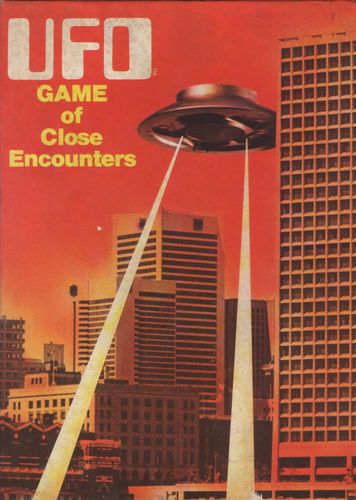
Once upon a time (because anything that begins with that phrase has to be timely and relevant), when I must have been in elementary school or thereabouts, I was digging through a closet and came across a box that apparently held a game. The title – UFO: Game of Close Encounters.

These were the days of Star Wars, but they weren’t the days of VCR’s / DVD’s / Netflix / YouTube / watch anything you want when you want no matter what. These were the days when the Charlie Brown Christmas Special was on TV once a year, and if you missed it, you missed it. Star Wars was a phenomenon, and since it was in short supply, anything sci-fi was doing pretty well. I didn’t know much about this UFO game, but it looked like it was at least in Star Wars‘ neighborhood, so I was intrigued.

The game belonged to my father, apparently a gift from somebody. My father isn’t much of a game player, and I’m not sure he ever played the game in his life. He sure didn’t play it with me. The game migrated to my closet as a kid, and then moved with me when I left home. And then, one day thirty-something years later …

“What’s this,” asks my daughter, rummaging through the closet in my office.

And I realize it’s time to end the cycle. UFO must be played.

The cover, found at Board Game Geek, of course

I get the game out and check Board Game Geek to see what I’m missing. Apparently, I only managed to lose 2 counters in all the years I messed with the game as a kid. Not too bad, and not really an obstacle to playing the basic version of the game.

The victory conditions in the basic game are pretty simple – the invading UFO player wins by landing five saucers on Earth. The Earth player wins by destroying enough saucers that the UFO player cannot win.

Game play is equally simple. The UFO player places his/her saucers around the outside of the board. The Earth player places his rockets on Earth. Each turn, players roll two dice. Each dice controls the movement of a separate piece. Pieces can move in orbit clockwise. They can move to a different orbit only along four paths, and may not change orbit or move clockwise in the same turn. If a rocket lands on a saucer, the saucer is destroyed. If a saucer lands on a rocket, the rocket is destroyed.

If the Earth player rolls doubles, he loses his turn and the Moon moves in orbit. If the UFO player rolls doubles, she may hyperspace one of her saucers to any empty space on the board.

If the Moon, while orbiting, moves over a piece, it destroys the piece. If the Moon is empty, a piece can be landed on the Moon on its own turn, by exact count. Likewise, Earth can only be landed on by exact count, but either player.

So, them’s the rules. How did the game go?

Pretty fun, actually. The strictures on movement make you think a bit, and the potential for hyperspace makes it tough for the Earth player to cover all his bases. Ultimately, you want to control those orbital paths towards the Earth, but it’s not as easy as you think, because if you just sit there, eventually the UFO player is going to destroy your rocket or hyperspace in behind you. In the game my daughter and I played, it came right down to the wire – four saucers landed on Earth, one saucer left needing a “1” to land. I got the lucky roll the dice  and destroyed the fifth saucer. Earth was saved. All humanity rejoiced.

The advanced game involves space stations and false signals on radar, and we’ll tackle it at some point. The game was pretty fun, actually. Didn’t take long, and didn’t drain the brain, so a nice way to spend a half an hour or so. Afterwards, we played LIFE (the old version with Art Linkletter on the money, of course), and my daughter cleaned my clock.

Of course, there wouldn’t have been an Earth to play the Game of LIFE on if I hadn’t stopped the saucer invasion …

Fashion of the Future!

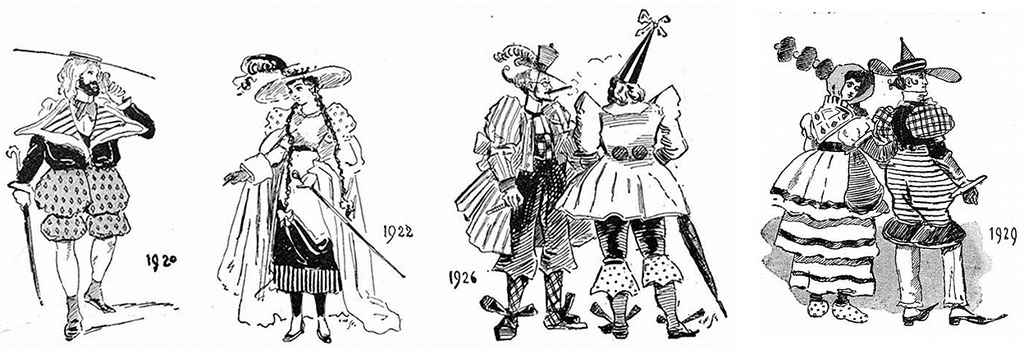
Saw something interesting at Public Domain Review about the future of fashion. Actually, the imagined future of fashion in the 1890’s based on a book from future (1993). W. Cade Gall, the author, found this book, which tells of the immutable laws that govern the waves that move through fashion.

Let’s see what the future book tells us about fashion in the Roaring ’20s

Hmmm. Pretty close

Now, here’s what I think is usable (besides the images, which will figure prominently in what I write for Terra Obscura, the land of the Philosopher Kings in Nod) in the article.

Random Fashion Table
For the most part, when I write cultures in Nod I base them on real world cultures (or perceptions of real world cultures). Why? Because a thoroughly make-believe world requires the players to learn a tremendous amount of made up bullshit about things that don’t exist, instead of them focusing on having fun drinking beer, rolling dice, and playing a game. That said, I do like to throw a few weird civilizations out there to keep things interesting, and the little table of waves might be useful for generating ideas about how they dress. The book conveniently gives us six waves – to whit:

1. Angustorial / Wobbling
2. Severe / Recuperative
3. Latorial / Decided
4. Tailor-Made / Opaque
5. Ebullient / Bizarre
6. Hysterical / Angustorial

The first term refers to the type, the second to the tendency. And no – I don’t know what “the tendency” means for sure. And “angustorial” and “latorial” – I can’t find definitions for those words. Perhaps they meant augustorial? Oh hell, maybe it’s not that useful after all. Or perhaps I just need to make a few changes:

ROLL D6
1. August and senatorial style as dictated by the elite; many ornaments, rich fabrics (and lots of it) and textures, meant to look refined, stately and elegant
2. Severe and simple, a reaction to the previous style that is casual and not ornamental in the least, focusing on solid colors, simple fabrics and clean, classic lines
3. A loosening of styles, fuller and blowsier, with sedate patterns, with a bit more trim (but not the ornamentation of phase 1); fashion is highly dictated at this point, and weirdos are barely tolerated
4. Much as before, but quality is the watch word – clothes are tailor-made and well fitted, and no two suits or gowns are quite the same
5. Ebullience and joy reign supreme, as a new generation takes advantage of the loosening of rules and introduces doodads, geegaws and bright colors and patterns to the mix – Ah youth!
6. The ebullience of before becomes a hysterical riot of color and pattern, with over complicated and impractical designs and a high degree of ornamentation; even now, the elite are beginning to create the august style that will appear next …

Star Apocalypse

Image by NASA via Wikipedia

The universe (or should that be Universe) is going to die someday. Well, maybe – I’m no physicist – I don’t even play one on TV. But let’s assume that all the stars in the sky will someday cool or collapse, and leave a universe very short on energy. All the star empires and rogue traders will be left to scavenge what they can from self-sufficient star bases and colonies, plundering once fertile planets that are now cold and almost lifeless, etc.

In other words – Star Apocalypse.

The idea here is to combine the two gaming genres of Traveller-style sci-fi and Gamma World-style post-apocalyptic gaming. The main point would not be the gathering of power, but of just keeping ahead of the cold, entropic embrace of Death. Every alien species and human star empire and god-like superbeing in the universe is dying, and the players are just trying to outlast them.

The best rules for such a campaign would probably sci-fi rules modified to allow for scarcity and the idea that the best and brightest are gone and those who remain maybe do not understand the technology they use quite as well as they should.

Where would the adventures take place? Isolated colonies (under glass domes, of course) and star bases eager for trade, but wary of strangers (think in terms of isolated towns in Westerns), ruins of ancient civilizations, and drifting hulks (as in spaceships) in deep space. The play would often be dungeon-style – exploring a physical space and battling monsters and traps, but the drivers would be the need for supplies – energy, fuel, food and water, replacement parts for the spaceship. Of course, there could also be a meta-driver – the belief that some super-scientist somewhere built a portal that allows one to leave the dying universe for a parallel universe that remains young and vital. This Shangri-la could be the overall focus of the campaign – something akin to Battlestar Galactica‘s plot of a caravan of spaceships seeking Earth.

Just a thought – and probably not an original one at that.

Invasion of the Pod Jellies

While writing the new hexcrawl, I scribbled these lovely fellows out and thought folks might find a use for them …

Several (3d4) large seed pods float in the ocean here, and might be seen (1 in 6 chance) by a vessel passing through this hex. The pods are about 6 feet long and consist of a very thick, green hide (Armor Class 18). The pods should be treated as having 20 hit points. They are vulnerable to fire, but immune to cold.

Within the pod, there is a strange, gelatinous life form that, through its mental powers, can understand and duplicate any sentient humanoid. Each pod jelly picks a single humanoid to make its own, using its ESP to choose a likely candidate, and each day absorbs a portion of their being (i.e. 1d6 points of constitution damage) while turning itself into a clone or replica of that person. The pod must be within 30 feet of its victim to do this, and victim receives a Will saving throw each day to resist the effect. When the original’s constitution is reduced to zero, the clone bursts forth from the pod and the original’s body disintegrates.

The pod jellies duplicate the original’s body (i.e. hit dice and physical ability scores) and mind (intelligence and charisma scores, though wisdom is never higher than 6) perfectly, knowing all they knew and having the same general special abilities. They cannot, however, exhibit emotion or faith, and emotion based powers (such as a berserk rage or a cleric’s divine powers), are duplicated and therefore they are not possessed.

POD JELLY
Medium Ooze, Chaotic (NE), Average Intelligence; Invasion (3d6)

HD 2
AC 16
ATK Touch (1d4 acid)
MV 20
SV F15 R15 W15
XP 200 (CL 3)

These are the abilities of a pod jelly in its native form, outside the protection of its pod-like shell and before it has taken on the form of a humanoid. In humanoid form, it loses its resistance to acid, though it retains its ESP ability and can still utter a psychic scream (i.e. psionic blast) once per day, though this takes the form of an actual shrill scream as well as a mental effect.

Special Abilities: Resistance to acid

Spell-Like Abilities: At will—Detect thoughts (ESP); 3/day—Psionic blast

I suppose I need to include them in ACTION X.

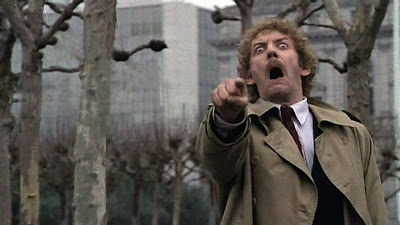
What’s more frightening, the psionic blast or that damn perm?


Musing on the Design of Star Wars

Image found HERE

I just finished listening to some folks talk about Star Wars and its possible future under Disney (main take-away – how can Disney screw it up more than Lucas?). The podcast ended with the tune played by the Cantina band, and that got me thinking about the over 1940’s vibe of the original trilogy, and, more importantly, what I consider the design failure of the second trilogy. Among other problems with the second trilogy, I felt that they missed out on some design cues that might have cemented it into the same universe with the original trilogy.

Star Wars had a significant 1940’s vibe to it – it was very much a recreation of 1940’s sci-fi serials and WW2 movies – with some Akira Kurosawa thrown in for good measure. Okay – the cantina music was more 1920’s, and the 1930’s fills in as well – so maybe we’ll call it a 1920’s to 1940’s vibe. Now, one cannot remove the design of a piece, even a pseudo-period piece, from their own time and place. That makes it an interesting mix of 1920’s-1940’s and late 1970’s design (and boy, can you tell that the second and third movies were designed in the 1980’s). The “seventies meets the past” look was nothing new, really – there was a definite interest in resurrecting the 1920’s through 1940’s look in that era, with a modern twist.

Luke and Leia appear to be about 18 years old or so, so the second trilogy should be taking place about two decades earlier. What I think would have been cool, then, is to make the second trilogy look very 1900’s-1920’s.

I guess what I’m getting down to is this: What might a very “early 20th century” Star Wars have looked like? A very aristocratic Galactic Senate in old fashioned military uniforms – a doughboy vibe to the soldiers and proto-storm troopers – bobbed hair on the ladies – a little more ornamentation on things than was necessary, that transition from the Gilded Age to Moderne – more of an Egyptian style to things – a waxed mustache on Yoda. Perhaps some of these elements were present in the second trilogy.

I don’t know quite what it would look like, but it makes me wish I was an artist so I could explore the look of the thing.

Women, Cars and Spaceships … A Retrospective

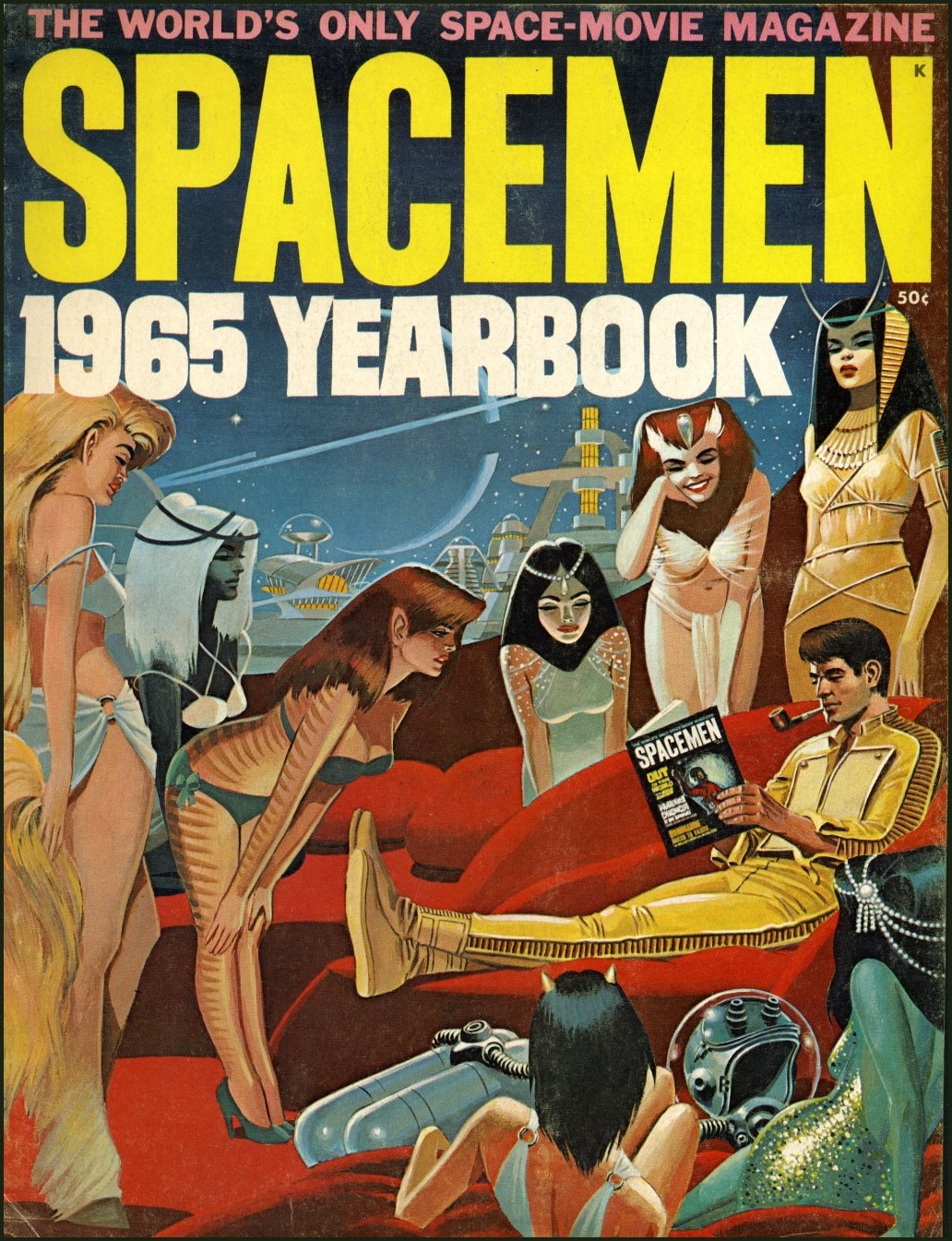
While driving to work this morning, I was listening to classical music and musing on the design of cars and spaceships. I don’t mean real spaceships, of course – I mean the kind you see in movies, comic books, pulp fiction and television – the good stuff. I also started thinking about mens’ taste in women, and how the styles of disparate things tend to conflate at different times. With that in mind, I decided I was going to put together some images from different years (or small spans of years) of the top spaceship of that time, the top car of that time and what were considered the top sex symbols of that time to see if they clicked.

Here we go …

We’ll begin with 1929 and Buck Rogers. The spaceship was still in the “could have been designed by lonely housewives” era. Fairly sleek and only a few doodads stuck to the outside of the ship. For our car, we have a 1929 Duesenberg – also pretty sleek, formal and yet also sporty. Whether Buck’s spaceship had leather seats, I don’t know. For our sci-fi beauty, we have Col. Wilma Deering, Buck’s erstwhile companion and drawn as a classic beauty of the era – rounded face and graceful lips.

By 1936, Flash Gordon has burst onto the scene in the first of his film adaptations. The spaceship isn’t much different than Buck Rogers’ craft, though perhaps a bit sportier (check out the chrome!). Dale Arden, as played by Jean Rogers, conforms pretty closely to the earlier beauty standard, and the car isn’t terribly different from the 1929 Duesenberg, though you’ll note the nose is slanted back a bit.

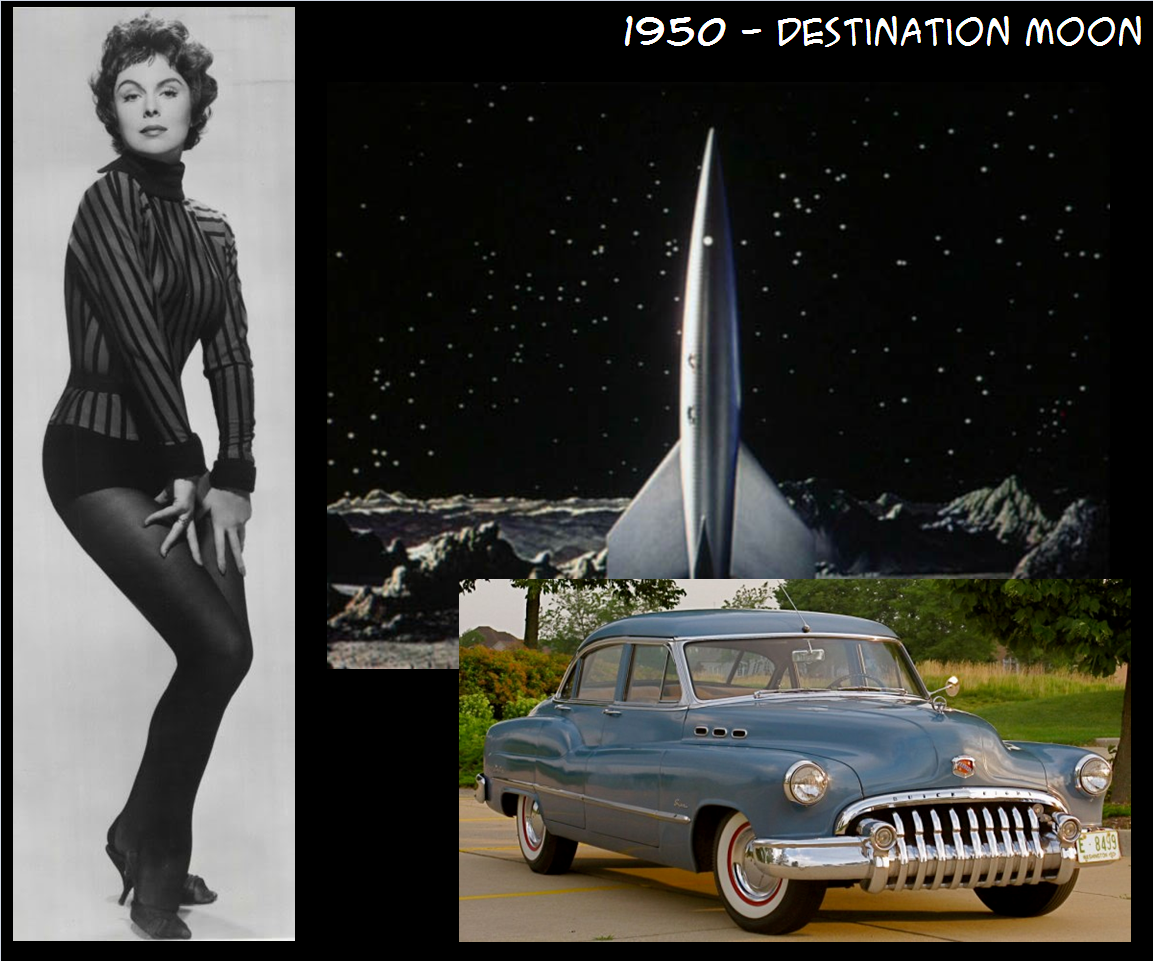
1950 brought the film classic (?) Destination Moon. Destination Moon at least played at being hard sci-fi, though the design was definitely of the moderne period, with the sleek spacecraft. The beauty of 1950, Erin O’Brien-Moore was pretty sleek herself, and shows how tastes were changing at the dawn of a new decade. The car is a bit more compact than in the 1930’s, but in this case it looks like the spaceship designs are beginning to presage developments in automobiles.

In 1956, Forbidden Planet put earthlings in a flying saucer (guess those captured German scientists were finally earning their keep). Beauty isn’t much changed from 6 years ago, and the car, a 1956 Chevy Bel Air, is not yet exhibiting the giant fins that will grace vehicles in the late 1950’s and early 1960’s.

By 1966, Star Trek has premiered. The Enterprise is unlike any spaceship audiences have seen before, and also notable is that the sole beauty of the cast (unless you include Sulu) is a black woman! Nichelle Nichols typified late ’60s beauty – curves and tall hair. The cars are becoming more slick as well – away from the tail-fins and into the muscle car era.

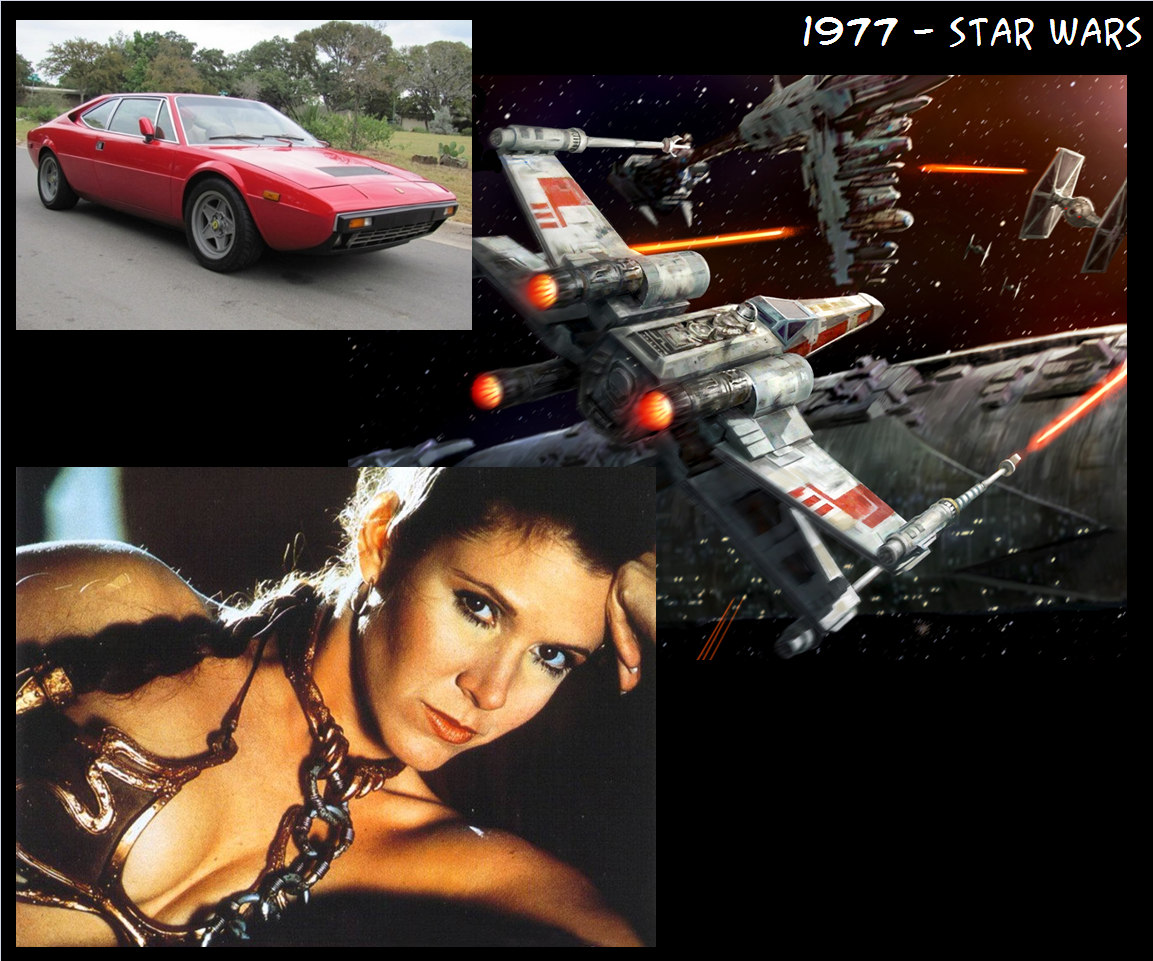
The next big leap, in this case back in some ways and forward in others, was 1977’s Star Wars (you might have heard of it). For the first time on film, we get a real sense of the “starfighter” – fighter aircraft in space. Yeah, the Star Destroyers were pretty iconic as well, but you really can’t beat the X-Wings and TIE Fighters for capturing the imagination of kids in that era. Our beauty is, of course, Princess Leia (Carrie Fisher), who really found herself thrust into unfamiliar territory in her slave girl costume. The 1977 Ferrari pictures seems to have a similar profile to those X-Wings.

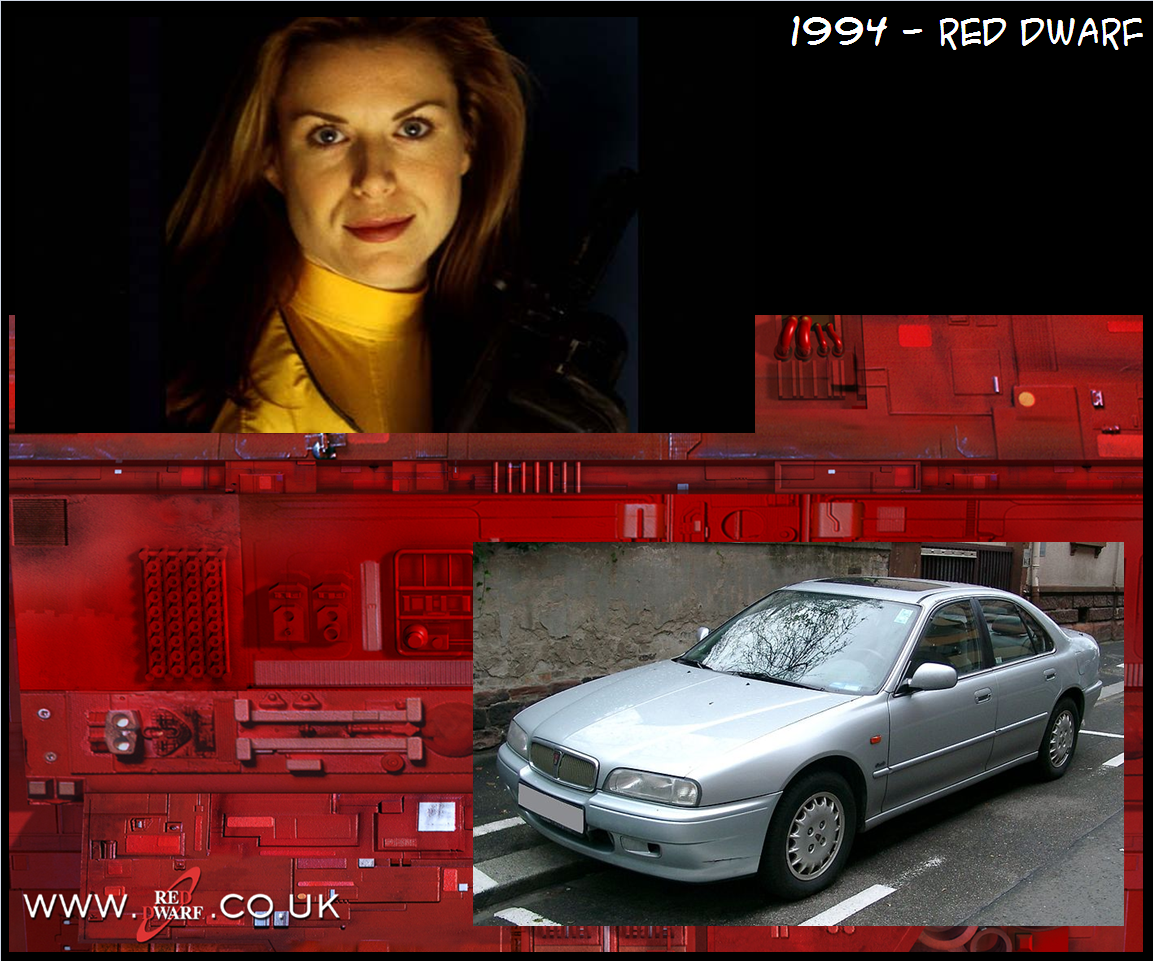
One last stop, and a leap forward to one of my favorite sci-fi series – Red Dwarf. Not American, and played for laughs, it introduced a completely utilitarian (and grandiose) spacecraft in the eponymous Red Dwarf. By 1994, we had maybe my favorite of all the sci-fi beauties introduced on this post – Chloë Annett as Kristine Kochanski (I like my women smart, beautiful and with a wry sense of humor) and the fairly utilitarian Rover. Substance over style in 1994 sci-fi.

Okay, there’s many more I could do – various incarnations of Star Trek, Alien, etc. I’ll leave further explorations to others.

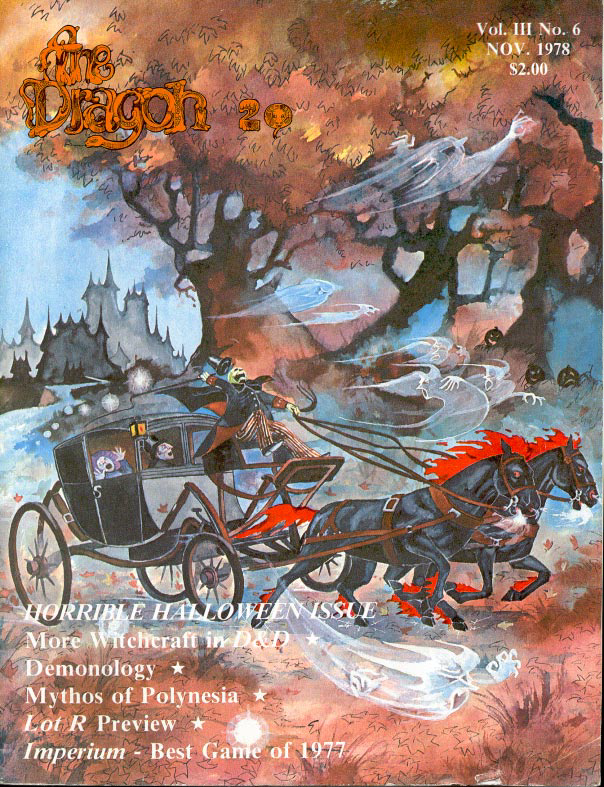
Dragon by Dragon – November 1978 (20)

And so we come to November of 1978, which is notable … for nothing that I’m aware of, other than this magazine. This appears to be their Halloween issue (why November? Kask explains it’s because November is the dreariest month of the year – what with all the football and Thanksgiving? – and thus a good month for horror stories).

Whatever the reason, let’s see what Dragon #20 has to offer.

Designer’s Forum – The Making of a Winner: Imperium – Outstanding Game of 1977 by Marc Miller

Yeah, that Marc Miller. In this article, Miller describes the origins of Imperium. Apparently it began as two games, Imperium being a giant sci-fi game of economics and conquest, and StarFleet, which was on a smaller scale. Ultimately, StarFleet was put on the back burner while Traveler was made. When Lou Zocchi mentioned that the name could get them in trouble with the Star Trek folks, and when they decided Imperium was too big to publish, they decided to take what they had learned making Traveler and apply to StarFleet, which would now be renamed Imperium.

Anywho – the article goes on to describe the design process behind Imperium, and to also provide some rules clarifications and addenda.

I enjoyed this bit …

Whatever happened to that guy?

Distributing Eyes & Amulets in EPT by Mike Crane

One of those great articles that makes perfect sense to people who play the game. The article is just a series of random tables that makes sure “rare” eyes and amulets show up less often than “common” eyes and amulets.

The Mythos of Polynesia in Dungeons & Dragons by Jerome Arkenberg

This article covers everyone from Tangoroa, God of the Ocean, to Pele the Destroyer, to Miru, God of the Underworld. The heroes seem more interesting …

The Polynesian Heroes were born in non-human form, and were brought up by their maternal grandparents, from whom they derived their magic. When in human form, they could transform, stretch, or shrink themselves, fly, take giant strides, and perform great feats of strength.

Maui is, of course, the badass of the crew (and he happens to look like a buffoon with eight heads) – here are some stats for Blood & Treasure.

Maui, Challenger of the Gods: Magic-User 18 and Fighter 15; HP 140; AC 12; ATK 4 slams +7 (1d3+5); MV 30 (Fly 40); F 6 R 9 W 4; XP 4500; Special: Dominate foes with 0 HD or less, 4 attacks per round, spells per day (4/4/4/4/4/4/4/3/3/2); Str 20, Int 18, Wis 18, Con 18, Dex 17, Cha 3.

Wormy

In this episode, Frank and Dudley abscond with one of the demon eggs to spring them on the ogres. It’s amazing how engaging this strip was right from the beginning.

D&D Variant: Another Look at Witches and Witchcraft in D&D by Ronald Pehr

Love the editor’s note:

Editor’s Note: This seems to be a well thought out class-variant. At the very least, it makes an excellent NPC or hireling/acquaintance. For those DM’s bold enough to try it, it provides a very viable character for ladies; be they sisters, girlfriends, lady gamer or others. D&D was one of the first games to appeal to females, and I for one, find it a better game because of that fact.

It manages to be both inclusive and a bit sexist at the same time.

So, what do the ladies get with this witch? It’s actually a nice class, and, I believe, the origin of the later witch class that showed up in Dragon in the 80’s. Witches here are not Satanists, but more nature lovers who use magic to charm and control – I guess what you would call an enchanter in more modern versions of the game – and who can brew potions, narcotics, hallucinogens, etc. Witches get eight levels of spells, many of them new, and they appear to straddle the normal magic-user/cleric divide.

D&D Variant: Demonology Made Easy by Gregory Rihn

This article is all about conjuring demons (and devils). The key here is learning a demon’s name, and the process is simple and clever: You research a demon or devil’s true name the same way you research a spell:

Demon prince, arch-devil = 9th level spell
Type VI, pit fiend = 8th level spell
Type V, ice devil, succubus = 7th level spell
Type IV, horned devil, night hag = 6th level spell
Type III, bone devil = 5th level spell
Type II, barbed devil = 4th level spell
Type I, erinyes, misc. = 3rd level spell

Definitely one of those, “Why the heck didn’t I think of that” moments.

Once you get down to the conjuration, you roll some percentile dice to see if what you call is what you get. Calling a demon prince, for example, has the following chances:

01-50 = Type V demon
51-75 = Type VI demon
76-00 = Demon Prince

High level conjurations require assistants and sacrifices, and there are additional chances for failure for characters below 20th level. Very good article.

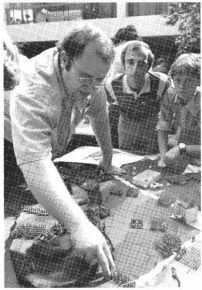
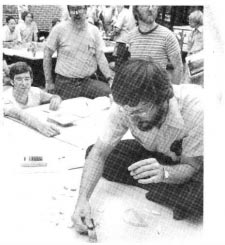
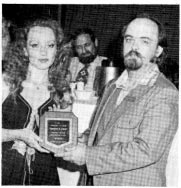
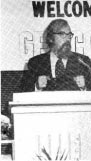
GenCon XI Photo Album

Greg Costikyan of SPI … I believe I recognize the woman as Gygax’s daughter
That Gygax fellow
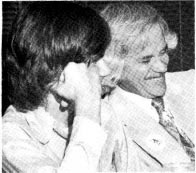
J Eric Holmes and his son Chris
Jeff Perren
Lou Zocchi and Woody … proving that GenCon’s best days are clearly behind it
Marc Miller
Mike Carr
Tim Kask
Tom Shaw of Avalon Hill

Review: See Africa and Die! or, Mr. Stanley, Meet Dr. Livingstone by Gary Gygax

Gygax reviews Source of the Nile here. Apparently, this is a super long play game. It is pretty extensive review, and it looks like a pretty cool game. Best line of the review:

Be certain to read and KNOW the rules before you attempt to play. The rules are not well organized, nor are they very complete. In fact, in many ways they remind me of those originally written for D&D®.

Gygax also gives some additional ideas for the game.

The Asimov Cluster by William B. Fawcett

This article discusses the problems inherent in recreating scenes from sci-fi novels in games of Traveler. It also provides stats for the planets of the Asimov Cluster from the Foundation Trilogy.

Advert for the drow modules. The drow are going to change quite a bit over the next 30 years.

Preview: The Lord of the Rings by Allen Hammack

This preview is for the Bakshi animated version (which I’ll admit I like, sue me). It mostly gathers together some stills from the movie and a few production notes from Bakshi.

It’s a Good Day to Die by Lyle Fitzgerald

This article compiles death statistics of a D&D campaign in Saskatoon. In two to three years, this campaign racked up 600 deaths of PCs and their advance-able hirelings. Wow! I know the old game was deadly (I’ve played it), but this does seem excessive. The top killers are Miscellaneous Causes (14.6 percent) and goblin races (10.1 percent). Dragons were responsible for 7.5 percent of the kills and giants 5.7 percent – respectable numbers for the big guys. War only caused 6 deaths – I guess one of the four horsemen needs to be replaced by a goblin.

War of the Ring Variant by Allen Hammack

Simple rule change – hide the movement of the fellowship so the bad guys don’t have to pretend they don’t know where they are. Honestly – can’t believe the designers didn’t think of this.

Fineous Fingers

A dragon throws a stupid paladin off a cliff. Nice tactic – fake a subdual.

Demonic Possession in the Dungeon by Chas. Sagui

This article takes the rules to task on the inability of demons to possess victims. In Chas’ rules, only demons of Type IV or higher can possess mortals. Interesting line:

The rule of the thumb is that only those demons that are immune to all but magical weapons and therefore exist upon two planes at once may possess.

One of those, “wait – is that really why, or did he just make that up?” lines.

The basic idea is that the DM let’s the players all know they might be possessed. Everyone rolls a saving throw, but only one character is really the victim. The victim is chosen “randomly” – i.e. first person into a room, last person, etc. A save vs. magic is allowed to avoid the possession.

The possessed dude has his normal AC, but attacks as the possessing demon. They cannot use lawful-aligned magic weapons. The demon can use its normal powers, provided its new body doesn’t preclude it. All damage is taken by the body, not the demon.

There’s more, but you’ll need to read the article.

Not a bad issue, really. The witch and the demon conjuration articles are my favorites. I’d recommend hunting it down.

Astro Creeps [Space Princess Monster]

Astro Creeps

HD 5 | DEF 13 | FIGHT 10 | SHOOT 11 | MOVE N | STR 5 | DEX 6 | MEN 8 | KNO 4 | DL 6

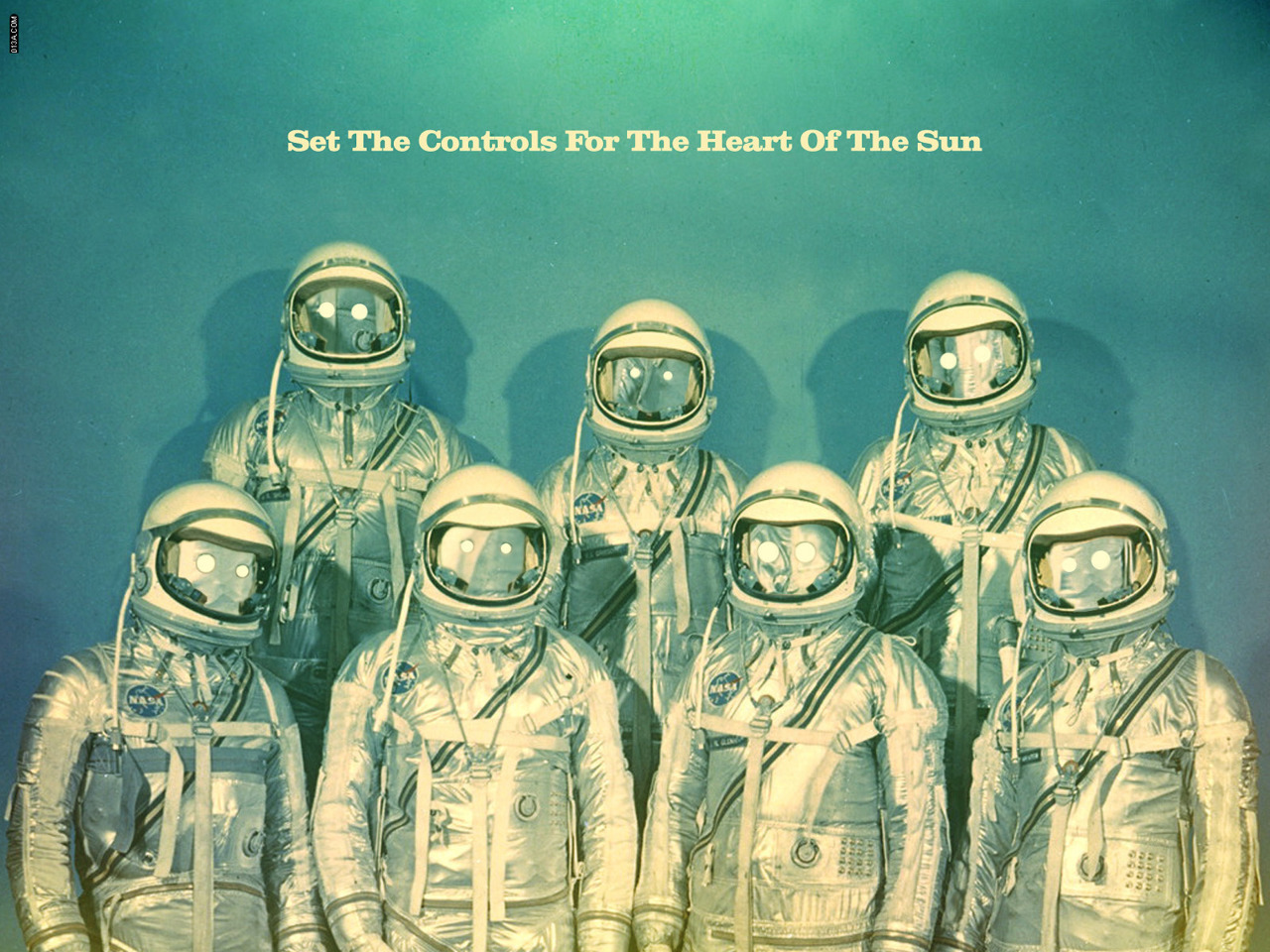
The conquest of space did not happen overnight, and it didn’t happen without a few casualties. Many of those souls who were lost in the spaceways found it impossible to slip the mortal coil entirely, their thirst for adventure and discovery being so keen. These men and women are known as astro creeps.

Astro creeps appear as space suits, usually of an old vintage. In place of faces, the astro creeps have two glowing orbs that seem to serve as their eyes. They drift through space, searching for new starships that they may inhabit (haunt, one might say) and turn to their own mysterious purposes.

An astro creep can attempt to seize control of a ship’s computer, using this control to chart a new course (usually to reach the destination they set out for when they were alive) or even to shut down random functions (life support, weapons, etc.). The chance of success depends on the size of the ship they are attempting to control:

Starfighter 79%
Shuttle 68%
Freighter 46%
Blockade Runner 46%
Corvette 34%
Star Cruiser 13%
Dreadnaught 6%

Note: Astro creeps rarely seize control of starfighters due to the cramped conditions.

Characters can use their identify and use device skill each round to attempt to regain control, rolling against a DC of 14 to succeed.

Astro creeps can unleash a piercing, manic laugh in combat, once every 1d4 rounds. Those within 30 feet of the laugh must pass a MEN test or be struck with panic, dropping whatever they are holding and fleeing at top speed for 10 rounds minus their MEN score.

Astro creeps can, at will, phase themselves through solid bulkheads and walls – moving through up to 3 feet of solid material. They are otherwise solid, and cannot use this ability to avoid being hit in combat.

My Space Lover [Random Table]

Copyright Wally Wood

You’re a red-blooded starship captain. You’ve just finished kicking some alien ass and forging a star treaty with some energy beings who possess a mother lode of ioun stones, and it’s time to hit the Pleasure Planet for some R&R (i.e. rockin’ and rollin’). You hit the infamous House of 7 Sins and what do you find, but …

PHYSIQUE
Roll on the body configuration table and then roll to determine skin, hair and eye coloration. When you’re done, roll a few “other characteristics”. And remember – this table should work equally well for males and females …

Body Configuration (Roll d%)
01-64. Humanoid
65-79. Sex-Bot
80-89. Centaur (i.e. humanoid torso, head and arms, quadruped lower body)
90-99. Mermaid / lamia (i.e. humanoid torso, head and arms, serpentine lower body)
100. Tentacle beast (uses illusion to project more normal image – roll again; if 100, then it uses no illusions)

Skin Coloration (Roll d4)1-2. Color (see below)
3. Metal (see below)
4. Special Skin

Hair Coloration (Roll d6)
1. Bald
2-4. Color (see below)
5-6. Metal (see below)

Eye Coloration (Roll d4; 1 in 6 have eyes of different clors)
1-2. Color (see below)
3. Metal (see below)
4. Precious stones (ruby, sapphire, etc.)

Colors (Roll d12; 5% chance of a metallic version of the color)
1. Black
2. Blue
3. Brown
4. Green
5. Grey
6. Orange
7. Pink
8. Purple
9. Red
10. White
11. Yellow
12. Roll Again

Metals (Roll d3)
1. Copper
2. Gold
3. Silver

Special Skin (Roll d10)
1-4. Spots (roll again for spot color, cover D% of body)
5-8. Stripes (roll again for stripe color)
9. Two Tone (roll again for each half of body)
10. Lacks skin – just musculature and a mucus membrane to protect it

Other Physical Characteristics (roll d% as many times as you wish, or roll 1d4-1 times)
01-02. Acrobat
03-04. Amazonian (height = 1d4+6 feet)
05-06. Androgynous (hey, worked for David Bowie)
07-08. Animal characteristics (feline, snake, primate, squirrel, rodent, frog, avian, bat, canine, beetle, etc.)
09-10. Antennae
11-12. Big Anime Eyes
13-14. Bioluminescent (glow corresponds to emotions, brilliant light builds as excitement builds (blinding at orgasm), chromatophores and iridophores in skin (see cuttlefish))
15-16. Cartilage skeleton (i.e. bones not rigid)
17-18. Claws and fangs
19-20. Crab or lobster-like plates over skin
21-22. Cyclops
23-24. Dancer’s physique
25-26. Devil horns
27-28. Double-jointed
29-30. Elastic body (like Mr. Fantastic)
31. Electrically charged skin (suffer 1d6 damage at orgasm)
32-33. Faceted eyes
34-35. Frog-like tongue
36-37. Full-figured
38-39. Fur
40. Gills (needs to be submerged)
41-42. Head ridges
43-44. Hermaphrodite
45-46. Hot skin
47-48. Hypno-eyes
49-50. Instinctively changes appearance to a person from your past (illusion)
51-52. Large ears (round, pointed, etc.)
53-54. Levitation
55-56. Long, supple fingers
57-58. Mental powers (emotion control, ESP, suggestion, plant memories, remove memories)
59-60. Multiple goodies (wink wink, nudge nudge, say no more eh?)
61-62. Multiple mouths
63-64. Musk glands / pheromones
65-66. No mouth (communicates telepathically)
67-68. Oviparous
69-70. Petite (height = 1d3+1 feet)
71-72. Psychoactive sweat (narcotic, stimulant, mind control)
73-74. Ritual piercings
75-76. Scales
77-78. Serpent tongue
79-80. Siren (singing, throaty voice, purring, cooing, growling, buzzing, moaning, chanting, keening (i.e. at orgasm, shatters glass))
81-82. Spider eyes (i.e. 1d3+1 x 2 eyes)
83-84. Spines on back
85-86. Suckers on fingers (or elsewhere)
87-88. Super long hair that can be moved
89-90. Tail (1 in 4 is prehensile)
91-92. Tentacles
93-94. Vampire
95-96. Vibro-hands
97-98. Wall crawler
99-100. Webbed fingers and toes

MENTALITY (Roll d20)
1. Angry
2. Combative (mating ritual is about 50% fighting)
3. Demure
4. Desperate
5. Dominant
6. Enchanting
7. Energetic
8. Fiendish
9. Haughty and aristocratic
10. Hot and cold
11. Kinky
12. Logical
13. Morose
14. Nurturing
15. Playful
16. Predatory (5% chance kills and eats mates when completed)
17. Punk
18. Scheming
19. Seductive
20. Submissive

COMPLICATIONS (1 in 10 chance of a complication, roll d10)
1. Assassin or spy
2. Blackmail!
3. Exposed to Space Crabs! See ship’s surgeon immediately
4. Extremely fertile (90% chance of pregnancy)
5. Permanent psi-link to your mind
6. Poisonous (save or suffer some sort of damage)
7. Sex implies engagement – blaster rifle marriage forthcoming
8. Sex is like love potion, fall madly in love with her or him
9. Space princess mind controlled into working in brothel … King of Space will b pissed
10. Thief

Copyright Ken Landgraf … sorry, couldn’t resist


Alien Booze

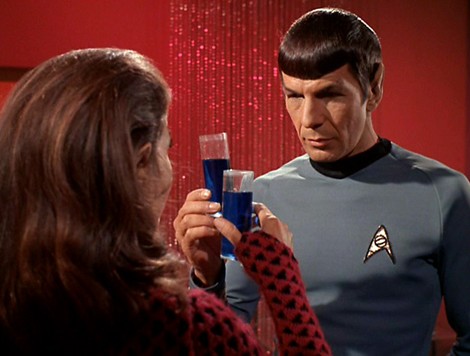
Star Trekkin’ across the universe can build up a mighty thirst, and there’s a good chance that the dive on Rigel-5 you just entered doesn’t have MGD on draft. Here are some other options.

Table I – Where

1. Venusian
2. Martian
3. Jovian
4. Saturnian
5. Mercurian
6. Plutonian
7. Neptunian
8. Denebian
9. Altairan
10. Cygnian
11. Betelgeusian
12. Polarian
13. Andromedan
14. Cetian
15. Algolian
16. Pleiadeian
17. Rigelian
18. Aldebaran
19. Antarean
20. Arcturan

Table II – Descriptor (roll 1d4 / 1d10)

1-1. Acid
1-2. Bitter
1-3. Black
1-4. Blood
1-5. Blue
1-6. Boiled
1-7. Brown
1-8. Bubbling
1-9. Copper
1-10. Crimson
2-1. Dark
2-2. Death
2-3. Dry
2-4. Fire
2-5. Fizzy
2-6. Frost
2-7. Gold
2-8. Green
2-9. Grey
2-10. Heavy
3-1. Jumping
3-2. Lite
3-3. Malt
3-4. Molten
3-5. Orange
3-6. Pale
3-7. Purple
3-8. Red
3-9. Rotting
3-10. Royal
4-1. Salt
4-2. Scarlet
4-3. Silver
4-4. Slime
4-5. Sour
4-6. Spiced
4-7. Spitting
4-8. Sweet
4-9. Viscous
4-10. Yellow

Table III – What

1. Ale
2. Beer
3. Brandy
4. Brew
5. Cider
6. Punch
7. Whiskey
8. Wine

Table IV – Possible Side Effects

01-04. Affected as though by male or female hormones (50-50 chance) – a noticeable change
05-08. Blind for 1d4 days
09-12. ESP for 24 hours
13-16. Fall in love with first person of opposite sex (or a reasonable facsimile thereof) that you see
17-20. Gain 1d10 pounds overnight
21-24. Grow dorsal fin and/or webbing between toes and fingers (or some other DNA snafu)
25-28. Hair falls out
29-32. Hair (green) grows on palms and tongue; falls out in 1d4 weeks
33-36. Hair turns blue or white or some other weird color
37-40. Increased intellect for 1d4 days, then weakened for 1d6 days
41-44. Increased strength for 1d4 days, then weakened for 1d6 days
45-48. Infravision for 1d4 days
49-52. Levitate for 24 hours
53-56. Lose 1d10 pounds overnight
57-60. Lose sense of taste for 1d4 weeks (5% chance this is permanent)
61-64. Memory loss for 1d4 days (per sitcom amnesia)
65-68. Overactive salivary glands for 1d4 days (sound like Daffy Duck)
69-72. Projectile vomiting (1d4+3 feet)
73-76. Put into highly suggestive state for 24 hours
77-80. Sleep for 1 week
81-84. Speak words in reverse order for24 hours
85-88. Temporary insanity for 1d6 days
89-92. Visited by pooka in form of green horse or pink elephant
93-96. You can see dead people
97-100. Emit highly flammable gases from every orifice for 24 hours