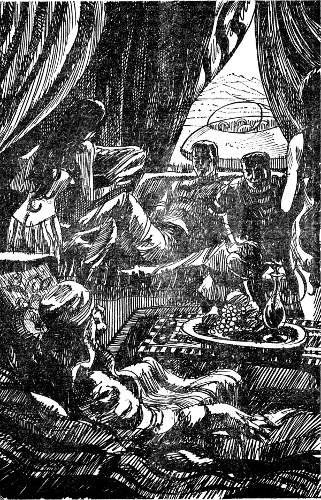
Retief and the Aga Kagan by Jack Gaughan
When you’re a pop culture archaeologist – ignoring the new to dig through the old – you often have that moment when you discover something that’s been around for decades, and which many others probably already know about. Still, it’s new to you, and thus a fun revelation you want to share. And so I present my latest old discovery – Jame Retief.
I was thumbing through some old issues of Worlds of IF on Project Gutenberg, and came across a story titled “The Madman from Earth” by Keith Laumer and decided to give it a read. Boy, was it fun. Then I looked at Wikipedia, and thought, “Well, I guess I’m late to this party.”
Mr. Laumer was a former officer in the U.S. Air Force and a diplomat in the American foreign service. Both of these jobs contributed to his satirical take on the exploits of Jame Retief, a rebellious diplomat in the Corps Diplomatique Terrestrienne (CDT), an organizations of bureaucrats and lick-spittles doing everything in their power to sponge off the galactic taxpayer while doing as little work as possible. Puffed up, arrogant and duplicitous, one gets the idea that Laumer wasn’t a huge fan of the diplomats he worked with, and thus invented “regular fella” Jame Retief to settle the score in dozens of short stories and novellas written in the 1960s and 1970s.
Jame Retief is cut from the same cloth as many heroes from the period and from pulp literature. He’s got a powerful punch, an appreciation for the finer things in life (a stiff drink, cigar and beautiful woman topping his list) and a sense of right and wrong that often puts him at odds with the CDT, his bosses therein never quite understanding why he threatens his chances for promotion by constantly going off the diplomatic script.
I’ve had tremendous fun reading about the “new life and new civilizations” that Retief and the CDT interact with, from the insect-ish Groaci who serve as the CDT’s most common competitors in the galaxy (as the Russians were to the Americans in the Cold War) to the expansionist and lobster-like Soetti, the fabulous Yillians and the ray-like Jaq. All of them come combine elements of human culture and something wonderfully alien. Aliens and humans in these stories are not just carbon-copies of a mono-cultural ideal, but given some individuality. An individual alien might be a good Joe or a scum bag in a Retief story, and the hero takes them as he finds them.
His sketches of alien planets are full of inspiration for sci-fi game masters as well. From “Cultural Exchange” (1962), here’s a sketch of the farming planet Lovenbroy, which holds a Terrie (human) colony:
“We’ve got long seasons back home. Five of ’em. Our year’s about eighteen Terry months. Cold as hell in winter; eccentric orbit, you know. Blue-black sky, stars visible all day. We do mostly painting and sculpture in the winter. Then Spring; still plenty cold. Lots of skiing, bob-sledding, ice skating; and it’s the season for woodworkers. Our furniture—All local timbers too. Lots of metals in our soil and those sulphates give the woods some color, I’ll tell you. Then comes the Monsoon. Rain—it comes down in sheets. But the sun’s getting closer. Shines all the time. Ever seen it pouring rain in the sunshine? That’s the music-writing season. Then summer. Summer’s hot. We stay inside in the daytime and have beach parties all night. Lots of beach on Lovenbroy; we’re mostly islands. That’s the drama and symphony time. The theatres are set up on the sand, or anchored off-shore. You have the music and the surf and the bonfires and stars—we’re close to the center of a globular cluster, you know Autumn’s our harvest season. Most years we have just the ordinary crops. Fruit, grain, that kind of thing; getting it in doesn’t take long. We spend most of the time on architecture, getting new places ready for the winter or remodeling the older ones. We spend a lot of time in our houses. We like to have them comfortable. But this year’s different. This is Wine Year.”

Retief and a quornt by Gaughan
I like the way Laumer uses hints and glimmers to build his make-believe world. Things hang together just fine, but without much detail. Rather than spelling out the rules of his creation, you get glimpses. You’re never sure when it is set, but it follows a couple hundred years after a human government called the Concordiat that also featured in a series of stories he wrote about artificially intelligent war machines called Bolos. There is space travel, and it’s faster-than-light, but spaceships still have to follow real physical laws in terms of entering planetary orbit. There’s nothing like the Star Trek transporter, computers presumably exist, but humans and aliens take center stage, people still smoke (cigars, dope-sticks), drink and eat (lots of great descriptions of alien booze and food) and kill each other with power pistols and 2mm needlers.
Now, I like to put something gameable in these posts, and my first inclination was to do some Grit & Vigor stats for Retief and some of these gear in these stories, but then I changed my mind. Making up stats for somebody who is strong, tough, quick, smart, etc. is no big deal, after all. Instead, I got an idea for addressing a common problem in translating fantasy, sci-fi and adventure literature into gaming, namely – a lack of team work.
Some of the best loved characters in fiction are loners – James Bond and Conan come immediately to mind. They sometimes have assistants, and even team-ups, but these characters are often little more than NPC’s. The stories written for them work best with a single protagonist, so translating their adventures into RPG’s meant for a party of three to six characters can be difficult. Thus my latest notion, Group Solo Play.
Group Solo Play

“Well, now what do I do?”
In GSP, a party of players control the actions of one larger-than-life hero. Every player is given the same number of chips – say 10 to start. When the character is presented with a big decision – a plot point, one might say – those players who have an idea of what they want him to do put any number of chips down on the table. For each chip played, the player rolls one dice, totaling them, with the player with the highest total taking over the control of the character. Once a chip is put on the table, win or lose, it is lost. The player in control stays in control until a new “big decision” comes up, when a new bidding war begins. This leaves many players on the sidelines, watching the story unfold as an audience, but with the chance to take the reins when the current controlling player is messing everything up.
The use of the chips means that no one player gets to dominate forever. One person might win a few bidding wars early, but eventually they run low on chips and the other players are going to win control. Ultimately, everyone has to work together to get the character through the adventure successfully, and in doing so competitively maybe gets a chance to appreciate the different methods of their fellow players. When everyone has run out of chips, and if the adventure is still ongoing, just hand out another 10 chips to everyone and keep going until you achieve ultimate success or failure.
The key role here is played by the Game Master, who needs to decide when a bidding war is to take place – you don’t want too many, or too few – and who needs to create a story telling atmosphere to keep the non-controlling players interested in the game while they’re waiting for a chance to take control.
 I managed to find a couple issues online and bought them and loved them. A fan filling in the details of something he loved, but not to the obsessive degree to which such things can be taken. None of the nonsense about “canon” and copyright and such – just creativity. In the process of finding the Star Fleet Handbooks, I also found the
  Arcturians are humanoids from Arcturus IV, a very large and dense planet. All Arcturians are clones, and there are over 100 billion of them in their home system. Arcturus IV is best described as an anarcho-capitalist society, with no central government to speak of. Despite their lack of central authority, the Arcturians are militaristic, and provide the bulk of the UFP’s infantry forces. Many also work in Starfleet security and marines. They are also known to have a great appreciation for the works of Shakespeare. Arcturians are often contemptuous towards outsiders.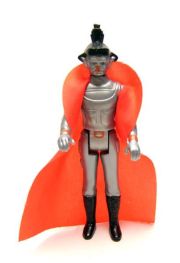
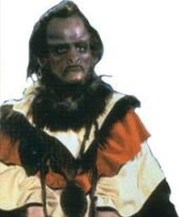 Kazarites are known to be simple shepherds on their own planet, preferring the company of animals to most sentient humanoids. They possess the power of telekinesis, which they use to propel their simple spacecraft through space. Kazarites sometimes enter Starfleet as biologists. They are capable of communicating with animals.
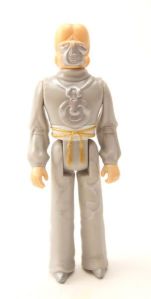
 Rhaandarites are a child-like species, sometimes considered the “country bumpkins” of space. They have a lifespan of many centuries, and do not mature until they are 150 years old. They also continue to grow their entire lives, with the oldest topping 240cm. Rhaandarites are good at taking commands, not giving them, but they are very loyal and trustworthy. They originate on the planet Rhaandar orbiting Alpha Indi. Males and females can only be told apart by the style of jewelry they wear. The Rhaandarites are known for hiding their technology in jewelry.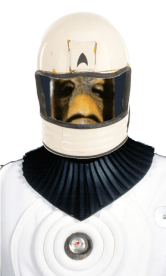

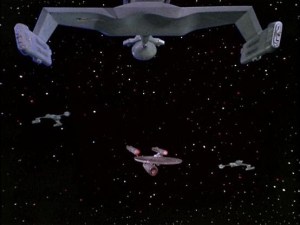 Last week I introduced the first part of my spaceship battle rules, which set the scene and defined the terms, so to speak. Today, we finish them up with the actual combat rules.
 When the Klingons and Romulans get squirrelly, it’s time to send in the USS Enterprise, phasers a-blazing to send those jokers back across their respective neutral zones. To handle a situation like this in my Star Trek campaign, I needed some spaceship battle rules, and I wanted a set of rules that would be quick and easy. Since I write lots of games these days, I figured I might as well write them myself, with a little inspiration from Starfleet Battles and the Star Trek RPG I’m using for the campaign.
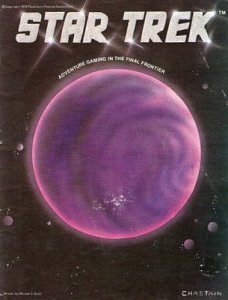 If I’m going to have a Star Trek campaign, I need some Star Trek rules. Fortunately for me, I discovered a pretty groovy set of rules a few months ago … in fact – the very first set of Star Trek RPG rules, Star Trek – Adventure Gaming in the Final Frontier, by Grenadier in 1978. I reviewed these rules a few posts back (


 If it is in Star Trek, it is in my campaign. Star Trek is the basis of the whole campaign, but it’s not the entirety of the campaign, and in fact, some of it is not technically in the campaign. My campaign would start in 2265, as Kirk and crew are blasting off for adventure. Heck, the PCs might even beat them to a few adventures in my campaign.
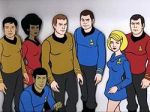 Since the animated adventures shared many key people with Star Trek – and since they’re fun and I love them (and wouldn’t think of running Trek without the Skorr and a 20-ft tall Spock), they’re in My Trek.
 Although there isn’t much material in the planned sequel series to Star Trek that one could use, especially since it would all take place 7 or so years after My Trek starts, the Klingon material from The Kitumba is all valid for my purposes.
 With the “Star Trek feel” in mind, there are some non-Trek works that I think work within the overall scheme. The 1959 TV series Men Into Space, for example, has a very similar feel to Star Trek in terms of its emphasis on exploration, engineering and science. If you haven’t seen it, I urge you to give it a shot.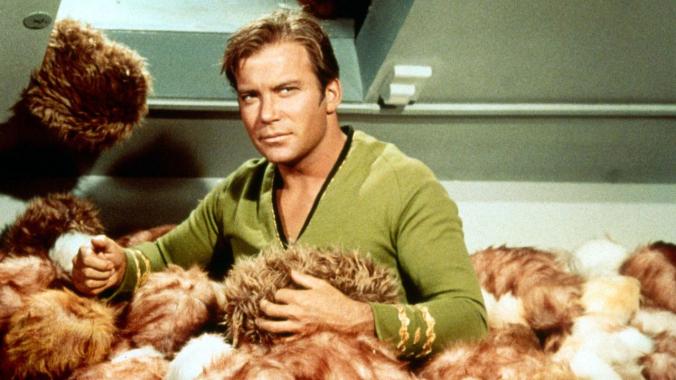
 In the midst of this, I started getting the Star Trek bug, and found a copy of the first Star Trek RPG, which I reviewed on this blog a while back. This got me to designing a Star Trek campaign (hence, My Trek) that I knew I would probably never play, but wanted to do anyways. And here’s where I discovered my potential burnout. I started having so much fun goofing around with Trek, that I just plain stopped working on my writing. I have an issue of NOD that is written, edited and ready to go … and I’ve just let it sit there for a couple weeks. I could publish it today … but I don’t think I feel like it. The writing and publishing, as much as I enjoyed it, was becoming work, and so messing with Star Trek became not just a vacation, but really more like playing hooky. When writing game materials for myself feels like playing hooky for writing game materials for others, you know you’re heading for burnout.
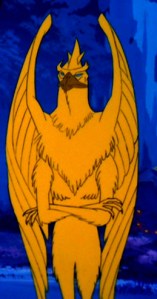 The game is very focused on its mission, which is to simulate Star Trek landing parties – I think it does this pretty well. In fact, you could spin this thing into doing Star Trek dungeon crawls with very little trouble.


 Land of Nod
