Dragging It Out for Drama

I was thinking about disease in 3rd edition D&D, and how it involves losing a few ability score points each day until you either roll two successful saves in a row and recover, receive magical healing, or die.

A mechanic like this could be useful for other effects as well – a dramatic countdown to destruction that forces the character and his or her allies to “find a cure” before time runs out.

Think about undead attacks, for example. Level loss is a great mechanic (I know, some people hate it) because it makes the undead frightening to the player as well as to his or her character. Imagine using almost irreversible constitution loss instead. The idea would be to allow maybe one initial saving throw against the effect. If it fails, the character’s life begins to ebb away. Maybe it would be one point per day, maybe one per hour. Slowly, though, the transformation is taking place. Maybe after two or three lost Con points, it becomes noticeable. When half the Con is gone, the character’s skin looks pale or grey, and their personality begins to change. Clearly, something must be done – a cure must be found! At what point do the other players give up on stopping the transformation and instead make plans to destroy their pal or imprison them somewhere?

Disease can work the same way, especially if there’s an exotic or magical cure for it. Obviously, if there are cure disease spells floating around, there’s little point in doing this, so it probably needs to be something like mummy rot that is not so easy to get rid off.

You could also use this to slowly model a person losing their mind, shifting in alignment, etc. Just pick the most appropriate stat, and let the effects show up slowly – first there will be suspicions (“Grak seems a little more irritable than usual”), then grave concerns (“I tell you, something is terribly wrong with Grak”) and then confirmation (“All the signs are there – Grak is being possessed by a demon!), and then the race is on to cure Grak before he goes full demon.

Key to a thing like this, of course, is the cure. It should be something within reach of the characters, but not easily reached. If you know the victim has ten days left to live, make sure the cure is about seven to eight days away – they can get there, and they have a little leeway, but it will be tough going, and the closer they get, the weaker (or weirder, or more evil) their pal gets, making the final push particularly hard.

Of course, dramatic stuff like this loses its potency (and becomes downright annoying) when it is overused. If the party has to stop what they’re doing and go on a side quest every five minutes because somebody was bitten by a giant rat, they’re not going to be happy. You probably don’t want to do something like this often, and probably don’t want to use the same exact situation more than once. Keep it special and unique – magical or exotic diseases, not every sniffle – keep the spawning undead and lycanthropes rare in the campaign, etc.

Just a random notion – could be useful as a way to make even a dungeon crawl game about more than just XP collection. Monsters and treasures come and go – it’s the dramatic stuff like this that will forge fond memories of a campaign.

Fight Like a Greek Hero … In the Buff!

A while back, I tossed out the idea of modeling variant samurai in Ruins & Ronin by swapping out access to armor in exchange for extra special abilities.

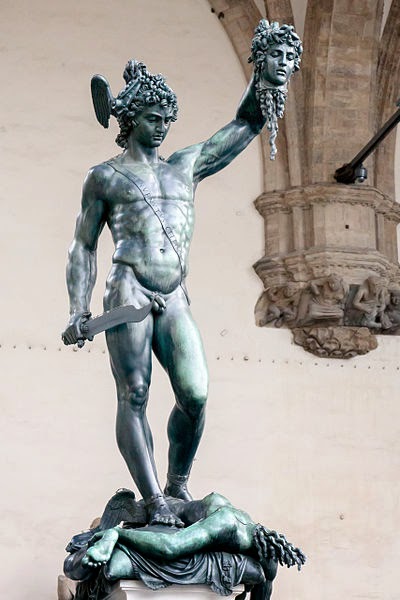
Today, I was looking at some classical art, wherein all the great heroes fight in the buff. Now, you could swap out the fighter’s normal access to armor with the monk’s ability to improve AC by level if you wanted to run a campaign set in classical Greece – in fact, I would suggest it. But what if you wanted to award fighters (and other character classes that normally have access to very good armor) if they want to throw down their metal suits and fight like Hercules?

My idea would be to grant an XP bonus whenever a warrior goes into battle unarmored. You can actually tie the size of the bonus to the amount of armor the warrior forgoes. This can get tricky at lower levels though, when fighters and clerics cannot necessarily afford better armor. You don’t necessarily want to hand the fighters and clerics a big XP bonus over the thieves and magic-users when they’re opting not to use armor they couldn’t get access to anyways.

Maybe the way to do it is this: If a character that normally has access to any armor decides to wear nothing more than leather armor (nonmagical), they get a +10% bonus to earned XP. If they decide to wear nothing more than padded, they get a +15% bonus. If they go around unarmored, but clothed, they get a +20% bonus. If they go virtually naked, they get a +25% bonus to earned XP.

You can reduce these bonuses for characters with more restrictive armor choices; you might decide that thieves who decide to go around virtually naked earn no more than a +10% bonus to earned XP, since they’re really only forgoing a couple points of AC bonus.

Shields don’t figure into this – the classical heroes often fought with shields. If the armor mentioned above is magical, reduce the XP bonus by 5% per magical plus (so wearing +1 leather armor translates into a +5% bonus to XP).

This could be a fun option for players with fighters who want to challenge common sense, and show off a bit in the process. It could also be a way to model the Xena’s and Red Sonja’s running around in less-than-optimal armor.

You might also give fighters with impressive physiques an additional bonus to reaction checks if they walk around virtually naked – i.e. permit them to add their Strength bonus in place of their Charisma bonus to reaction checks.

Bedevil Your Players with NPCs

OMG – Did you hear what the magic-user said about the illusionist?

While city-based adventures can be a nice change of pace in RPG games that spend most of their time in dungeons, I think that cities and towns should usually be safe places for adventurers to visit. After all, of the three setting types in most fantasy games – settlements, wilderness and dungeons – two of those three are supposed to be geared towards killing the players. Settlements should be a place where adventurers can heal, resupply and prepare for the next delve into danger (well, except at night, when the vampires, assassins, chaos cultists and thieves are stalking the streets). Without the chance to recover and build, how are they going to do what the game intends them to do?

That being said, there is no reason why settlements cannot present new and interesting challenges to the players. Challenges is the key word here , not dangers. Challenging NPCs can make a visit more interesting without killing or harming the characters physically.

Here are a few ideas for obstreperous NPC’s to bedevil the player characters …

Obstreperous NPCs

1. The Spy – Always nosing into the adventurer’s business, and selling their secrets to interested parties (i.e. the man in the shadows). Spies can help move an overarching plot that develops slowly, and eventually become a source of adventures.

2. The Gossip – Spreads rumors and gossip around town concerning the adventurers, and not always that accurately. The gossip can tip off rivals* and piss off neutrals and allies, making life more difficult and expensive for the adventurers.

* Rival adventurers, of course – I strongly suggest rolling up one or two rival adventuring parties. They use the same town as their base of operations, and thus bump into the adventurers in the local tavern and compete for hirelings. More importantly, when adventurers are trying to clear out a dungeon, the rivals might get to key rooms first, or even run into the adventurers as a wandering monster.

3. The Buffoon – An idiot who wants to help the party, but his help always turns out to hinder (e.g. Gilligan or Joxer the Mighty). The idiot really does mean well, so non-evil characters may have a hard time getting rid of him.

4. The Braggart – A loud-mouth braggart who challenges the PCs at every turn, but couldn’t possibly handle him- or herself in a duel. Unfortunately, the braggart can make things tough on the PCs if they fight back – perhaps their father is wealthy or powerful.

5. The Nemesis – Counts one or all of the PCs as her enemies, to be crushed, destroyed, demoralized or generally messed with. The reason lies in the past, and may be an event so minor the PCs don’t remember doing it. Naturally, the nemesis does not attack openly, and may even appear as a friend and ally. The nemesis attacks through others, and has friends in high places.

6. The Fanatic – The PCs biggest fan, a person with no life of his or her own who has latched onto the PCs, living vicariously through their adventures. The fanatic brags about them, which can create problems with rivals, and begs for chances to adventure with them. If the fanatic’s illusions are shattered, they will turn quickly against their former idols.

7. The Mixer – Likes to start trouble, especially between the adventurers and their allies or retainers, or within the ranks of the party itself. The mixer is cunning and seemingly harmless and innocent, and almost always poses as a concerned advisor and friend.

8. The Schmuck – The schmuck is genuinely likeable and good … and completely hopeless. They are always in need of money or help because they bit off more than they can chew (gambling debts, a fight with a bully, trouble with the tax man or loyal aristocracy, etc.). No matter how much the adventurers help, the schmuck will always screw it up or require more help.

Think about introducing one or two of these annoyances in your next city adventure, and spend enough time on them to make them worthy of being reoccurring NPCs in your game.

What If Arthur Szyk Illustrated a RPG?

One thing I’ve long wanted to do is to produce different versions of a role playing game – we’ll say Blood & Treasure since that’s my game to play around with – keyed to different artists. The rules would stay largely the same, though it might be fun to introduce a couple optional rules to bring the game closer to a particular artist’s style – i.e. rules that make the Arthur Rackham version of a game slightly different than the Frank Frazetta version of a game.

If I did this with Blood & Treasure, for example, I would create a “basic” B&T – much shorter, simpler, and make the layout serve the art (and be in color!). I think it would be fun to have simple games to play in books that mainly exist to be beautiful. Imagine something about 30 to 40 pages long, with maybe several nice illustrations in color.

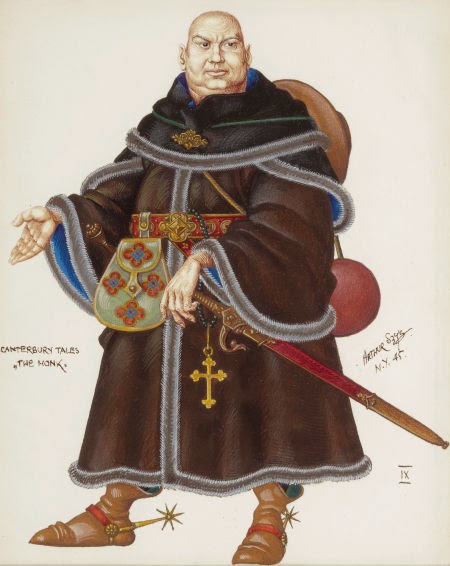
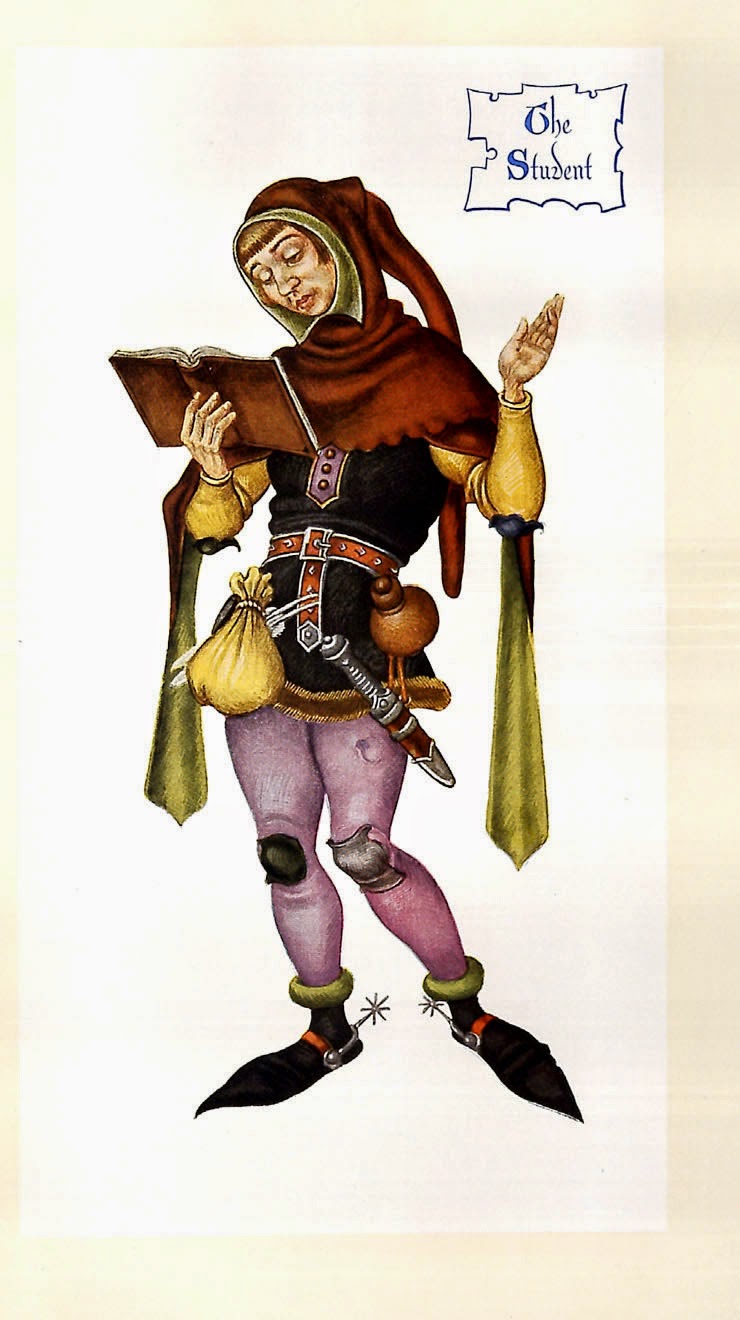
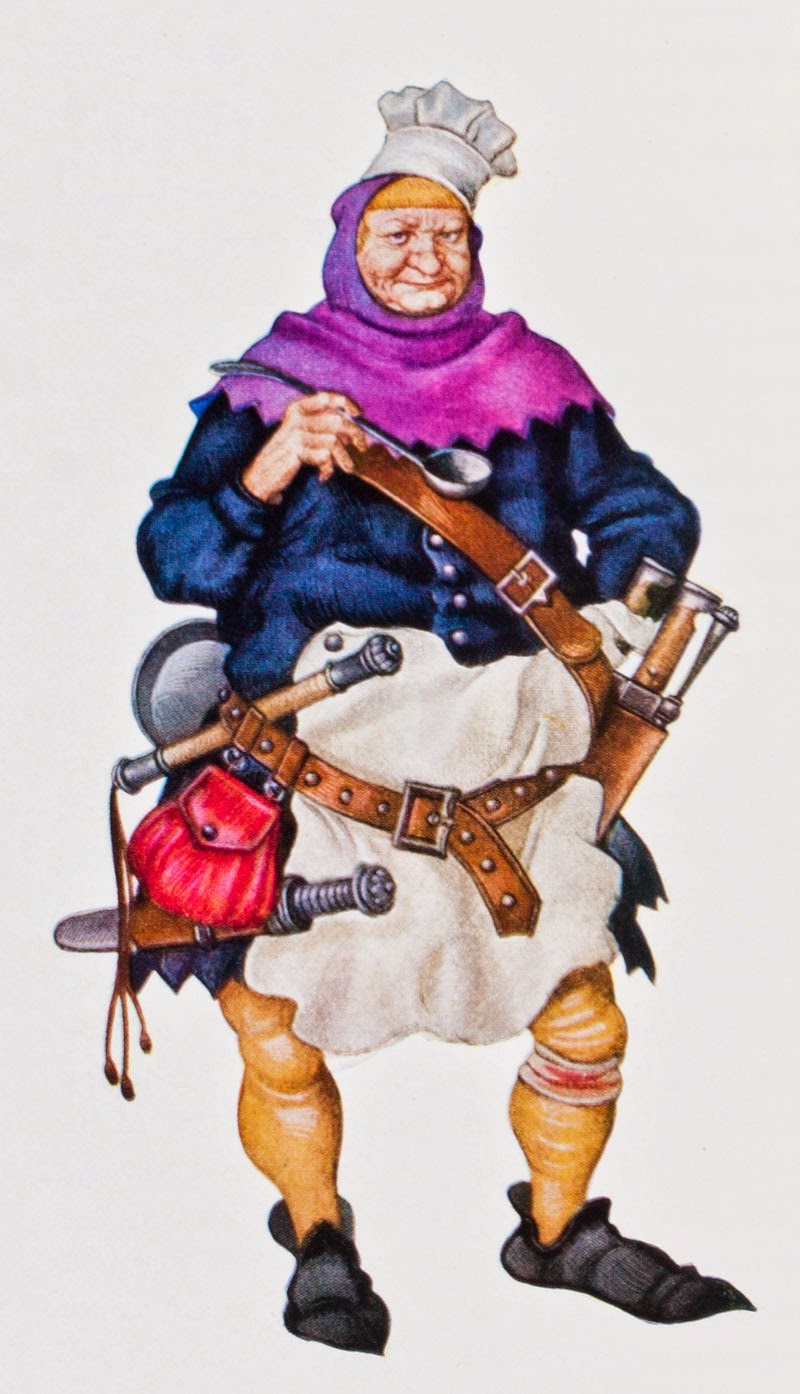
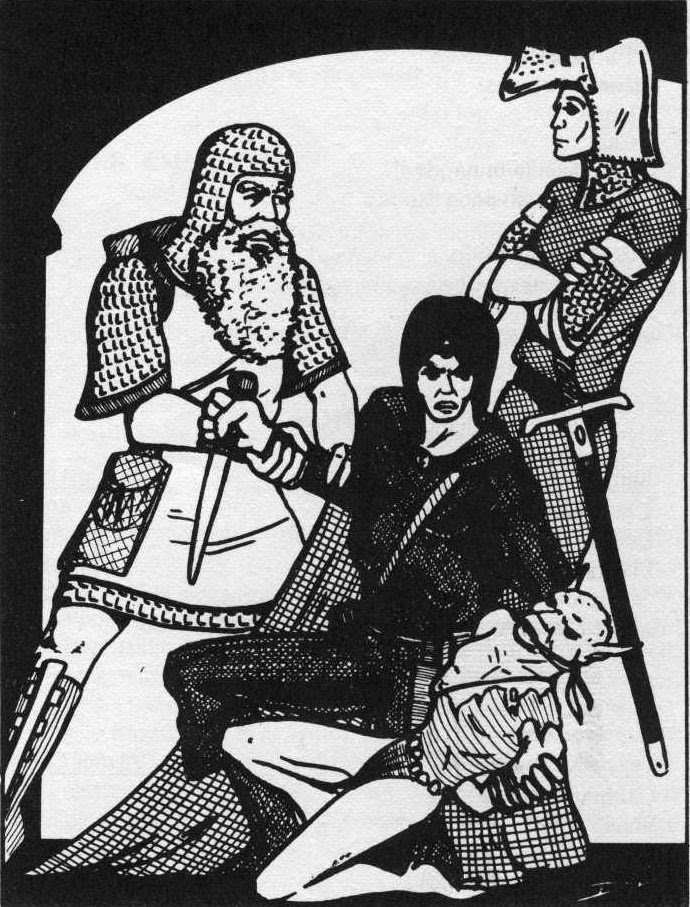
Anyhow – I got to thinking about this again because I was perusing the artwork of Arthur Szyk today. Imagine a game with illustrations like these …

Fighter
Cleric
Magic-User
Thief
(No, I don’t know why the thief would wear a chef’s hat … just work with me here)


This might be something worth doing after I finish the NOD 23, Tome of Monsters, Grit & Vigor and the revision of some older works. Of course, the books would have to work off of stock art by modern artists or works  in the public domain (so no Szyk or Frazetta, unfortunately) to make them financially feasible, but it still might be fun. Maybe the basic version of Blood & Treasure could be called Blood Simple (crap, I think I’m starting to really like this idea …)

Images found at the following sites:

Arthur Szyk, The Alphabet of Illustrators

Lehigh University Special Collections

Power of Babel: Arthur Szyk: The Canterbury Tales

Much Ado About Alignment

Just some stream of consciousness stuff here – me thinking about the over-thinking of alignment.

Alignment is the wrong tool for the job of “defining” a personality, but that doesn’t mean it’s not a useful tool for the game (you know – THE GAME). Let’s review …

Alignment seems to have originated as a way to do fantasy army factions, not unlike English vs. French at Crecy, or Warhammer’s Empire vs. Dwarves (or whatever).

These factions were more than just simple nationality or “race”, though – they did have some basis in values – good guys vs. bad guys, with neutrals joining either side. What were the factions really fighting about? I guess the good guys want a good universe, where there’s some measure of freedom and happiness and justice – good luck defining exactly what that means to a multitude of people, but you sort of get it in your heart. Finn and Jake are Lawful, but that doesn’t mean they spend much time thinking about it or hewing to a master plan of goodliness.

Chaos is the bad guys – they like to dominate and bully and kill because it’s fun (but don’t adventurers have fun killing people and taking their gold? Well, yeah, sort of … but it’s for the greater good, and they only kill bad guys!) So, it doesn’t matter that the Chaotic warlord thinks he’s bringing the blessing of his rule to people who can’t rule themselves – he’s a dick. You know it, I know it, the people he tortures know it.

Okay – so we have two factions, vaguely warring over control of the universe.

Alignment has another dimension though – game balance. Chaotics can use poison and flaming oil and do whatever they want WOOOOO!, but Lawfuls would never stoop to such lowly tactics, right? And neutrals are not low enough to poison people, but flaming oil is badass and super fun, and they don’t mind getting down and dirty like that. That means Chaos should pretty much always win, right? What’s the balancing factor?

Well, go back far enough and you find that you had two brands of clerics – the Lawful clerics and the Chaotic anti-clerics. Anti-clerics cast the reverse of lots of cleric spells, presumably healing spells included. So, it’s just possible that the old intention was that chaotics get to play with poison, but they don’t necessarily get healing.

A lawful cleric (remember, no neutral clerics – they would eventually show up as druids) doesn’t necessarily have to heal anyone if she doesn’t want to – she’s a crusading, fighting-priest – like the armored bishops of old who smashed in the heads of blasphemers and railed against Chaos in sermons and probably withheld their divine favors from folks who didn’t toe the line (or who didn’t come across with a sizable donation for the cause!)

Side note – clerics should be the most awesome class in the game to play, bar none. I think it’s a sorry lack of imagination, grit and gusto that has made them into “walking healing wands”. Cleric players out there – get into some old time religion and make those clerics awesome again.

So imagine the balance – chaotic characters can coat their weapons with poison (save or die!) and stab people in the back and steal from their friends and such, but they may not receive healing, which means they have to be sneaky as hell (pun intended) and might have to put up with tons of shit from the lawful cleric in the party, including giving up a hefty portion of gold in exchange for saving their sorry butts. Neutrals aren’t as bad as that, but they have a bit more freedom to play dirty, and probably have to tithe to the party cleric in exchange for the good stuff. The lawfuls are restricted in their tactics, but enjoy full support from the Lawful church as their reward for playing by the rules.

So, alignment, if reduced to a matter of vague faction and game balance, are probably game enhancers. There’s going to be some guidance in terms of personality, but let’s not worry over that too much. Law and Chaos are extremes, so embrace them. If you want to be complicated, be neutral and pony up some gold when you contract mummy rot – such is the way of the world.

IQ – A Different Way to Allocate Skills and Abilities

Caveat #1 – This isn’t necessarily a post about D&D-style games. I say necessarily, because it could probably be adapted, but it isn’t intended to be a new rule for the old game. It’s actually not intended to be a new rule for any game – just a thought experiment.

Caveat #2 – Since I’m a D&D guy from way back, the language used will probably be cognate with D&D language – old habits die hard.

Caveat #3 – IQ, or “intelligent quotient”, is the term I’m using because one tends to speak about “IQ points”, and this scheme uses points. In truth, I’m using IQ in a way that has little to do with the real thing.

On to the idea …

Characters have ability scores to measure their raw physical (including mental) abilities in a variety of general endeavors. Strength, dexterity and the like. Among these is intelligence.

Raw intelligence might be considered to be one’s ability to figure things out on the fly, and could influence dice rolls concerning that endeavor. It would also, though, form the basis of learning – i.e. skills.

Skill also impacts one’s endeavors, on an individual basis. So, while raw dexterity generally impacts one’s ability to dextrous things (thus a bonus or penalty on a dice roll), skills would apply only to individual endeavors that might be influenced by dexterity, such as moving silently or picking pockets.

How skilled can a person be? Here’s where a points system comes in, and we’ll call these points IQ points. IQ points are allotted over time to any number of endeavors that a character trains in. How many IQ points does a character have? That would be based on raw intelligence. Perhaps, if we used a scheme like D&D, IQ would equal intelligence x 10.

Each possible endeavor a person can become skilled in – from picking locks to fighting with a broadsword to shooting an arrow to programming a computer or casting a magic spell – would be given a level equal to the number of IQ points devoted to it. This level would be cross referenced with a difficulty level when attempting an endeavor to find the chances (on a dice roll) of success. I think the old “turn undead” table would be a pretty good starting place for this, though one would have to play with it a bit to get it quite right.

How does one devote IQ points to endeavors? Practice, practice, practice!

Characters must devote a certain number of hours per day to an endeavor to devote IQ points to that endeavor. Here’s where the system would need quite a bit of thought and fine-tuning applied to it, and honestly more than I shall do here. Remember, this is at this point a notion and a thought experiment, not a fully-formed system.

We might suggest something like this – each hour of practice per day gives a person a 1 in 6 chance of achieving a higher level in that something, up to a maximum of a 5 in 6 chance, at the end of the week. Beyond level 5, this becomes a chance in 8. Beyond level 10, a chance in 10. Beyond level 15, a chance in 20. If a person manages to achieve a higher level, they allot a point of IQ to that endeavor and record their higher level on their character sheet.

Example: Sir Boris devotes five hours of practice per day to fighting with longsword and shield. He has 50 IQ points total. At the end of the week, he has a 5 in 6 chance of achieving “level 1” in fighting with longsword and shield. If he succeeds on his roll (which is likely), he achieves level 1, and allots 1 IQ point to “longsword and shield”, leaving him 49 IQ points to devote to other endeavors or to improving at “longsword and shield”.

Of course, experience is the best teacher. Anytime a character attempting an endeavor during an adventure – i.e. fighting with longsword and shield against a hobgoblin rather than just training against another pupil or his teacher – he has a chance to increase his level. After the fight (or attempt or whatever), if the character was successful, he or she has a 1 in 10 chance of increasing their level right there on the spot. If they were not successful (but are still alive), they have a 1 in 100 chance of increasing their level. One might also rule that the task being attempted must be equal in or greater in difficulty than the character’s present level of skill in order to have a chance to increase their skill – thus master’s at fighting cannot easily improve their skill at fighting by picking fights with those who are less skilled – no challenge, no improvement!

By devoting hours of study, one can spend their IQ on a given endeavor and achieve a certain level (with a maximum level as well) that must then be maintained by devoting a lesser amount of time per day or week to maintenance. If we divide the levels of mastery into broad bands, say something like the following …

1-5 levels = Novice

6-10 levels = Veteran

11-15 levels = Expert

16-20 levels = Master

… we can thus assign different training requirements to maintain one’s level of skill. We could say to maintain novice level, one must devote at least one hour per week to training. To maintain veteran level, one must devote at least three hours per week to training. To maintain expert level, one must devote at least one hour per day to training. To maintain master level, one must devote at least two hours per day to training. “Devoting hours” means studying, training, practicing, etc. Since one’s time is limited, the ability to maintain numerous skills at a high level is also limited.

Example: Sir Boris above has one level in “longsword and shield”. To maintain that level, he must devote one hour per week to training with longsword and shield. He can devote addition training time to attempt to increase his level with longsword and shield, but one hour of training will always be devoted to nothing beyond maintaining his current level.

When one does not practice as they should, they lose one level in that endeavor, and thus free up an IQ point. They might re-train themselves in that same endeavor and regain the lost level, or they might decide to devote their training to something else. A wizard who used to think illusions were the way to go might let his practice with illusions lapse, and instead devote his time and training to conjuration.

And thus the system. One gets better at things by training and actual experience “under fire”, but is limited by their overall intelligence (i.e. ability to learn) and the amount of time they have to maintain their skills. One would have to work out the details to make sure the system functions properly, but it could provide a very “organic” way of building living, breathing characters that change over time. Introduce training costs (which might vary from one endeavor to another), and characters have a reason to go out into the world in search of gold.

Adventurers Face Death, Yes, But Also Taxes

Image found HERE – Click through for more info on medieval taxes

We all know the formula. Start in town, buy equipment, journey into the unknown, hopefully find lots of money, come back to town, buy more and better equipment (and maybe healing), rinse and repeat.

I have found that in practice, there are three ways this can go. The first, of course, is perfectly. More often, adventurers either come back without enough to support themselves in the hyper-inflationary economy they’re all creating in town, or they come back with more dough than they can spend (assuming they’re like mine and stubbornly refuse to hire men-at-arms).

It seems like the latter might have been more of a problem than the former in the old days. In AD&D, Gygax introduced “training costs” to, as I understand, siphon money away from successful mid- to high-level adventurers.

Another option is the bane of man’s existence from the earliest days of civilization … The Taxman!

Folks who regularly read the blog will know I was recently delving into the pages of Adam Smith’s Wealth of Nations. He does a long chapter on taxes, and as I was reading about the myriad forms of taxation that existed in the 18th century, it occurred to me that a random taxation table could be fun, with adventurers never sure just how the local prince was going to steal their money.

The idea here, of course, is not to make life needlessly difficult for adventurers. If they’re relatively poor, the taxes will be relatively light, and an inability to pay them will result in being impressed into doing work for the sovereign, which can be used as a way to introduce new adventures and even entire campaigns (Robin Hood, anyone?). Adventurers tend to be outsiders and ne’er-do-wells anyways (why else are they delving in dungeons instead of holding down respectable jobs?), so another reason to bristle at authority should help to keep them on the adventuring path.

To get this rolling, we need to determine how heavy the taxation is in the locality, who is collecting it, and what the actual taxes are.

HOW HEAVY ARE THE TAXES?

Different kingdoms/city-states/whatever have different expenses, and folks who spend tax money tend to overspend rather than underspend.

Each community will impose 1d4+1 taxes (see below) on adventurers.

THE TAXMAN

The tax collector is usually a normal human, but might also be a captain (5 HD) or an aristocrat (3 HD). In rare cases (1%) he is a fighter or thief of 4th to 7th level.

The tax collector is not a popular fellow, so he is always accompanied by 1d6+4 men-at-arms (light infantry usually).

Not all tax collectors are created equally, of course, so we will differ them by their alignments. Roll as follows:

LAW vs. CHAOS (D6)

1-2. Lawful = Cannot be bribed or frightened easily from his appointed duties

3-4. Neutral = Can be bribed (Charisma check, -2 penalty) with an amount of money equal to half the taxes owed; can be frightened, but will return with triple the number of men-at-arms

5-6. Chaotic = Can be bribed (Charisma check) as above, but there is a 1 in 6 chance he will return later and pretend no taxes were ever collected; can be frightened, but will hire 1d6 assassins or thieves to get revenge.

GOOD vs. EVIL (D6)

Note, if you use the three-fold alignment system, consider Good to be implicit in Law above and Evil to be implicit in Chaos above.

1-2. Good = Is willing to fudge the tax bill down a bit (maybe 10%) if people look hard on their luck.

3-4. Neutral =No special behavior.

5-6. Evil = Will overestimate taxes by at least 10% if one is not very careful.

Where’s the Taxman?

The taxman is usually stationed at the front gate of a stronghold, village, town or city, but may be encountered as a random encounter outside of town, but rarely in the wilderness.

THE TAXES

1. Tax on coins: A tax of 1d4 x 5% on all coinage carried is assessed.

2. Tax on cargo: A tax of 1d6 cp is assessed for every 20 pounds of goods, above and beyond one’s own clothing, they carry into the settlement. If the goods are “valuable”, this is increased to 1d6 cp per pound.

3. Tax on arrows and bolts (and quarrels): The arrow tax is 1d6 cp per arrow, bolt or quarrel. There is a 1 in 6 chance they will also assess a 1d6 cp tax per foot length of bows and crossbows. This protects the local bowyers and fletchers.

4. Tax on iron and steel: A surtax of 1d6 cp is assessed for every pound of objects composed mostly of iron or steel. This protects the local iron industry.

5. Tax on copper: A surtax of 1d4 cp per pound of copper (including coins), bronze and brass carried into the settlement.

6. Tax on silver: A surtax of 1d4 sp per pound of silver (including coins) and electrum carried into the settlement.

7. Tax on gold: A surtax of 1d4 gp per pound of gold (including coins) and platinum carried into the settlement.

8. Tax on gemstones: A tax of 1d4 x 5% of the value of gemstones carried into the town; those who cannot pay have their stones confiscated until they can pay, but must pay an additional 10% fee for failure to pay and for storage.

9. Tax on magic items: Obviously, this requires the presence of a person in the tax collector’s retinue who can cast detect magic, or obviously magical items. A premium of 10 gp per item is collected, and items of a demonic or diabolic nature will be confiscated by local church authorities, with 10% of the item’s value (determined by the church authorities) to be paid to the original owners, unless they are determined to be Chaotic (Evil), in which case they are clapped in irons and sent straight to the dungeon.

10. Tax on magic-users: Those who appear to be magic-users (the spellbook is a dead giveaway) must spend 1d6 nights patrolling with the night watch, or else must buy out of this duty at a rate of 1d10 sp per night.

11. Tax on holy symbols: Foreign holy symbols are assessed a blasphemy tax of 10 sp (wooden or stone or common metal holy symbols) or 10 gp (precious metal holy symbols). Each healing spell cast in court on behalf of the king/mayor/prince/etc. is the equivalent of 5 sp of the assessed tax.

12. Tax on strength: Settlements always have hard work that needs doing on civic projects. Characters who look sturdy (i.e. Strength of 10 or higher) are impressed into a work gang for 1d6 days, or else must buy out of this duty at a rate of 1d10 cp per day for able-bodied folk, 1d10 sp per day for muscular folk (i.e. Strength of 13-15), and 1d10 gp per day for the truly mighty (i.e. Strength of 16+). If a creature does not look as strong as he or she is, use your best judgment as  TK as to whether this applies to them.

13. Tax on beauty: The local ruler has an eye for beauty; those with Charisma scores of 13 or higher are tasked with attending court in their finery (or finery will be provided) for 1d6 days while in the settlement to impress visitors, or else must buy out of this duty at a rate of 1d10 sp per day.

14. Tax on feet: A tax of 1 cp per unshod foot/hoof, 1 sp per sandaled or shoed foot or shoed hoof or 1 gp per booted foot is assessed. If your game includes centipede men, they’re going to hate this!

15. Tax on wheels: A tax of 1d6 sp per wheel is assessed.

16. Tax on beards: The locals have had trouble with dwarves, and so they assess a tax of 1 gp per inch of beard length on all (not just dwarves) who enter town. If you don’t know how long a character’s beard is, guess or roll randomly. If the dwarf’s player has ever mentioned looking like “the dudes from ZZ Top”, he’s going to regret it.

17. Tax on warriors: The locals need strong warriors to deal with the humanoids and monsters of the wilderness. Anyone who looks the part of a warrior (leather armor or more) is impressed into patrol duty for 1d6 days, or else must buy out of this duty at a rate of 1d10 sp per day.

18. Tax on finery: Jewelry, silks, mithral, adamantine, cloth-of-gold and the like are assessed a tax equal to 1d4 x 5% of their value.

19. Tax on hides and pelts: Hides and pelts are assessed a tax of 1d10 sp for animal skins, 1d10 gp for magical beast skins (and similar) and 1d10 pp for dragon skins. If the tax cannot be paid, the hides are confiscated into the treasury of the settlement or king.

20. Tax on retinues: In order to support the local labor market, a tax of 1 sp per hireling or man-at-arms is assessed.

You’ll note that there is no tax on thieves’ tools – that’s because they’ll probably just arrest a person who has them or toss them out of town.

If taxes cannot be paid, the offenders are either barred entry to the settlement and its environs (i.e. sent back into the wilderness under armed guard) and threatened with being declared outlaws if they again return without their assessed taxes, or is taken into custody until they can work their bill off (i.e. a great adventure hook!).

The Greyhawk Tomb of Horrors Company – A Campaign Notion

I’m still reading Adam Smith’s Wealth of Nations (it’s not a small book), and I’m now reading about the various merchant companies that held monopolies to trade with various colonies of the U.K. This got me thinking about using a similar concept in fantasy rpg’s.

In this case, you would have countries or city-states establish control over a mega-dungeon and the immediate region around it. This actually makes some sense, when you consider the incredible wealth (monetary and magical) held in a mega-dungeon. For a fun campaign, you would probably want to establish multiple mega-dungeons in a campaign world, with different countries controlling them.

Each of these mega-dungeons has a different adventurer company that holds a monopoly on its exploration and exploitation, with a percentage of all proceeds going to the government that gave it the charter. The adventurer company might be a joint stock company, in which different NPC’s (wealthy merchants, sinister types, aristocrats, and the adventurers themselves) hold stock, with an annual dividend based on how well the adventurers have done in their explorations. The adventurer company could have multiple adventurers in it, of varying levels – so players could have multiple adventurers, bringing new ones in at times as old adventurers die off or rise to higher levels and need apprentices and squires.

Moreover, as the adventurers hit the name levels, the strongholds they establish could be in the region of the mega-dungeon, as a means for the company to control the area. Of course, rival nations would want to wrest control of the dungeon away from the company and its country, so now wargaming can enter into the campaign. The adventurers might also get involved in conquering other mega-dungeons, and even establishing their own companies to exploit them.

As adventurers become more wealthy, they can attempt to buy more shares in the company, maybe rising the level of directors and having to engage in all the intrigue that surrounds big money and royal courts.

I imagine this could make for a fun framework for running a campaign.

Human and Humanoid Armies, the Adam Smith Way

I have of late been reading Adam Smith’s Wealth of Nations. It’s a great book, and very enlightening, not only for his insights into the operation of economics, but also for his asides regarding the evils of slavery, the American revolution and, in a latter chapter, his investigations into war.

Specifically, his investigations into the costs of maintaining an army in times of war and peace. He doesn’t get too deep into the weeds, of course, but reading Book V: Chapter I: Part I reminded me a bit of reading the demographics that Gygax inserts, piecemeal, into the Monster Manual and elsewhere in the AD&D canon.

The chapter in question regards the costs to a sovereign in maintaining an army. It gives some ideas on different phases of human development, and their effect on manpower and expense.

Smith divides human development into three categories, with the earliest being hunters, the second shepherds and the third farmers and craftsmen. In Gygaxian, D&D terms, we could think of the humanoids (orcs, goblins, etc.) and human tribesmen as hunters, the human nomads and dervishes as shepherds, and the settled humans and demi-humans as the farmers, husbandmen and craftsmen.

I found the following paragraphs interesting:

“Among nations of hunters, the lowest and rudest state of society, such as we find it among the native tribes of North America, every man is a warrior, as well as a hunter. When he goes to war, either to defend his society, or to revenge the injuries which have been done to it by other societies, he maintains himself by his own labour, in the same manner as when he lives at home.”

“An army of hunters can seldom exceed two or three hundred men. The precarious subsistence which the chace affords, could seldom allow a greater number to keep together for any considerable time.”

In other words, most humanoid encounters are going to be with warriors and their wives and children. To put it another way, the wild folks you encounter in the wilderness in D&D are all warriors. He would also place the size of these tribes at a maximum of 300 warriors.

“Among nations of shepherds, a more advanced state of society, such as we find it among the Tartars and Arabs, every man is, in the same manner, a warrior. Such nations have commonly no fixed habitation, but live either in tents, or in a sort of covered waggons, which are easily transported from place to place. The whole tribe, or nation, changes its situation according to the different seasons of the year, as well as according to other accidents. When its herds and flocks have consumed the forage of one part of the country, it removes to another, and from that to a third. In the dry season, it comes down to the banks of the rivers; in the wet season, it retires to the upper country. When such a nation goes to war, the warriors will not trust their herds and flocks to the feeble defence of their old men, their women and children; and their old men, their women and children, will not be left behind without defence, and without subsistence. The whole nation, besides, being accustomed to a wandering life, even in time of peace, easily takes the field in time of war. Whether it marches as an army, or moves about as a company of herdsmen, the way of life is nearly the same, though the object proposed by it be very different. They all go to war together, therefore, and everyone does as well as he can. Among the Tartars, even the women have been frequently known to engage in battle. If they conquer, whatever belongs to the hostile tribe is the recompence of the victory; but if they are vanquished, all is lost; and not only their herds and flocks, but their women and children become the booty of the conqueror. Even the greater part of those who survive the action are obliged to submit to him for the sake of immediate subsistence. The rest are commonly dissipated and dispersed in the desert.

The ordinary life, the ordinary exercise of a Tartar or Arab, prepares him sufficiently for war. Running, wrestling, cudgel-playing, throwing the javelin, drawing the bow, etc. are the common pastimes of those who live in the open air, and are all of them the images of war. When a Tartar or Arab actually goes to war, he is maintained by his own herds and flocks, which he carries with him, in the same manner as in peace. His chief or sovereign (for those nations have all chiefs or sovereigns) is at no sort of expense in preparing him for the field; and when he is in it, the chance of plunder is the only pay which he either expects or requires.”

“An army of shepherds, on the contrary, may sometimes amount to two or three hundred thousand. As long as nothing stops their progress, as long as they can go on from one district, of which they have consumed the forage, to another, which is yet entire; there seems to be scarce any limit to the number who can march on together.”

In D&D terms, this applies to nomads and dervishes, and maybe those barbarian tribes a high level barbarian can summon. Smith would again make warriors of all the men in the tribe, and a even a few women.

“Agriculture, even in its rudest and lowest state, supposes a settlement, some sort of fixed habitation, which cannot be abandoned without great loss. When a nation of mere husbandmen, therefore, goes to war, the whole people cannot take the field together. The old men, the women and children, at least, must remain at home, to take care of the habitation. All the men of the military age, however, may take the field, and in small nations of this kind, have frequently done so. In every nation, the men of the military age are supposed to amount to about a fourth or a fifth part of the whole body of the people.”

So now we’ve reached settlements, and we find that their men-at-arms number about 20% to 25% of the population. An encounter with 500 nomads might include 250 warriors (assuming about 50% male/50% female), while you would need a settlement of 1,000 people to muster up 250 men-at-arms.

“The number of those who can go to war, in proportion to the whole number of the people, is necessarily much smaller in a civilized than in a rude state of society. In a civilized society, as the soldiers are maintained altogether by the labour of those who are not soldiers, the number of the former can never exceed what the latter can maintain, over and above maintaining, in a manner suitable to their respective stations, both themselves and the other officers of government and law, whom they are obliged to maintain. In the little agrarian states of ancient Greece, a fourth or a fifth part of the whole body of the people considered the themselves as soldiers, and would sometimes, it is said, take the field. Among the civilized nations of modern Europe, it is commonly computed, that not more than the one hundredth part of the inhabitants of any country can be employed as soldiers, without ruin to the country which pays the expense of their service.”

This now creates a distinction between the ancient civilizations and the modern (i.e. 18th century) – the ancient putting about 20% of the population in the field to fight, the 18th century about 1% of the population.

“A shepherd has a great deal of leisure; a husbandman, in the rude state of husbandry, has some; an artificer or manufacturer has none at all. The first may, without any loss, employ a great deal of his time in martial exercises; the second may employ some part of it; but the last cannot employ a single hour in them without some loss, and his attention to his own interest naturally leads him to neglect them altogether. Those improvements in husbandry, too, which the progress of arts and manufactures necessarily introduces, leave the husbandman as little leisure as the artificer. Military exercises come to be as much neglected by the inhabitants of the country as by those of the town, and the great body of the people becomes altogether unwarlike. That wealth, at the same time, which always follows the improvements of agriculture and manufactures, and which, in reality, is no more than the accumulated produce of those improvements, provokes the invasion of all their neighbours. An industrious, and, upon that account, a wealthy nation, is of all nations the most likely to be attacked; and unless the state takes some new measure for the public defence, the natural habits of the people render them altogether incapable of defending themselves.”

Here we see a justification for 1 HD nomads and humanoids versus 0-level humans. The humans are mostly farmers and craftsmen, and don’t have much time for training. Maybe we could say 1d8 hit points of nomads and hunters, 1d6 for farmers and 1d4 for city folk would be about right.

“In these circumstances, there seem to be but two methods by which the state can make any tolerable provision for the public defence.

It may either, first, by means of a very rigorous police, and in spite of the whole bent of the interest, genius, and inclinations of the people, enforce the practice of military exercises, and oblige either all the citizens of the military age, or a certain number of them, to join in some measure the trade of a soldier to whatever other trade or profession they may happen to carry on.

Or, secondly, by maintaining and employing a certain number of citizens in the constant practice of military exercises, it may render the trade of a soldier a particular trade, separate and distinct from all others.

If the state has recourse to the first of those two expedients, its military force is said to consist in a militia; if to the second, it is said to consist in a standing army. The practice of military exercises is the sole or principal occupation of the soldiers of a standing army, and the maintenance or pay which the state affords them is the principal and ordinary fund of their subsistence. The practice of military exercises is only the occasional occupation of the soldiers of a militia, and they derive the principal and ordinary fund of their subsistence from some other occupation. In a militia, the character of the labourer, artificer, or tradesman, predominates over that of the soldier; in a standing army, that of the soldier predominates over every other character; and in this distinction seems to consist the essential difference between those two different species of military force.”

The distinction between militia and standing army is interesting. In D&D terms, the militia are the 0-level humans and the soldiers are the 1 HD men-at-arms, with perhaps a few of the better of the men-at-arms being capable of becoming 1st level fighters.

So – read your Adam Smith, and everything else you can find – for you never know where you’ll glean something useful for your hobby.

Over In a Nonce – Deadly Dueling

I’ve done a similar combat system to this one in the past, so consider this a revision or just forget the last one.

Once again, I’m thinking in terms of a deadly combat system, more realistic perhaps than the traditional hit points/armor class system, and potentially over quickly.

The system is written for Blood & Treasure, but should be easy to adapt. It assumes you are using the combat advantage system in Blood & Treasure. It works as follows:

A. Each character makes an attack roll, add half armor class bonus from natural armor or worn or carried armor (i.e. shields) to this roll

B. Compare the attack rolls – high roll wins the combat round

B1. If a combatant rolls a natural ’20’, their opponent is either killed or, if they are merciful, knocked unconscious or left prone and disarmed (and dishonored)

B2. If a combatant rolls a natural ‘1’, they suffer a catastrophe – roll 1d6

1. Disarmed (must draw another weapon or fight unarmed)
2. Trip or slip (fall prone, Reflex save or lose weapon as well)
3. Backed into corner (opponent gets an advantage, as you cannot maneuver)
4. Face cut (blood in your eyes, opponent gets an advantage)
5. Hand cut (must fight with other hand, giving opponent an advantage unless you are ambidextrous)
6. Roll again (or if anyone has another good idea for a catastrophe, let me know!)

B3. The loser must pass a Fortitude saving throw or is fatigued, suffering the normal penalty to attack rolls, but also extending their fumble range by 1 (i.e. from 1 on 1d20 to 1-2 on 1d20, etc.) A combatant with armor must take a penalty on this save equal to half their armor class bonus.

B4. The winner need only make a Fortitude save vs. fatigue in even rounds of combat. Each round that they win, they increase their critical threat range by 1 (i.e. from 20 on 1d20 to 19-20 on 1d20, etc.)

C. Keep rolling combat rounds until somebody is dead (or unconscious) or surrenders

Multiple Opponents – the outnumbered foe has to roll against each attacker, all of whom derive a combat advantage from the situation, and might have to make multiple saves against fatigue. Only the attacker’s first attack roll counts against a chosen opponent in terms of causing fatigue or death. Unlike with normal rules, heroes sallying forth against multiple foes are probably doomed unless they well out-level them.

Multiple Attacks – Monsters or characters with multiple attacks make those attacks as normal, with each defender making their own attack roll against them, or a defender making multiple rolls against them; as above, only the character’s first attack roll counts towards causing fatigue or death.

Missile Combat – This system doesn’t work for missile weapons, but consider this idea: Make attack rolls against AC as normal. Roll the hit location (you can devise your own table) with that body part being made useless unless the struck character passes a Reflex save. Obviously, hit locations like head, throat or heart would carry with them instant death.

Other Sources of Hit Point Damage: To get rid of hit points, you’d need to deal with things like fire breath or falls. If you like things to be super dangerous, you could always go save or die – or perhaps save vs. being crippled, severely burned (you’d have to determine just what that entails), frostbitten, etc. with a roll of “1” indicating that the attack killed you outright.

Impact of System

A system like this opens some interesting possibilities. High level characters are still hard to kill, but maybe not as hard as before – even a first level character can get lucky against a high level character with a system like this in a way that is essentially impossible using traditional combat. Likewise, first level characters are going to have a tough time surviving, but might actually last many more rounds than they would using the traditional system.

If you try this system out, let me know how it worked.