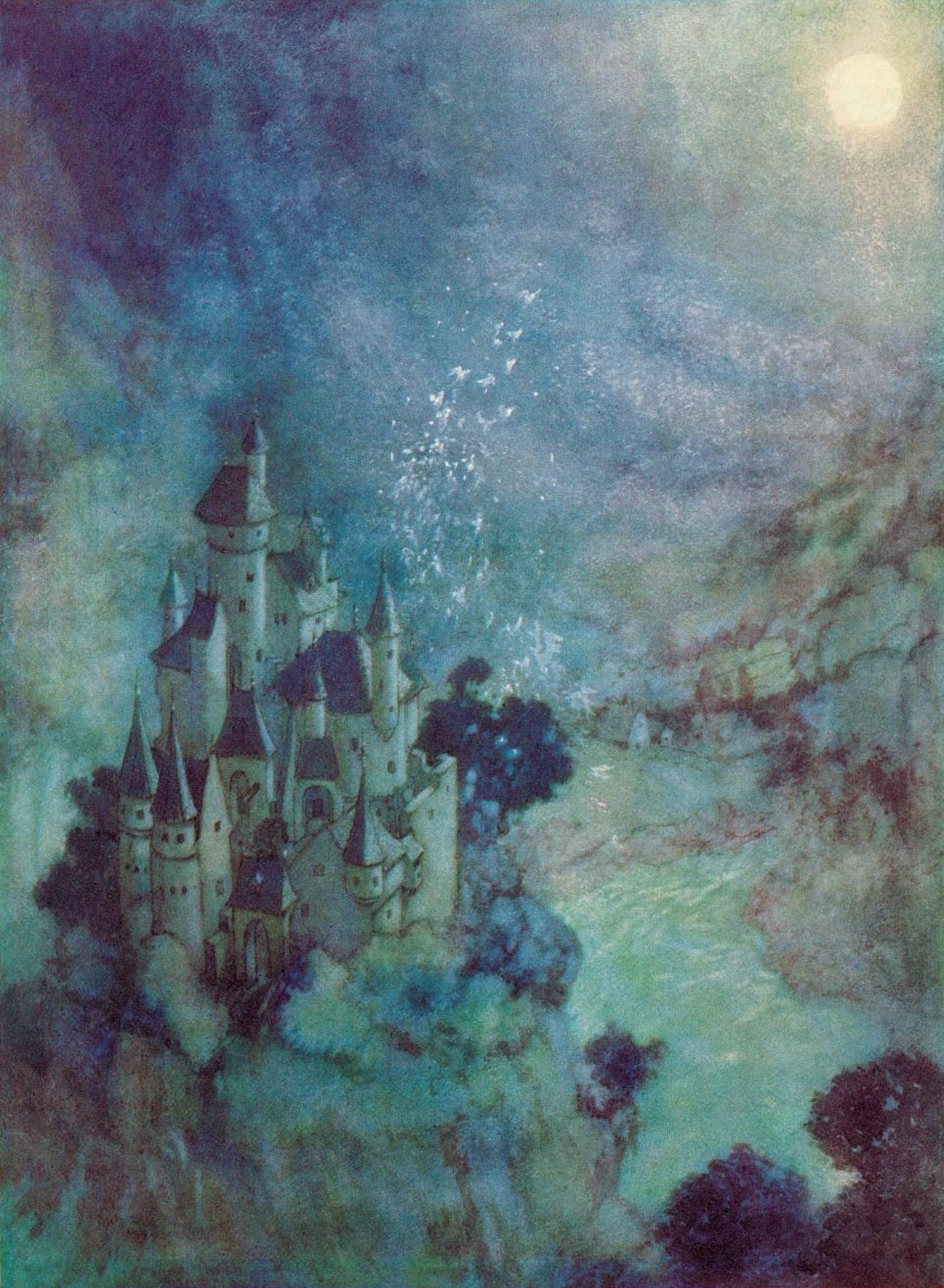
Venatia – Lonely Pine, Hobgoblin Blood and the White Wolves

Still moving ahead with Western Venatia and NOD #6.

0518. A large village occupies the southern shore of Lake Krusk. The village is collection of longhouses constructed of stone taken from the surrounding cliffs, which happen to be made of travertine. Despite the simplicity of the occupants, each house is worth a good sum if one were able to carry the stone away through the winding, evil valleys of the Klarkash Mts to a lowland market.

The people of the village, Zamat-on-Krusk, are humans, but with more than a little hobgoblin blood flowing through their veins. They have orange-red skin, protruding jaws and stiff, black hair with the consistency of straw. Born mostly of slave-stock, they are fiercely independent folk and prone to react violently to provocation.

While the main industry of Zamat-on-Krusk is fishing and the production of fish oil (the Zamati know a process of distilling the fish oil to produce a pungent sort of naphtha), it is also a trading town, receiving goods from amoral merchants that with to trade with the goblin-folk of the mountains and serving armies of orcs, goblins and human bandits on the march.

Zamat-on-Krusk has a 30-ft tall wall and a standing army of 50 men-at-arms, half armed with crossbows and axes and the other half with pole arms. The villagers do most of their fishing with a legendary breed of giant fishing eagles. Some of these eagles are trained as war beasts – they do not carry warriors, but instead harry besiegers from the air. The village supports three large road houses located outside the village walls. These roadhouses cater to travelers – mostly bandits, hobgoblins, goblins and orcs.

Zamat-on-Krusk is governed by a council of chiefs, the population being divided into multiple close-knit clans headed by hereditary chieftains. The chieftains rarely convene – usually only in times of war or other severe crises, and when they do their first order of business is usually a series of violent challenges to determine who shall serve as head of the council and de facto ruler.

0609. Atop a hillock there is a lone pine tree that sings melancholy dirges heard up to 9 miles away. Anyone foolish enough to harm the tree is immediately set upon by a pack of four hounds of Yith.

| Hound of Yith: HD 3; AC 1 [18]; Atl 1 bite (1d6+1); Move 18 (F25); Save 14; CL/XP 7/600; Special: Baying (cause fear 100-ft), harmed only by magic/silver weapons, fly, magic resistance 10%,

If the vandals survive, they are attacked for twelve more nights by more hounds, with the pack expanding by one hound each night. On the thirteenth night, they will face Arawn, a death god.

| Arawn: HD 20 (137 hp); AC -5 [24]; Atk 2 club strokes (1d6+5); Move 15 (F15); Save 2; CL/XP 28/6800; Special: Cast spells as 20th level druid, death spell 1/rd (as black ray from eyes), immune to damage dealing spells and magic weapons, magic resistance 50%. Looks like a pale man in a black cloak and sable tunic wielding a large +3 club.

The ground around the tree is littered with copper coins, some several centuries old. Adventurers can take the coins without fear of reprisal, finding 20-80 with each hour of searching until a total of 4,000 have been recovered.

[Because hey – what kind of jerk beats up a tree suffering from depression?]

0613. The White Wolves are a small hobgoblin tribe that dwells in a cave lair. They keep six carnivorous apes and 50 goblin slaves. The White Wolf clan consists of 200 warriors. The warriors wear chainmail and wield short swords and throwing axes, with half of the tribe also carrying pole arms and the other half short bows. The goblin slaves can be equipped with spears and clubs in a pinch.

Each platoon of ten hobgoblins is commanded by a sergeant-at-arms (2 HD) with chainmail, polearm and longsword. The White Wolves are led by Grishna the Flayer. He is an old, large, gnarled hobgoblin covered in decades of scar tissue. Grishna is a canny tactician who has held his own in many campaigns against the knights of Pfeife, Blackpoort and Guelph.

Grishna is assisted by a wizened old female hobgoblin shaman called Fruze. Fruze has been around even longer than Grishnak and bears a special hatred for the Pfeifers that wiped out her old clan, the Dragon’s Tongue hobgoblins.

Treasure: 270 cp, 270 sp and 250 gp locked in an iron chest that is kept beneath a boulder in Grishna’s chamber.

| Grishna, Hobgoblin Fighter Lvl 6: HP 27; AC 0 [19]; Save 9 (7 vs. disease); CL/XP 6/400. Heavy flail, dagger, +1 platemail.

| Fruze, Hobgoblin Adept Lvl 2: HP 7; AC 8 [11]; Save 14; CL/XP 3/60; Special: Adept spells (1st), guide. Staff, fetishes.

0711. The Goblin Tower abuts the Klarkash Mountains. Built ages ago by a dwarf lord, it has since fallen to a strange cult of goblins that worship the Gnawer at the Root. The cultists’ leader is Grinkle, an exceptional goblin shaman who uses his powers to snatch away children from all over the world, putting them to work mining beneath the tower to eventually open the tomb of the Gnawer, a creature said to combine the powers of an ancient black dragon and type IV demon.

| Grinkle, Goblin Adept Lvl 10: HP 38; AC 8 [11]; Save 6; CL/XP 11/1700; Special: Adept spells (3rd), sage. Owns a crystal ball through which he snatches disobedient children.

0804. This wide plateau is littered with the remains of a terrible battle. One can pick out dozens of skulls and skeletons of humans and hobgoblins and rusty weapons and armor that look to be a hundred years old. One side of the field contains a ruined catapult, its arm splintered. At the other there is a massive boulder from under which stick to legs still encased in armor.

The armor is +2 platemail that remains in perfect condition (if it can extracted from the boulder). The old inhabitant of the armor, a Sir Goresby, now possesses the armor. Those who wear the armor must succeed at a saving throw to avoid charging goblins and hobgoblins on sight and to avoid feeling animosity towards elves and half-elves.

At night, the skeletal warriors rise and engage in mock battle. Intruders find themselves attacked by twenty skeletons for every adventurer present. Unlike normal skeletons, they age those they hit by 1 year.

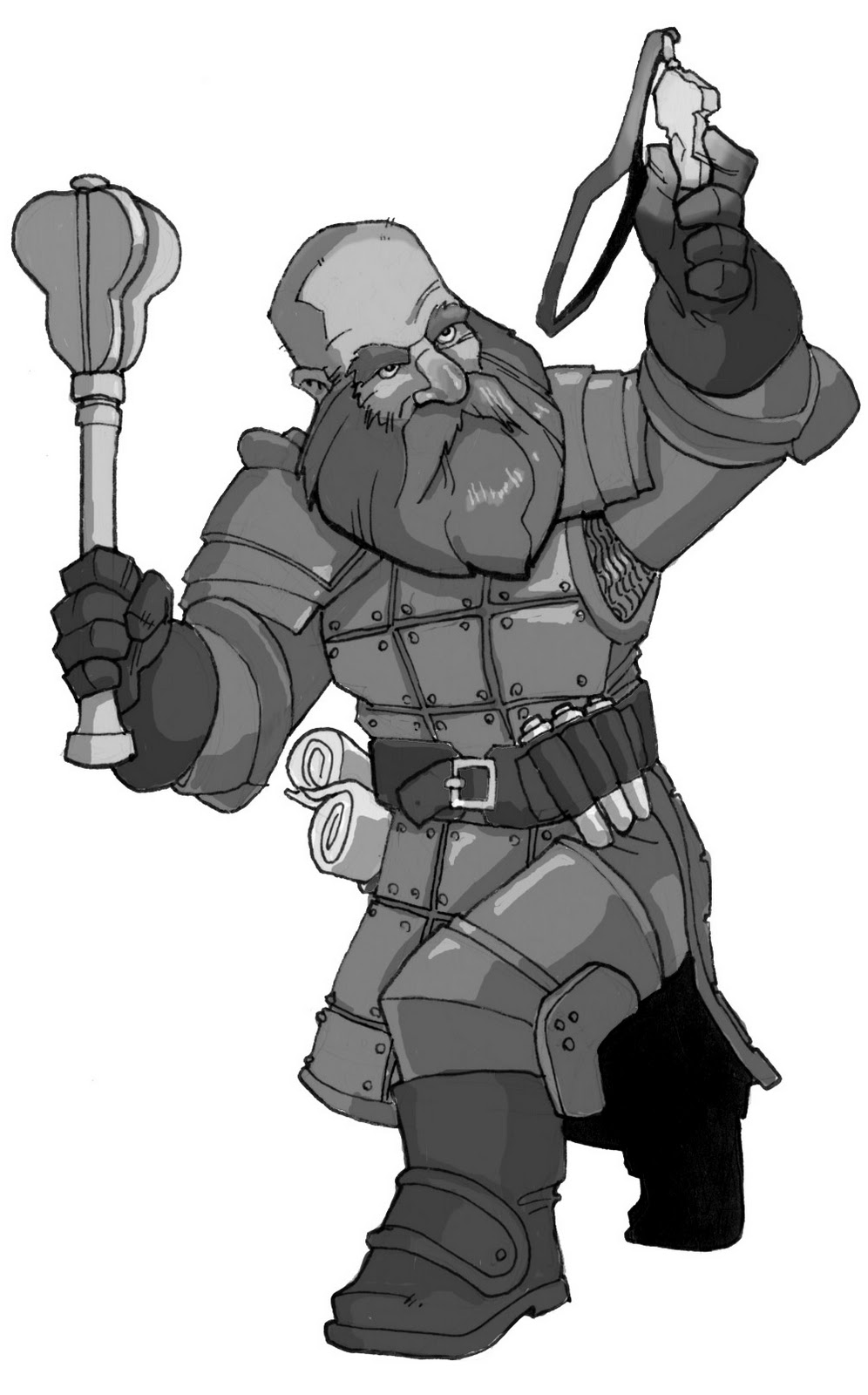
Art from Otherworld Miniatures hobgoblins boxed set.

Venatia – Grubs, Goblins and Groaning Spirits

Ah – the unlucky post. Five more encounters for Western Venatia. If all goes well, I’ll publish PARS FORTUNA this weekend. I’m still waiting for one last piece of art – if it comes through I’ll publish the complete rules on Lulu.com – should go for $15 in book form, $7 in e-book format – and the basic rules in the free download section on this blog. If the picture doesn’t come through, I’ll still probably publish the free version. Cross your fingers.

1636. All that remains of an ancient elf hunting lodge is a support column carved to look like three thin beeches braided together. A stone foundation traces a large footprint – the lodge must have been quite a sight in its day. There is little rubble left from the thing, and the forest is slowly but surely reclaiming the site. Should one rap three times on the surviving column, a trapdoor will open nearby to reveal a set of stone stairs descending into a cellar. The cellar is divided into two sections. The first is a fairly common root cellar loaded with urns, amphorae and barrels of spoiled or dried foodstuffs and sour wine. In one wall of the root cellar there is a sturdy, steel door that is quite cold to the touch – cold enough that prolonged contact begins causing frostbite (1d4 damage).

Behind the frozen door there is a small chamber with steel walls that was magicked long ago into a sort of freezer. Freezer-burned sides of venison and fowls hang from hooks in the ceiling, and in one corner there is the preserved remains of two elves, a woman and man. The woman was quite old (young looking, but with long ears) and is sitting in the corner cradling the man, who was much younger than her and died of terrible wounds taken in battle. The woman wears a gown of woolen scarlet, embroidered velvet slippers worth 50 gp and a silver tiara worth 100 gp. The man wears the costume of a wealthy forester and holds in his right hand a broken long sword (once a magical +2 weapon). Upon entering the freezer, a groaning spirit will emerge from the walls of the root cellar and attempt to destroy the intruders.

| Groaning Spirit: HD 7; AC 2 [17]; Atk 1 touch (1d8 + Str); Move 12; Save 9; CL/XP 9/1100; Special: Chilling touch, keening, only harmed by magic weapons and spells.

1705. Amidst the overarching oaks and fecund ferns of the forest, a small mound of earth has been raised and topped by a small wooden idol. The idol looks very old and weathered, the wood cracked and only a few particles of paint still adhering. The idol depicts a woman of earthy beauty, its breasts swollen, belly full, hips round and face regal. Druids, even neophyte druids, will recognize this as a depiction of the one true Goddess behind all mortal conceptions of feminine divinity, and their prayers and offerings (and those of their comrades) will result in each receiving the effects of the Bless spell for one week. Offensive actions directed at the simple idol curse the druid and her friends increase the chance of wandering monster encounters by +2 (i.e. usually to 1-4 on 1d6).

1726. The banks of the river here are coated with run-off from the surrounding farms and villas. Encounters with effluvial grubs, nasty worm-like creatures who burrow and feed on human and animal waste, occur here on a roll of 1-3 on 1d6.

| Effluvial Grub: HD 2; AC 5 [14]; Atk 1 bite (1d4 + infection); Move 9 (B6); Save 16; CL/XP 11/1700; Special: Infection, effluvial gases.

1808. The remnants of a Nomoan road can be spied here, forming a small ridge among the trees and underbrush. The road is mostly overgrown, but still allows fast passage through the woods. It once extended all the way to the mineral springs in [1816]. A particularly large oak alongside the road is home to a flirtatious hamadryad who will appear to benevolent looking adventurers and invite them to dine with her. They will find that a wide stump behind the oak has been set with a fresh linen cloth, plates of silver and a meal of venison steaks and berry wine. The dryad, Salena by name, will quiz the adventurers on the goings on of the wider world, and is a fine hostess. Should the adventurers return her kindness, she will send them on thair way with a sack of goodies (treat as one week of iron rations). Should they prove violent, they will be set upon by a gang of buckawn robbers hidden nearby and poised to strike.

| Buckawn: HD 1d6; AC 2 [17]; Atk 1 dart or dagger (1d3); Move 15; Save 18; CL/XP 1/15; Special: Spells, magic resistance 10%.

| Salena: HD 2 (13 hp); AC 9 [10]; Atk 1 wooden dagger (1d4); Move 12; Save 16; CL/XP 3/60; Special: Charm person (-2 save).

1821. A tribe of skunk goblins has built a large stilt village here. The tribe numbers 125 warriors, 150 females and 200 children. The skunk goblin king is Glickwick, who is advised by Wullug the vizier. The tribe’s warriors go into battle mounted on giant killer frogs, making them a force to be reckoned with.

| Skunk Goblin: HD 1d6; AC 4 [15]; Atk 1 weapon (1d6); Move 12; Save 18; CL/XP 1/15; Special: Pungent.

| Glickwick: HD 4 (22 hp); AC 4 [15]; Atk 1 weapon (1d6); Move 12; Save 13; CL/XP 5/240; Special: Pungent. Chainmail, flail.

| Wullug, Goblin Adept Lvl 3: HP 12; AC 6 [13]; Save 13; CL/XP 4/120; Special: Pungent, spells (1st), guide. Warhammer.

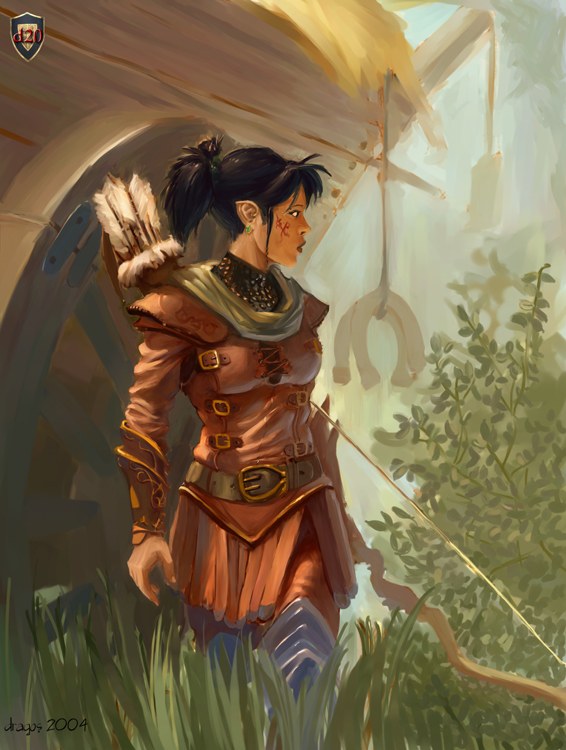
Art by Dragos Stanculescu from his gallery at Elfwood.

Venatia – Hydras, Mantas and More

Six more delightful things to see and/or do in Western Venatia.

Also, since I have your attention, a few bits of NOD news:

PARS FORTUNA is set to be published in one week. There will be a basic version of the game as a free PDF and a complete version for sale via Lulu.com. I’m waiting on one piece of art, right now, and have a few bits of formatting to finish up. PARS FORTUNA will contain 12 new races/race-classes, a new way to handle weapons and armor (nothing earth shattering), simplified encumbrance, new initiative rules, new magic system with 126 different spells, guides on designing campaigns and dungeons – both for sandbox/exploration type games and plot driven games, 147 new monsters, a sample level 1 dungeon, a sample sandbox and 120 new magic items. Whew! The basic version will have 4 of the races, the spells level 1 to 3, about 48 of the magic items and a bunch of the lower level monsters. Can’t wait to get this one off my plate.

Oh – and what do you think about STAR FORTUNA as a sci-fi version?

NOD #6 is in the works – probably will be published early December. This will be a free download to celebrate the holidays. I plan on going free downloads next year and then selling hard copies on Lulu. I think I can make up the lost revenue with advertising – rates will be affordable and the circulation on #1 stands at close to 700 units.

– My first Hexcrawl Classic will soon be available via Frog God Games. I’m writing the second one now and should do about 8 or 10 of the things in all. Exciting stuff for me, and hopefully people will find them useful. I’m especially excited that they will eventually be converted into the Pathfinder format, opening a new audience for sandbox-style play.

Mystery Men! was funded and I’m now working with Joel Carroll to get our illustrations completed. I’m going to put scads of time into the MM! rules once PARS FORTUNA and NOD #6 are put to bed.

And that’s the news from NOD. Now on to our regularly scheduled geekery …

0913. A tattered cloak hangs on the branch of a tree. The face of a grimacing ogre is embroidered into the back of the cloak. In the presence of ogres or giants, the wearer of the cloak must pass a saving throw or fight alongside them against his comrades or risk the cloak making a choking attack each round as a 4 HD monster dealing 1d8 points of damage.

1616. A female owlbear and her three cubs live here in a dank cave. The cave opens out on a small gully that turns into quite a large pond when it has rained. The gully is surrounded by scrub oak and blueberry bushes. The owlbears look like a combination of great horned owls and black bears. When the female is in season, encounters with males occur on the roll of 1-4 on 1d6.

| Owlbear: HD 5+1 (27 hp); AC 5 [14]; Atk 2 claws (1d6), bite (2d6); Move 12; Save 12; CL/XP 5/240; Special: Hug (2d8) if attack roll is 18 or higher..

1631. There is a geyser here in a large, stony clearing surrounded by a “fence” of massive boulders. Most dwarfs can identify the work as coming from hill giants. Within this compound there is a shallow pool of hot water and mineral salts and the geyser, which erupts every 1d4+3 turns. Folk caught in the gout of super hot water suffer 3d6 points of scalding damage (half that with a successful saving throw) and more-over have their movement rate cut in half from the burns that cover their body for 2d4 days.

A cursory examination will reveal spikes hammered into the walls of the cavity from which the water springs. The cavity is safe, though very steamy, if the water is not exploding, and grants access to a complex of limestone caves filled with slippery, sucking mud to a depth of 1 to 3 feet. Movement through the mud caverns is at a rate of 3, and fighting in the mud forces folk to pass a save every time they miss an attack or fall into the sticky stuff.

Lurking in the system of muddy caves is a thessalhydra that the region’s giants, goblins and kobolds call Yiquartho, which roughly translates as the “Daughter of Heaven’s Whore”. Yiquartho receives sacrifices of gnomes and adventurers on an irregular basis from the evil folk of the woods, and will quickly pick up the scent of new arrivals. The creature’s treasure is scattered through the cavern system beneath the thick layer of mud.

Treasure: 3,240 gp and a gold nose stud worth 165 gp.

| Yiquartho: HD 12 (57 hp); AC -1 [20]; Atk 8 bites (1d6) and 1 bite (3d6) and 1 tail (2d6); Move 12; Save 3; CL/XP 17/3500; Special: Acid, poison, immune to acid.

1642. Giant manta rays, silvery blue in color, choke the sea lanes here by day, and at night leave the water to soar through the skies. By day or night, encounters with the beasts occur on a roll of 1-4 on 1d6 in this hex, with 1d6 appearing.

| Giant Manta Ray: HD 8; AC 6 [13]; Atk 1 bite (2d6), tail sting (2d10); Move S18; Save 8; CL/XP 10/1400.; Special: Swallow whole, tail stuns

1707. The River Dubglas in this hex plunges down a waterfall. Stretched across the falls are the remnants of a rope bridge. The bridge now consists of a single length of thick rope with the remaining ropes now suspended from it over the maelstrom. The river is not fordable further up river, for it is astoundingly deep, being a primordial gorge that once supported a dark civilization of ophidians. The river is 40 feet wide at this point, and crossing using the rope requires four strength checks (use whatever method you favor, or use saving throws) to avoid falling. A fall plunges one 10 feet down into the river and then over the 30-ft high falls for 6d6 points of damage.

1817. A tall hill of gray stone dominates the landscape. It is topped with several menhirs that jut out at odd angles. An ancient vampiric chief of the Magog is interred within this hill along with a bodyguard of wights. The tomb is accessible from the top of the hill via a small opening near the base of a menhir. One must wriggle through the opening to reach an ante-chamber ringed with menhirs carved with undulating, swirling patterns that cause nausea when stared at for too long. Secret doors from this chamber give access to the deeper recesses of the tomb. Wandering monsters in the barrow include mites, molds, wights and zombies. At the heart of the complex is the tomb of the vampiric chief, kept in a deep slumber in a coffin of silver in the middle of a pool of holy water.

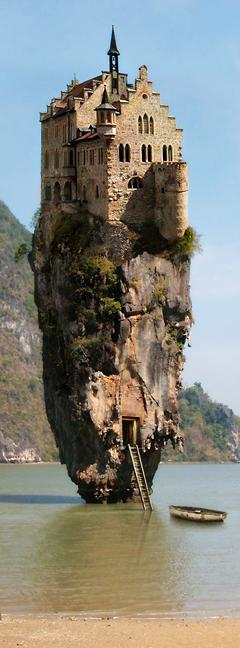
Illustration by Jon Kaufman.

Venatia – Kobold Silver and Ill Weather

Yeah, somewhere in between all my other projects (rpg and otherwise) I’m still cranking away on Western Venatia, which will be the centerpiece of NOD #6, the free (pdf) holiday issue that will publish in December. On to the weirdness …

1414. The small farming village of Gormen rests here on the outskirts of Blackpoort’s domain. The folk of Gormen are hard-working an industrious and have a very low opinion of adventurers, merchants and the rascals that populate Blackpoort. Still, their militia consists of a mere 15 men in piecemeal armor and wielding farm implements (1d4 damage) and slings, so the regular patrols by Blackpoorts soldiers and tax collectors are hard to resist. The village is ruled by a selectman named Eblith, a heavily weathered and creased old man with bushy white eyebrows and hooked nose. Eblith is a brewer by trade, and his brews are renowned throughout this corner of Nod.

1435. The Skrink kobolds live in extensive silver mines that were abandoned by the gnomes many decades ago. The mines consist of five different levels, each level consisting of anywhere from 3 to 6 galleries and one or two shafts leading down to the next level. The kobolds number 150 warriors, 20 females and 60 young and are led by a Niknit and his 20 closest relatives, all 1 HD kobolds.

Treasure: The Skrink’s entire treasure consists of 60 gp worth of silver nuggets, each nugget being carried on a separate kobold to avoid losing the entire treasure to plunderers.

| Niknit, Thief Lvl 3: HP 13; AC 2 [17]; Save 12; CL/XP 3/60; Special: Backstab for double damage, decipher writing, thievery.

1450. A particularly dangerous sea serpent that goes by the name of Illweather dwells under the waves here in the wreck of a sleek greatship that was once the pride of Tremayne’s navy. The Golden Ark was lost many years ago after receiving an illicit cargo from a galley that originated in the port of Ophir. The cargo was a silvery sphere that, when held, glows in a swirl of turquoise and taupe and causes the hair on one’s body to stand on end. The holder of this relic of the ophidians gains the power to control wind and weather in an 9 mile radius (i.e. 3 hexes in diameter). The sea serpent has learned of this power and uses it to raise storms in the hopes of sinking an easy meal.

| Illweather, Fanged Sea Serpent: HD 8 (40 hp); AC 0 [19]; Atk 1 bite (1d10 + poison); Move 12; Save 8; CL/XP 9/1100; Special: Poison.

1537. The steaming carcass of an ogre lies here covered by maggots. There are no tracks (not even the ogres) in the immediate area, and no apparent cause of death.

1606. Several days ago a barge was tossed ashore by an errant wave (or perhaps an ill tempered water elemental). Whatever the cause, the barge’s cargo of exotic musks was spilled all over the forested shore and the crew were forced to seek shelter in the boughs of the trees from the parliament of great horned owlbears that have come to investigate the aroma. The five surviving crewmen are exhausted, hungry and completely miserable.

| Great Horned Owlbear: HD 7+1 (40, 31, 22 hp); AC 5 [14]; Atk 2 claws (1d6), bite (2d6); Move 12; Save 12; CL/XP 5/240; Special: Hug for additional 2d8 damage if to-hit roll is 18+.

1611. Some 200 feet from the shore of Blackmere Lake a crag rises from the dark waters. Atop this crag the wizard Delorian chose to build his manse. It is here that he observes the stars, records his thoughts, putters about in his laboratory and does all the other things one expects of wizards.

Delorian is one of the the most powerful mages in the Motherlands. He is capable of rending the very fabric of reality with his incantations and imposing his will on nature by dint of superior intellect; naturally, this means his tower is subject to almost weekly raids by robbers and adventurers and so is well defended by magical tricks and traps. Deep beneath the surface of Blackmere, the crag is honeycombed by caves that serve as the lair of a family of three mist dragons, allies of the wizard.

Visitors can reach the castle by a small dingy tied to a post on the shore. Upon reaching the crag, one must climb a ladder that leads to a small antechamber. At this point the image of the wizard appears before them, questions them and does his best to discern their true motives. If they do not seem to be a threat, he invites them in (the doors are wizard locked). If they do present a threat, all of the items in the antechamber animate and attack, including a richly woven rug, three tapestries, a chest-of-drawers and two suits of armor.

Groups that try alternate means of entry are attacked by a flock of twelve gargoyles. Delorian monitors all such battles and summons the mist dragons if the gargoyles seem to be outmatched. If necessary, he involves himself in the combat.

Within the confines of his modest home there is a small kitchen, a plush living room, a library closet with a secret door to a laboratory and observatory, and several guest chambers tended by automatons of polished steel with owl faces and sepia tunics bearing the three-handed glyph of Delorian.

Delorian is a very lawful man, though he is no prude or stick in the mud. He barely tolerates the presence of the “city of thieves” so close to his tower, and has thought seriously about moving it.

Treasure: Delorian’s treasure is kept in a sealed vault located 20 feet below his home. It can only be reached via teleportation and contains several beams that increase the liklihood of materializing within solid stone. The treasure is 11,700 gp and a bronze statue of a portly woman wearing a viking helmet worth 115 gp. Delorian’s grand grimoire contains the following high level spells: Contact Other Plane, Extension II, Teleport, Wall of Stone, Control Weather, Disintegrate, Legend Lore, Limited Wish & Phase Door.

| Delorian, Magic-User Lvl 15: HP 30; AC 4 [15]; Save 5; CL/XP 18/3800; Special: Spells (7th). White robe, staff of wizardry, ornate titanium dagger, three silver darts, potion of healing, bracers of AC 4 [15].

| Small Animated Object: HD 1; AC 5 [14]; Atk 1 slam (1d4); Move 15; Save 17; CL/XP 1/15.

| Medium Animated Object: HD 2; AC 5 [14]; Atk 1 slam (1d6); Move 12; Save 16; CL/XP 2/30.

| Large Animated Object: HD 4; AC 5 [14]; Atk 1 slam (1d8); Move 9; Save 13; CL/XP 4/120.

| Gargoyles: HD 4; AC 5 [14]; Atk 2 claws (1d3), bite (1d4), horn (1d6); Move 9 (Fly 15); Save 13; CL/XP 6/400; Special: Fly.

| Mist Dragon: HD 10 (40 hp); AC 0 [19]; Atk 2 claws (1d6) and 1 bite (4d6); Move 9 (Fly 30); Save 5; CL/XP 17/3500; Special: Gaseous form, breath weapon, spells.

Venatia – Robbers, Barbarians and Jellyfish

A few more encounters from Western Venatia. Enjoy …

1416. On the fringes of the domain of Blackpoort lies the castle of Elsien, a barbaric fighting-woman. Elsien’s manse is a motte-and-bailey castle built of white stone. A famed warrior woman in the Gaestly Hills, she has an uneasy alliance with Blackpoort that was sealed by her marriage to the son of Lord Mayor, a scrawny little complainer called Twearne who spends most of his time undermining Elsien’s authority and going on about life at court. In truth, his father was glad to be rid of him, and half hopes that the baroness will kill him, ridding him on an ineffectual heir and giving him a casus belli to launch a conquest of the barony. Elsien keeps seven storytellers in her castle – each living in a comfortable cell barred by a copper grill and emerging only at the behest of Elsien to recount some ancient legend or invent a new tale. The storytellers want for nothing in their cells – women, wine, etc. It is a strange life, but they seem to be satisfied with it. Elsien commands 20 men-at-arms in chainmail hauberks and winged helms armed with spears, short swords and short bows. She also has an elite corps of berserkers, all tall men with white hair and ritually scarred faces – veterans of campaigns against the hobgoblins in the Klarkash Mountains and natives of the barbarian tribes of that terrifying place. The elite berserkers wear black kilts and iron bracers and carry long-handed battle axes and dirks. Among their number is a wild cleric of Mars called Resek. Of late, Elsien is growing bored of her pathetic husband, annoying subjects and her retirement from adventure. She could easily be persuaded to take up her axe and once more descend into the dark places of the earth.

The castle is surrounded by a large, sprawling village of sheapards and farmers known for their love of a good fight (assuming somebody else is doing the fighting). Visitors will be goaded almost constantly into fisticuffs with other visitors through the use of innuendo and other acts of subterfuge. The village proper is surrounded by a wooden stockade and water is drawn from a number of wells.

Treasure: 4,500 gp, five 2 lb ingots of silver worth 20 gp each and 2 casks of olive oil (100 lb each, worth 60 gp each).

| Elsien, Barbarian Lvl 11: HP 60; AC 3 [16]; Save 4; CL/XP 11/1700. Chainmail, shield, battle axe. Grave, short and sturdy, bossy, light skin, blue eyes, platinum hair, square jaw.

| Resek, Cleric Lvl 4: HP 27; AC 9 [10]; Save 12 (10 vs. poison and paralysis; CL/XP 5/400; Special: Spells (2nd), command undead. Black kilt, flanged mace, holy symbol. Tall, white hair, scarred face and back, gold tooth.

1443. This hex and sometimes those that surround it are home thousands of small, luminous jellyfish. The jellyfish mostly dwell in the depths, but at night, especially when the moon shines down, they come to the surface and dance just beneath the surface like thousands of little stars. The jellyfish often form strange, hypnotic patterns and have an effect on sailors or divers similar to a magic spell (i.e. save or fall into a trance). Entranced people cannot move until a dispel magic or remove curse spell is cast on them.

1513. Blackpoort is a large human port on the shores of Blackmere Lake. It is a rival to Antigoon and controls trade on the lake and beyond. Blackpoort is ruled by guilds, the most powerful being those of the thieves and assassins. Most of Blackpoort’s manors are located near the River Swiven or its tributaries. One might encounter fishermen, herdsmen and farmers in these villages, along with the odd craftsman.

[Blackpoort will be featured in NOD #7 along with Antigoon and Lyonesse – a triple city edition – Lord, what am I getting myself into with that?]

1516. This narrow canyon is hemmed by limestone cliffs that resemble towers and battlements. The shallow caves are inhabited by a great multitude of giant vampire bats. These bats become active at night, and will be encountered there at double their normal numbers (i.e. 6d6). One cave (1% chance of finding per day of searching) contains a partial map of the upper level of the the infamous Dungeons of the Mad Mage and a scroll of protection from oozes.

A small altar has been erected at the entrance to the canyon in honor of Camazotz, the demonic prince of bats. It is visited (during the day) by a small cult. The cult is located in Blackpoort and consists mostly of students and thieves. The cultists hold raucous orgies at the altar, spilling wine and a little blood in honor of Camazotz. Desecration of the altar has a 5% chance of attracting the attention of Camazotz, who will send a flock of 20 demonic bats ridden by demonic monkeys armed with obsidian swords to punish the heretics. There is a 1% chance he will investigate himself.

| Demonic Bat: HD 1; AC 7 [12]; Atk 1 bite (1d4); Move 3 (Fly 24); Save 17; CL/XP 2/30; Special: Only harmed by magic weapons.

| Demonic Monkey: HD 1; AC 6 [13]; Atk 1 bite (1d4) or 1 weapon (1d6); Move 9 (Climb 9); Save 17; CL/XP 2/30; Special: Only harmed by magic weapons.

| Camazotz: HD 15 (300 hp); AC -3 [22]; Atk 2 claws (2d10) and 1 bite (3d10); Move 30 (Fly 30); Save 2; CL/XP 17/30; Special: Immune to normal weapons at night, magic resistance 75%, charm monster 2/day, comprehend languages, detect evil, plane shift, geas, teleport without error, deific powers. Camazotz appears as a huge bat surrounded by an aura of grey flames and 1,000 normal bats.

1529. This portion of hills is haunted by three in-famous dwarf robbers, the Kolldens. The Kolldens are highwaymen of the first order, preying on traffic on the Swiven River. Their names are Broon, Droon and Zoot. The Kollden’s lair is a hidden cave in a dry gulley, the entrance trapped by a tripwire to cause a cave-in (2d6 points of damage).
The lair consists of a dirt tunnel that slants downward for about fifteen feet and then drops into a crevasse 4 ft wide and 40 ft long. At the end of this crevasse there is a 2 ft wide crack that runs back ten feet before emptying into a spacious cavern that has been improved by the brothers.

The living chamber is furnished with piles of furs for beds, a long, narrow trunk locked with an expert lock and trapped with a deadly poisoned needle. One corner of the chamber holds several small barrels and sacks containing ale, flour and dried fish (treat as four weeks worth of iron rations for three people). In the middle of the chamber there is a fire pit and roasting spit. A very narrow chimney in the roof allows the smoke to escape.

Treasure: The Kolldens keep their treasure in the trunk. It consists of 345 sp, 390 ep, 200 gp.

| Broon Kollden, Dwarf Thief 5: HP 16; AC 6 [13]; Save 10; CL/XP 5/240; Special: Back stab for triple damage, decipher script, thievery, cant. Pistol (treat as light crossbow), short sword, pouch containing 23 gp and 18 sp and a four leaf clover.

| Droon Kollden, Dwarf Thief 3: HP 11; AC 9 [10]; Save 12; CL/XP 3/60; Special: Back stab for double damage, decipher script, thievery, cant. Musket (treat as heavy crossbow), thick club, pouch containing 15 gp and 67 sp.

| Zoot Kollden, Dwarf Assassin Lvl 1: HP 4; AC 9 [10]; Save 15; CL/XP 1/15; Special: Cheat death, decipher script, disguise, sneak attack for double damage, skullduggery, poison. Pistol, short sword, silver dagger, dog whistle, pouch containing 16 gp.


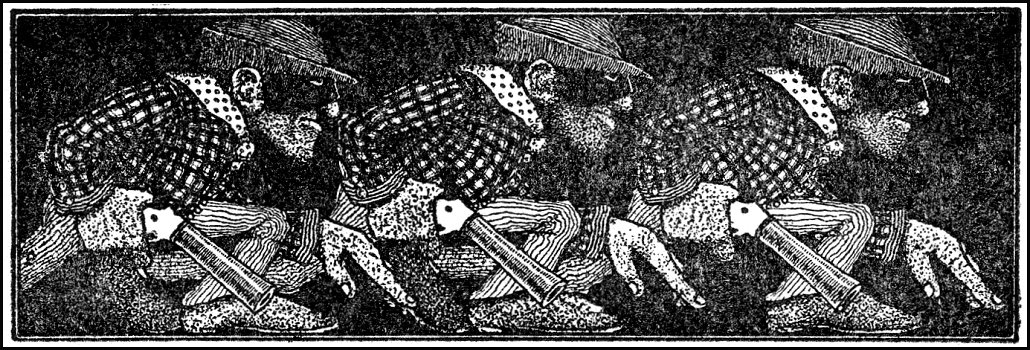
Image via Golden Age Comic Book Stories. To be honest, I have forgotten the name of the artist, curse my metal hide.

Venatia – Oozy Vats and Falling Stars

Four more for Western Venatia …

1108. A large, abandoned monastery overlooks the river here. Once occupied by an order dedicated to Ceres, the place was eventually infiltrated by chaos cultists who invoked an elder god in a terrible ritual. The god destroyed what was left of the order and then struck its worshipers blind, dumb and mad and sent them out into the world to their fate. Being dedicated to Ceres, the nuns were known for their exquisite, light ales. The brew vats are now filled with a mouldy ooze and five ooze mephits. Other oozes haunt the surrounding hills and the rest of the ruins.

| Ooze Mephit: HD 3; AC 3 [16]; Atk 2 claw (1d3); Move 12 (Fly 18, Swim 12); Save 14; CL/XP 5/240; Special: Harmed by magic weapons, breath weapon, acid arrow, stinking cloud, summoning.

1412. The remains of a shattered tablet rest on the beach, partially obscured by the dark grey sands. If pieced back together, they contains remnants of the spell Conjure Elemental – not enough that the spell can be cast or copied into a spellbook, but enough that they will aid a magic-user in researching the spell.

1422. A massive catapult has sunk into the swamp here. Vegetation now clings to the device, which is rotted and shows signs of fire damage. A noisy, little bird has built a nest atop the crossbar, and will raise a ruckus if anyone approaches, attracting a wandering monster on a roll of 1-2 on 1d6. A sliding panel on the catapult conceals a bone scroll case. The case contains a map that shows secret entrances into the citadel of Blackpoort and three old gold pieces dating back to the Antigoon monarchy.

1431. A falling star has created a crater here recently. The crater is still warm towards the center, and one can find bits of meteoric iron and glass strewn about the site. Buried in the center of the crater at a depth of 10 feet there is a large, glowing cannister. The cannister is 10 ft in length and 4 ft in diameter, and is the last resting place of an alien high priest of chaos. Anyone touching the cannister with their bare flesh will watch their hand wither and drop off, but this touch is the only way to open the cannister. Inside are the mummified remains of a slug-like creature with a single pseudopod and five long, supple “horns” growing from its head. It has seven eye buds and a lamprey-like mouth on the end of a long proboscis. The mummy rests on a styrofoam “bed” and is swaddled in a tapestry covered with alien scenes of a bleak world with a green sun and rust red seas. At its feet is a brazen head that looks like a cross between a rotweiler and a crustacean. The head, if spoken to in the alien tongue, can recite chapter and verse of the Hymns of Nibiru, called by humans “the Living Planet”. For unknown reasons, the cannister has attracted the attention of hundreds of small, lethal giant centipedes. There is a 1 in 6 chance each round of encountering 1d6 of the little devils while in the crater.

Venatia – the Beast of Bracken Abbey

A few more glimpses into the wilds of Western Venatia.

On a side note, the Mystery Men! voting is underway. A few of the races are looking to be slaughters, while a couple are neck and neck. I can’t wait to see which heroes make the final cut for illustration.

1246. On moonless nights (beginning or end of a Nodian month), this hex becomes inundated with hundreds of jellyfish, from tiny creatures barely the size of a gold piece to monstrously large entities. They float near the surface, swaying in time to an unheard tune and converging on anything foolish enough to wander into the midst of their reverie. Assume encounters here with 2d10 monstrous jellyfish.

| Monstrous Jellyfish: HD 2d6; AC 8 [11]; Atk 1 sting (2d6); Move 3; Save 16; CL/XP 3/60; Special: Paralysis.

1314. Amid the rugged splendor of the moors there are the charred remains of an ancient abbey. Little remains but the burnt out shell of the cloister and the weed-ridden medicinal gardens, which are home to several violet fungi who let out their terrifying screams whenever they detect creatures moving toward the abbey. The abbey’s courtyard has a well grown slimy with the passage of years. At the bottom of the well sleep the so-called “Beast of Bracken Abbey”, a troll-like creature covered in bubbling pustules of slime. The beast has large, yellow eyes and iron-hard talons, and can expel a killer slime from its mouth every 1d4 rounds. The color of killer slime* is rolled randomly:

1-2 Purple
3-4 Red
5-6 Yellow

Treasure: Covered in non-toxic encrustations of slime you find 2,300 sp, 980 gp and two soapstone busts worth 100 gp each, one bust depicts Apollo Helios, the other Diana. When both busts are displayed in the same room at an equal height they create a Bless effect through the entire room.

| Beast of Bracken Abbey: HD 10; AC 2 [17]; Atk 2 claws (1d4) and bite (1d6); Move 12; Save 5; CL/XP 11/1700; Special: Belch slime.

1333. Lonely Castle Carnifex stands brooding by the river, its black willows sipping at the lazy waters and its grey spires, showing no light or warmth, staring out over the endless woodlands. The castle is the home of a band of huntsprites, the executioners of the fairy court. The sprites look like slim humanoids with black butterfly wings and wearing simple white shifts. They arm themselves with longbows and short swords that give out a shrill ring when drawn from their scabbards. The sprites do not brook intrusion into their sanctum, and truthfully the place is so bleak and unwelcoming that few would want to spend more than a few minutes exploring its empty hall and the corridors and chambers that surround it. Each sprite’s sword is +1 in the hands of an elf, dwarf or gnome, but -1 in the hands of folk without fey blood in their veins.

| Huntsprite (3): HD 8 (39, 35, 26 hp); AC 1 [18]; Atk 2 +1 sword (1d6+1) or 2 +3 longbow (1d8+3); Move 15 (Fly 30); Save 8; CL/XP 13/2300; Special: Perfect shot, spells, magic resistance 45%.

1410. Blackmere Lake is known for its sudden, violent storms. One hundred years ago the wedding barge of the daughter of Argrave, Lord Mayor of Blackpoort, went down in such a storm with its passengers, crew and treasures. The barge still rests at the bottom of the lake, haunted by a wedding party that dances, sings and feasts on the living for all eternity.

The party guests and crew are now a collection of thirty wraiths. The guests and their servants appear as ghostly men and women dressed in medieval finery (long shoes tipped with bells, long turbans, doublets, etc.). When living creatures are spotted, the guests call out to them to join the party. Servants seat them before a ghostly feast and pour luminescent wine in golden goblets. It is then, when they are surrounded, that the wraiths turn on their guests and devour their life force. Unlike most wraiths, their depredations do not create spawn.

Should one manage to destroy or disable all of the wraiths, they will find that the barge holds a great treasure of wedding presents.

Treasure: 1,390 sp, 6,450 gp, a bronze statue of a satyr worth 20 gp, a silver statuette of Juno worth 125 gp, an amber brooch worth 100 gp, a brass waist chain worth 300 gp, a piece of polished coral worth 145 gp, a pearl worth 400 gp, an olivine worth 900 gp, a sapphire worth 4,000 gp and a silver decanter of endless water and a potion of extra healing.

* The killer slime is a monster that will appear in November in PARS FORTUNA. Of course, it will also appear in the free download of NOD #6 in December.

Western Venatia – Shark!

A few more encounters for Western Venatia. You’ll have to use the tags at the bottom to navigate to the other Venatia entries because, frankly, I’m pooped!

1206. A massive carcharadon patrols these waters, always watchful for a foundering cog or lazy galley slung low in the water.

| Carcharadon: HD 8 (40 hp); AC 6 [13]; Atk 1 bite (1d8+4); Move (Swim 24); Save 8; CL/XP 8/800; Special: Feeding frenzy.

1209. On a lonely hill overlooking a quiet meadow of purple cone flowers and alyssum there are the remains of a villa. The villa belonged to Calyn, a well-respected soldier of Nomo, adopted human son of a noble elf family. All that remains of the villa is a cobbled court-yard and a single stone wall. The wall carries the faded remains of a fine mosaic showing children at play and stately men and women watching them and drinking from black, horn-shaped cups. In the center of the courtyard there is a fountain carved from rugged limestone with fittings of green copper. Should one sit on the side of the fountain and ask a question, the fountain will respond by singing an ancient legend (per the spell Legend Lore) in a fine tenor.

1219. An old chimae lives in a cave overlooking a boulder-stewn plain. The chimae has the body of a giant goat, the head of a lion and a serpent tail and answers to the name Chalos. Chalos often comes to the river to hunt.

Treasure: 1,890 sp, 1,500 gp, brass collar worth 300 gp and hepatizon and turquoise pendant worth 1,000 gp.

| Lion Chimae: HD 9 (34 hp); AC 3 [17]; Atk 1 bite (1d10) and 1 stinger (1d6); Move 12 (Climb 9); Save 6; CL/XP 10/1400; Special: Poison sting causes paralysis.

1222. By the side of the imperial road you spot a fawn sitting next to a gnarled, old stump. From the way its swaying, the fawn looks as though its been injured. A close inspection reveals that the creature is, in fact, a wolf-in-sheep’s-clothing, a sort of wilderness mimic.

| Wolf-in-Sheep’s Clothing: HD 9 (35 hp); AC 2 [17]; Atk 3 tentacles (1d4); Move 1; Save 6; CL/XP 10/1400; Special: Grab, surprise on 1-4 on d6.

1239. One might stumble across the body of a wolf, freshly killed, it seems, with a hand axe that still sticks in the creature’s side. If the axe is removed, the wolf’s skin leaps from the body and glides into the woods. For one week thereafter, the adventurer’s hear the howls and footfalls of a wolf pack, but encounter no random monsters in the woods.

Venatia – a Baleful and Beautiful Garden

Quick note – I am finishing up NOD #5 and should have it available by next week. Contents will include a couple dozen vampires drawn from world folklore, Mines & Minerals, the Illusionist class and his spells, Ibis – City of Sorcerers, level 2 of Izrigul’s Palace (continued from last issue) and another chapter or two of Phantastes. Cover image to the right.

1124. The drab moors give way here to a colorful garden of pistachio trees, maples and, in the springtime, brilliant tulips and lilies. A meandering path of crushed stone takes one from the front gates to the little castle within, a tower keep that looks as though it were carved from ivory. The garden is worked by thirty children dressed in tattered clothing, all of them wiry and underfed. The children work in a kitchen garden of over sized cabbages, radishes and eggplants. Secreted in the trees are a six ettercaps, all servants of the mistress of the ivory tower, an annis hag called Urmelia. Urmelia and her minions stage raids on the Emperor’s Way, bringing back slaves who are, using the hag’s special recipe, changed into mere children. Should the hag’s formula be used on a human or halfling, they find themselves reduced in age to 8 or 9 years, their strength score cut in half and their dexterity dropped by 2 points. The hag usually has a dozen doses of the potent potion on hand. In the tower’s donjon Urmelia keeps her sister Yordis, polymorphed into a small child and bound with silver chains that disrupt her ability to use magic.

Treasure: 3,800 ep, 1,090 sp, 820 gp, 10 lb of cocoa worth 100 gp/lb, 7 lb of saffron worth 15 gp/lb.

| Urmelia, Annis Hag: HD 8 (37 hp); AC 1 [18]; Atk 2 claws (2d8), bite (1d8); Move 12; Save 8; CL/XP 10/1400; Special: Hug and rend, polymorph, call mists.

| Ettercaps: HD 5 (31, 27, 23, 19, 16, 14 hp); AC 6 [13]; Atk 2 claws (1d3), bite (1d8 + poison); Move 12; Save 12; CL/XP 6/400; Special: Poison bite.

1131. The woods here hold a forgotten cemetery, overgrown with black willows crowded with white butterflies and pale vines that produce a grape from which one can brew the “wine of ages”. Here, aged ghouls come to lie in the cool grass and dream their dark, lazy dreams. A marble cupola in the center of the graveyard served as a shrine once, but is now the lair of three unpleasant gravebirds, who have used their ability to speak with the dead to learn many secrets, secrets they will divulge for the price of a squealing babe or blushing maiden.

| Gravebirds: HD 2 (15, 13, 7 hp); AC 5 [14]; Atk 1 bite (1d4 + disease) or 2 claws (1d3 + disease); Move 4 (Fly 16); Save 16; CL/XP 3/60; Special: Disease (per mummy rot), speak with dead.

1137. A cave flecked with serpentine snakes its way into the earth, first becoming chilly as one leaves the embrace of the sun, but then becoming hotter and drier with every step until the spelunker emerges into a great vault intersected by streams and rivers of magma that are spanned by natural bridges of basalt. On three of these bridges there are trapezoidal shrines made of serpentine and pierced by a single dark, open entrance. The shrines are approximately 30-ft to a side. The interiors are clad in polished obsidian and hold idols of the ancient ophidians.

The shrine of Yibolokendh, goddess of hunters, who appears as a tall ophidian female wearing armor and trophies of the hunt (primate skulls). The shrine is guarded by six inphidian warriors and overseen by an ophidian seer who speaks of the beginnings of things.

The shrine of Ichasha-Yath, goddess of the deadly chill that terrifies all reptilians. The goddess appears as tall ophidian with icy eyes and chocolate brown scales and carrying a silver dart. It is guarded by six inphidian warriors and overseen by an ophidian seer who speaks of th ends of things. The seer of Ichasha-Yath can summon snowstorms once per day.

The shrine of Labos, god of medicine, who appears as a stately male ophidian, graceful and adorned with long, white hair and purple eyes who carries a map of the ophidian anatomy. It is guarded by six inphidian warriors and overseen by an ophidian seer who speaks of the secrets and lies who can heal the sick and bring the dead back to life – for the right price.

| Ophidian Seer: HD 3; AC 4 [15]; Atk 1 iron staff (1d8), bite (0); Move 12; Save 14; CL/XP 6/400; Special: Reproductive bite, cast magic-user and cleric spells (3rd).

| Inphidian: HD 4; AC 2 [17]; Atk 2 bites (1d4); Move 15; Save 13; CL/XP 6/400; Special: Blinding spray, poison.

1141. On a crystal clear bay there is a large village of swarthy men and women, a sort of lost colony of ancient Nabu called Kademand. The Kademandi mostly deal in the timber trade, shipping wood from the Nybling Hills to Antigoon and Ophir. The village buildings are constructed or marble quarried nearby, with even the most common hovel looking far above its station. The village is surrounded by a 15-ft tall wall of marble, 10-ft thick and studded with 25-ft tall towers. The village is ruled by a nomen (lord) called Thorothi the Sagacious, a learned man of astronomy and ancient history who keeps a small library of scrolls and well worn tomes.

The bay on which the town sits is inhabited by a herd of selkies (fey seal people), and in fact is called Selkie Bay. Thorothi was married to the most beautiful of the selkies, Brece, after using helping the selkies drive away the giant octopus [1149] that once lived just outside the bay, harassing selkies and humans alike. Brece now spends half the year in human form attending her husband, and half the year in seal or selkie form playing in the sea. Both of them are satisfied with this arrangement, and their marriage keeps their people at peace, though it has not yet resulted in an heir for Thorothi.

1149. A giant octopus, called Death’s Gauntlet by the people of the region, dwells here in a vast, undersea cave, brooding at his recent defeat by Thorothi of Kademand [1141]. In his cave he keeps an obsidian shield, too heavy for a human and too small for anything else, worth 200 gp.

| Death’s Gauntlet: HD 10 (50 hp); AC 7 [12]; Atk 8 tentacles (1d4); Move 2 (Swim 10); Save 9; CL/XP 13/2300; Special: Constriction and pinioning.

Venatia – the Bell Tower

And another six to whet the appetite.

Part One | Part Two | Part Three | Part Four | Part Five

1006. Luinel is a mid-sized village of about 40 thatched huts surrounded by a picket of pointy sticks and a tangled thicket. The villagers mostly work as woodsmen, but they also keep a few goats, sheep and swine. They are best known, though, for their oxen – powerful beasts with red coats and horns that stretch 4-ft from one tip to the other. These colossal beasts are capable of hauling twice that of normal oxen. The village is governed by a mayor elected by a council of elders and important men and women.

Of particular note is a tall, conical structure in the center of the village. This particular hut is surrounded by a low wall of bright red bricks, with a single opening that is always guarded by an armored man with a masked helm and a stout spear. Inside the hut there is a strange statue, abstract and wretched and hurtful to the eye and soul. The villagers do not allow people to enter the central hut, and when questioned they say only “It is the heart of the village. Can you not hear it beating?” with wide eyes and a look of eerie calm.

While adventurers are welcomed into the village, there is no inn, so they will have to sleep with different families. If they show too much interest in the idol and are of a lawful bent, the families will murder them in their sleep and drag their corpses to the hut, where they will have disappeared by the next morning. The villagers have the abilities of 3rd level assassins when given a mission by their idol. It is said that when a body is given over to “the heart”, that a new red ox appears in the communal pen.

1025. A small family of four hill giants scrapes out a living in the surrounding hills by hunting big game. The cavern holds a towering kiln that the giants use as a hearth for roasting meat. Tucked into the ashes of the kiln there is a sinister magic dagger called the Tooth of Vexus. The Tooth of Vexus is a +2 dagger. Vexus was a potent wizard in these hills some 300 years ago, but not many folks now remember him, primarily because he died in the process of creating a powerful spell to wipe away memories. C’est la vie! Once per day, the holder of the dagger can cast a spell that automatically nullifies saving throws against it.

| Hill Giants: HD 8+2 (42, 40, 36, 30 hp); AC 4 [15]; Atk 1 weapon (2d8); Move 12; Save 8; CL/XP 9/1100; Special: Throw boulders.

1032. There is a bell tower here constructed of dingy, yellow-brown stone. The tower is set on a grassy sward grazed by wild ponies and appears to be abandoned. Careful observers might note that the floor of the bell tower is a spiral of narrow stones. The bell has no rope, but if one manages to ring it, they will cause the spiral floor to turn into a winding spiral stair that leads down to a hexagonal room. Three walls of the room hold a mirror and are painted in a primary color (red, blue or yellow), as opposed to the other walls which are painted black. The mirrors appear to be normal, but if touched prove to have no substance to them. They are, naturally, portals. Each one has a frame of gold set with gems – one with topaz, one with aquamarine and the third with tiger’s eye. Should any of the mirrors be touched, a magic mouth will appear on one wall and say “I shouldn’t do that until you have heard the riddle” in a somber, throaty bass.

At this, a second mouth appears on a different wall and, in a crisp, clear soprano, says, “Choose the picture fair, of fire and light, always bright, small as a snail but containing all there is to see.”

If one answers “The Eye”, a third mouth appears and says, in a soft, quiet voice, “Then what are you waiting for, the master awaits!”

Naturally, the tiger’s eye mirror leads to the under-ground stronghold of Mikelroy the Irregulous, a wizened old sorcerer who specializes in spells of transportation. The aquamarine mirror is one way, and leads to the Land of the Dead. The topaz mirror is also one way, and leads to an alley in Antigoon.

Mikelroy the Irregulous’ home is a round chamber 500-ft in diameter divided by dozens of arches hung with thick, white curtains. Within are living chambers, a library of invisible books (seven volumes, mostly concerning the magic of teleportation, but also a few travelogues of the dimensions) and a laboratory. Several rooms hold bizarre, alien animals in cages – mostly avians of many kinds, including a fairly enraged mi-go in temporal stasis.

Mikelroy has one apprentice, a bestial young woman with a flat nose and flared nostrils, a beetling brow, large, brown eyes, floppy, pointed ears and vestigial horns. Mikelroy will introduce her as Pencella, whom he rescued from a labyrinth.

Mikelroy is a pleasant sort, but distant and overly flashy. He is especially interested in finding a way into the dungeon in [1339].

| Mikelroy, Magic-User Lvl 12: HP 29; AC 9 [10]; Save 5 (3 vs. spells); CL/XP 14/2600; Special: Spells (6th). Silver dagger. Old man with sharp, blue eyes and long, silky hair of grey. He is graceful in build and manner, and wears a flowing white robe that trails several feet behind him and is held aloft by three brass, mechanical crabs.

| Pencella, Beastman Magic-User Lvl 2: HP 2; AC 8 [11]; Save 15 (13 vs. spells); CL/XP 2/30; Special: Spells (1st). Dagger.

1041. A pleasant shoal of white sand stretches almost a mile into the sea here. Though often submerged, at low tide it can be traversed, and one might spot a gleaming statue at its furthest point. The statue is studded with glistening white shells, and appears to be a woman, her arms thrown back, her shoulders forward, her eyes fixed on the horizon. The statue was constructed at some point in time by sea folk, and is an idol of Calypso, a nereid and minor goddess of death. By night, the waters around the idol are thick with enticing asrai.

1105. A wily old kelp dragon, the remains of the honorable Yostifrix, haunts these waters, always on the prowl for a wayward barge of revelers to be overturned and devoured. The dragon’s bed contains three large, rusty chests containing 2,470 sp, 1,200 gp and a large, jagged sard worth 10,000 gp.

| Yostifrix: HD 10 (42 hp); AC 1 [18]; Atk 1 bite (2d6); Move 12; Save 5; CL/XP 14/2600; Special: Breath weapon, level drain, squeeze.

1118. The orc warlord Gorthruk has established a permanent camp here. The camp is built atop a tall, flat hill and consists of a wooden palisade and two tall, wooden watch towers. Gorthruk has worked for the hobgoblins of the Klarkash Mountains in the past, but now has set his sights on conquering Blackpoort. Gorthruk controls 700 orcs and has sent emissaries to the orcs of the central hills to secure an alliance. His warbands patrol the area around this hex constantly, and are encountered on a roll of 1-3 on 1d6.

Treasure: 900 gp, a platinum music box encrusted with gems (5,000 gp, mechanism needs repair) and a gold medallion (1,000 gp).

| Gorthruk: HD 8 (40 hp); AC 4 [15]; Atk 1 battle axe (1d8); Move 9; Save 8; CL/XP 8/800; Special: None. Chainmail hauberk, battle axe, dagger, the Eye of Balor. The Eye of Balor is a pendant worn around Gorthruk’s neck. It allows him to bestow a curse once per day as a 10th level magic-user.

Illustration by Edmund Dulac, via Golden Age Comic Book Stories.