Hell South – Preview 4

Another glimpse at the Underworld …

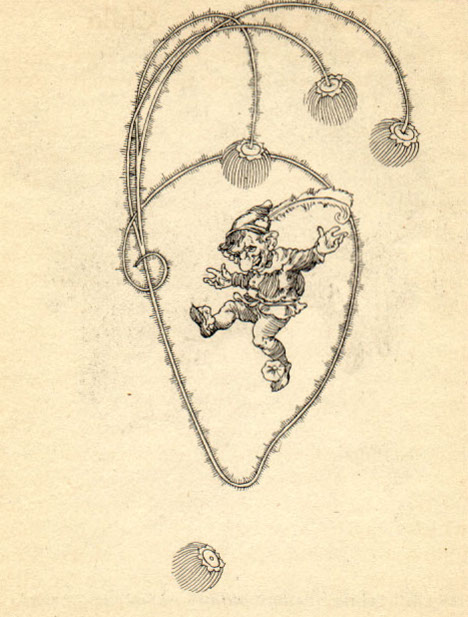
24.94 Old Buckle: The ground here is quite uneven, with deep (1d4 x 100 feet) canyons and narrow ridges. On the edge of one such ridge an adventurer might spot a buckle and the remains of a leather belt hung on a small spike of stone attached to the ridge. An adventurer tried to use the belt as a rope to swing themselves down to a ledge located about 6 feet below the edge of the ridge. On this ledge there is a small idol of Lilith made of gold with inlaid ruby lips and amethyst eyes (worth 500 gp, weighs 100 lb). Touching the idol causes one to lose their balance. Kissing the idol teleports them into the stronghold of Lilith in Erebus, the second circle of Hell.

39.107 Quarry Men: A tribe of 200 rock men have an extensive quarry here, pulling granite from the walls of the cavern and selling it throughout the Glooms. Despite their stodgy and staid ways and dull way of speaking, the rock men are quite intelligent and excellent bargainers. The rock men dwell in small caves dug into the sides of their ever-expanding quarry. The best granite is retained and carved into new rock men. The rock men have a treasure of 2,130 sp, 380 ep, 2,520 gp, a brass icon of Vulcanus (worth 30 gp), two fine rhodochrosites worth 500 gp each and 20 barrels of mineral spirits (worth 6 gp each).

51.109 Notac-ichat: A clan of 40 notac-ichat and their 30 females and 35 young dwell here in a citadel of gray bricks, tiny windows and flat, crenelated roofs. The notac-ichat own a tapestry in which is impressed not only the image, but the intelligence of the archmage Vaunus the Vain. The tapestry advises their chief, Yar-Iskr, a rambling old male with purple chitin and a wandering mind. In truth, the archmage controls him and rules his people, using them to collect rare ingredients for a spell to make a simulacrum body that his mind can inhabit until something more permanent comes along. They currently lack an ounce of halfling blood and the wisdom teeth of a dwarf.

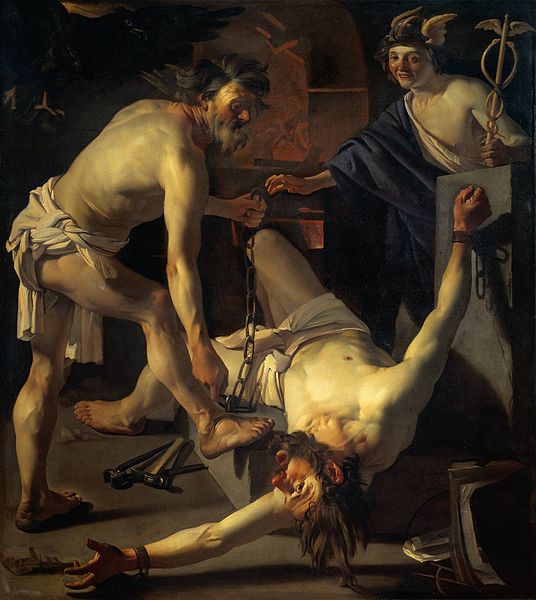
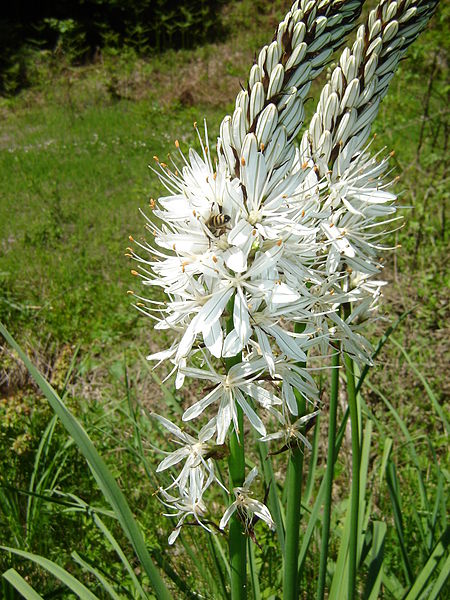
Image from Wikipedia

The Glooms – Dungeons and Mines

7.91 Adalark’s Tomb: A tall cenotaph of black marble stands 20 feet tall here. On the top there is a sculpture of a giant serpent, mouth open and fangs bared.

The serpent is the entrance to a small tomb complex located about forty feet below the ground. One cannot fit in the serpent’s mouth, of course, but by reaching deep into its mouth (unfortunately impossible for halflings or gnomes) and touching a stone lodged therein, a person is teleported beneath the ground.

[A] The entry chamber into the tomb is a square room with black marble walls and a 30 foot high ceiling. Against one wall there is a copper plaque bearing the following inscription: “Adalark | Called Great | Was Great | He cannot blame lesser thieves for following in his steps.”

There is a terracotta statue here of a weeping woman looking at the plaque, on hand reaching toward it. Approaching any of the walls in the room causes a sub-section (10’ wide by 10’ tall) of that wall to move backward – apparently one cannot step closer than five feet toward a wall. The walls extend back ten feet, at which point a metal portcullis descends from the ceiling, locking them in. The walls then slowly begin to crawl back to their original position to crush the intruder. The section of the wall with the plaque does the same as the others.

If all four walls are forced back at the same time, the wall with the plaque disappears completely and reveals a second chamber, and the other three traps do not spring.

[B] The trapped chamber opens here onto a balcony overlooking a square room about 10 feet below. In the room below there is gathered the treasure of Adalark the master thief, which consists of three gold ingots (3 lb each), a brass icon of a winged woman (worth 1,000 gp), a cape of deep red velvet (100 gp), six silver shields (250 gp each), thirty pairs of chartreuse gloves (they were Adalark’s trademark), a suit of halfling-sized platemail and 8,000 gp. The interior of the platemail is coated with platinum (2,000 gp worth).

Extending from the balcony there is a wall of force that does not allow one access to the treasures below. The treasure chamber is actually an optical trick called “Pepper’s Ghost”. The treasure is actually located in a room beneath the balcony. A large pane of glass slanted across the open area reflects the treasure, which is illuminated from below using a continual light spell. The most likely way of dropping into the treasure chamber is to use dispel magic to remove the wall of force. Any who then drop into the chamber without being very careful may drop through the glass into a pool of acid below (inflicts 3d6 points of damage from the fall and 1d6 points of damage each round from the acid).

14.87 Boring Wreck: A large earth borer made of steel with brass highlights has been abandoned here by the Master’s synthoids after the drill bit broke. The Master was already on to other projects and never reclaimed it. Eight were-weasels have now adopted it as a lair, and keep 60 cp, 170 gp, fifteen wolf skins (worth 8 gp each) and a small pearl worth 3 gp hidden inside.

20.92 Iromir Mine: Iromir is a natural alloy of iron and mithral. A very deep mine here, run by kobolds (who took it from a clan of svirfneblin), produced a good amount of the material, which the drow favor for their weapons and armor when they cannot find pure mithral. The shipments recently stopped. When a band of orog from the village in [32.98] appeared to investigate, they discovered the mine (it has seven levels) crawling with kobold zombies. There are now fifty orogs camped outside the mine and making some shallow forays into the place.

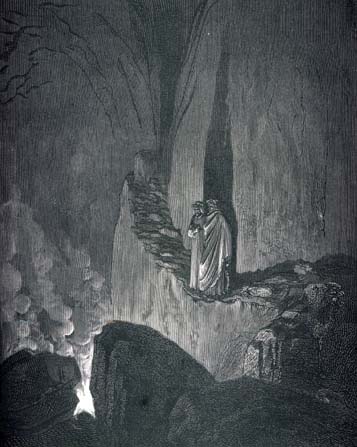
Image is copyright Wizards of the Coast.

Hell South – Preview 2

“Hell South” sounds weird. Anywho …

4.68 Kobolds in Distress: A band of 15 kobolds have been trapped on a ledge about 30 feet above the ground. They are armed with javelins and clubs, and especially worried about the cave located about 10 feet above their ledge, where a lone howler dwells. Below the ledge there are four chaos beasts that escaped the Master.

HOWLER: HD 6; AC 2 [17]; Atk 1 bite (2d8) and 1d4 quills (1d6); Move 18; Save 11; CL/XP 8/800; Special: Quills (save or quill breaks in flesh, imposing -1 penalty to d20 rolls, removing deals 1d6 damage), howl (those who hear for one hour must save or become confused (per spell).

CHAOS BEAST: HD 8; AC 3 [16]; Atk 2 claws (1d4); Move 9; Save 8; CL/XP 10/1400; Special: Magic resistance (20%), corporeal instability (save or become amorphous mass and lose one point of wisdom per round; at 0 wisdom the victim turns into a chaos beast).

5.69 Goons: A tribe of 370 goons and their 60 females and 40 children dwell here in an ornate, garish palace of stone set with ornamental stones. The carvings depict cavorting demons, hunting beasts and scenes of terrible melancholy. The palace contains barracks and living chambers, fungal gardens, cruel prisons and kennels for the goons’ 30 champion hunting dogs. The palace is laid out in rings separated by fungal gardens crawling with shriekers who double as guard animals.

The goons are ruled by Vodic, a brutal priest of Cali, the demon queen of assassins. Vodic dwells at the center of the palace in a shrine of Cali. The ring just beyond the shrine is inhabited by 30 louts. The shrine contains a bronze idol of Cali and three iron chests hanging from thick, iron chains attached to the ceiling. The idol holds aloft in one hand a compass carved from a single large sapphire (worth 4,000 gp). The compass has a permanent find the path effect cast on it, activated by holding upright on one’s palm and blowing on it.

GOON: HD 1+1; AC 4 [15]; Atk 1 weapon (1d8+1); Move 12; Save 17 (12 vs. hold spells); CL/XP 4/120; Special: Crown (if knocked from his head, he either slinks away in embarrassment or flies into a rage, gaining +2 bonus to hit and damage until reduced to -5 hit points), magic immunity (immune to mind-affecting spells).

6.102 Dusty Halls: There is a small castle here, abandoned ages ago while under siege by the wizard Porin Bloody Bones. Porin devised a wondrous spell that sealed the castle – a powerful variation on the venerable hold portal enchantment. In time, the garrison succumbed to hunger and cannibalism and eventually wiped themselves out. Unfortunately, the wizard didn’t last long enough to enjoy his victory, having succumbed to the venom of a serpent that crawled into his tent one night. The castle has been sealed ever since, and is now inhabited by twenty ravenous zombies. Within these dusty hallways one might discover the great hall with its magnificent opal-studded throne (ten opals worth 250 gp each).

The castle’s treasure is hidden in a room within a room. The walls of the outer room are studded with spikes. When the inner door is tampered with, it opens with a powerful gust of wind. Anyone in front of the door must pass a saving throw or be flung back on the spikes for 1d6 points of damage. If the damage rolled is “6”, the spiked walls of the circular chamber begin to spin, first at a rate of 10 feet per round. The speed increases by 10 feet per round until it reaches a maximum speed of 90 feet per round. Once the speed reaches 30 feet per round, anyone still on the spikes begins to suffer 1d6 points of damage per round.

Within the treasure chamber there are 5,650 sp, 2,310 ep, 1,060 gp, a tiny pair of gold dice (30 gp), a small book of dirty kobold limericks with a gray-brown cover (by reading the first word of each page you discover a wish spell that works one time) and a +1 broadsword.

CANNIBAL ZOMBIE: HD 4; AC 8 [11]; Atk 2 claws (1d4) and bite (1d6); Move 9; Save 13; CL/XP 4/120; Special: Immune to sleep and charm.

Image from WIKIPEDIA

The Glooms – Mechanical Men, Drow and Worm Food

After taking two days off from writing about Hell (well, a week actually – it was two days between finishing NOD 11 and starting NOD 12), here is the first peek at the southern portion of the Glooms.

2.58 Mechanical Misfits: A little tribe of mechanical men, refugees from the experiments of the Master [4.105], dwell in a ruined kobold fortress. The fortress is carved into the wall and consists of a guarded, fortified entry chamber (locked portcullis, the ledge in front of it is trapped to collapse, sending people 50 feet to the cavern floor). Beyond the entry chamber there are about twenty chambers, mostly small, inhabited by the mechanical men. The mechanical men number 40 individuals built of scrap. Most are about 3 to 4 feet in height. They are sneaky little devils, scavenging far and wide for replacement parts and metal that they can melt down and forge into new parts. They have a working forge and a fine crucible and are open to trade, but find it difficult to resist the temptation presented by adventurers toting metal.

2.106 Troupe: A troupe consisting of five drow overseers and their master, Qodvigo, a drow warrior-mage, and thirteen enslaved ophidian dancing girls. The troupe is gradually picking their way through the ooze-filled tunnel using picturesque wagons painted with phosphorescent paint (skeletons, owls, the words “Master Q’s Traveling Show”) and supported on four spindly legs, like those of an elephant only longer and thinner.

There are three wagons in all, each one carrying three or four ophidians huddled around a coal-burning stove, a driver and a guard. The ophidians wear torqs that have a permanent charm monster effect cast on them and tied to Qodvigo. Qodvigo’s wagon is the largest and contains a separate, raised chamber (about 6 feet long and 4 feet wide) containing his ritual objects and spellbook.

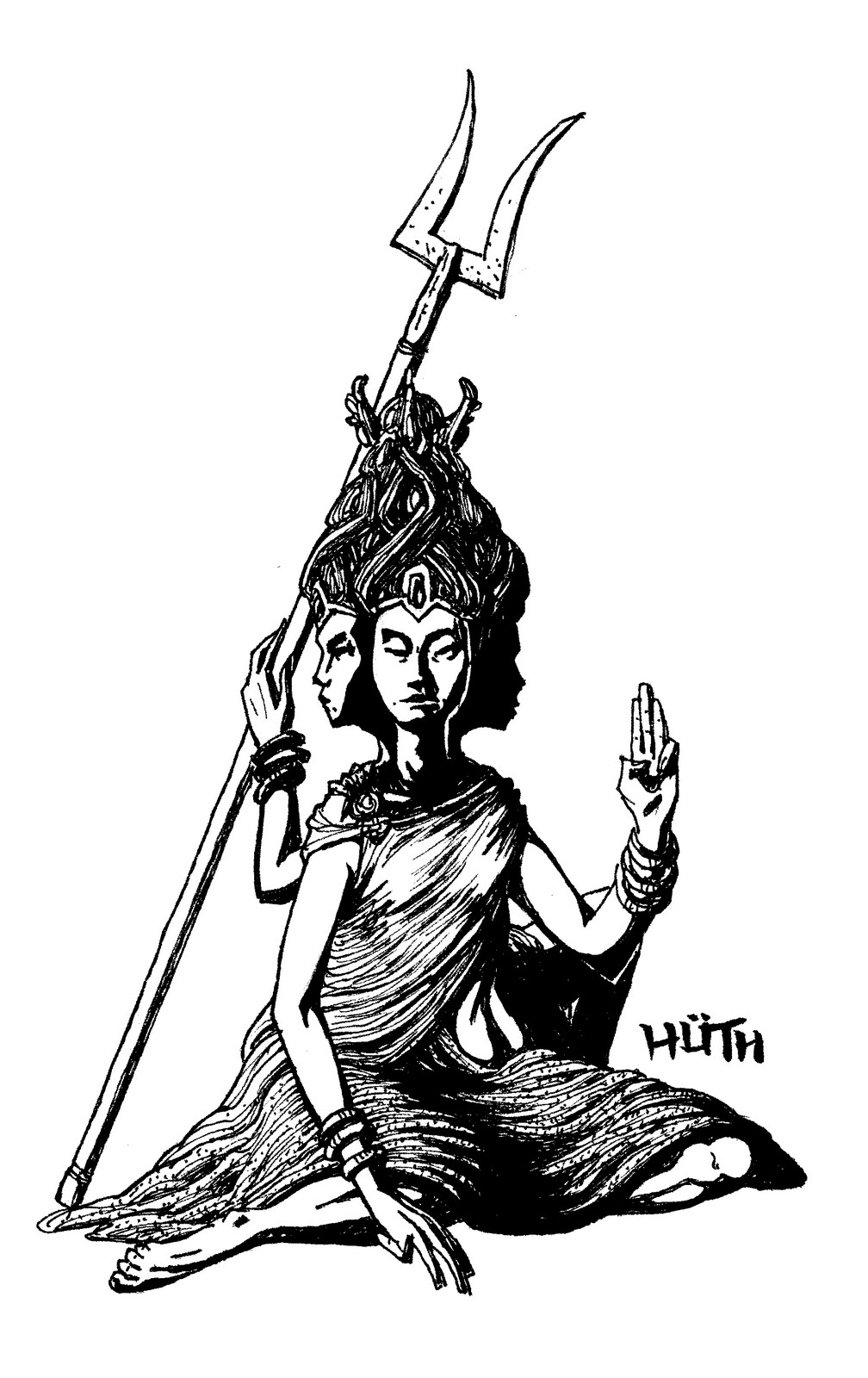
3.66 Worm Food: A tunnel in the wall here features a series of stairs downward leading to a branch of three tunnels. In the nexus there is a brass idol of Tricrucia, the petty goddess of forks in underground tunnels. The three-faced, three-legged, three-armed idol has all three arms pointing down towards the three different passages. One of the passages has an “X” carved above the cave entrance, the second a short series of three white marble steps down and the third the smell of rotting vegetation. The third tunnel is the safe one, the other two containing great lantern worms. At the end of the stinky tunnel there is a small shrine to Tricrucia containing sacred coins (5,100 sp, 710 ep, 5,400 gp) in bronze pots. If any of these are stolen, the thieves suffer a divine curse that keeps them from ever knowing their way under-ground, at least until the treasures are restored.

Image of Tricrucia by Chris Huth from Petty Gods – can’t wait for that release!

Map of Hell Hex Crawl – Current Incarnation

Quick and easy post today – the Hell map in its most current incarnation. Things will be added as I write the rest of the hex crawl. The red river near the middle is Phlegethon. The little yellow squares indicate the location of something Hellish. The letters indicate the different tunnels and vaults, such as …

[A] Hall of Surt: This tunnel is roughly 10 miles wide and 300 feet tall, with roughly rectangular walls carved throughout with the images of solemn fire giants. The air here is warm and dry, and the tunnel has no resources, including flora, fauna and water, to be spoken of. The floor is covered in massive stalactites and the ceiling in stalagmites, some of them so massive as to connect to form pillars 30 to 50 feet in diameter. This forest-like environment makes travel slower than normal (one hex every two days) and increases the chance of wandering monsters to 2 in 6 per day.


I’ll have a more interesting post tomorrow – converting a famous Halloween family into something playable for Swords and Wizardry. Here’s a hint – they’re both creepy and kooky.

Hell Preview 11 – Earth, Wind and Water?

Another preview – maybe the last before the release of NOD 11. I’m going to try to finish the first Hell hex crawl installment this weekend and publish sometime next week. I think the schedule will be …

NOD 11 – Ante-Hell, Circle 1 and Circle 2 – North half

NOD 12 – Ante-Hell, Circle 1 and Circle 2 – South half

NOD 13 – Circles 2-5

NOD 14 – Circle 6 (City of Dis)

NOD 15 – Circles 7-9

I think it’s safe to say that by NOD 15, I’ll be sick and tired of writing about Hell.

In the meantime – here’s the preview material …

15.39 Aella: This windy hex holds the stronghold of Aella, titaness of whirlwinds, daughter of Khaos. Aella’s barony is always windy, with the direction of the wind shifting substantially from moment to moment and whirlwinds forming each hour on a roll of 1 on 1d4 (treat as an air elemental’s whirlwind power).

In the midst of these winds there is a great dome of tarnished gold. The dome is pierced by a grand gatehouse of white marble with towers 60 feet tall and inner and outer portcullises. The gatehouse and dome are defended by 15 companies of sinister bronze men, who pour molten bronze upon people from murder holes in the gatehouse (6d6 damage, save for half) and 5 squadrons of harpies, who pepper invaders with arrows and sing their terrible songs.

Aella is lithe and graceful, but her green eyes have a malevolent cast and her red hair is wild and unkempt. Her skin is the color of a crimson sunset and her frame is encased in mithral platemail. She carries a massive glaive. Her treasure includes 3,920 gp, 740 pp and a silver idol in a copper basin (worth 14,000 gp) that depicts her father.

18.28 Mount Kippat: Kippat is a lonely mountain that towers over the surrounding savannah. Plumes of white and yellow smoke pour out of crevices near the base (climbers must save vs. poison or fall unconscious and fall for 6d6 points of damage). The cracks and crevices of the mountain are inhabited by a tribe (really multiple families) of 400 goblins. The crevices are anywhere from 10 to 30 feet deep, and the bottoms have been hollowed out by the goblins, who sought both a place to live and the green garnets that abound here. Over time, the goblins tunneled deep into the mountain, discovering that the deeper one went, the larger the garnets became until they finally coalesced into a single garnet about 20 feet in diameter at the very center of the mountain. A bizarre creature appears to exist in the heart of the garnet. The garnet’s great size and faceted nature makes it difficult to discern just what it hides, but it is clearly evil and the garnets of its mountain seem to carry with them a taint to this mother garnet.

66.9 Water Bridge: A powerful gout of water emerges from the ground here and arcs into the distance, well past the horizon. One can step into the rushing water and, if they can hold their breath for 10 rounds or fight the current enough to keep their head out of water (requires an open doors roll each round) they are delivered across the hex, suffering only 3d6 points of damage for the journey.

Unfortunately, the plume of water plunges back into the ground at the end of its journey, depositing the adventurer in a series of partially submerged limestone caverns crawling with giant centipedes, green slimes and other monstrosities. It is impossible to “swim” back up the flowing water and the limestone caves seem to climb ever downward, with waterfalls and submerged tunnels all the way. At the bottom of the caves there is a sickly titan chained to the cavern walls. The titan looks pale, its eyes rheumy and its lips lank and parched despite the moisture of the caverns.

The titan, Felix, is the son of Anatole, goddess of the sunrise and Sors, the god of luck. He was locked away, hidden from the Sun, as a means of tormenting his mother. His chains are semi-ethereal and pass through his wrists and ankles. They keep him weak and prevent him from using his magical powers. If freed, he would be a target for every demon and devil in Hell, but he would be a powerful ally for a time and a great help in escaping Hell.

Yeah, the titans were built with the help of THIS.

Hell Preview 10 – Brutish Hobgoblins, Chained Duergar and a Terrible, Terrible Place

12.40. Hobgoblins: A tribe of 100 brutish hobgoblins burrow deep into the earth here in search of iron for their master, Flavros. Their village is a series of gray, adobe buildings bristling with spikes and stacked upon each other in the fashion of a great mound. The hobgoblins are overseen by an erinyes called Gofany, a reeve in service to Flavros, who is as paranoid and ill-tempered as any demon ever born into Hell. She is clothed in banded armor of leather and bronze and from her wings hand dozens of holy symbols taken from foolish clerics. The village is surrounded by a 20-ft deep moat filled with hundreds of spikes (actually tubes containing worms that infect wounds caused by the tubes; save vs. disease or lose 1 point of constitution each day as the worms burrow through flesh and spread their putrescence.

The hobgoblins leave the village in work gangs overseen by the largest and meanest hobgoblins of the tribe, venturing out to ancient mines where they descend into the darkness and return with sacks of iron ingots. They process the iron around their village, and great heaps of slag have completely blighted the meadows. At Gofany’s command, 1d6 of these slag heaps can rise up in the manner of earth elementals to combat her challengers.
Gofany keeps a treasure of 1,000 sp, 3,000 gp, 260 pp and a silver plate worth 16,000 gp. The plate, when filled with a bit of wine, acts as a scrying pool that shows any person alive living their most humiliating moment.

13.56. Sand Pit: The landscape here descends into a valley of dunes. Black rivulets flow into the sandy area from the surrounding landscape, forming a oozy marsh in the center. Strange totem poles of grotesques jut up from the sandy soil, apparently carved from living trees. These totem poles are few and far between when one first enters the hex, but become more numerous as one approaches the center. They seem to exert a strange influence over magic spells cast here as well, an influence that becomes more pronounced as they become more numerous. The chance that a spell cast in the hex goes awry starts at 15%. For each mile towards the center of the hex one travels, that chance increases by 5%. If a spell is found to go awry, roll as though the spell caster has used a wand of wonder.

This strange hex has a forge fueled by cold, black fames at its heart. The flames arise from the heart of an ancient demon lord called Humbaba, long since slain by the forces of Law. The forge is worked by a three duergar brothers without names, who are themselves chained to the forge. They are currently beating upon a tangle of black, iron wires intended to become a crown for the succubus called Lady Scarlet, who dwells in a deeper Hell. The forge and the duergar are guarded by a company of dragon men who are clad in burning platemail and who wield military forks that drip with acid.

14.34. Saslarta’s Domicile: Saslarta is a pit fiend who controls a particularly unpleasant stronghold as a vassal of Azazel. Saslarta appears as a masculine, muscular humanoid with obsidian scales and a head reminiscent of a raven, upon which he wears a platinum diadem (12,000 gp). His stronghold is dull, ugly and filthy and stinks of feces. In fact, it is made of great bricks of excrement through which burrow worms and dung beetles (each turn spent inside the fortress carries a 1 in 6 chance of 1d4 rot grubs falling on you from above).

Saslarta’s fortress is surrounded by fields grazed by stench kows, the kows being tended by halfling cowherds, who split their time between tending the herds and patching the fortress walls with fresh loads of dung. The halflings are renowned leather workers. The fortress is defended by ten companies of manes demons.

The walls of the fortress are 50 feet high and it has nine mound-like towers. The entrance is via a barbican. The courtyard of the barbican is home to a chaos dragon called Mote. The wide halls and chambers of the fortress are jumbled together in a haphazard fashion, and there are numerous pits holding loathsome otyughs. A buzzing of giant flies constantly assaults the ears, and attacks by 2d6 the beasts occur on a 1 in 6 chance per hour. Saslarta’s throne room consists of a deep chamber guarded by rusted iron portcullises. His throne and the dais is rests on are made of concrete and are surrounded by a moat of raw sewage that drips from rusted pipes that jut from the walls at odd angles. The throne actually sits on a rusted iron grate, beneath which is his treasure chamber.

Saslarta’s treasure consists of 36,000 sp, 2,000 gp, 1,170 pp and a garnet worth 950 gp that was lodged in his eye during a fight with a movanic deva. The treasure is kept in a deep pit that is home to a truly massive otyugh with the face of Doukas Basileios, an ancient emperor of Nomo.

Hell Preview 9 – Hellish Halflings, a Sinister Salesman and a Demoted Demon

9.51. Halflings: Far from the salt-of-the-earth, pleasant folk of the world above, the halflings of hell are bestial little fiends who delight in the torment of others, and especially of things larger than they are. They are the sum of all the fears and jealousies that infect their kin who dwell in the sunlight. These particular halflings dwell in the branches of a wood of thorny trees that covers most of this hex. The trees grow in clumps and have a bark that can be pulped and turned into a mild poison that they rub on their barbed whips. This poison adds +1 to the damage inflicted by the whips and raises especially large and uncomfortable welts on the skin (-2 effective dexterity for 24 hours).

The halflings dress in bark cloth and lurk in the branches, preparing to ambush travelers with their barbed nets. People captured are tortured to death (suffer 1d3 points of constitution damage each day until they die). The halflings then attempt to capture their shades with their nets when they appear. The shades of lawful and neutral creatures are especially valuable in Hell, but hard to hold onto.

The halflings live in small, clannish groups of about 1d10+20 individuals. There are twenty such groups in this hex and they are encountered on a roll of 1-2 on 1d6.

10.47. Traveling Salesman: The master of Hell has a soft spot in its heart for salesmen, and they are welcomed as honored guests in its myriad rings. One of the best is a man called Kharvel, a huckster extraordinary whose crooked dealings landed him in Hell after he died. He was granted his memories and his old body by the powers-that-be and now roams Asphodel atop a great achaierai he calls Tripoli. From here he sells all manner of goods stolen and traded for, including random potions (one in six is cursed to have the opposite effect and one in twelve of those is cursed to be permanent), maps (one in six is genuine), amulets (all fake), and other odds and ends.

Despite his dishonest nature, Kharvel is actually a good source of rumors and information about the netherworld, though he charges a high price for information. He looks like a well-proportioned, rugged man with golden skin, a balding pate and a devilish beard and mustache. He wears a white tunic and cloak, worn sandals and a leather belt that holds a curved sword, several pouches and pipes of the sewer. These pipes summon shadow rats instead of the normal, mortal variety.

11.46. Ruined Fortress: While the lords of Hell may appear to be eternal and everlasting, they are as mutable, in a way, as humanity. Demons are creatures of spirit and thus immortal, but they can be reduced in stature by their peers and mortal challengers. Such was the fate of Pashatiel, a demon of doorways and beginnings and endings who deigned challenge the power of Flavros and was duly defeated and demoted.
Pashatiel’s fortress was constructed of iron blocks welded together. The fortress had two layers of walls – an outer wall 25 feet tall with 11 towers standing 30 feet tall, and an inner wall 30 feet tall with 8 towers standing 35 feet tall. The place is without windows. The top of the towers are shaped like the pretty, outstretched hands of a maiden.

The fortress is now empty. The demons who died here fighting the army of Flavros have melted away into the landscape. Weapons and armor, including hundreds of arrows that retain their poisoned tips, are scattered about the place, many atop black stains on the walls and floor that have a vaguely humanoid shape.

The interior of the fortress is clad in ivory-colored marble that is very clean and very smooth. Hallways, doorways and archways abound in this weird, quiet place, with actual chambers being few and far between. When people pass through the archways and doorways, they feel a tickle on the back of their neck, as though something is watching them and has made a note of their arrival. The interior is like a maze, and there is but a 2 in 6 chance per round (3 in 6 for elves, 4 in 6 for dwarves) of making any real progress.

The only chamber of note in the fortress is the inner sanctum, a sort of circular great hall at the heart of the place containing a throne atop a circular dais. Sprawled on this throne is Pashatiel, who in life took the form of a short, graceful man with deep wrinkles on his bronze-colored face, wide, gray, catlike eyes and long, straight, night-black hair. His appearance is now ashen and indistinct – like a shadow rather than a demon lord. Pashatiel is now a prisoner of his fortress – reduced in stature to a mere shadow demon.

Pashatiel inhabits the walls, floors and ceilings of his fortress, with the dais being the focus of his spirit and power. He can, with a thought, disappear from the dais and re-emerge from any wall, floor or ceiling. He can also command 2d4 shadows or 1d4 allips to arise from the black stains on the walls and floors.

If defeated as a shadow demon, Pashatiel sinks into the ground and re-emerges some time later as a mere lemure. Beneath the dais, which weighs 3 tons, there is a hidden treasure cache containing 1,250 gp and 400 sp.

Image from HERE. From the Monkees episode The Devil and Peter Tork – I wanted one of the devil as salesman, but I got this instead.

Asphodel, First Circle of Hell

Rather than post some locations, I thought I’d post the draft for my description of the first circle of Hell, Asphodel.

Asphodel
The First Circle of Hell

Once one has crossed the Acheron, they see looming above them a wall greater and more hopeless than any other in the cosmos. Hell, you will remember, is a prison and the demons and devils within Hell prisoners. The walls are composed of impossibly thick stones, and thus for all intents and purposes impossible to bore through or knock down. The walls are also proof against ethereal creatures and the passwall spell. Within Hell, it is impossible to teleport or open dimension doors or gates to anywhere outside of the confines of Hell.

Hell’s ramparts from the outside are a sheer face of dark gray stone about 500 feet high. The battlements are not unlike those of a mortal fortification, being crenellated and manned by barbed devils. The walls are 80 feet wide at the bottom and about 40 feet wide at the top, providing ample space for the terrible bronze guns of Hell – massive cannon 30 feet long and 6 feet in diameter that launch exploding cannon balls that inflict 12d6 points of damage in a 10-ft radius, 9d6 in a radius from 11 to 30 feet, 6d6 in a radius from 31 to 60 feet, 3d6 points of damage in a radius from 61 to 90 feet and 1d6 points of damage in a radius from 91 to 120 feet. Folks within 60 feet of the impact must pass a saving throw or be permanently deafened. The cannon have a range of 600 feet and the shells can explode in mid-air at a range chosen by the firer. These shells leave massive craters, many of which are in evidence on the gray-green plains of Asphodel just beyond the walls.

The key point about the cannons is that they point inward, not outward. Likewise, the demons on the parapets do not resist people flying into Hell – only people trying to fly out. For those attempting an escape, assume that every mile of the wall is patrolled by 1d4 squads of barbed devils (i.e. 1d4 x 10 barbed devils) and one cannon. When one section of the wall is “attacked”, barbed devils from nearby sections quickly join the fight. Fortunately, the barbed devils that guard the walls of Hell are prisoners themselves, and thus cannot go beyond the walls to chase down escapees. The gods of Law and the masters of Hell use other resources to deal escaped shades.

Most escape attempts are aimed at the Hellmouth, or Gates of Hell. The gate is unimpressive on the exterior wall – an arched portal 40 feet tall and 25 feet wide barred by a portcullis that, like the walls, is proof against ethereal creatures. The bars are 6 inches thick and made of adamant, and thus quite difficult to bend. The 80 foot tunnel beyond the front portcullis has another adamant portcullis located every 20 feet. All of these are operated by barbed demons looking down from chambers constructed around the tunnel via arrow slits. Murder holes abound, through which the demons pour such things as molten lead, acid and boiling oil. Arrow slits located about 20 feet above the floor allow them to rain arrows on those who are attempting to force their way through.

On the interior wall of Hell, the gate is more heavily defended, situated as it is between two 500-ft tall towers pierced by numerous arrow slits. Each tower is manned by three companies of barbed devils. The terrible hound Cerberus stands guard just outside the inner portcullis.

Beyond the walls of Hell, Asphodel is a wide-open, undulating savannah of long, gray-green grasses, thorny, twisted trees and tiny white flowers called asphodels, the circle’s namesake. The plains are roamed by a variety of demonic humanoids and animals in a sort of parody of Africa’s savannah. Many fortresses and even cities dot the savannah, where the lords and dukes of Hell hold court.

There is no Sun in Hell, of course, but the whole of Asphodel is swathed in a twilight gloaming, allowing creatures to see about 1 mile away, double for creatures with “darkvision”. The air of Asphodel is unnaturally still and almost suffocating in its stillness. There is no wind to move the grasses or bend the boughs of the prickly trees, and the range of wind-related magic on Asphodel is cut in half. Storms cannot be raised here nor lightning called.

Races of Asphodel
Asphodel, like most of the other circles of Hell, is not only inhabited by pitchfork-carrying devils and their victims. Four races known to people of the surface world dwell in Asphodel, though these races have been changed by their habitation in Hell.

Asphodelian Gnoll: The gnolls of Asphodel are tall and thin, with greenish hair spotted with black and glaring white eyes. They arm themselves with spears, ring armor and large, round shields. The Asphodelian gnoll utters an insane, demonic laughter while fighting, forcing people to pass a saving throw after three rounds of combat or become so unnerved that they suffer a -2 penalty to fight.

GNOLLS: HD 2; AC 4 [15]; Atk 1 bite (2d4) or weapon (1d10); Move 9; Save 16; CL/XP 3/60; Special: Unnerving laughter.

Asphodelian Goblin: The goblins of Asphodel have rear legs like those of a grasshopper. They have mottled blue skin and long fangs jutting down from behind their upper lips. These goblins carry spiked maces and wear leather armor. Their touch causes people to revert in age by one year unless they pass a saving throw.

GOBLINS: HD 1d6 hp; AC 5 [14]; Atk 1 weapon (1d6); Move 9; Save 18; CL/XP B/10; Special: -1 to hit in sunlight, touch de-ages people.

Asphodelian Halfling: Asphodelian halflings are willowy and relatively tall for their race. They have spidery arms and legs and droopy eyes, like those of opium eaters, on small heads with beetle-brows and pronounced overbites. The halflings are bald and have four gleaming white eyes spaced evenly around their heads, making it impossible to surprise them. They arm themselves with barbed nets and whips, dropping from trees to capture travelers.

HALFLINGS: HD 1d6 hp; AC 5 [14]; Atk 1 weapon (1d6); Move 9; Save 18; CL/XP B/10; Special: -1 to hit in sunlight, cannot be surprised.

Asphodelian Hobgoblin: Asphodelian hobgoblins are squat, apelike creatures always encased in black lacquered platemail and gripping their beloved axes and blunderbusses. They are deeply paranoid creatures, positive that everyone and everything is out to get them, and this makes them even more militant than usual for hobgoblins.

HOBGOBLINS: HD 2+2; AC 1 [18]; Atk 1 weapon (1d8+2); Move 9; Save 16; CL/XP 2/30; Special: Magic resistance (10%).

Hell Preview 7 – A thing, another thing and then one more thing

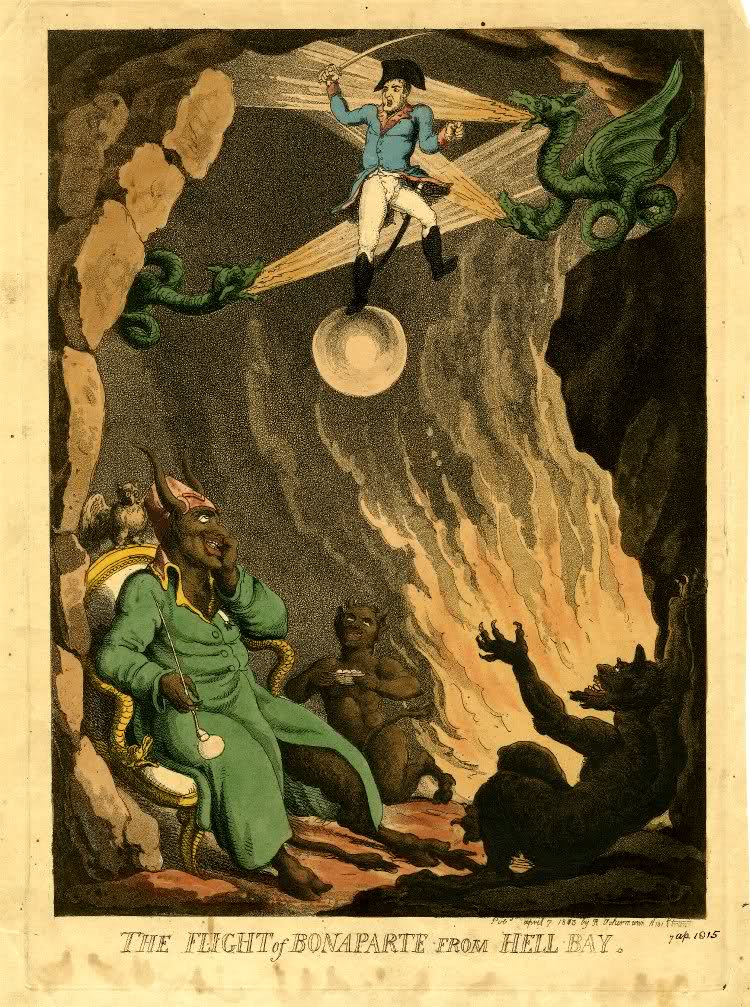
Fair warning – none of these have anything to do with Napoleon in Hell. Just liked the image.

119.52. Silver Plates: Somebody has dropped two silver plates in this hex. Characters have about a 1% chance of coming across them on their travels. The plates depict angelic beings in chains bound to large stones. The delicacy and artistry of the plates is astounding, and has an arresting effect on a person’s attention if they fail a saving throw to resist the effect. A person so drawn to the silver plates finds the plight of the fallen angels more and more compelling, and, if they encounter such angels (i.e. devils) later will suffer a -3 penalty to save against any charm or compulsion effects by them. The plates are worth 300 gp.

36.11. Necromanteion: Necromanteion is the terrible city-state of Gorgyra, the nymph of the Acheron. The city is a great dome set atop black, volcanic glass that floats above or under the Acheron as Gorgyra wishes. The interior of the city features five small harbors connected by narrow canals inhabited by demonic nixies. Between these canals and harbors there is a city of spires spun from black glass. Eerie music floats within this crystal wonderland, forcing people here to pass a saving throw each day or lose one important, happy memory (and one point of Charisma). The towers of the city are mostly empty. Each has a narrow entryway flanked by caryatid columns of transparent glass. Vultures wing through the air here and perch on the towers and fish people guide gondolas through the canals.

The fish people are Gorgyra’s children, being polymorphed from the normal, bloated white fish that swim in the murky Acheron. They are given the souls of shades who have been swept into her domain (one soul in ten is her property by right), these souls being kept in crystal spheres worn on silver chains around their necks. These shades are collected by the fish men when they leave the dome (although it appears to be solid glass, it can be passed through by Gorgyra’s servants) in their sleek, black galleons. These galleons can submerge or even fly about 20 feet above the surface of the Acheron as the fish men like. Each galleon has a crew of twenty.

Gorgyra’s palace is the largest spire in the dome that is located in the center of the dome. Here, she holds court before her people and her priestesses, female drow who have been transformed by their mistress. They now have skin covered in silvery scales and gills, as well as webbed fingers and toes. Gorgyra’s throne room measures about 50 feet in diameter with a 100-ft ceiling. The walls are the same black glass one sees in the rest of the city, though here the walls are covered in bas-reliefs of weeping women and drowned men. These sculptures leak salt water from their eyes or mouths, the water pooling on the floor about three feet deep.

FISH MAN: HD 2; AC 3 [16]; Atk 1 bite (1d4+1) and 1 weapon (1d6+1); Move 12 (Swim 24); Save 14; CL/XP 4/120; Special: Slimy skin, immune to illusion, poison and paralysis, half damage from lightning, light sensitive.

FIENDISH NIXIES: HD 1d4 hp; AC 7 [12]; Atk 2 claws (1d4 + poison); Move 6 (Swim 12); Save 18; CL/XP 1/15; Special: Charm, magic resistance (10%), poison claws (save or 1d8 damage).

DROW PRIESTESSES: HD 7; AC 6 [13]; Atk 1 short sword and dagger (1d6+1 and 1d4+1); Move 12; Save 9; CL/XP 9/1100; Special: Darkvision 120-ft, surprise (4 in 6), find secret doors, spells (dancing lights, faerie fire, darkness), cast spells as a 7th level druid, magic resistance (50%)

GORGYRA: HD 9 (72 hp); AC -1 [20]; Atk 2 claws (1d8) and bite (1d10); Move 24 (S24); Save 14; CL/XP 14/2600; Special: Sight causes blindness or death, deals double damage against lawful creatures, spells (cause disease, darkness, detect invisibility, dispel magic, haste, poison), immune to poison, resistance to fire (50%), +2 or better weapon to hit, regenerate 3 hp/rd, magic resistance (50%).

8.52. Grasping Hand: In the midst of the grasslands there is a portion of ground that looks as though it has been recently burned. Should somebody step into the middle of this burnt area and speaks the name of a place within Hell, an enormous clawed demon hand erupts from the ground beneath their feet and grasps them tightly. It rises in the air, supported on a scaly arm, and then hurls the person bodily towards that place. The landing, unless the person levitates, flies or uses feather fall, inflicts 10d6 damage, and the hand itself inflicts 1d10 points of damage.

Image from Monster Brains