Dragon by Dragon – November 1980 (43)

It’s time for another review of the grand old Dragon, and this time with a special guest appearance by White Dwarf #21. I figure, why not look at what WD was up to during the same month of Dragon I’m reviewing – see how the gaming communities in the US and UK differed.

First, though, we’ll dip into the Dragon and see what $3 got you back in 1980.

As you might be able to tell from the cover, this issue presents a new version of the Witch as an “NPC” class, written by Bill Mulhausen and revised and edited by Kim Mohan and Tom Moldvay. The first was back in Dragon #20, from November of 1978. I guess November is the month for witches.

This version is much like the one that will appear a few years later, dividing the witch into low (level 1-16) and high (level 17-22) orders. This is reminiscent of the AD&D druid. Here are a few of the essentials of the witch:

Requirements: Intelligence and Wisdom must be 15 or higher, must be human or elf (and elves are limited to 9th level, and can multi-class as witches).

Hit Dice: d4 to 11th level, +1 hit point per level thereafter.

Attack and save as magic-users.

Witches receive bonus spells for high Intelligence, as a cleric does for high Wisdom. Their chance to know each spell and such are as for a magic-user. For younger readers, AD&D magic-users had a percent chance to be able to learn any given spell of a level. This was based on their intelligence. You had to roll for each spell to see if a magic-user could learn it. So yeah, you could conceivably have a magic-user who couldn’t learn magic missile, fireball or lightning bolt.

The witch has rules for followers (gains 1d10x20 at 9th level if she establishes a place of worship), and rules about how many apprentices she can have.) She can apply for membership in the high order at level 10 if her Intelligence and Wisdom are 16 or higher and if she possesses a magic crystal ball, mirror or libram. High order witches can advance to 22nd level, and they receive special high order spells at each level from 16 to 22.

Besides their spells, they can brew poisons and narcotics, which they learn as they advance in level. This includes sleep (3rd level), truth (4th level) and love potions 6th level). She can read druid scrolls with no chance of failure, magic-user and illusionist scrolls with a 10% chance of failure and cleric spells if the spell is also on the witch’s spell list (8th level).

Witches can manufacture one magic candle per month at 9th level. The candles can cause love, offer magical protection, heal damage and other effects. She gets a familiar at 10th level, can brew flying ointment at 13th level, control dolls at 15th level, can fascinate with her gaze at 17th level, use limited wish at 21st level and shape change at 22nd level.

The witch has 8 levels of spells, which involve lots of charming, divination, some healing and a few offensive spells. It’s a cool class, but I can’t help but think you’d be just as well off with a magic-user.

Dave Cook (that one) offers some survival tips for the Slave Pits tournament at GenCon XIII. I only mention it here because those adventures went on to be classics when they were published as modules.

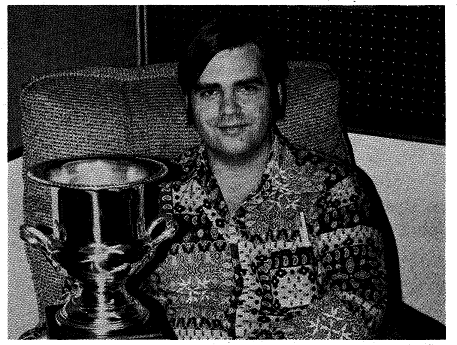
We also learn in this issue that Frank Mentzer won the 4th Invitational AD&D Masters Tournament at GenCon XIII. Dig that crazy shirt …
Speaking of great Dungeon Masters, this issue has a DM Evaluation Form for players to fill out. Here’s a sample …

This runs on for several pages and 43 questions! A couple issues ago, a reader complained that the adventures in the magazine were filler. This, ladies and gentlemen, is filler. I’m guessing GenCon kept them busy.

The Bestiary has some choice bits …
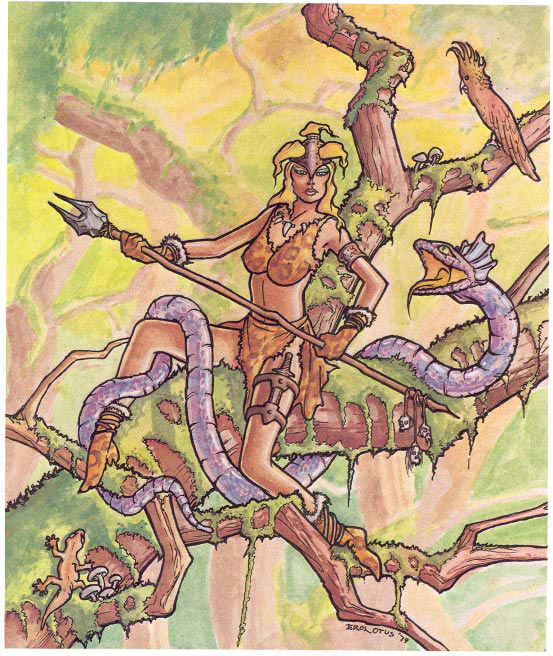
This is an amazon, art by Erol Otus (of course), monster by Roger E. Moore. I’d detail the monster stats here, but frankly, they’re humans and the women do all the “men’s work” and vice versa. Not much to see here – but the art is cool.

Todd Lockwood has a monster called a Tolwar that is basically a trunkless elephant who can telekinetically throw boulders (2d12 damage). They serve as loyal mounts.

Tolwar, Large Monster: HD 6, AC 15, ATK 1 slam (2d4) or 2 boulders (900’/2d12), MV 40′, SV F10 R11 W17, AL Neutral (N), XP 600 (CL 7), Special-Hurl boulders, only surprised on 1, telekinesis (100 lb), catch boulders with telekinesis (75%).

Ed Greenwood presents the lythlyx, a weird spiral creature that whips, constrict and drain blood from people.

Lythlyx, Large Aberration: HD 6, AC 19, ATK 1 whip (2d6 + constrict 3d6 + blood drain 1d4), MV 15′ (Fly 20′, Swim 20′), SV F13 R14 W11, AL Neutral (N), XP 600 (CL 7), Special-Blood drain can be used to heal monster (heal 1 hp per 4 hp taken), immune to charm, command, fear, hold monster and sleep, psionic attacks (all).

Now, give me a bunch of amazon warriors on tolwars hurling boulders at a band of adventurers who have stolen some amazon gold and are hiding in a half-ruined wizard’s tower, and you’ve got an adventure.

Philip Meyers has an article about disbelieving illusions, or more specifically phantasmal force. He comes up with a little system based on the intelligence of viewer and how suspicious they are about what they’re seeing. In the table below, situation 1 represents a character who has been informed about the illusion, and 6 is where the character expects to see what the illusion is depicting – in other words, 1 is super suspicious, and 6 is not suspicious at all.
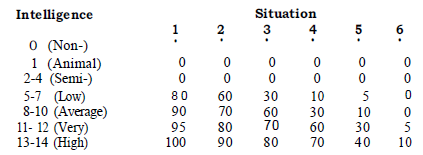
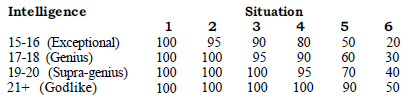
The number is the percent chance of disbelief. It is increase by +20% if olfactory or thermal components are expected but not present, +20% if aural components are expected but not present, +10% if victim of illusion is an illusionist, -10% if victim is surprised and +10% if victim’s Wisdom is 15 or higher.

I reckon you can do about the same by giving a bonus to save vs. phantasmal force as opposed to improved phantasmal force or spectral force.

This issue contains a Traveller adventure called Canard. I won’t comment, because I’ve never played Traveller, but if you’re a fan, it’s probably worth checking out.

Two reviews which might be of interest – the first a Game Designers Workshop (not Games Workshop, as I originally posted) offering called Azhanti High Lightning, about fighting aboard a giant starship. The review was positive, but wonders whether or not they should have tried to tie it to Traveller.

They also review SPI’s DragonQuest, their first “serious” foray into Fantasy RPGs. The reviewer likes it – the intentional rather than random character generation, the action points in combat – but does not care for the way experience is handed out. Overall – positive review, and another reminder that Old School gaming was already becoming “Old School” in 1980.

I’ll also note Hero, by Yaquinto Games. It was an “album game” – “The physical layout is like that of a double record album. The components are stored in the pockets, while the playing surface is printed on the two inside faces.”
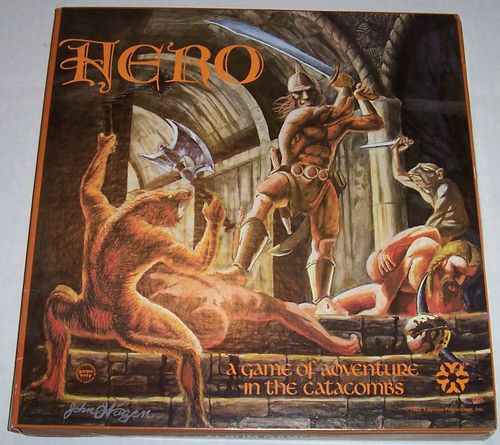
Very cool idea, and it would be fun to see something similar done these days, especially considering the connection between Old School gaming and bitchin’ Heavy Metal album art.

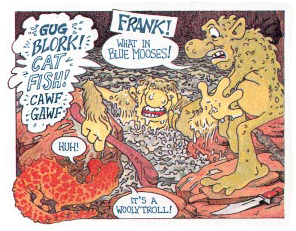
I liked this comic …

A scroll of illiteracy would be a great cursed item in a game.

A fair issue of Dragon, with a couple notable bits.

So, what was White Dwarf up to in November (really Oct/Nov) of 1980.
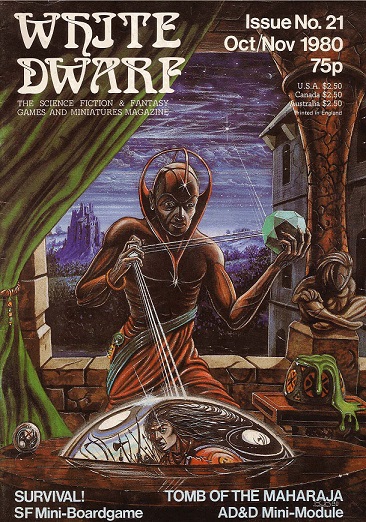
First – cool cover, but there are much better WD covers yet to come. You also notice, right off, that the layout of WD is much more professional than for Dragon at this point. Dragon makes some improvements over the years, but frankly never looked as good, and by the 1990’s and 2000’s looked terrible.

In this issue, Andrew Finch presents some cool material inspired by The Chronicle of Thomas Covenant, Unbeliever. We have a new class, Lore Lords, who combine the spell-casting ability of magic-users and clerics, along with d8 hit dice and studded leather armor. Fortunately, this is balanced by a high XP requirement. Similar classes are the Rhadamaerl, who specialize in the lord of stone, and Hirebrand, who specializes in the lore of wood. There are also Bloodguards, who serve as bodyguards for Lore Lords, songs of summoning and words of power. Having never read the Thomas Convenant books, I cannot rate how accurate these classes are, but for fans they’re probably worth checking out. One bit I liked for Lore Lords was their ability to communicate telepathically with one another. A cool house rule might permit magic-users with intelligence and wisdom of 15 or higher to communicate this way with one another.

Roger E. Moore (yeah, that guy) presents a merchant class. It’s actually pretty close to the Venturer class I did, and I promise I hadn’t seen this write up when I wrote mine. Moore’s merchants can open locks, appraise items and use suggestion and command when speaking with people. These are all percentage skills, like those of the thief. Good class.

Azhanti High Lightning gets a review in this issue – positive as in the Dragon.

The Fiend Factory has several cool monsters, the Brothers of the Pine, Chthon, Enslaver, Micemen, Dragon Warriors, Grey Sqaargs and Cyclops. Here are some quick stats:

Brothers of the Pine, Medium Undead: HD 3, AC 15 [+1], ATK 1 weapon, MV 30′, SV F15 R15 W12, AL Chaotic (LE/NE), XP 1500 (CL 5), Special-Cast one 1st level druid spell per day, shrieking wail (save or flee for 1d8 turns), immune to cold, resistance to electricity, vulnerable to fire, only plant-based spells affect them.

Chthon, Medium Aberration: HD 8, AC 20, ATK nil, MV 0′, SV F13 R- W9, AL Chaotic (LE), XP 800 (CL 10), Special-Mineral intellect that hates all animal and plant life, especially intelligent, control up to 20 plants and animals (save to negate).

Enslaver, Tiny Aberration: HD 2+1, AC 14, ATK special, MV 10′, SV F19 R17 W12, AL Chaotic (CE), XP 200 (CL 3), Special-Blindsight 30′, 90% chance of hiding among rocks, dominate creatures that touch them (save negates), hosts freed from domination must make system shock roll or die, hosts are immune to pain and mind effects.

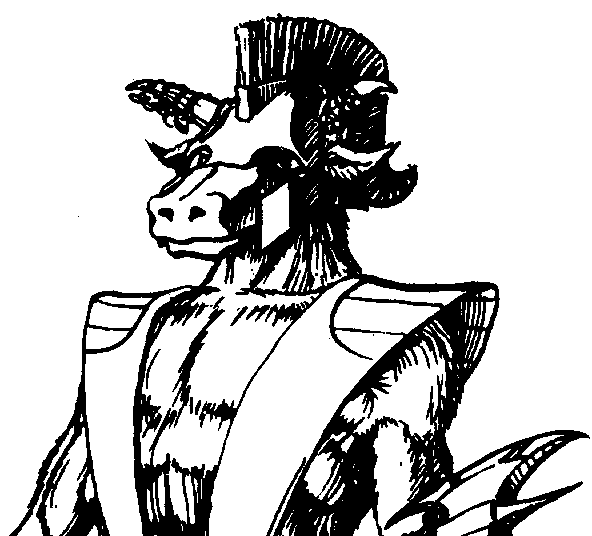
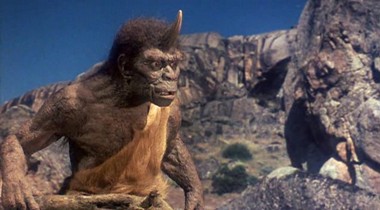
Micemen (crossbreed of brownie and orc!), Small Humanoid: HD 1-1, AC 13, ATK 1 javelin and dagger, MV 30′, SV F14 R16 W16, AL Chaotic (LE), Special-Infravision 90′, shun bright lights, surprise (4 in 6). Despite the picture, I’d like to see these dudes as evil piglets dressed as Robin Hood.

Dragon Warrior (made from dragon teeth), Medium Construct: HD 5+1, AC special, ATK 1 weapon, MV 20′, SV F14 R14 W14, AL Neutral (N), XP 500 (CL 6), Special-Cannot speak, obey commands, last for a number of turns equal to the dragon’s age category, +1 to hit, +2 to damage, attack as 6th level fighters, immune to parent’s breath weapon type, sleep, charm and hold, clad in scale armor and armed with broadsword, disintegrate when killed or dispelled.

Grey Sqaarg, Medium Construct: HD 6, AC 22, ATK 1 grapple, MV 20′, SV F14 R14 W14, AL Neutral (N), Special-Constructs built by ancient dwarves, never initiate attack, fight with strength bonus to hit and damage equal to combined modifiers of attackers, grapples to incapacitate people, made of solid stone, magic resistance 30%.

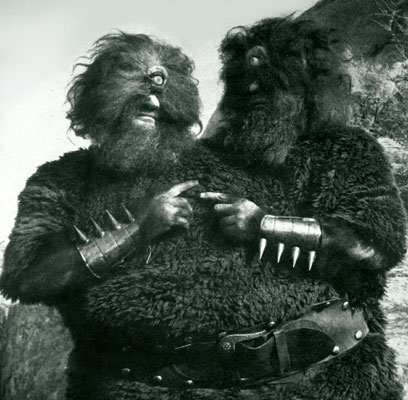
Cyclops, Large Giant: HD 6, AC 14, ATK 2 claws (1d6), bite (2d6), MV 30′, SV F10 R14 W14, AL Chaotic (CE), Special-Hypnotic stare, -1 to hit melee, -2 to hit ranged, +2 save vs. illusion, prefer to eat demi-humans to humans, breed with human females.

White Dwarf #21 also contains a sci-fi boardgame called Survival and a dungeon called the Tomb of the Maharaja. It is, I’m afraid, quite short and not terribly interesting.

All-in-all, some pretty cool stuff from the Brits in November 1980 – and of course, lots of art by Russ Nicholson.

Well, that does it for this edition of Dragon by Dragon. As always, I leave you with Tramp …

NOD 28, Revisions and Goodies

It’s a bad sign when you start all of your blog posts with “I’m sorry I haven’t posted lately …”. Still, I’ve been a busy boy, so I have a good excuse. Here are my current RPG projects and a glimpse at what I would like to do moving forward, as well as a few RPG odds and ends mixed in to make this more than an advertisement.

NOD 28

First and foremost – I’ve put NOD 28 out for sale today as a PDF! It’s going for $4.99 – 78 pages, with part one of the Trollheim Mountains hex crawl (trolls, pseudo-Russians, elemental folk, a crazed demigod, etc.), a Swiss mercenary character class, new rules for handling disease in RPG’s and a campaign idea for a “World of Atlantis” game drawing from Theosophy’s notion of “root races”. Tons of fun for $4.99. GET IT HERE or HERE.

BLOOD & TREASURE 2nd edition

I’m about 80% complete with editing and laying out the new B&T Player’s Tome, and about 35% complete with the Treasure Keeper’s Tome. The 2nd edition will not be a major departure from the first, but I’ve made some adjustments to saving throw values, XP requirements, I’ve tried to give the sorcerer some personality and make the ranger the cool cat I remember from youth, streamline any rules that could use streamlining, etc. The goal is still RULES LITE – OPTIONS HEAVY. Most of the work I’ve done is concerned with improving the layout and incorporating the first edition errata. I’ve also commissioned new covers from David Williams, which are being colored now. Here’s a sneak peek – half of this image will be the Player’s Tome, the other half will be the TK’s Tome.


If anybody has an ingenious old school idea they think would improve fantasy gaming, let me know and I’ll see if I can’t incorporate it into the rules.

QUICK MONSTER: GOATMAN

Goatmen live in hidden valleys, deep within forbidding mountains. Half mad, chaos flows through their veins. When the moon is full, they descend into the lowlands, seeking out people to torment or torture.

Goatman, Medium Monstrous Humanoid: HD 1; AC 16; ATK 1 slam (1d6); MV 30; SV F15 R13 W14; XP 250 (CL3); Special-Auras.

Goatmen cause fear (as the spell) to all within 10′ of them. Each time a person succumbs to this fear, the goatman grows larger, gaining 1 hit dice (and all that goes with it). At 6 HD, they become large creatures and their aura changes to one of madness (save or go temporarily mad). Each person that goes mad causes the goatman to gain another HD. At 12 HD, the goatman becomes huge, and the aura becomes one of death. All within 10′ of the beast must save or die. Each creature that dies increases the goatman’s hit dice by 1. At 18 HD, the goatman explodes into shadow and ceases to exist. The land where he explodes becomes permanently blighted and haunted by the souls of those who died.


MYSTERY MEN! Revision

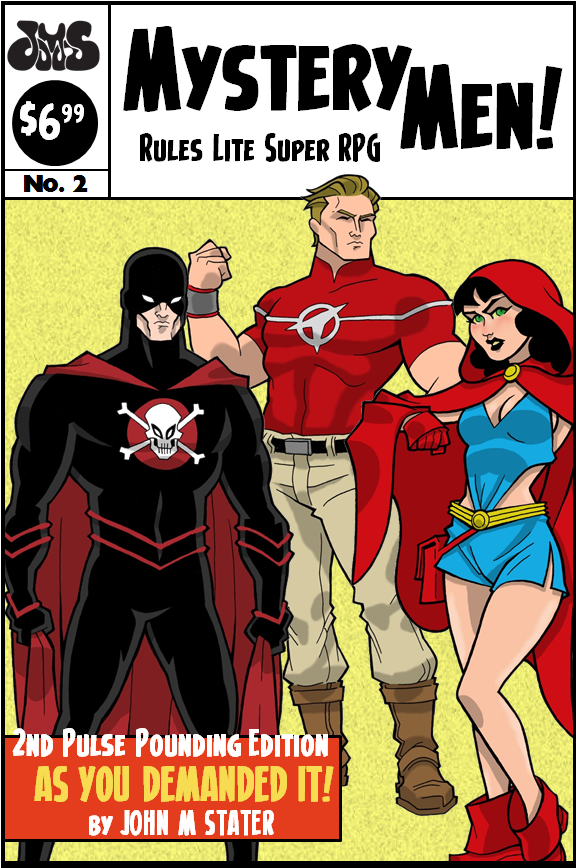
I’m further along with the MM! revision than B&T. The book is laid out, the rules tinkered with, and now I just need to give it a thorough editing. This version will still have the sample Shore City setting and the sample adventure, but will also include several write-ups of heroes and villains.

NEW SPELL: UNWITTING ALLY

Magic-User 2
Range 10′ radius
Duration 1 minute

One enemy helps you despite himself. When this spell is cast, one enemy within 10′ chosen at random must pass a Will save or become your unwitting, unwilling ally. Every move the creature makes has the possibility of helping you. For each action, roll 1d6.

1-2. The creature’s action proceeds as normal.
3-5. The creature’s action proceeds as normal, but has a side effect useful to you.
6. The creature’s action is twisted to your purpose entirely.

Help, in this case, is up to the referee, but would include things like the monster making a move, but also accidentally tripping or running into one his allies, the monster making an attack, but accidentally attacking an ally as well, etc.

BLACK DEATH

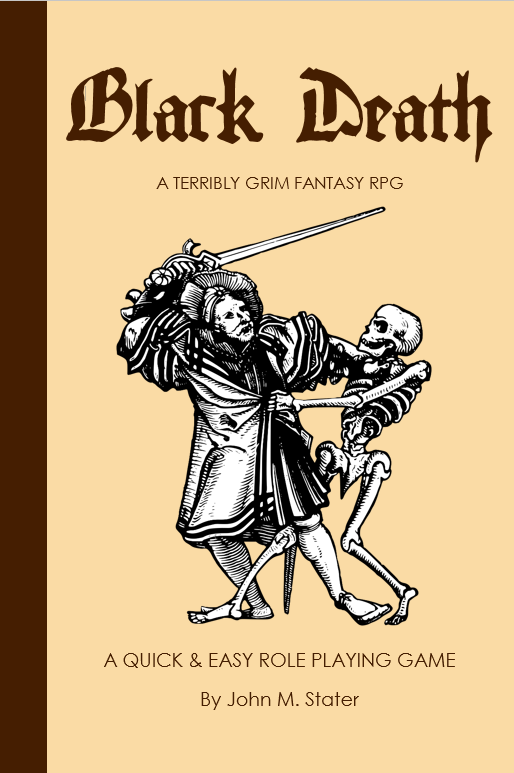
The latest Quick and Easy RPG is Black Plague, which really just needs some editing and it’s ready to go. This one is set in the era of Europe’s religious wars (mostly the Hundred Years War), and is intended to be grim and gritty – more survive than thrive. This Q&E is a bit heftier than past editions, due to containing a bit more setting info and some rules for disease and damnation.

QUICK MONSTER: LEAF SWARM

A leaf swarm is a swarm of vicious green insects. They descend on a tree, strip it of leaves, and then take their place. When a creature nears the tree, the leaf swarm strikes, surprising on a roll of 1-4 on 1d6. The monster’s stings cause blindness. The first save a creature fails blurs their vision (-2 to hit and damage), the second failed save blinds them for 1 minute, and the third blinds them permanently.

Leaf Swarm, Tiny Vermin: HD 4; AC 13; ATK 1 swarm (1d3 + special); MV Fly 60; SV F14 R13 W14; XP 400 (CL5); Special-Blindness.

THE FUTURE

What I’d like to start doing next is producing more adventure material for the games I’ve written. No more games for me – just fun, supplemental material.

For GRIT & VIGOR I want to do setting books that cover different eras – the historical events that lend themselves towards adventure, the equipment, the personalities. Each book would also have an adventure for that era. These would be trade paperbacks, probably 40 to 60 pages.

For MYSTERY MEN! I’d like to do some short books of heroes and villains, also accompanied by an adventure or two. They might be themed, or they might just be whatever tickles my fancy. These would maybe run 20 to 30 pages, trade paperback.

For BLOOD & TREASURE I’d like to do some adventures, with a few new monsters, new spells, etc. Again, trade paperback, probably 30 to 40 pages.

I also want to start writing supplements called THE LAND OF NOD that would provide hex crawls, mini-adventures and other setting material. These would probably also be trade paperbacks, maybe in a landscape format. Page count here would probably be around 120 pages. The first step would be to collect and revise the old NOD hex crawls.

I still have a revision of Space Princess and Pars Fortuna slated for the second half of this year, and I have more Bloody Basics I would like to make.

So – that’s what’s on my agenda for 2016. We’ll see how far I get. Hopefully, as the revisions and editing slows down I’ll have more time for blogging. I have tons of ideas that need to be fleshed out, and God willing I’ll start that fleshing process as the year wears on.

Cheers!

Dragon by Dragon – August 1980 (40)

It’s chilly outside, but this edition of Dragon by Dragon goes back to the balmy summer days of 1980, with the August issue of Dragon! Fantasy and sci-fi films were all the rage in August 1980, from Smokey & the Bandit II to Xanadu to Final Countdown. Well, the last two are fantasy/sci-fi. The first is sort of fantastic.

Let’s see what fantasy & sci-fi offerings the good folks at TSR were serving up …

AUGUST 1980 DRAGON TOP TEN

#1 – PEOPLE CAN COMPLAIN ABOUT ANYTHING

A letter to the editor:

“Dear Editor:
I must get it off my chest: Why do you print so many modules? I agree that it’s a nice concept, a magazine and a module for only $3.00, but there are some people who could do without them and be able to afford this almost perfect magazine. If you must put a filler of some sort in here, why not. make it a game?”

Apparently, the modules were “filler”.

AD BREAK

I’ve seen some interest in Boot Hill and western RPGs recently on Google+, so I thought this ad might be of interest:

I’ve seen many Boot Hill articles, but this is the first ad I remember seeing.

#2 – THE DUELING ROOM

This will sound odd to some readers, but one of the things I like about early D&D was the lack of desire to make it immersive and real. There was already that strain in some players and game masters, but the early breed seemed content to play it as a game that didn’t have to make much sense. Characters had crazy names and did crazy things.

Thus my appreciation for “The Dueling Room” article by Jeff Swycaffer. It’s a place for two players to pit their characters against one another. Why? Because it sounds like fun. Because my character can beat up your character – no he can’t – yes he can – prove it!

Naturally, the dueling room has some random tables attached to it, because the room changes as the duel proceeds, including some “odd events” like fireballs bursting into the room and absolute, unalterable darkness for 6-11 turns. Sounds like fun.

I seem to remember some folks on G+ doing a D&D fight club – this would be the perfect arena for fights like that.

I think I’ll put designing something similar on my list of articles I need to finish for this poor, neglected blog.

SIDE TREK

“Digging the burial mound or building the funeral pyre requires 1-6 hours of labor, depending on the softness of the soil and the availability of firewood. Another 1-3 hours is required for preparation of the body, final rites and actual interment or cremation.” – George Laking

Now you know.

#3 – FLAMING OIL

Flaming oil (and it’s modern cousin alchemist’s fire) have long been popular because they seem like a way to break the melee rules and kill things that would otherwise be difficult to kill. My players have hurled or prepared to hurl flaming oil quite a few times.

“Don’t Drink This Cocktail – Throw It!” by Robert Plamondon is an examination of the stuff. This is one of those articles that deeply explored a D&D concept … to death one might say. The desire to make gaming very complex was there from the start, and the cycle of “more complexity” to “more simplicity” is ongoing. I’m old and crusty enough now that I’m pretty thoroughly stuck in the “keep it simple” camp.

Still, as long as this article is, the rules are pretty easy to boil down:

Only you can prevent fire damage

1 – Make attack roll. If you miss, roll d12 to determine which direction (1 = “1 o’clock”) it goes.

2 – Roll d20 – on a “1” it didn’t break, on a “2” it didn’t light.

3 – If you hit, you score 2d6 damage in round one, and 1d6 in round two.

4 – Splash is3′, creatures get a saving throw (vs. poison) or take 3 damage. Armor doesn’t help.

The article touches upon the flammability of dungeons, and then includes this gem:

“Additionally, rumor has it that pyromaniac players are sometimes attacked by a huge bear in a flat-brim hat who fights with a +6 shovel.”

#4 – THE OTHER WERE

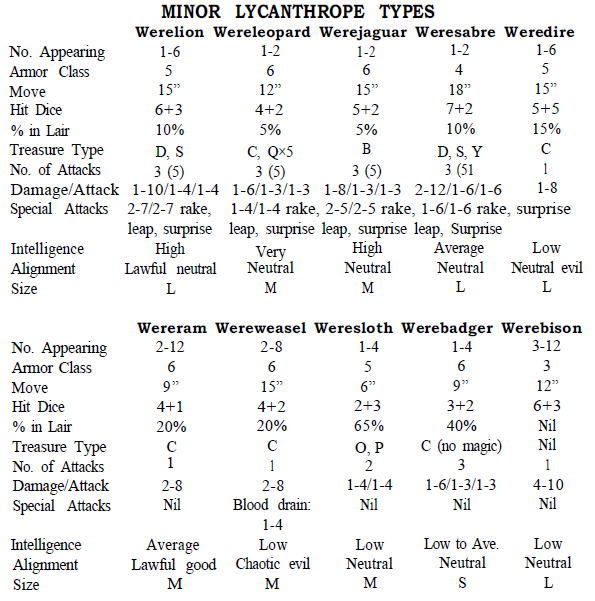
Roger E. Moore presents a number of additional were creatures in this article: Werelions, wereleopards, werejaguars, weresabres (as in sabre-tooth tigers), weredires (as in dire wolves), wererams, wereweasels, weresloths (yep), werebadgers and werebisons.

Not a bad collection. I often just hand wave alternate were creatures and use the existing were creature stats I think are closest – such as using the werewolf for a wereleopard, but why not use this quick and easy chart of monster stats instead:

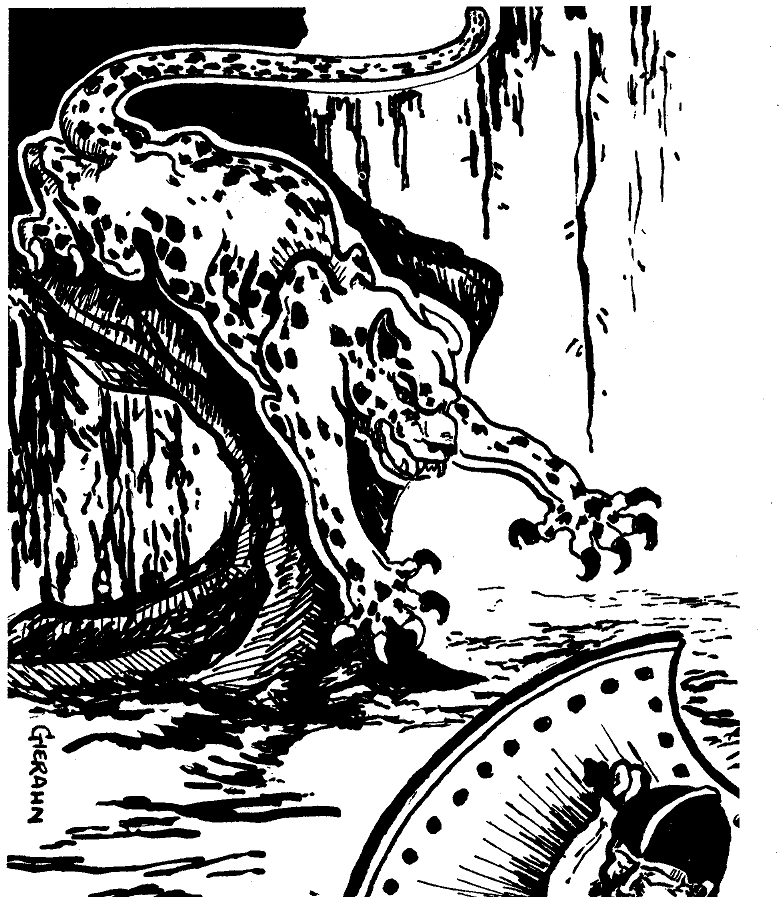
And dig that werejaguar illustration that accompanied the article.

AD BREAK

I thought this ad was unique:

I’m guessing the art for Spellbinder was late …

#5 – GIVING THE UNDEAD THEIR DUE

The article “Giving the Undead an Even Break” by Steve Melancon starts as follows:

“A 22nd-level Mage Lich approaches a band of adventurers. Suddenly, an 8th-level Cleric presents himself forcefully. The DM rolls 19 on a 20-sided die, and the Lich runs in terror.

Such a scene is ridiculous.”

Is it? If the game is meant to be “realistic” to you, or you’re looking for high drama, I suppose it is. If you’re playing a game, then it’s not so bad. Clerics turn undead. The lich is undead. So be it. Monopoly is equally ridiculous, but it’s just a game. So what?

If this does bother you, though, this article might help. It uses a percentile roll for turning undead, to make the tough undead harder to turn. There’s some cross referencing involved as well.

Personally, I’d just allow “name-level” undead a saving throw against the turning effect, giving them another chance to resist. Simpler, probably just as effective.

#6 – INTERNATIONAL MEN OF MYSTERY

Paul Montgomery Crabaugh wrote a nice little article on globe hopping for international spies, for the Top Secret game. It’s nothing fancy, just a d% table of 100 “fun” places to visit on a spy adventure. The game master can use it to help design a convoluted plot – roll for a starting point, then roll three or four more times for where clues might lead … with a few false clues thrown in to make it tough. I won’t reproduce the table here, but check out the issue and the article, especially if you’re doing a Cold War spy game.

SIDE TREK

There’s a long article in this issue about how fantasy worlds should operate, which is interesting but, really, “say’s who?” It is a worthwhile article to read, though, with some neat concepts and tables – again, I suggest one find a copy of the magazine – but what I wanted to point out was an early piece by Jim Holloway for TSR.

If I had the money, and the interest was out there, I’d love to do an expanded Sinew & Steel with art like this in it.

AD BREAK

Read more about it

#7 – MONSTERS

Josh Susser created a pretty cool monster for this issue. The fire-eye lizard is something like a tiny dragon (red, orange, yellow, green, blue, indigo or violet) with blazing, luminescent eyes it can use to blind creatures. It can also make a prismatic sphere of its own color that lasts for 3

turns. Lizards of different colors can cooperate to add layers to the sphere or lizards of the same color can make larger spheres with a longer duration.

Here are the Blood & Treasure stats:

Fire-Eye Lizard, Tiny Magical Beast: HD 1+2 (females 1+3); AC 16; ATK 1 bite (1d4 for males or 1d4+1 for females); MV 5 (F120, S30); F16 R13 W16; XP 100; Special-Blind, prismatic sphere.

I also dig Ed Greenwood’s wingless wonder (illustration to the right), but would mostly love to play one in a game. Here are the quick stats:

Wingless Wonder, Small Aberration: HD 2+2; AC 12; ATK 9 or 12 tentacles (1 + constrict); MV 20; F16 R15 W13; XP 200; Special-Radiate continuous anti-magic shell, immune to fire, eats gems (cannot digest them, 1d4+4 in stomach), psionic blast when killed (-4 to save).

The issue also has stats for Pat Rankin’s flitte and Lewis Pulsipher’s huntsmen.

#8 through #10 … well, nothing. Not as much caught my interest this issue. There were some magic items for Runequest, and some D&D magic items folks might like, and the aforementioned very long article about making faerie “real” in your campaign worlds. Tom Wham also wrote some additions for The Awful Green Things from Outer Space.

See you next time, hopefully with some new content for your game.

A Gaggle of Gobblers

To celebrate Thanksgiving, when we give thanks to God by feasting on a slain dinosaur, I present a multitude of monsters based on the humble turkey.

We begin with the original:

Turkey, Wild Forest

Size: Small (30 lb., 4’ tall)
Type: Animal
Hit Dice: 0 (1d4 hp)
Armor Class: 12
Attack: 1 scratch (1d2)
Movement: 30 (Fly 60)
Saves: F14 R12 W19
Alignment: Neutral (N)
Intelligence: Animal
No. Appearing: 1d2
XP: 25 (CL 0)

Wild forest turkeys have excellent daytime vision, and are only surprised on a roll of 1 on 1d8. At night, their vision is far worse, and they are surprised on a roll of 1-3 on 1d6. They dwell in meadows in woodlands.

Turkey, Giant Wild Forest

Size: Medium (60 lb., 8’ tall)
Type: Animal
Hit Dice: 1
Armor Class: 13
Attack: 1 scratch (1d4)
Movement: 30 (Fly 60)
Saves: F13 R12 W18
Alignment: Neutral (N)
Intelligence: Animal
No. Appearing: 1d2
XP: 50 (CL 1)

Giant wild forest turkeys are known to prey on small creatures, like gnomes, when they are particularly hungry. Like their smaller kin, they have excellent daytime vision, and are only surprised on a roll of 1 on 1d8. At night, their vision is far worse, and they are surprised on a roll of 1-3 on 1d6. They dwell in meadows in woodlands.

Turkey-Men

Size: Medium (200 lb., 8’ tall)
Type: Monstrous Humanoid
Hit Dice: 1
Armor Class: 13
Attack: 1 scratch (1d4) or by weapon
Movement: 30
Saves: F13 R15 W16
Alignment: Neutral (N)
Intelligence: Low
No. Appearing: 1 male + 2d6 females
XP: 50 (CL 1)

Turkey-men are somewhat dull-witted woodland humanoids. Males live alone, and are quite territorial. They keep harems of 2d6 females, who make up the fabric of turkey-man society. Males maintain alliances with their brothers, and with them control a larger territory against other brotherhoods.

Turkey-men are tall and gangling, with the heads of turkeys and tufts of feathers around their necks. Their feet resemble those of turkeys, and their fingers are talons as well. They often wear cloaks of wild turkey feathers, and usually carry simple spears or war clubs and hide shields in combat.

Like wild turkeys, they have excellent daytime vision, and are only surprised on a roll of 1 on 1d8. At night, their vision is far worse, and they are surprised on a roll of 1-3 on 1d6. They dwell in hide lodges on woodland meadows.

Draco-Turkey

Size: Medium (300 lb., 8’ tall)
Type: Dragon
Hit Dice: 5
Armor Class: 15
Attack: 2 claws (1d4) and bite (1d6)
Special: Gobble (30’ cone, sonic damage)
Movement: 30 (Fly 60)
Saves: F11 R10 W11
Immune: Sleep and paralysis
Alignment: Chaotic (NE)
Intelligence: Average
No. Appearing: 1
XP: 500 (CL 6)

Listen, the woodlands can get a bit boring. Sometimes a green dragon finds a cask of wine, drinks it, gets a little crazy and, well, draco-turkeys happen. Like their normal turkeys, they have excellent daytime vision, and are only surprised on a roll of 1 on 1d8. At night, their vision is far worse, and they are surprised on a roll of 1-3 on 1d6. They make their lairs in wooded hollows, felling trees into something resembling a crude lodge.

Galliraptor

Size: Medium (330 lb., 8’ tall)
Type: Animal
Hit Dice: 3
Armor Class: 15
Attack: 1 talon (1d6) and bite (1d4)
Movement: 45 (Fly 60)
Saves: F12 R11 W17
Alignment: Neutral (N)
Intelligence: Animal
No. Appearing: 1d4
XP: 150 (CL 3)

These creatures are hybrids of giant wild forest turkeys and deinonychuses. They are leaner than giant turkeys, and faster. Like their smaller kin, they have excellent daytime vision, and are only surprised on a roll of 1 on 1d8. At night, their vision is far worse, and they are surprised on a roll of 1-3 on 1d6. They dwell in meadows in woodlands.

Gruesome Gobbler

Size: Medium (330 lb., 8’ tall)
Type: Magical Beasts
Hit Dice: 4
Armor Class: 15 [+1]
Attack: 1 talon (1d6) and bite (1d4)
Movement: 45 (Fly 60)
Saves: F11 R10 W15
Resistance: Fire, magic 10%
Alignment: Chaotic (CE)
Intelligence: Low
No. Appearing: 1d4
XP: 150 (CL 3)

Gruesome gobblers are galliraptors infused with demonic power. They are sometimes summoned and bound by shamans to keep people away from evil places. Like their smaller kin, they have excellent daytime vision, and are only surprised on a roll of 1 on 1d8. At night, their vision is far worse, and they are surprised on a roll of 1-3 on 1d6. They are +2 to hit and damage Lawful (Good) creatures.

Were-Turkey

Size: Medium (60 lb., 8’ tall)
Type: Monstrous Humanoid
Hit Dice: 2 [Silver]
Armor Class: 15
Attack: 1 scratch (1d4) or bite (1d4) or by weapon
Movement: 30 (Fly 60)
Saves: F15 R12 W12
Alignment: Neutral (N)
Intelligence: Average
No. Appearing: 1
XP: 200 (CL 3)

When the full moon is rising, you can find the were-turkeys scrambling for the woodlands, mostly to avoid the embarrassment of turning into a turkey in front of their friends. “Why”, they ask, “why couldn’t I have been bitten by a werewolf?” They have excellent daytime vision, and are only surprised on a roll of 1 on 1d8. At night, their vision is far worse, and they are surprised on a roll of 1-3 on 1d6. Were-turkeys can communicate with turkeys.

By the way – I put my five latest print titles at Lulu on sale at 25% off – today only. Pick one up if you’ve a mind to.

Beasts of Mild Interest

I was groovin’ around the internet the other day and came across some cool animal pictures. So I made stats for them. Because I’m a geek.

Not all of these animals are dangerous, per se, but in D&D world everything is trying to kill you, so why not these blokes. They could also be used to make giant versions, weird hybrids, lycanthropes or be used as familiars, so enjoy!

Maned Wolf

Image via Wikipedia

Size/Type: Small Animal
Hit Dice: 0
Armor Class: 12
Attack: 1 bite (1d4 + trip)
Movement: 40
Saves: F14 R13 W19
Alignment: Neutral (N)
Intelligence: Animal
No. Appearing: 1
XP: 50 (CL 1)

Maned wolves are the tallest canines in the world. They have a distinct odor, which is why they are also known as “skunk wolves”. They are native to Brazil. They would make cool mounts for pixies.

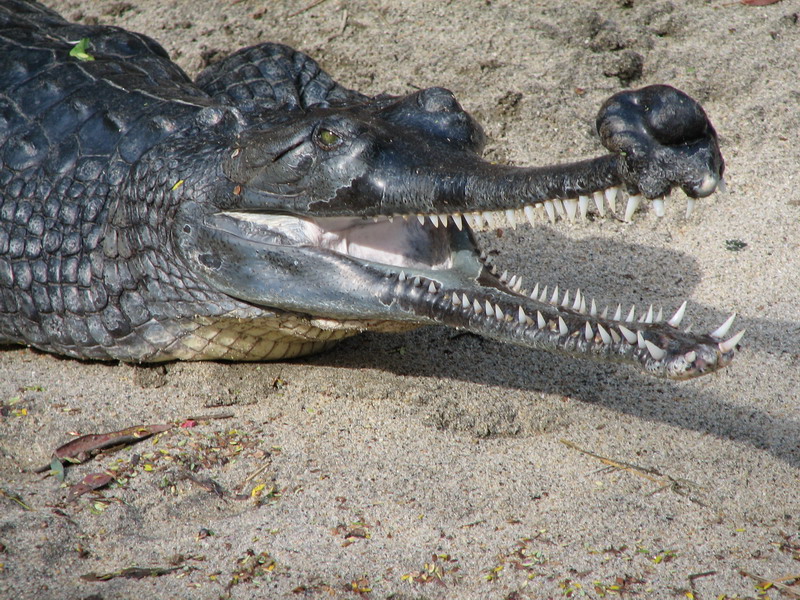
Gharial

Size/Type: Medium Animal
Hit Dice: 3
Armor Class: 13
Attack: 1 bite (1d6 + constrict) or tail (1d8)
Movement: 30 (Swim 40)
Saves: F12 R12 W17
Alignment: Neutral (N)
Intelligence: Animal
No. Appearing: 1d8
XP: 300 (CL 4)

Gharials are river crocodiles from India. They have very narrow snouts, and tremendous maneuverability when swimming.

Gharial – Large

Image via Wikipedia

Size/Type: Large Animal
Hit Dice: 9
Armor Class: 12
Attack: 1 bite (2d6 + constrict) or tail (2d6)
Movement: 30 (Swim 40)
Saves: F8 R9 W14
Alignment: Neutral (N)
Intelligence: Animal
No. Appearing: 1
XP: 900 (CL 10)

While most gharials adhere to the previous stats, some males grow much larger.

Bekantan (Proboscis Monkey)

Image via Wikipedia

Size/Type: Small Animal
Hit Dice: 0
Armor Class: 12
Attack: 1 bite (1d3)
Movement: 30 (Climb 30)
Saves: F14 R13 W19
Alignment: Neutral (N)
Intelligence: Animal
No. Appearing: 1d10+8
XP: 25 (CL 0)

Proboscis monkeys live in large bands in roughly the same terrain as orangutans. They can swim up to 60 feet underwater.

Okapi

Size/Type: Large Animal
Hit Dice: 5
Armor Class: 12
Attack: 1 slam (1d6)
Movement: 40
Saves: F10 R11 W16
Alignment: Neutral (N)
Intelligence: Animal
No. Appearing: 1
XP: 250 (CL 5)

Okapi are natives of tropical jungles. Rarely seen, they are inoffensive creatures who would look really cool as mounts for elven druids.

Babirusa

Image via Wikipedia

Size/Type: Medium Animal
Hit Dice: 1
Armor Class: 11
Attack: 1 gore (1d4)
Movement: 40
Saves: F13 R13 W18
Alignment: Neutral (N)
Intelligence: Animal
No. Appearing: 1 (male) or 1d4x20 (females and young)
XP: 50 (CL 1)

Babirusa are swine that dwell on tropical islands. Their tusks grow so long that curl around and can even pierce their own heads. They can fight until reaching -6 hit points, and can run at five times their normal movement rate.

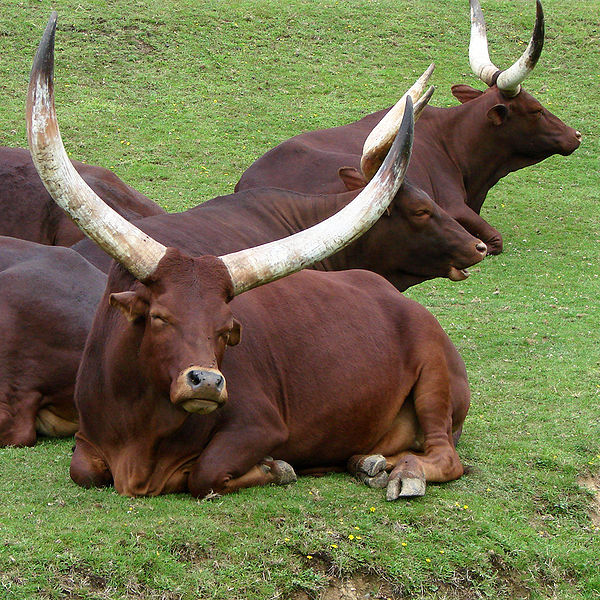
Ankole-Watusi

Image via Wikipedia

Size/Type: Large Animal
Hit Dice: 7
Armor Class: 12
Attack: 1 gore (2d6)
Movement: 40
Saves: F9 R10 W15
Alignment: Neutral (N)
Intelligence: Animal
No. Appearing: 5d6
XP: 350 (CL 7)

Ankole-watusi are African cattle with enormous horns. A frightened herd flees as a group in a random direction (but always away from the perceived source of danger). They run over anything of Large size or smaller that gets in their way, dealing 1d12 points of damage for each five cattle in the herd (Reflex saving throw).

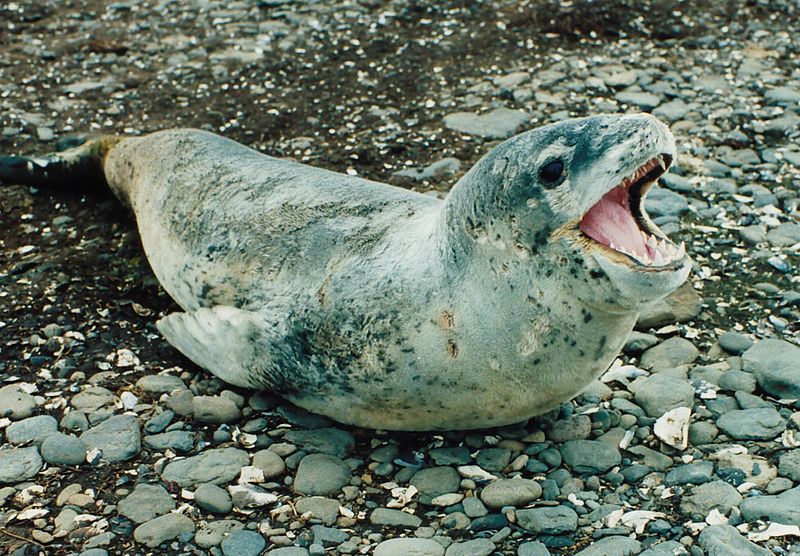
Leopard Seal

Image via Wikipedia

Size/Type: Large Animal
Hit Dice: 6
Armor Class: 13
Attack: 1 bite (1d6)
Movement: 20 (Swim 50)
Saves: F9 R9 W15
Alignment: Neutral (N)
Intelligence: Animal
No. Appearing: 1
XP: 300 (CL 6)

Leopard seals are seriously dangerous predators who have been known to attack and kill people … so totally D&D.

Patagonian Mara

Image via Wikipedia

Size/Type: Small Animal
Hit Dice: 0
Armor Class: 12
Attack: 1 bite (1d4)
Movement: 50
Saves: F14 R12 W19
Alignment: Neutral (N)
Intelligence: Animal
No. Appearing: 1d4
XP: 25 (CL 0)

Patagonian maras are great big bunnies with small ears from South America.

Dragon by Dragon – June 1980 (38)

It’s Fall here in Nevada – finally. Summer usually lingers until Halloween (or Nevada Day, if you prefer) and then gets its back broken. But Dragon #38 was published in June of 1980 – summertime!

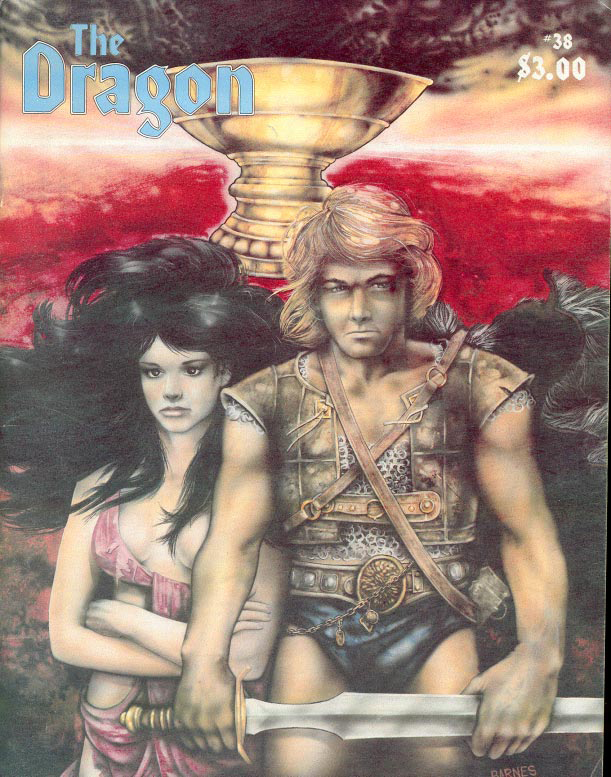
The guy on the cover is appropriately attired for summer, though somewhat less so for adventuring. It’s worth remembering that the male equivalent of the chainmail bikini was the fur underwear that graced many a barbaric warrior in the 1980’s (and professional wrestlers – it was really the heyday of violent men in their underwear).

So, onto the ten best things about Dragon #38!

We start this post with an advertisement.

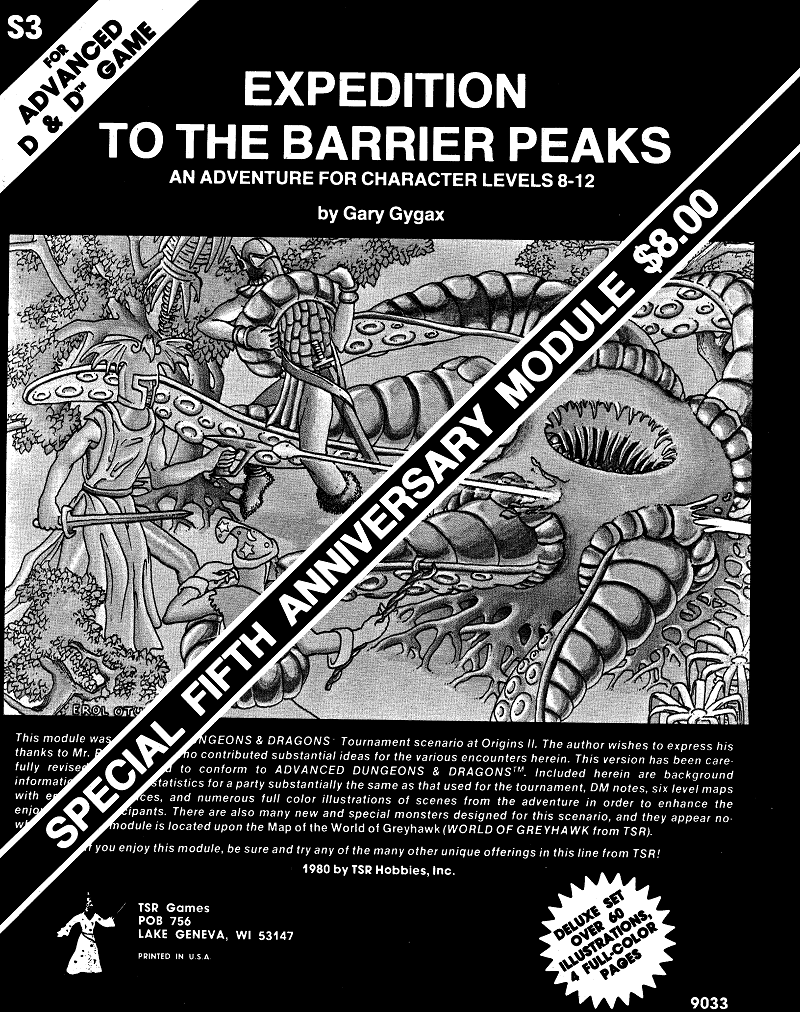
The first is S3 – Expedition to the Barrier Peaks, the special Fifth Anniversary Module! Only $8.00 – approximately $23 in today’s dollars. Am I selling my stuff too cheap? Well, I’m not writing classic modules, so probably not.

#1 … In the Weeds with Dragons

I’m not trumpeting this article because it’s a truly great addition to the world of Dungeons & Dragons. Rather, because it takes me back to a day when these sorts of “scholarly” articles about the game were not so unusual.

Lakofka was a master of them (and he perhaps still is). He had a penchant for digging into the elements of the game, thinking deeply about them, and then reworking them for his campaign. Were they better for the attention? I suppose that’s a matter of opinion … but I like that he did it.

In this article, he presents new percentage chances for dragon’s speaking and casting spells. He also comes up with the chances that dragons might cast spells other than magic-user spells. He also presents a three new dragons – Brown, Orange and Yellow. The brown dragon has faerie fire and lightning breath weapons, the orange dragon color spray breath weapon (I dig this) and the yellow dragon has breath weapons that cause disease and blindness.

#2 … Redacted

Merle Rasmussen writes an article about a new game … Top Secret. I never played it, but was always intrigued. I did a quick check, and didn’t see anything about a retro clone of this one – maybe some fan out there can create one. In the meantime, I would suggest checking out Bill Logan’s White Lies. Looks awesome.

#3 … Memories

Speaking of spies and espionage … the Cold War. The advertisement to the right was one of many games about nuclear destruction (or its bizarre aftermath) from the period. I’m never sure if the people writing them didn’t want it happen a little. This one also brought to mind Supremacy. Fun game – I played it often. I remember the f-u move in that game was, when it was obvious you were going to lose, to nuke your own territory and launch a nuclear winter so that nobody won. Tricky, weird, stupid game, but lots of fun with friends. Right up there with RISK and Axis & Allies.

#4 … Gygaxian Sugar Coating

The old man himself speaks on the idea that good characters must be stupid …

“Good does not mean stupid, even if your DM tries to force that concept upon you. Such assertions are themselves asinine, and those who accept such dictates are stupid.”

Which begs the question: Is Raggi the Gygax of his day?

Also:

“Female dwarves are neglected not because of male chauvinism or any slight. Observers failed to mention them because they failed to recognize them when they saw them. How so? Because the bearded female dwarves were mistaken for younger males, obviously!”

I was never big on bearded female dwarves, but I think I’m changing my mind. Time to commission an all-female dwarf party illo for the new Blood & Treasure.

AD BREAK

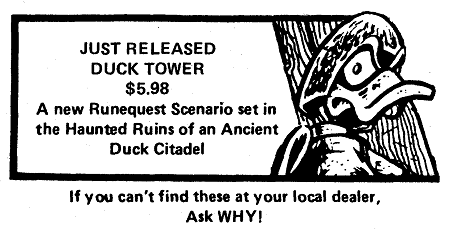
Always wondered what the heck the deal was with the ducks in that game. Was it Howard the Duck inspired?

#5 … The Seven Magical Planets

Super cool article by Tom Moldvay with great art by Darlene.

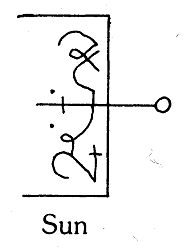
The article draws on Agrippa to present the magical correspondences of the different classical planets for use in gaming. For example, here’s the entry for the Sun.

THE SUN

Archetypal Plane: Light (or the Positive Material).

Description of Archetype: A blond, golden-skinned child holding a sceptre. A rooster crowing. A lion roaring. A sleeping gold dragon. The phoenix rising from flames. An individual with a tawny complexion, yellowish eyes, and a short, reasonably hairless, handsome body. A wise, honorable personality, courageous to a fault, but constantly seeking praise.

Planetary Powers: Magic concerned with money. Fortune and destiny in general. Any operation involving peace, harmony, and friendship. Long life and health. Transmutation of the elements. Spells involving light; magic whose prime purpose is goodness.

Color: Gold, or bright yellow.

Metal: Gold.

Stones: Amber, Topaz, Heliotrope (Yellow Jasper), Cat’s Eye

Agate, Citrine, Jacinth.

Plants: Sunflowers, Saffron plants, Ginger, Gentian, Celadine, Dittany, Lotus trees, Laurel trees, Poliginia, Ivy, any vines which climb toward the sun.

Animals: Lions, Roosters, Eagles, Rams, Boars, Shellfish, Worms, most Beetles, the Phoenix, a Cockatrice.

Day: Sunday.

Numbers: 1, 6, 11, 66, 666.

Selected Deities: Sol, Helius, the Titans Theia & Hyperion, Samas, Tai Yang Ti Chun, Tionatuh, Brigit, Apollo, Suya, Vishnu, Asar, Ra.

Angel: Michael.

Angelic Order: The Shinanim.

Devil: Surgat. (possibly also Mephistopheles).

Demon Order: Type III Demons.

Spirits: Dardael, Hurtapel, Nakiel, Vianathabra, Carat, Haludiel, Machasiel, Burchat, Suceratos, Capabile, Och, Sorath, Aquiel.

Tarot Trumps: The Sun, The Wheel of Fortune, The Hanged Man.

This is just one of those really useful articles for generating gaming ideas.

#6 … True Confessions

I freaking love the line drawings for miniatures they used to do in The Dragon. I want to make them all into characters. And, most importantly, I want to learn how to draw something that cool in such a small, compact package.

#7 … Another Damn Ad …

I know, but look at this thing!

#8 … The Civil War

The Electric Eye article by Mark Herro looks at two games – Civil War and Star Trek. Why is this so cool … because when I was a young nerd, my father borrowed a book of programs from an old nerd he worked with and I typed the Civil War program into a computer and played it. So help me God. To kids out there, I might as well be explaining about the day the guy who invented fire showed me how it was done.

#9 … The Flolite

Sometimes it’s the monster’s stats that make you want to use it. Sometimes its the art. For the flolite, it’s the art.

And dig the Dyson-esque hatching on the verges of the lights. So cool.

So what about the stats for Kevin Readman’s little beastie? Here’s the B&T version:

Flolite, Medium Aberration: HD 5+1; AC 15; ATK 1 tentacle (1d4+1); MV Fly 30′; CL/XP 7/1250; Special–Excellent sight and hearing, 30′ radius daylight around creature, when deals max damage with tentacle it drains 1 point of Strength and gains 1d8 hit points, frenzy against flying creatures (+1 to hit, +3 damage).

The monster’s eye, if harvested, protects an adventurer from the level or prime requisite draining abilities of vampires, night hags, wights, etc. What a great adventure hook – the adventurers know they have to take on a vampire in her castle, or follow a night hag into the Astral Plane to retrieve the Christmas dreams of the children of Sombertown, and to avoid the energy drain they must first venture into the desert after some flolite eyes.

#10 … I AM THE GREATEST!

A game by Brian Blume in this issue – Ringside – that simulates boxing. “Match the pros or create your own fighters.”

I admit, I’ve never been into boxing, but this sounds like a fun game for a Saturday afternoon. Invite some friends over, make a championship belt, and have some fights.

The game is pretty simple – Agility, Endurance, Counterpunch and six punches. Combat uses a punching chart. There are basic rules, advanced rules and campaign rules, and stats for 30 of the greats, including Ali, Jack Dempsey and Rocky Marciano.

And that’s it for Dragon #38 – June 1980. Find a copy and enjoy, boys and girls!

Dragon by Dragon – May 1980 (37)

To be completely honest, The Dragon was not the biggest thing that happened in May 1980.


That being said, it may have been the biggest thing that happened in RPG’s that month, and that’s good enough for me. Let us delve into the top ten things about The Dragon #37.

#1. NEUTRAL DRAGONS

Arthur W. Collins fills in the alignment gap of dragons in this article, and introduces the gemstone dragons we have all come to know and love (well, some of us). These are dandy creatures, especially if you’re into psionics. What follows are some quick stat blocks in Blood & Treasure style for the gemstone dragons (all adults, max. hit dice):

Crystal Dragon, Large Dragon: HD 6; AC 18; ATK 2 claws (1d4) and bite (2d6); MV 20′ (Fly 50′); SV F9 R9 W9; AL Neutral (N); Special: Breath weapon (2/day dazzling cloud that cause blindness, 10′ cone), entrance (10% cumulative per minute of talking), implant suggestion (35%), telepathic, 50% chance of psionics, 50% chance of speaking, 30% chance of magic-use, druid spells (1/1/1/1), magic-user spells (1/1/1), save aura (+4 to save against), blink 6/day

Topaz Dragon, Large Dragon: HD 7; AC 19; ATK 2 claws (1d4+1) and bite (2d8); MV 20′ (Fly 50′); SV F9 R9 W9; AL Neutral (N); Special: Breath weapon (2/day dehydration gets rid of 3 cubic feet of liquid per dragon hp and deals 1d6+6 Str damage to creatures, 10′ cone), entrance (10% cumulative per minute of talking), implant suggestion (40%), telepathic, 50% chance of psionics, 60% chance of speaking, 35% chance of magic-use, druid spells (2/2/2/1), magic-user spells (2/2/2), save aura (+4 to save against), blink 6/day

Emerald Dragon, Huge Dragon: HD 8; AC 20; ATK 2 claws (1d6) and bite (3d6); MV 20′ (Fly 60′); SV F6 R8 W8; AL Neutral (N); Special: Breath weapon (2/day; sonic vibration knocks people unconscious for 1d6 x 10 minutes or deafens them for same if they save), entrance (10% cumulative per minute of talking), implant suggestion (50%), telepathic, 50% chance of psionics, 70% chance of speaking, 40% chance of magic-use, druid spells (2/2/2/1), magic-user spells (2/2/2/1), save aura (+4 to save against), blink 6/day

Sapphire Dragon, Huge Dragon: HD 9; AC 21; ATK 2 claws (1d6) and bite (5d4); MV 20′ (Fly 60′); SV F6 R8 W6; AL Neutral (N); Special: Breath weapon (2/day, sonic vibration disintegrates a number of hit points equal to the dragon’s hit points), entrance (10% cumulative per minute of talking), implant suggestion (55%), telepathic, 50% chance of psionics, 80% chance of speaking, 45% chance of magic-use, druid spells (2/2/2/2), magic-user spells (2/2/2/2), save aura (+4 to save against), blink 6/day

Amethyst Dragon, Huge Dragon: HD 10; AC 22; ATK 2 claws (1d8) and bite (5d6); MV 30′ (Fly 80′); SV F5 R7 W5; AL Neutral (N); Special: Breath weapon (2/day shriek like a banshee), entrance (10% cumulative per minute of talking), implant suggestion (65%), telepathic, 50% chance of psionics, 90% chance of speaking, 50% chance of magic-use, druid spells (2/2/1/2/2/1), magic-user spells (2/1/2/2/2), save aura (+4 to save against), blink 6/day

Sardior the Ruby Dragon, Huge Dragon: HD 11; AC 23; ATK 2 claws (1d10) and bite (5d8); MV 30′ (Fly 80′); SV F5 R7 W5; AL Neutral (N); Special: Breath weapon (2/day shriek like amethyst dragon or dazzling cloud like crystal dragon), entrance (10% cumulative per minute of talking), implant suggestion (75%), telepathic, 50% chance of psionics, 100% chance of speaking, 100% chance of magic-use, druid spells (3/3/3/3/3/3/3/3), magic-user spells (3/3/3/3/3/3/3/3), save aura (+4 to save against), blink 6/day

Inflict one on your players today!

Side Trek #1 – Fiends!

“On other fronts, it seems likely now that TSR and Games Workshop have reached a final agreement regarding the publication of the Fiend Folio …”

Love the Fiend Folio. Love it.

Side Trek #2 – Calling Mr. Hall

“Question: My character is a 9th-level Druid changed to a Magic-User (he is now 10th level as a M-U). I want to be able to put my previously owned Apparatus of Kwalish inside my newly acquired Mighty Servant of Leuk-O. Then I would have the ultimate weapon …”

#2. Happenstance

So I’m knee-deep in writing Black Death, which is set, vaguely, during the Thirty Years War and the Wars of Religion. What article do I happen to come across, but “Armies of the Renaissance by Nick Nascati Part VI – Landsknect and Reiters”.

Apparently, the Landsknecht army (and my game) should include:

Infantry – pike-armed, in the style of the Swiss pikemen they were trying to counter

Light Cavalry – dressed as landsknechts, armed with arquebus or crossbow – trained as skirmishers and scouts

Ritters – armored lancers with full plate, battle lances and longswords, and plate barding for the horse

Reiters – black-armored pistoliers, they took two form – light reiters wore a shirt of mail and heavy reiters wore half-plate; both carried three wheellock or matchlock pistols and an estoc

The landsknechts were true mercenaries – a good war to them was one with lots of prisoners they could ransom!

#3. Magic-Users are Experience

T. I. Jones presents a very long article about magic research for magic-users and clerics. I think it’s one of those interesting pieces that tried to deal with all that treasure that was floating around in AD&D. The idea, which I generally ascribe to, is to keep the players needing money, and that keeps them delving into dungeons. The DMG had training costs, which we never used when I was a kid and which I now understand were kind of important to the game. There was also the expense of one day setting up a stronghold. This article gives another – magic research. For example:

“Research in one’s own library will require that such a library have been acquired and built up over the course of several levels of experience. It should be not only difficult but expensive to acquire such a library—a minimum expenditure of 10,000 gold pieces per level of the spell to be researched is recommended. That is, if a Magic-User is to research a second-level spell, he should have spent at least 20,000 gold pieces on his library.”

#4. Libraries

Speaking of libraries, the next article, by Colleen A. Bishop, is a random book generator. Let’s build a library shelf by rolling some percentile dice:

Our shelf contains 250 scrolls (holy cow! – I’m not rolling up all of those) and five books. There’s a 4% chance of a scroll being magic, so there should be 10 magic scrolls on the shelf. The books are two histories of particular castles, a book about the inferiority of kobolds to human beings, and another about how humans are better than dwarves and an alchemist’s notebook in which the writing is too difficult to read.

This would be an excellent random table to automate, to produce large libraries quickly.

#5. Giant in the Earth

Lawrence Schick and Tom Moldvay present another batch of literary heroes for D&D. This time, the article does not include any character stats. Rather, it describes the rationale used by the authors for creating their stats. The article includes a great passage about doing stats for Tolkien’s creations …

“As far as writing up the characters from Tolkien’s Ring Trilogy, we would love to try our hand at them. Unfortunately, the Tolkien estate is known to be fanatically paranoid about the slightest possible infringement of rights (whether real or imagined). We were also unwilling to attempt them because 90% of the Tolkien fans would be unhappy with the results, regardless of what they were. In the end, we decided it was simply too much hassle to write up Tolkien characters.”

Yeah, this would be post-lawsuit.

The article has a nice table comparing AD&D to D&D levels, which I reproduce:

AD&D 21+ = D&D 40+ / equivalent to demigods, for characters with magically extended lives or who are in close contact with the gods

AD&D 17-20 = D&D 30-30 / the max. an exceptional character would obtain in a single lifetime

AD&D 13-16 = D&D 20-29 / average for heroic characters

AD&D 9-12 = D&D 10-19 / normal minimum for any hero

AD&D 5-8 = D&D 5-9 / this line was actually missing from the article

AD&D 1-4 = D&D 1-4 / low-level cannon-fodder

#6. Urban Encounters

Here’s a nice table folks should find some use for …

#7. Nothing New Under the Sun

From the letters to the editor …

“Unfortunately, I do not feel so good about Mr. Fawcett’s article, “Angels in Dungeons and Dragons.” Yes, I did read the article’s opening statement about the source material being both religious and fictional in nature. As a DM, I will admit that the concept of having angels for the deities of a mythos is intriguing. However, it is the source material that bothers me. Let us remember that much of the article was derived from the Holy Bible, and as far as I’m concerned that is not a book to be taken lightly! Games are games, but the Word of God is not something to be used in such a manner.

I happen to believe in the Bible. However, I also happen to believe in the Constitution, and I respect your right to print what you wish. But I think that “Angels in Dungeons and Dragons” was in extremely poor taste.”

#8. Magic Items

Some goodies in the Bazaar of the Bizarre this month. Here’s an inventory:

Mirror of Speed
Mirror of Confusion
Mirror of Memory
Mirror of All-Seeing
Yefar’s Great Mirror (all by Gerald Strathmann)
Rod of Singing by Robert Plamondon (cursed  item)
The Discus Shield by Roger E. Moore

#9. Vulturehounds

A cool monster by Chris Chalmers and Dan Pollak. Quick stat block

Vulturehound. Small Magical Beast: HD 2; AC 15; ATK 2 claws (1d3) and bite (1d6); MV 50′ (fly 30′); SV F13 R11 W18; AL Neutral (N); Special-None.

They run around in groups of 4d6, and have voracious appetites. I think they’d be a great encounter in dry hills.

Side Trek #3 – I love McLean!

Always loved the art style, and the humor

#10. The Pit of the Oracle

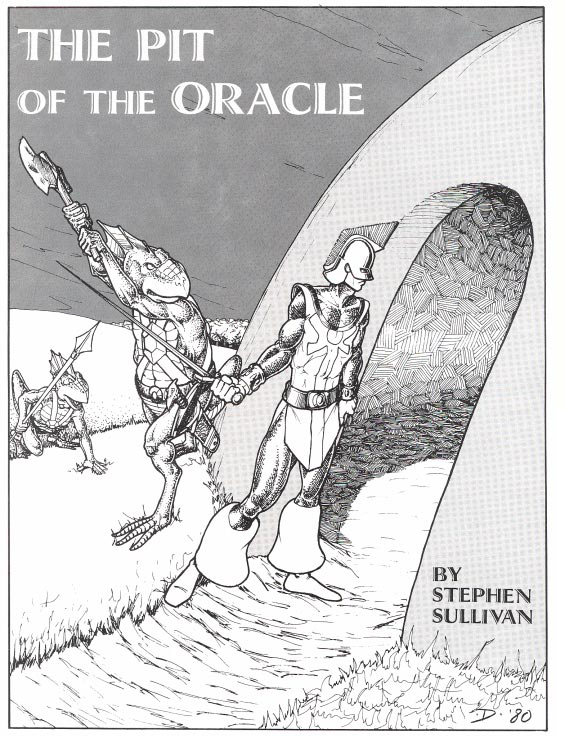
A module by Stephen Sullivan, with a nice cover image by Jeff Dee in which a fighter is either doing a bad-ass, casual back strike against a troglodyte, or in which a fighter is about to get his ass kicked by a couple troglodytes.

The module contains a dungeon and a town (and a Temple of Apathy), as well as some other nice art pieces by Dee, Roslof, Otus and Sutherland. You can tell the elements of D&D’s most classic phase are all coming together.

The map has all sorts of notations on it, which makes me think the adventure is a bit complex … but it also looks really cool. Hey, maybe that’s just the art talking.

And that’s Dragon #37 – happy Sunday folks and have a groovy week ahead.

Monster Tome II – The Worm Harmonious

I don’t know if the Monster Tome II will ever be a physical (or electronic) product, or if it will just be a series of blog posts. Either way, here’s an entry for you …

WORM HARMONIOUS

Size/Type: Huge Magical Beast
Hit Dice: 8
Armor Class: 17
Attack: 1 slam (1d12)
Movement: 30 (Burrow 10)
Saves: F R W
Immune: Sonic attacks, mind-effects
Alignment: NeutralIntelligence: Low
No. Appearing: 1d2
XP: 800 (CL 9)

The worm harmonious looks like a long, thick, wriggling vermin with pale pink flesh (sometimes marked with saffron streaks or speckled with deep aubergine spots) and odd markings on its “face” that approximate a mime or geisha. Extending from its head, down the sides of its body for about 10 feet are a number of long “hairs”, which it can vibrate to create or negate sound. Its entire body is actually covered by these hairs, though most are much smaller and are nearly invisible.

As alluded to above, the worm harmonious can negate sound, and thus create an area of silence (as the spell) in a 100′ radius by using its hairs to absorb the sound. While absorbing sound, the monster cannot move, and its attacks suffer a -3 penalty to hit. After three rounds, the monster can release this absorbed sound as a sonic blast, dealing 1d8 points of sonic damage to all creatures within 30′. Alternatively, it can give off a low, disorienting hum for 3 rounds that forces all within 30′ to pass a Will save or suffer one of the following effects:

Roll d6
1-3. Dazed (-1 penalty to hit and AC)
4-5. Confused (as the spell)
6. Stunned (no actions, only reactions)

It can also use its hairs to create a horrible, piercing screeching noise approximating some of the less successful attempts at Jimmy Hendrix-style guitar riffs. While doing this, the monster attacks normally, but its foes suffer a penalty to Armor Class and attacks, combined, equal to -3. They can choose, for example, a -2 penalty to AC and a -1 penalty to hit, or no penalty to AC and a -3 penalty to hit, etc. As long as the penalties add up to -3.

Dragon by Dragon – April 1980 (36)

There will come a day when the April edition of The Dragon will be full of jokes. Based on the cover, I’d say that day was not in April of 1980.

The aforementioned cover is by Dean Morrissey, and it is inspired by that issue’s short story by Gardner Fox, “The Cube from Beyond”, a Niall of the Far Travels story. Mr. Morrissey is still a working artist – you can see some of his pieces HERE.

Let’s check out 10 cool things about issue #36 …

1) NIALL OF THE FAR TRAVELS

First and foremost, I’m always a sucker for a good sword & sorcery tale by Gardner Fox. Here’s a sample:

“Now Thavas Tomer was a doomed man. He had fled down the halls and corridors, seeking sanctuary—where no sanctuary was to be found. At his heels had come Niall, his great sword Blood-drinker in his hand, seeking to make an end to this magician-king who had slain and raped and robbed all those against whom he had sent his mercenaries.”

If somebody could figure out a way to make a random idea generator that plucked passages from fantasy stories, I bet it would be a great way to come up with adventures or campaigns. Three different passages from the same book might inspire three very different campaigns.

2) ALIGNMENT STRUGGLES

An interesting “Up on a Soap Box” by Larry DiTillio, regarding him running an adventure he normally ran for adults for some adults and teens at a convention. Here’s an excerpt:

“In the same game another incident occurred, again with that same Paladin player. This one involved a mysterious monk smoking a substance from a hookah which he offered to certain party members. My friends accepted somewhat overeagerly, while the Paladin again asked me that question. Was smoking a drug against his alignment? Now, I’m not a junkie, nor do I think drugs are of any benefit to teen-agers (no high is as good as your own natural openness to things at that age), but I have had a good deal of experience with a whole gamut of consciousness-altering substances and would be hard pressed to declare them categorically evil.”

The first incident involved a dungeon room where sex could be purchased. In both cases, the paladin inquires whether these acts are against his alignment. It’s a tricky question, and does get to a problem with alignment – i.e. the interpretation of what it means. No answers here, but an interesting problem, and an interesting article.

3) CONAN!

In this issue, Gygax chimes in with some stats for Conan. It’s funny, but I was actually searching for this article recently, looking for inspiration for maybe making some revisions to the barbarian class in Blood & Treasure.

In doing so, I found some comments on websites that this article was a mistake, in that the weird rules changes needed to simulate Conan showed the weakness of the D&D system. I disagree – D&D is a game. Conan was a character in stories. No random rolls there, no comparisons of hit rolls and Armor Class. That a game cannot simulate something in a story is not a condemnation of the game (which, in D&D’s case, was not designed specifically to simulate Conan stories in the first place).

So, how does Conan shake out? Well, which Conan. The piece actually presents Conan at different ages – 15, 20, 25, 30, 40, 50, 60 and 70. Neat idea. We also see how his fighter and thief levels change through his ages. His fighter level runs from a low of 4 at age 15 to a high of 24 at age 40 … and then back down to 12 by the time he’s 70.

How does a level drop? Well, there’s really no way to do it in the game, but I thought about using a rule that each year without adventuring might result in a character losing 10% of his earned XP. If you don’t stay in practice, you get rusty and, therefore, lose levels. Just a thought.

So, let’s look at Conan at age 25.

Conan, Human Fighter/Thief: Level 12/8; HP 132; AC 16; ATK attacks 5 times every 2 rounds; Str 18/00, Int 15, Wis 10, Dex 20, Con 18, Cha 15; AL Chaotic Neutral (good tendencies); Psionics–Latent–animal telepathy, detect magic, precognition, mind bar.

Conan gets the following special abilities:

  • When he rolls a total of “21” to hit, he scores double damage.
  • He is 75% undetectable in underbrush and woodlands.
  • He surprises opponents 50% of the time.
  • He is only surprised on a roll of 1 on 1d20.
  • He gets a +4 bonus on all saves.
  • Poison can knock him unconscious, but never kill him.
  • He regains hit points at double the normal rate, and regains hit points at the normal rate even without resting.
  • He has 25% magic resistance if he is aware that magic is being used against him.
  • His psionics are all latent – he does not know he has them, and cannot consciously choose to use them.
  • When wielding an off-hand weapon, he can parry one attack per round with it.
  • He can move at a trot all day without tiring.
  • His trails are 75% undetectable.
  • His vision and hearing are 50% better than normal.
  • When he pummels people, his opponents are treated as slowed; his fists are treated as mailed even when bare.
  • When grappling, his effective height is 7′, and his effective weight is 350 lb.
  • He gets a 15% bonus to overbearing attacks
  • He does unarmed damage as though armed with a club

4) PITY THE HALF-ORC

In “Sage Advice” by Jean Wells …

“Question: Why can’t half-orcs be raised, especially if they are 90% human as the Players Handbook says?

Answer: The Players Handbook does not say that half-orcs are 90% human. It says that 10% of them (from which player characters are drawn) resemble humans enough to pass for one under most circumstances. Genetically, a true half-orc is always 50% human. Half-orcs cannot be raised simply because they do not have souls. I went right to the top for the answer to this one, and according to Gary Gygax himself, ‘Half-orcs cannot be raised-period.'”

It occurs to me that the inability to raise demi-humans was a balancing factor in old D&D for all of their special abilities.

5) IS THAT ULTRA-POWERFUL MONSTER A DEITY?

Len Lakofka tries his hand at setting all those deity-killing PC’s right by setting down some truths about the gods. How many DM’s, I wonder, design their pantheon specifically for one day fighting high-level adventurers?

Here are Lakofka’s definitions for deity-hood:

1. Has 180 or more hit points
2. Can cast a spell or has a power at the 20th level of ability
3. Can fight or perform acts as a 20th level Lord or 20th level Thief

Those who cannot do this are not deities. This includes Jubilex, Ki-rins and Yeenoghu. Baal, Orcus, Tiamat and Bahamut, on the other hand, are deities.

He also states that deities get their special abilities from the Outer Planes, while lesser beings get their powers from the inner planes or from deities.

Much more here, including abilities from ability scores of 19 or higher (or 25+ for strength).

It looks like the blueprint used for the later Deities & Demigods / Legends & Lore books.

AD BREAK

Now that’s a great illustration for selling a monster book. You can pick up the PDF HERE.

6) APRIL FOOLS!!!

Turns out there was a prank hiding inside this issue after all – technically The Dragon #36 1/2.

We have articles about how to make the most out of your pet dragon, some new monsters (see below), keeping your players poor with the tax man, Bazaar of the Ordinary (web of cob), a random table (d30!) of things to say when you accidentally (or maybe not accidentally) summon Demogorgon, Leomund’s in a Rut (expanding character footwear options), this month’s module – a 10×10 room with nothing in it (map provided), and an add that includes Detailed Advanced D&D, the next step in fantasy gaming.

As for one of those new monsters:

The Keebler, Small Fey: HD 0; AC 13; ATK none; MV 40′; XP 50; AL N (good tendencies); Special-Magic resistance 60%, bake cookies (Will save at -4 or charmed); Spells-3/day-create water, purify food & drink, slow poison, create food & water, neutralize poison, locate object (edible substances) – as though by 7th level cleric.

7) The Mongols

Neat article by Michael Kluever on the history, weapons and tactics of the Mongols. Mongols done the way they were are probably pretty underused in fantasy gaming – they were a pretty fascinating group, and a campaign that includes a rapidly expanding Mongol Empire (wherein PC’s leave town, adventure in a dungeon, and come back to find the town razed or absorbed into the empire) would be pretty cool, especially if that expansion ends up being crucial to the game.

How was the typical Mongol warrior equipped:

Armor ranged from none to leather to scale armor, plus conical helms (leather for light cavalry, steel for heavy cavalry) and small, circular shields made of wicker covered with leather; they also wore silk undershirts that apparently helped to minimize damage from arrows when they had to be removed from wounds

Two composite bows, one for short range, one for long range; they used armor-piercing arrows, whistling arrows to signal and incendiary arrows (tipped with small grenades – apparently the Duke boys didn’t invent the idea); each warrior carried two quivers with 60 arrows in each

Heavy cavalry also carried a scimitar, battle axe OR horseman’s mace, a 12′ long lance with a hook for yanking warriors off their horses and a dagger

Light cavalry carried a lighter sword, two to three javelins and a dagger

8) Giants in the Earth

This edition, by Lawrence Schick and Tom Moldvay, includes:

Rafael Sabatini’s Captain Blood (17th level fighter, 10th level thief, 8th level cleric)

Lovecraft’s Richard Upton Pickman (King of the Ghouls, 9th level fighter)

Thomas Burnett Swann’s Silverbells (forest minotaur 15th level ranger, 13th level paladin)

The last one caught my attention, since I’d never heard of the author. The idea is that the original stock of minotaurs, termed forest minotaurs here, were neutral good defenders of the woodlands and the fey creatures who lived therein. You can find his books for sale at Amazon.

9) A New Way to Track XP

Experience points, like alignment, are a perennial sub-system people are trying to improve. In this version, XP are based on actual damage inflicted (modified by the strength of the opponents), and for deeds actually done. To whit:

For non-magical monsters, you get 5 XP per point of damage done, multiplied by the difference between the monster’s AC and 10

For magical monsters, 10 XP per point of damage done, same modifier.

For spellcasting in combat, 10 XP per level of spell

For spellcasting in a hostile situation, 5 XP per level of spell

Thieves get XP for gold stolen, maybe only if they grab a larger share than the other members of their party

Not a bad idea, really.

10) The Fastest Guns that Never Lived

This is a reprint, collection and expansion of articles I remember covering many reviews ago. Designed for Boot Hill, it’s a pretty fun article for fans of westerns, and a great opportunity for fan debates. If you think it’s bunk, you can blame Allen Hammack, Brian Blume, Gary Gygax and Tim Kask.

So, let’s get to the winners in each stat:

Fastest Gun in the West: (1) Clint Eastwood, (2) Bob Steele, (3) Paladin

Slowest: Pancho

Most Accurate Gun in the West: (1) Clint Eastwood, (2) Will Sonnet and Col. Tim McCoy, (3) Lone Ranger, The Rifleman, Paladin and Lee Van Cleef

Least: Hoss and Little Joe Cartwright

Bravest Gun in the West: Charles Bronson

Most Cowardly: Pancho

Strongest Gun in the West: Hoss Cartwright

Weakest: Will Sonnet

Somebody was in love with Clint Eastwood, huh?

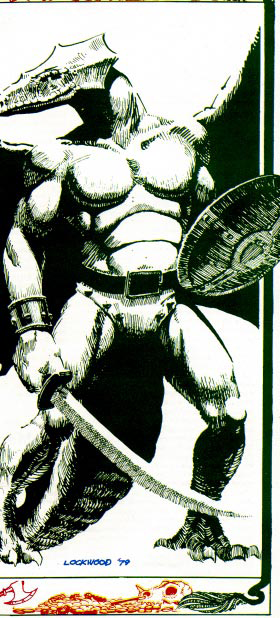
11) BONUS COOL – THE KROLLI

Todd Lockwood (that one?) brings us the monster of the month, a race of warm-blooded flying reptile dudes. Here are the Blood & Treasure stats.

Krolli, Large Monstrous Humanoid: HD 2 to 6; AC 17; ATK 1 bite (1d6+1), rear claw (1d8+1), hand (1d8 or by weapon +4); MV 20′ (fly 40′); AL varies; XP 200 to 600; Special-High dexterity, multiple attacks, acute senses, surprised on 1 on 1d6, 25% magic resistance.

They are encountered in lairs, with 3d20 in lair, 25% females and young, with 2-3 and 1/2 HD each, and 1d8 7+2 HD chieftains. Encountered among men, they are usually mercenaries or slavers, and could be found as body guards or military officers.

They have high natural strength (20) and dexterity (23).

They may be of any class, though 95% are fighters. Of the remainder, 70% are clerics. They cannot wear armor, but often carry shields. They are almost never thieves or assassins.

Side note – I really loved Lockwood’s stuff for 3rd edition D&D – a very worthy artist to carry that torch, I think.

Hope you enjoyed this review … I leave you with Tramp

Two Cinematic Hex Crawls

Over the last few days, I managed to watch some D&D-ish movies before work – just dumb luck, they just happened to be on.

The first involved a few PC’s and their henchmen taking a dangerous cruise on a quest to break an evil magic-user’s polymorph other spell on a prince, who ended up a baboon. The quest eventually takes them to the arctic and a hidden, pleasant land within the arctic. On the way, they fight monsters, counter spells and eventually break the spell. Alas – no treasure, but they’ll probably be rewarded by the prince.

The second involved five people, four men and a woman, dragged from modern times into ancient Greece. The men are made galley slaves, while an evil king tries to romance the woman. The men eventually lead a slave revolt, wash up on shore, do a little hex crawling, and are made slaves again. Luckily, one of the guys ends up with an 18/00 strength (or maybe higher), and in this capacity serve a different king, and wind up fighting Hercules himself to get back to their own time period.

The first film was Sinbad and the Eye of the Tiger, the second The Three Stooges Meet Hercules. Scoff if you will, but the second flick is probably close to most D&D campaigns than the first. Oh, we all dream of Lord of the Rings-caliber gaming, but bumbling insanity is often what we get.

Both films were lots of fun – I’d actually never managed to watch the Sinbad flick, despite being a fan of Harryhausen – so here are a few bits and pieces inspired by these movies:

Giant Walrus

From HERE

Size/Type: Huge Animal
Hit Dice: 11
Armor Class: 16
Attack: 1 bite (2d6)
Movement:15 (Swim 60)
Saves: F5 R8 W13
Alignment: Neutral (N)Intelligence: Animal
No. Appearing: 1
XP: 550 (CL 11)

Giant walruses are much like their smaller counterparts, though they are more aggressive.

Minoton

From HERE

Size/Type: Large Construct
Hit Dice: 6
Armor Class: 18
Attack: 1 gore (1d10) or by weapon (2d6)
Movement: 30
Saves: F11 R12 W12
Resistance: Fire, electricity
Alignment: Neutral (N)
Intelligence: Non-
No. Appearing: 1
XP: 600 (CL 7)

Minotons are bronze automatons made by magic-users for brute labor and basic fighting. Most are armed with spears. They are tireless and immune to all mind effects, and only obey the commands of their creator.

Troglodyte

From HERE

Size/Type: Large Giant
Hit Dice: 4
Armor Class: 14
Attack: 1 gore (1d6) and 1 slam (1d4) or by weapon (2d6)
Movement: 30
Saves: F10 R14 W15
Alignment: Neutral (N)Intelligence: Low to Average
No. Appearing: 1d4
XP: 200 (CL 4)

Troglodytes are large, primitive ancestors of human beings. They speak the language of simple primates, and though fearsome are not particularly aggressive. Female humanoids get a +2 reaction bonus with male troglodytes.

Eye of the Tiger

From HERE

Level: Magic-User 3
Range: Personal
Duration: 10 minutes

When this spell is cast, a magic-user’s eyes become cat-like (giving them darkvision to a range of 60′). Any feline they look upon within 60′ must pass a Will saving throw or the magic-user turns into a vapor and inhabits the cat’s body. The magic-user retains her own intellect, and gains the fighting ability of the cat. The magic-user can leave the cat’s body at any time, but if they are still inside the cat when it is killed, they die along with it.

Two-Headed Cyclops

From HERE

Size/Type: Huge Giant
Hit Dice: 16
Armor Class: 16
Attack: 2 weapons (3d6) or boulder (100’/3d6)
Movement: 40
Saves: F3 R7 W8; +2 save vs. mind effects
Alignment: Chaotic (CE)Intelligence: Low
No. Appearing: 1
XP: 800 (CL 16)

The two-headed cyclops stands about 50′ tall. It is terribly bright, but it really doesn’t need to be to get along.

Sleeping Pills

These magic items are akin to potions. They are made in lots of 4, and each pill packs the punch of a potion of sleep. Saves against them are saves against magic, not poison.