Misspells

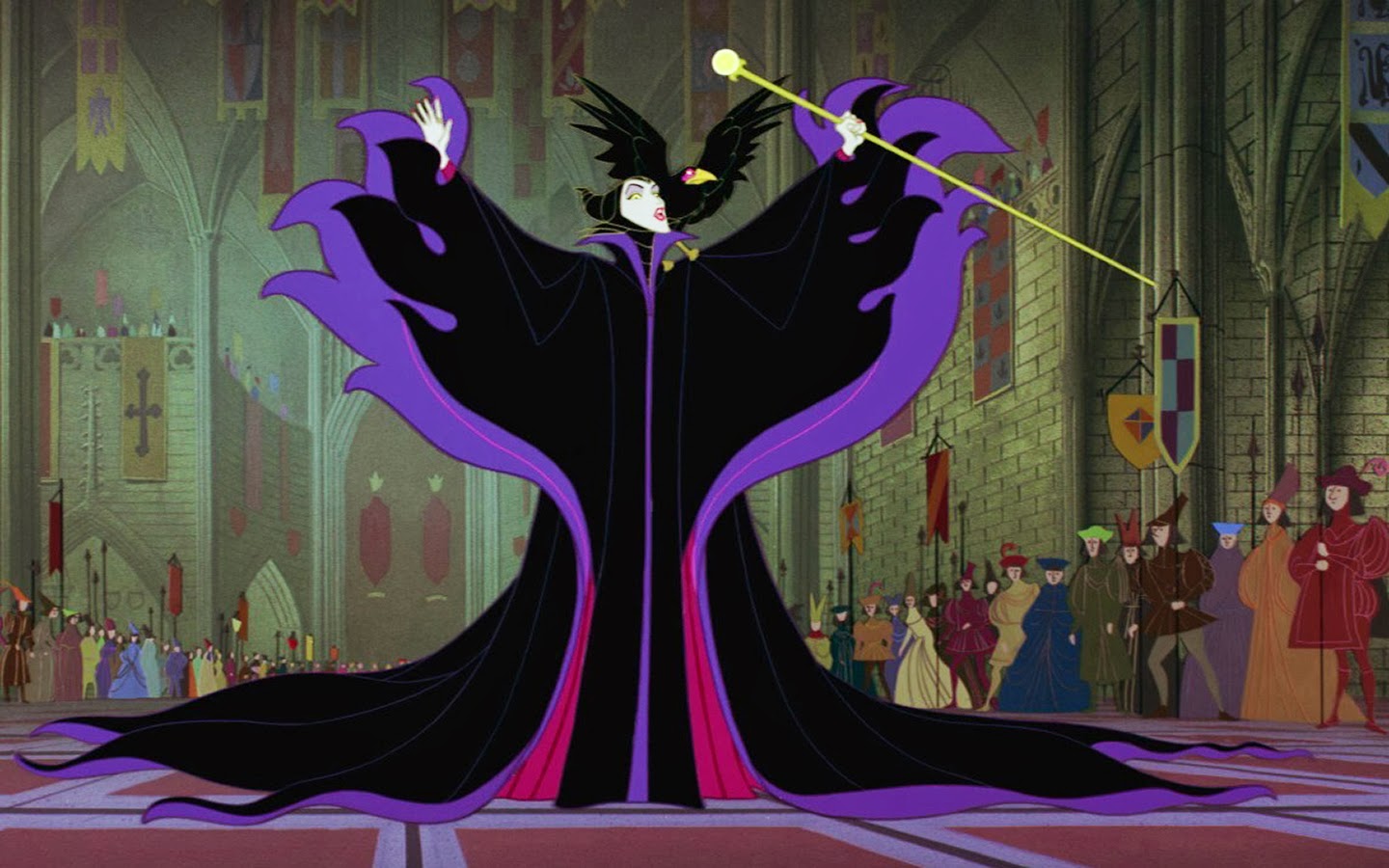
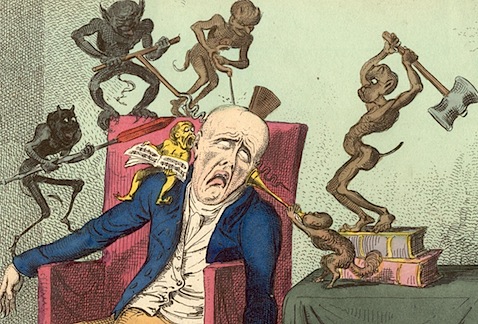
Bonus XP if you know who this is!

When you write as much as I do, you get used to dealing with typographical errors. Some of them are rather amusing – I remember one blog post in which some room trap involved a wench rather than a winch lifting something heavy. I suppose anybody who has ever visited modern D&D message boards knows about that game’s very mysterious “rouge” class (which I have now decided I am going to write).

One area in which I have made more than a few errors, and repeated errors at that, is with spell names. Sometimes, these screwed up spell names actually make a sort of weird sense, and it occurred to me that errors in spelling on scrolls might lead to some amusement in a game of D&D (et. al.) Grammatically incorrect scrolls could be a new category of cursed magic item – the magic-user thinks they’re casting one thing, but discover their spell has a different effect.

A few ideas follow:

Altar Self: The caster is turned into an altar for the duration of the spell. Note sure if I want to know where the holy water comes from.

Animate Trope: This one takes some work for the GM. Think of a role playing trope and make it come to life (literally) during the game.

Baste: Warm meat juice is squirted on the caster, making them more delicious and stickier.

Blank: The caster’s face disappears for the duration of the spell.

Cane of Cold: A walking stick made of ice appears in your hand. Feel free to shake it angrily at your foes.

Charm Parson: As charm person, but it only works on clerics and druids (and the like).

Dorkness: The lights stay on, but the caster becomes socially awkward (Charisma 5) for duration of the spell.

Find Familiar: More of an incorrect inflection than misspelling, this spell causes they caster to find strangers strangely familiar. He just knows he knows them from somewhere, and it’s maddening that he cannot think of who they are. As a result of this frustration, he suffers a -1 penalty to Will saves for the duration of the spell.

Obscuring Mast: The mast of a ship grows from the ground right in front of somebody, obscuring their vision until they move out of the way.

Slaw: A jar of coleslaw appears.

Spectral Ham: A ghostly swine appears and otherwise acts as the spectral hand spell. This one might be an improvement over the original.

Summon Munster: Roll randomly on a d10: (1-2) Herman (i.e. a goofy flesh golem); (3-4) Grandpa (i.e. a vampire); (5-6) Eddie (i.e. a 1 HD werewolf); (7-8) Lily (not sure here – she’s Dracula’s daughter); (9-10) Marilyn (i.e. human female with high Charisma).

Tireball: A belted radial is launched bouncing towards a target point, and then explodes with a loud noise, sending shreds of rubber out. Basically as a fireball, without the “fire” damage and dealing minimum damage within the blast radius.

Have at it folks – I’m sure these can be improved upon and better versions can be invented.

Holy Moses, It’s a New Class!

Yes, a new class … probably the last new class of 2014 … based on Moses, that fellow who parted the Red Sea and held the Ten Commandments.

At least, it’s based a little on Moses, and a little on other old time prophets. In essence, it’s a non-warrior cleric with more flexibility in terms of spells, but fewer spells to choose from.

In a moment, the class. First, a couple words from our sponsor (which happens to be me)

Two new e-books up on Lulu over the past couple days. The long awaited (well, by me anyways – took me forever to finish it) NOD 24, and the even longer-awaited (again, by me) Bloody Basic – Contemporary Edition. From my descriptions on Lulu.com …

BLOODY BASIC – CONTEMPORARY EDITION

Bloody Basic takes the advanced Blood & Treasure Fantasy Role Playing rules and boils them down to the essentials to make gaming easy, fast and fun. The Contemporary Edition rules include rules for the contemporary races, classes, spells and monsters of fantasy role playing, including automatons, drakkens, gnomes, fighters, sorcerers, clerics and thieves. $4.99 for 44 pages

NOD 24

2014 comes to a close with the 24th issue of NOD! In this issue, we continue the Ende hex crawl started in NOD 23, detail some Indian divinities, get into some court intrigue, make monsters with a dictionary, explore the ancient Red Sea as a campaign setting, tangle with space genies, and meet some 1920’s superheroes called the Roustabouts. 80 pages. $4.39 for 80 pages

Wow! What amazing bargains (if you’re into this kind of thing).

Now, back to our program!

The prophet is a cleric who goes way back … all the way to Moses in fact. The prophet is destined to be a religious leader of a people, if he or she can live long enough. Starting out in life, they are touched by a deity and tasked with leading their chosen people, or converting their chosen people, to their worship. They must eventually lead these people into the wilderness to found a new kingdom for them. The deity in question should be one that is, as yet, minor in stature, or a major deity that has largely been forgotten by his or her chosen people.

Obviously, this class is based on Moses. I won’t go over the story of Moses – it’s easy enough to find – but suffice to say he was a prince who discovered his true heritage and was chosen by God to lead his people through the Wilderness to the Promised Land. As an emissary for God on Earth, he could perform miracles, and as a man that was raised in a royal house, he had a good deal of non-spiritual leadership ability.

The prophet class has an innate ability to commune with the divine, a spell list based on the miracles attributed to Moses, other Biblical prophets and Christian saints. You’ll notice quite a bit of overlap with the normal cleric’s spell list. The prophet begins life as an aristocrat, and that means he has some capacity for fighting and leading people. His leadership abilities will continue to improve as he gains levels, though his fighting ability will improve more slowly. Prophets are not meant to be front-line warriors. A prophet’s spellcasting ability is in some ways more limited than a cleric’s, and in others superior.

Restrictions: Wisdom 13+, Charisma 9+, alignment must be LG, LN or LE

Hit Dice: d8 at first level, d6 at each level afterwards

Skills: Decipher Codes, Find Secret Doors

Weapons: Any*

Armor: Any*

Prophets are trained in the use of all arms and armor, but using arms and armor not allowed to a magic-user represents a lack of faith in their deity, and imposes a spell failure chance on them (cumulative):

Non-permissible light weapon +5%
Non-permissible medium weapon +10%
Non-permissible heavy weapon +15%
Non-permissible light armor +10%
Non-permissible medium armor +20%
Non-permissible heavy armor +30%

Spell failure chance should be rolled when the prophet beseeches her deity for a miracle. If the spell fails, the deity chooses to ignore her.

A prophet does not technically cast spells. Rather, he asks for miracles. A prophet is allowed a limited number of miracles of each miracle level per day. He does not need to memorize or prepare miracles, as long as he has access to a level of miracles, he can ask for any of them. The prophets’ miracles are listed at the end of this article.

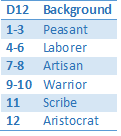
Besides adventuring to earn money and power, a prophet’s most important job is to amass followers. To this end, a prophet must preach before multitudes, attempting to either convert them to his new faith, or reawaken them to an old faith. Treat conversion as a Charisma task in which the prophet is skilled.

The prophet can attempt to groups of 0 to 1 HD creatures, or individuals with more than 1 hit dice. With groups, the prophet makes a Charisma task check and, if successful, converts a number of followers equal to his 1d4 plus his level. Difficulties include differences in ethical alignment (law – neutral – chaos) and moral alignment (good – neutral – evil), or the people being strongly dedicated to another faith. The same basic process is used for individuals, with an additional penalty equal to the each level the target is higher than the prophet.

When 0 or 1 hit dice individuals join the prophet’s cult, you might need to determine what they are:

There is a 1 in 6 chance per person that they are wholly dedicated to their new faith, and need never check their morale. Others, however, may lose faith in the face of hardships (as determined by the TK). When this happens, the prophet must make a new conversion task check for each individual. If he fails, they decide to return to their homes and their old way of life.

A prophet must take care of his followers. He must provide food and water for them, protect them, provide some manner of shelter (tents at a minimum), and heal them when they are wounded or sick.

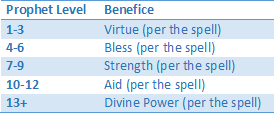
For one battle per day, the prophet can grant a benefice to his warriors in battle. As the prophet’s level increases, he gains additional benefices he can grant. Each benefice can be granted to one battle per day, and only one benefice can be granted per battle.

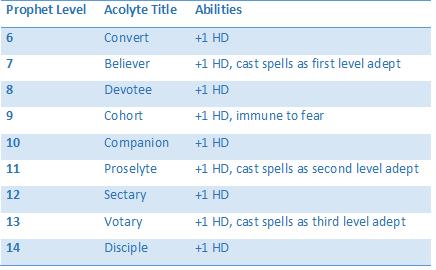
At 6th level, one of the prophet’s existing followers can become his acolyte. The prophet’s acolyte becomes a lesser divine servant of the prophet’s deity, gaining abilities as the prophet gains abilities.

A prophet with fewer than 10 followers by 6th level must perform a quest for his deity or lose his ability to request miracles. Likewise a prophet with fewer than 25 followers at 7th level, fewer than 50 followers at 8th level, and fewer than 100 followers at 9th level and each level beyond 9th.

A prophet that is killed might enjoy an apotheosis upon death. There is a 5% chance per level of the prophet. When an apotheosis occurs, the prophet transforms into an outsider of similar alignment with roughly as many Hit Dice as the prophet +1. In this form, the prophet remains in the material plane for one minute per level. Thereafter, he is called to his home plane and disappears forever unless resurrected. If resurrected, the prophet returns in his original body, not as an outsider.

FIRST LEVEL MIRACLES
1. Aid
2. Bless
3. Comprehend Languages
4. Control Light
5. Cure Light Wounds
6. Multiply Food and Water
7. Protection from Evil
8. Summon Nature’s Ally I
9. Sustenance
10. Turn Undead

SECOND LEVEL MIRACLES
1. Augury
2. Buoyancy
3. Calm Emotions
4. Consecrate
5. Cure Moderate Wounds
6. Detect Thoughts (ESP)
7. Gentle Repose
8. Levitate
9. Remove Paralysis
10. Speak with Animals
11. Summon Nature’s Ally II
12. Summon Swarm

THIRD LEVEL MIRACLES
1. Cause Disease
2. Create Food and Water
3. Cure Blindness/Deafness
4. Cure Disease
5. Cure Serious Wounds
6. Fly
7. Hold Person
8. Remove Curse
9. Summon Nature’s Ally III
10. Tongues
11. Water Walk

FOURTH LEVEL MIRACLES
1. Blight
2. Charm Monster
3. Control Water
4. Cure Critical Wounds
5. Divination
6. Flame Strike
7. Holy Smite
8. Restoration
9. Sticks to Snakes

FIFTH LEVEL MIRACLES
1. Awaken
2. Bilocation
3. Commune
4. Contact Other Plane
5. Healing Circle
6. Hold Monster
7. Insect Plague
8. Raise Dead

SIXTH LEVEL MIRACLES
1. Banishment
2. Geas
3. Move Earth
4. Wind Walk

SEVENTH LEVEL MIRACLES
1. Control Weather
2. Create Clay Golem
3. Transmute Matter

EIGHTH LEVEL MIRACLES
1. Earthquake
2. Holy Aura

NINTH LEVEL MIRACLES
1. Astral Projection

NEW SPELLS

BILOCATION
Level: 5
Range: Personal
Duration: 1 minute

For one minute, the prophet can be in two places at once. Each version of the prophet can carry out movement and actions as normal. The second version can appear within 1 mile per prophet level of the first. When the second version disappears, any damage or other effects he sustained, or any items he took possession of, return to the first version.

BUOYANCY
Level: 2
Range: Close (30 ft.)
Duration: 1 minute

One object within 30 feet designated by the caster becomes buoyant in water, and floats to the surface.

CREATE CLAY GOLEM
Level: 7
Range: Touch
Duration: 10 minutes per level

By fashioning a roughly human-sized and shaped object out of clay and inscribing a magic sigil on its head, the prophet can cause it to become a clay golem for 10 minutes per prophet level.

MULTIPLY FOOD & WATER
Level: 1
Range: Touch
Duration: Instantaneous

This miracle takes existing food and water and multiplies, creating one extra portion per prophet level.

SUSTENANCE
Level: 1
Range: Personal
Duration: Instantaneous

The prophet can go without food, drink and sleep for one day, but must sacrifice one point of constitution to do so. This constitution point cannot be healed while any casting of this spell is in effect. A prophet could, therefore, use sustenance for seven days straight, but would be without seven points of constitution on the seventh day, and would suffer the normal effects of a lower constitution. Constitution points sacrificed for this spell return at the rate of one per day of rest.

TRANSMUTE MATTER
Level: 7
Range: Touch
Duration: 24 hours

The prophet can transmute matter from one form to another, thus lead to gold or steel to adamantine. The effect lasts for 24 hours. At the end of this time, the object must pass an item saving throw (as its original matter) or disintegrate.

 

Saving Some Gold Pieces (and a Spell)

Boys and girls, if you’ve been waiting to buy some of my print products, you may be in luck. Lulu is running a sale through November 27th ..

And on November 27th, I’m going to throw in some markdowns of my own for the holiday season. You’ll find the link to my storefront on the side over there.

Don’t forget, if you buy a hard cover book, I’ll send you a free PDF of that book.
And now, to keep this post from being nothing but a commercial, I will make up a magic spell …

Wind Tunnel
Level: Cleric 5, Druid 4, Magic-User 5
Range: Centered on caster
Duration: 1 minute

This spell creates a tunnel of powerful winds extending 10 feet per level ahead and behind the spellcaster. The tunnel is large enough for the spellcaster to walk through normally, though it obviously cannot be larger than the chamber or passage which the spellcaster currently occupies. Missile weapons, gases and breath weapons are deflected by the wind tunnel. Creatures outside the tunnel trying to force their way through the tunnel suffer the effects of entering a huge air elemental’s whirlwind. The caster can decide if creatures grabbed by the wind tunnel are carried forward or backward and then deposited on the ground, prone, where the tunnel ends.If the tunnel is not created on solid ground, the spellcaster’s comrades (though not the spellcaster, on whom the spell is centered) might fall into the winds themselves (in other words, it cannot be used to create a bridge across a chasm unless the spellcaster’s comrades want to ride the winds across).

(Essentially, this is a variation on, and enhancement of the wind wall spell).

Odds and Ends (or Monster and Spells to be Precise)

SINOOZE

Large Ooze, Neutral (N), Non-Intelligent; Solitary

HD 8
AC 12
ATK Slam (1d6 + 1d6 acid)
MV see below
SV F10 R11 W11
XP 800 (CL 9)

Sinooze is an ooze that seeks out skeletal remains. It oozes over them and penetrates the bones with microscopic feelers, absorbing and reading the DNA. Using this information, it expands and takes the shape of the creature’s musculature.

The sinooze attacks and moves as the creature whose bones it animated. In addition, the monster deals acid damage when it successfully strikes. This acid damages organic materials and metal, but not stone.

Sinooze are flammable. When struck with fire, it suffers half damage, but is lit on fire. Subsequent successful attacks by the monster deal 1d6 points of fire damage. The monster continues to suffer 1d3 points of fire damage each round while ablaze.

Cold damage forces the ooze to pass a Fortitude saving throw or become thick and sluggish. Its movement is cut in half, and it becomes vulnerable to bludgeoning damage (i.e. takes full instead of half damage).

Special Qualities: Resistance to fire, weapon resistance

Bite of the Wolf
Level: Druid 2
Range: Personal
Duration: 1 hour

The druid’s mouth becomes a wolf’s muzzle. The druid gains a bite attack that deals 1d4 points of damage. Victims of the attack must pass a Reflex save or be tripped and knocked prone.

Coils of the Constrictor
Level: Druid 2
Range: Personal
Duration: 1 hour

The druid’s body becomes sinuous and flexible. On a successful grapple attack, the druid deals 1d4 points of damage and constricts his opponent for 1d4 points of damage per round until the grapple is broken.

Dwarfblood (Transmutation)
Level: Magic-User 1
Range: Personal
Duration: 1 hour

For one hour, the magic-user gains the special racial abilities of a dwarf.

Elfblood (Transmutation)
Level: Magic-User 2
Range: Personal
Duration: 1 hour

For one hour, the magic-user gains the special racial abilities of a elf.

Fangs of the Viper
Level: Druid 3
Range: Personal
Duration: 1 hour

The druid’s mouth becomes fanged. The druid gains a bite attack that deals 1d3 points of damage and injects Poison III into the victim.

Flashing Blade (Transmutation)
Level: Magic-User 1
Area of Effect: One blade
Duration: 1 hour

This spell can be cast on one medium or large blade, which must be touched by the magic-user. For one hour, the blade shines with a bright, blinding light. When the sword is used for an unsuccessful attack, the target of the attack must pass a Reflex save or be blinded until the end of the next round.

Foreboding (Illusion)
Level: Magic-User 2
Range: 30 feet
Area of Effect: One creature
Duration: 6 hours

The target of this spell has terrible feeling of foreboding. While under the effects of the spell, she believes every find trap task check she makes succeeds (i.e. finds a trap), every remove trap task check fails, and all listen at doors task checks result in her hearing weird, threatening noises on the other side of the door.

Gnomeblood (Transmutation)
Level: Magic-User 2
Range: Personal
Duration: 1 hour

For one hour, the magic-user gains the special racial abilities of a gnome.

Horns of the Rhino
Level: Druid 3
Range: Personal
Duration: 1 hour

The druid’s nose and forehead broaden and grow a fierce horn. The druid gains a gore attack that deals 1d8 points of damage. Every gore attack counts as a bull rush attack.

Horseless Carriage (Conjuration)
Level: Magic-User 4
Range: Object touched
Duration: 1 hour

By touching a wagon or similar wheeled conveyance, you imbue with the ability to move on its own. The wagon moves by your command, and in much the same way as a horse would, save that the wagon operates by voice command. For every three levels you possess, the wagon is moved by the equivalent of one horse (i.e. gains one horsepower). A 7th level magic-user could conjure up two horsepower, while a 12th level magic-user could conjure up four horsepower.

Hover (Transmutation)
Level: Magic-User 3
Range: Personal or close
Duration: 1 hour

This spell works like the levitate spell, except that it gives the recipient of the spell the ability to move at a movement rate of 20 forward and backward, and the recipient of the spell only levitates 6 inches above a solid or liquid surface.

Hug of the Bear
Level: Druid 3
Range: Personal
Duration: 1 hour

The druid’s arms become large and furry, and tipped with claws. The druid gains two claw attack each round that deals 1d6 points of damage. If both claw attacks hit a foe, they are automatically grappled.

Monstrous Mein (Transmutation)
Level: Magic-User 3
Range: Personal
Duration: 10 minutes

The magic-user’s creature type changes to monstrous humanoid. The magic-user gains darkvision to a range of 60 feet, is no longer affected by spells that affect humanoids (such as charm person), and gains a +2 bonus on Reflex saving throws. In addition, their visage becomes monstrous, and normal humans and men-at-arms must pass a Will saving throw upon seeing them or become frightened for 1d4 rounds.

Phantom Banker (Transmutation)
Level: Magic-User 2
Range: Close (30 feet)
Duration: Permanent

The magic-user changes one form of currency into the next higher form of currency, thus copper pieces into silver pieces, silver pieces into gold pieces, and gold pieces into platinum pieces. The total value of the coins does not change, thus 100 copper pieces can be changed into 10 silver pieces. Another use of the spell could then turn those 10 silver pieces into a single gold piece.

Polymath (Transmutation)
Level: Magic-User 3
Range: Personal
Duration: 1 hour per level

For the duration of this spell, the magic-user becomes a cleric, fighter or thief of her same level. The magic-user loses all magic-user abilities and restrictions for the duration of the spell, and for this reason they cannot end the spell early – the duration of the effect must be set by them when the cast the spell, up to one hour per level. While in their new class, they gain it’s hit dice (and thus re-roll hit points), saving throws, armor and weapon restrictions, special abilities, etc.

Polymath, Advanced (Transmutation)
Level: Magic-User 5
Range: Personal
Duration: 1 hour per level

As polymath, except the magic-user can become a multi-classed cleric/magic-user, fighter/magic-user or thief/magic-user of one level lower than their magic-user level (follow all normal multi-classing rules), or they can become a bard, ranger, barbarian, druid, assassin, etc. of one level lower than their magic-user level.

Potent Potables (Transmutation)
Level: Magic-User 2
Range: Close (30 feet)
Duration: 1 hour

All liquids within range of the magic-user take on the properties of alcohol for one hour. The liquids still taste the same, and potions still work as advertised, but the imbiber must pass a Fortitude saving throw or become drunk (treat as fatigued, but the player also has to slur their words when the speak and give out a loud, fake hiccup every so often – it’s called verisimilitude dude!)

Pussycat! (Transmutation)
Level: Magic-User 5
Range: Close (30 feet)
Duration: 1 minute

When the magic-user yells “pussycat!”, the most powerful creature (by number of levels or hit dice) is polymorphed into a normal cat for one minute, and it must pass a Will save or be frightened for the duration of the spell.

Quills of the Porcupine
Level: Druid 3
Range: Personal
Duration: 1 hour

The druid grows quills from his back and the back of his head and arms. When they make a successful bull rush attack, they deal an additional 1d6 points of damage, and creatures that miss them in melee combat must pass a Reflex saving throw or suffer 1 point of damage. The druid’s clothing is ruined by this spell, and she cannot cast it while wearing armor.

Sepulchral Power (Transmutation)
Level: Magic-User 5
Range: Personal
Duration: 10 minutes

The magic-user’s creature type changes to undead. The magic-user gains darkvision to a range of 60 feet, is no longer affected by spells that affect humanoids (such as charm person), is immune to illusions and mind-affecting effects, poison, sleep effects, paralysis, disease, stunning attacks, and gains a +2 bonus on Fortitude saving throws. They are still affected by death effects, but are now healed by negative energy and damaged by positive energy. Their appearance becomes gray and decayed, and normal humans and men-at-arms must pass a Will saving throw upon seeing them or become frightened for 1d6 rounds. As undead, they are liable to be turned or rebuked (and thus destroyed or controlled) by clerics and other classes with those abilities.

Spikes (Conjuration)
Level: Magic-User 2, Druid 2
Range: Touch
Duration: 1 hour

Armor touched by the spellcaster gains armor spikes, per the normal rules for armor spikes.

Supernumerary (Divination)
Level: Magic-User 2
Range: Close (30 feet)
Duration: Instantaneous

The magic-user instantly ascertains the exact quantity of one type of item within range, for example all the coins in an area by type.

Telecommunication (Conjuration)
Level: Magic-User 2
Range: Touch
Duration: 1 hour

The magic-user turns two cans, glasses, jars, etc. touched into a “telephone”. The objects are connected by an ethereal “wire” up to 1 mile long, and essentially work as though they were two tin cans connected by a string. There is some danger connected with this spell. When people communicate through it, they send out vibrations into the ethereal plane, and there is a 5% chance per conversation of attracting the attention of a wandering ethereal filcher.

Whitefoot
Level: Druid 2, Ranger 2
Range: Close (30 feet)
Duration: 1 hour

One creature within range leaves white tracks – as though it stepped in white paint – wherever it goes for one hour. This makes tracking a snap under most conditions.

Nodian Grimoire – Four New Spells

Image found HERE

I don’t invent all that many new spells – there are already so many of them, and I find that new ones often go unprepared because they’re a bit too niche – in other words, players don’t know what’s coming, so they tend to prepare the most tried and true spells for their clerics and magic-users.

That being said, a few ideas recently popped into my head, so I figured I would write them up.

ANIMATE ROOM

Level: Cleric 8
Range: Immediate area
Duration: 1 hour

This spell works much as animate object, except that it animates an entire room as a single monster. The room has the statistics of a huge animated object, and can use the objects within it as weapons to attack.

GODLY VISAGE

Level: Cleric 6
Range: Personal
Duration: 1 minute

The cleric takes on the physical form of his or her patron deity for one minute. Their equipment might change its form, but not its properties, magical or mundane (i.e. chainmail may look like +3 platemail, but it still acts like normal chainmail). Followers and enemies of the god or goddess must pass a Will saving throw or be stunned. This state lasts until the “deity” is hit in combat and damaged, or the “deity” or any of the “deity’s” allies attack the stunned creatures.

In addition to looking like their deity, the cleric gains the following special abilities: Suffer half damage from non-magical weapons and attacks, enjoys 5% spell resistance, and gains one special attack associated with their deity. This special attack should be no more powerful than a 3rd level spell, and can be used once.

QUID PRO QUO

Level: Magic-User 6
Range: Personal
Duration: 24 hours

By casting this spell, a magic-user declares a trigger spell, and the spell that will be triggered when that spell is cast in the magic-user’s presence, but not by the magic-user herself. Once this spell is cast, the effect lasts for 24 hours. If during that time any creature casts the trigger spell (hereafter known as the triggerer), instead of the trigger spell’s effect, a different spell is cast, with quid pro quo’s caster as the origin of the spell and the triggerer as the target (if applicable).

THIN AIR

Level: Magic-User 3
Area: One 3-ft. x 3-ft. x 3-ft. cube per level (max 30-ft. cube)
Duration: 1 minute

You rob the air within the area of effect of oxygen. You can move the area of effect while the spell lasts by concentrating on it – this concentration precludes other actions. Creatures within the thin air that engage in strenuous activity (running, climbing, fighting, etc.) must pass a Fortitude saving throw each round or become fatigued. A fatigued creature must continue to attempt Fortitude saving throws to avoid becoming dazed. Dazes creatures must continue to attempt Fortitude saving throws to avoid becoming unconscious. This unconscious state lasts for as long as the creature remains in the thin air, and 1d6 rounds thereafter.

Grand Curses

First post of 2014!!!

GRAND CURSES

Sometimes a simple spell just is not enough. Sometimes, that damn village that ran you out of town because your barbarian is a half-orc needs to learn what for. Sometimes that pompous duchess who stiffed you after you slayed the local dragon needs to find out you’re not to be messed with. Sometimes, a simple spell is not enough – you need a Grand Curse!

Grand curses are not unlike normal spells in their overall effect, but they strike many more targets than a normal spell. Grand curses spread like plagues. They are cast on a single person and from that person affect all others with which they have contact. In this way, a grand curse can impact virtually every person in a village, town, castle or even kingdom. Grand curses are no more difficult than the normal spells they mimic, but their cost is much higher for the spellcaster.

A spellcaster can turn any spell he or she knows into a grand curse. To do so, they must know the spell the grand curse is to mimic, and they must be willing to sacrifice a pound of their own flesh, metaphorically. Each person affected by a grand curse costs the original spellcaster 10 experience points per level of the mimicked spell. Affected, in this case, means any creature forced to attempt a saving throw versus the spell. If a village of 100 people is affected, for example, by a sleep spell in the form of a grand curse, the spellcaster would lose 4,000 XP. These lost XP can force a spellcaster to lose a level, so when you unleash a grand curse, beware! In addition, the grand curse counts as a spell four levels higher than the spell it mimics.

In all cases, the spellcaster casts the grand curse at one initial victim. This person receives a normal saving throw, but at a -4 penalty. If they pass their saving throw, the grand curse fails. Otherwise, they suffer the effects of the spell with a permanent duration until dispelled with dispel magic spell or remove curse. Each person that sees or has some sort of contact with the victim of the grand curse while they are feeling its effects must succeed at a saving throw themselves or become a victim of the grand curse themselves. The effects of the grand curse affect a victim 1d6 turns (i.e. 10-60 minutes) after they fail their saving throw, so it is possible for the victims to move about quite a bit – all the better to spread the curse.

And before you ask – yes, grand curses must have a negative effect on their victims. No cursing people with cure light wounds!

The following are examples of grand curses.

Beauty’s Sleep
Level: Magic-User 4

This grand curse mimics the sleep spell. Each person that sees a sleeping victim of the spell must pass a Will saving throw or fall to sleep themselves.

Black Mood
Level: Magic-User 8

This grand curse mimics the crushing despair spell. Each person that sees a weeping or otherwise saddened victim of the spell must pass a Will saving throw or fall into despair themselves.

Confusion of Tongues
Level: Magic-User 7

This grand curse mimics the garble spell. Each person that speaks with an addle-brained victim of the spell must pass a Will saving throw or become addle-brained themselves. The garble spell appears in The NOD Companion.

Danse Macabre
Level: Cleric 7

This grand curse mimics the cause disease spell. Each person that comes within 10 feet of a diseased victim of the spell must pass a Will saving throw or fall sick themselves.

Infectious Laughter
Level: Magic-User 6

This grand curse mimics the hideous laughter spell. Each person that hears a laughing victim of the spell must pass a Will saving throw or laugh themselves.

Mass Hysteria
Level: Magic-User 8

This grand curse mimics the confusion spell. Each person that comes within 10 feet of a confused victim of the spell must pass a Will saving throw or become confused themselves.

Plague of Accidents
Level: Magic-User 8

This grand curse mimics the fumble spell. Each person that sees a person drop something must pass a Will saving throw or become clumsy themselves. The fumble spell appears in The NOD Companion.

St Vitus’ Dance
Level: Magic-User 12

This grand curse mimics the irresistible dance spell. Each person that sees a dancing victim of the spell must pass a Will saving throw or dance themselves. Oh, and I know – there are no 12th level spells – but damn this would be cool. Maybe save it for an evil demigod.

It’s a Nice Day for a White Wizard

Yeah, I should probably be shot for that title.

So, a couple days ago I posted a spell list for “black magicians” that was based on the supposed powers that the demons in De Plancy’s Infernal Dictionary could bestow upon a conjurer. In ACTION X, these magic-users, officially called black magicians or conjurers, are Charisma-based spellcasters, meaning they will make a charisma-based task check to cast spells.

The flip side of these folks are the white magicians, or theurgists, who are Wisdom-based. Same rules for spellcasting, but a different key ability and a different spell list. For the white magicians, I decided to delve primarily into reputed miracles, both from the Old and New Testaments in the Bible, and from what I could glean from the lives of the saints and a few notions tucked in from the druids. If you were running a campaign with somewhat Biblical clerics, you might find this list useful. I think it’s a pretty fun mix of God’s mercy and God’s wrath, and isn’t completely foreign to what is expected from a fantasy cleric.

FIRST LEVEL
1. Aid
2. Bless
3. Comprehend Languages
4. Control Light
5. Cure Light Wounds
6. Multiply Food and Water
7. Protection from Evil
8. Summon Nature’s Ally I
9. Sustenance
10. Turn Undead

SECOND LEVEL
1. Augury
2. Buoyancy
3. Calm Emotions
4. Consecrate
5. Cure Moderate Wounds
6. Detect Thoughts (ESP)
7. Gentle Repose
8. Levitate
9. Remove Paralysis
10. Speak with Animals
11. Summon Nature’s Ally II
12. Summon Swarm

THIRD LEVEL
1. Cause Disease
2. Create Food and Water
3. Cure Blindness/Deafness
4. Cure Disease
5. Cure Serious Wounds
6. Fly
7. Hold Person
8. Remove Curse
9. Summon Nature’s Ally III
10. Tongues
11. Water Walk

FOURTH LEVEL
1. Blight
2. Charm Monster
3. Control Water
4. Cure Critical Wounds
5. Divination
6. Flame Strike
7. Holy Smite
8. Restoration
9. Sticks to Snakes

FIFTH LEVEL
1. Awaken
2. Bilocation
3. Commune
4. Contact Other Plane
5. Healing Circle
6. Hold Monster
7. Insect Plague
8. Raise Dead

SIXTH LEVEL
1. Banishment
2. Geas
3. Move Earth
4. Wind Walk

SEVENTH LEVEL
1. Control Weather
2. Create Golem
3. Transmute Matter

EIGHTH LEVEL
1. Earthquake
2. Holy Aura

NINTH LEVEL
1. Astral Projection

NEW SPELLS

Bilocation – A trick of the saints and apparently noted in psychic phenomena, this is the ability to be in two places at once. I aim to make this a non-combat spell – the point would be to allow the magician to simultaneously accomplish two tasks.

Buoyancy – There is a tale of a miracle that involved making a metal object dropped into a river float to the surface.

Create Golem – A clay golem, to be precise.

Multiply Food & Water – This is based, obviously, on the loaves and fishes episode.

Sustenance – This would allow the magician to go without food and drink (and maybe sleep) without suffering any negative consequences.

Transmute Matter – In the Black Magic post, I mentioned Transmute Metal and Transmute Liquid. Since spells in ACTION X are not prepared ahead of time, creating scarcity and thus more challenging game play by multiplying the number of spells, it seems to me I might as well combine those spells into a Transmute Matter spell.

Turn Undead – Yes, in ACTION X it’s a spell.

Now, if we have charismatic Conjurers and wise Theurgists, who uses intelligence? Well, besides the non-magical brainiacs and hackers, it’s the psions of course. I’ll post the psion power list in a couple days.

De Plancy’s Spellbook

I’ve been working on the spells and psionic powers for ACTION X, and wanted to not only go a bit “lower magic” for the game, but also make it as realistic as one can make the supernatural. To that end, I decided to only use psionic powers that reputedly exist in the real world (fair warning – I don’t believe in psychic abilities). For magic spells, I decided to use two main sources, since the magician class has two lists of spells – black magic and white magic. The source for the black magic spells is de Plancy’s Dictionnaire Infernal and the powers the various demons were capable of granting to conjurers. For the white magicians, I looked at the miracles of the Bible and of the saints as well as the reputed powers of the druids.

Since lots of gamers are acquainted with de Plancy’s work, I thought the spell list I extracted from it would be of interest …

FIRST LEVEL
Audible Glamer
Burning Hands
Charm Animal
Charm Person
Command
Cure Light Wounds
Detect Evil
Detect Magic
Knowledge*
Light
Phantasmal Force
Protection from Evil

SECOND LEVEL
Augury
Calm Emotions
Charisma
Consecrate
Desecrate
Detect Thoughts (ESP)
Find Familiar
Improved Phantasmal Force
Intelligence
Invisibility
Numismatize*
Speak with Animals
Strength

THIRD LEVEL
Blindness/Deafness
Compel Return
Cure Blindness/Deafness
Cure Serious Wounds
Heroism
Hold Person
Locate Object
Putrify*
Rage
Reveal Secrets*
Speak with Dead
Spectral Force
Suggestion

FOURTH LEVEL
Cause Disease
Command Plants
Confusion
Cure Disease
Detect Lie
Divination
Fireball
Lightning Bolt
Modify Memory
Polymorph Other
Polymorph Self
Restoration

FIFTH LEVEL
Contact Other Plane
Control Winds
Feeblemind
Song of Discord
Teleport

SIXTH LEVEL
Find the Path
Legend Lore
Longevity
Transformation
Water Tell*

SEVENTH LEVEL
Control Weather
Raise Tower*
Transmute Liquid*
Transmute Metal*

EIGHTH LEVEL
Earthquake

NINTH LEVEL
Astral Projection

* New Spell

While most of the supernatural ability granted by these demons were easily converted into an existing spell, a few were not. I haven’t written these spells up officially yet, but the following will give you a brief idea:

Knowledge: Gives the conjurer expert knowledge in one particular skill.

Numismatize: Turns raw metal directly into coins.

Putrefy: Causes a wound to become ridden with worms and rot.

Raise Tower: Sort of a variation on the magnificent mansion spell; this one raises a stone tower with an armory full of weapons.

Reveal Secrets: Like ESP, only it plucks the secrets from one person’s mind and shares them with all people nearby.

Transmute Liquid: Transmutes one liquid into another, i.e. water into wine, wine into blood, etc.

Transmute Metal: Transmutes one metal into another, i.e. lead into gold.

Water Tell: Variation on stone tell; in de Plancy, one couldn’t talk to rocks, but they could talk to rivers.

Prepared Spells Without the Preparation

Demonologist by Jon Kaufman, for the NOD Companion

I just had an idea – probably not a new one – and I thought it would be worth a mention.

When I’m writing NOD or Hexcrawls, I usually do not write down the prepared spells for the various spellcasters. There are a few reasons for this, but the top two are (1) it often takes up too much room and (2) it makes some people who run games feel locked in with those spells. Tonight, while writing character stat blocks for the Virgin Woode (progress continues a bit more slowly than I’d like), a notion occurred to me for allowing on-the-fly spell preparation for game masters.

The basic idea is this: The GM picks a spell they want the caster to have. They roll 1d20. If they roll under the caster’s Intelligence score (you can substitute Wisdom for clerics and druids, if you prefer), then it means the caster had the wherewithal to prepare that particular spell for that particular day. Easy as pie.

So – I have a 4th level NPC magic-user with a 14 intelligence. He gets into a scuffle with the player characters and I decide I want him to cast magic missile. I roll the d20, get a 13, and that means he prepared magic missile that day. If he wants to cast it again, I need to roll again to see if he was smart enough to prepare it twice.

Now – you might be saying, “Yes, but what if I have an evil cleric NPC and it turns out she didn’t prepare a basic spell like cure light wounds or inflict light wounds. That’s stupid.”

To get around this, it probably makes sense to scribble down a few spells, especially low level spells, that we don’t have to roll for to check, at least for clerics and druids, who have all the spells at their disposal. For magic-user, it’s arguable that the only spell they certainly have in the spellbooks is read magic.

So – 3 basic spells (using spells from Blood & Treasure – your system may vary) of each of the low levels that we can assume a cleric and druid and magic-user would have prepared:

Cleric (Lawful)
1st level – bless, cure light wounds, protection from evil
2nd level – cure moderate wounds, hold person, silence
3rd level – cure serious wounds, dispel magic, prayer

Cleric (Chaotic)
1st level – cause fear, inflict light wounds, protection from good
2nd level – inflict moderate wounds, hold person, silence
3rd level – animate dead, blindness, dispel magic

Druid
1st level – cure light wounds, entangle, produce flame
2nd level – barkskin, delay poison, resist energy
3rd level – dominate animal, poison, wind wall

Magic-User
1st level – detect magic, read magic, sleep
2nd level – detect thoughts, levitate, web
3rd level – dispel magic, fly, suggestion

Of course, if you don’t want to go through this exercise, it’s always acceptable for the GM to simply decide, on the fly, that the cleric has cure light wounds prepared, and I’m not going to bother rolling for it.

What Gave the Magic-User a Headache?

Magic-users are brain guys, and since they use their brains so much (and use them in such odd ways), they’re prone to frequent headaches. It’s not that different from swimmer’s suffering from swimmer’s ear or tennis players suffering from tennis elbow.

In play, whenever a random encounter roll is made and a “3” is rolled, there is a chance of the magic-user coming down with an aching  head. Let the magic-user roll a reverse saving throw (i.e. they need to fail the save to avoid the headache) – since the higher level a magic-user is, the more stress they put on the old grey matter. If a headache is indicated, roll d% on the following Random Magic-User Headache Table and inflict some agony.

01-04. Spell Residue: When a spell is imprinted on a magic-user’s brain and then unleashed, it often leaves behind a bit of itself – a spell residue, so to speak. This leads to a throbbing of the temporal lobe. The headache lasts until the magic-user unleashes all of his spells and then goes 24 hours without preparing any new spells OR until the magic-user can pass a once daily saving throw (as above). While suffering the headache, the magic-user suffers a 5% chance of spell failure and -2 penalty to all saving throws or skill throws involving concentration.

05-14. Dehydrated: Absent-minded as they are, magic-users often forget things like basic maintenance. The magic-user has become dehydrated, and this has started a headache. While suffering, the magic-user suffers a -1 penalty to all d20 rolls until he spends a day drinking a double ration of water.

15-16. Cerebral Parasite: The magic-user has picked up a cerebral parasite. The parasite lowers his intelligence score by 1d4 points (roll randomly each day) until removed with a cure disease spell.

17-19. Withdrawal Symptoms: Sometimes, a magic-user develops an addiction to a spell he or she has impressed on their minds. Randomly determine (or choose) a spell that the magic-user has memorized in the past, but which they do not have memorized now. Until the magic-user memorizes that spell and casts it for three days in a row, they suffer from a headache that gives them a 10% spell failure chance. If they go more than two days with this headache, they develop a nauseous stomach. If they go a week without memorizing the spell, they beat the addiction and are fine. If they eliminate the headache by memorizing the spell, they feed the addiction, and thereafter must memorize and cast the spell at least once per week or suffer from the withdrawal symptoms again.

20-35. Slept Funny: The magic-user must have slept funny, giving them a stiff neck and sore head. They suffer a -2 penalty to reflex saves (save vs. dragon breath, traps) and a -1 penalty to will saves (i.e. saves vs magic).

36-40. Tension – Fear: The magic-user has developed a headache from the stress and tension involved in dungeon delving. They must go 24 hours without encountering a monster or trap to remove the headache; otherwise, they suffer a -1 penalty to all will saves (save vs. magic) and a -3 penalty to all saves vs. fear.

41-45. Tension – Greed: The magic-user has developed an obsession with some piece of wealth owned by another character. Until they steal this item, they suffer a -1 penalty to all will saves (save vs. magic) and suffer a 15% spell failure chance any time they cast a spell that would be beneficial to the owner of the object of their desire.

46-50. Tension – Lust: The magic-user has developed an obsession with a fellow party member – one they would normally find attractive. Until they admit their feelings, they suffer from a -2 penalty to all will saves (saves vs. magic).

51-55. Allergies – Creature: The magic-user has developed an allergy to an animal owned by themselves or another party member, to a monster often encountered in the dungeon they are exploring (i.e. one of the monsters on the random encounter chart) or to another member of the party. When they get within 10 feet of this allergen, they suffer a headache that imposes a 5% spell failure chance and a -2 penalty to all will saves (saves vs. magic).

56-60. Allergies – Iron Rations: As above. The magic-user suffers the symptoms for 1d6 hours after consuming iron rations.

61-65. Allergies – Rope: As above. The magic-user suffers the symptoms for 1d6 hours after touching hempen rope.

66-70. Allergies – Magic Item: As above, but the allergy is to a particular magic item the magic-user recently came into possession of. The symptoms are suffered while the item is in his possession.

71-78. Pressure: The headache is caused by being more than 2 “levels” underground. The magic-user must either ascend to a higher level of the dungeon or suffer through the symptoms for 1d4+1 hours. While suffering, the magic-user suffers a 5% spell failure chance per dungeon level below 2 and a penalty to will saves (saves vs. magic) equal to the dungeon level they are on -2.

79-88. Light: Having spent so much time underground, the magic-user’s eyes are sensitive to light. They can stand torchlight, but must be at least 10 feet away from the torch. Anything else causes them to suffer a -2 penalty to all d20 rolls. This lasts until they have been exposed to pain-causing light for at least 4 hours.

89-99 Eye Strain: The eye strain caused by reading spell books, scrolls and ancient chaos carvings has caused a headache. The magic-user suffers a -1 penalty to all will saves (saves vs. magic) and a 5% spell failure chance until they rest their eyes for 48 hours.

100. Headache Demons: The magic-user is beset by 1d6 invisible headache demons:

Headache Demon, Tiny Outsider: HD 1; AC 14; ATK 1 implement of torture (1d4 + headache); MV 30 (Fly 40); F16 R13 W12; AL Chaotic (CE); XP 100; Special: Natural invisibility (per improved invisibility spell), yhose hit by the implements of torture must pass a will save or suffer a throbbing headache (-1 to all will saves, 5% spell failure chance; duration 1 hour) – additional spell failures increase the duration by one hour; three failed saves results in 1d4 points of intelligence, wisdom or charisma damage.