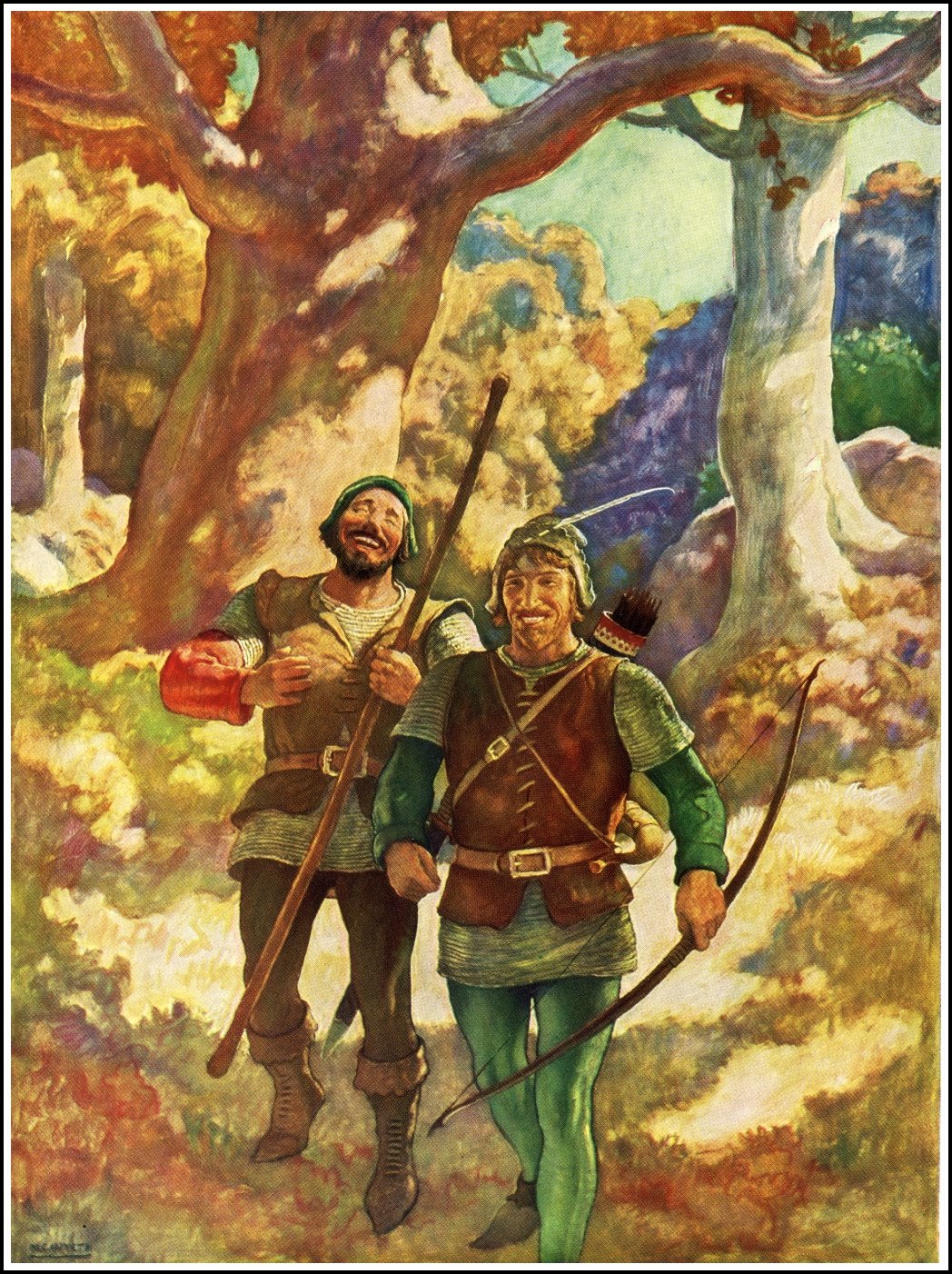
Thieves

This post is Open Game Content

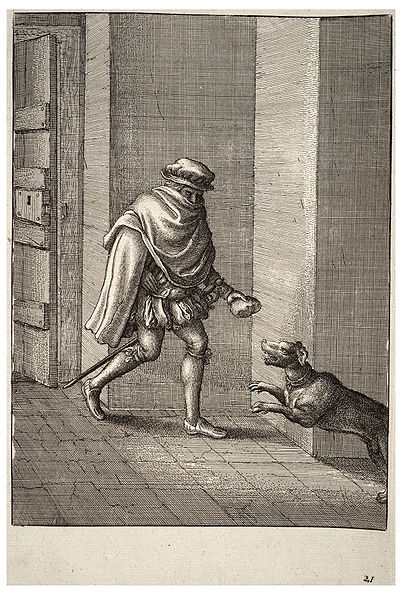
THE THIEF
The thief relies on cunning to win the day. Thieves are middling warriors and have no magical abilities, but they are hard to kill and train themselves in a wide array of skills useful to adventurers.

Prime Attribute: Dexterity, 13+ (+5% experience)

Hit Dice: 1d6 (Gains 2 hp/level after 9th level.)

Armor/Shield Permitted: Leather, padded and shields.

Weapons Permitted: Club, dagger, dart, hand axe, javelin, light crossbow, maces, short bow, short sword, sling, staff.

BACK STAB (1st): A thief normally avoids face-to-face combat if possible, preferring instead to use stealth to catch an opponent unaware. A thief able to attack an unaware opponent from the rear gains a bonus to hit and damage. To catch an opponent unaware, a thief must make a successful move silently check to sneak up behind the foe, or make a successful hide check while behind the opponent. A thief that succeeds can make a back stab at a +4 bonus to hit. A successful hit inflicts double normal damage.

As the thief gains experience, the damage inflicted increases. At fifth level, a back stab deals triple damage, and at ninth level a back stab inflicts quadruple damage.

DECIPHER SCRIPT (1st): Thieves can decipher writings by making a successful saving throw. This includes unfamiliar languages, codes and incomplete messages. Thieves can also use this ability to decipher and then cast spells from arcane scrolls, though the saving throw to do so is made at a -10 penalty.

THIEVERY (1st): A thief’s training makes them particularly adept at dungeon delving. Thieves successfully listen at doors and find secret doors (and hidden traps) as well as elves (2 in 6 and 4 in 6 chance respectively), and can find pits and traps as well as a dwarf (1 in 6 chance of just noticing, 3 in 6 chance if searching).

Moreover, thieves have the following unique abilities: Hiding in shadows, moving silently, climbing sheer surfaces, picking pockets (and other acts of legerdemain) and picking locks (with a set of burglar’s tools, which cost 25 gp). Use of these abilities requires the thief to succeed at a saving throw (in essence, making a saving throw to avoid failure). Non-thieves have a 1 in 6 chance of successfully performing these abilities.

Hiding in Shadows: Hiding in shadows requires shadows, of course, and is as effective as the invisibility spell, except that the thief cannot move while hiding in shadows.

Moving Silently: This means moving without making any sound at all. A thief moving silently and scouting ahead of a party can avoid an encounter entirely if his opponents are surprised.

Climb Sheer Surfaces: This means surfaces with no, or almost no, hand or toe holds. The Referee might require multiple saving throws for long climbs, and might regard failure as merely “no progress” or actual falling.

THIEVES’ CANT (1st): Thieves often use a street language known only to those in the “trade”. Code words, hand signals, demeanor, and other signs comprise the language of thieves’ cant and can be used to convey complex ideas. The language may vary to some degree both geographically and culturally, making cants unique to each region, city, and even within a city.

Level Experience Hit Dice Attack Save Title
1 0 1 +0 14 Scamp
2 1,500 2 +0 13 Varlet
3 3,000 3 +1 12 Villain
4 6,000 4 +1 11 Dodger
5 12,000 5 +2 10 Rapscallion
6 25,000 6 +2 9 Desperado
7 50,000 7 +3 8 Rook
8 100,000 8 +3 7 Scoundrel
9 200,000 9 +4 6 Master Thief
10 320,000 +2 hp +5 5 Master Thief
11 440,000 +4 hp +5 4 Master Thief
12 560,000 +6 hp +6 3 Master Thief

Assassin is next …

Cunning Men and Wise Women

Statting out some kobold shamans and witchdoctors tonight, I realized I didn’t like the idea of making them clerics or druids. So, I did a quick conversion of the d20 adept NPC class.

The following material is Open Game Content.

Adept (NPC Class)
Adepts are practical spellcasters of rural and barbaric folk, less skilled than the druids and more focused on serving their communities than going on daft adventures into the unknown. Most are skilled in folk remedies and fortune telling, and they are always skilled in another profession.

Hit Dice: 1d6 per level, +1 per level after 9
Weapons Allowed: Club, dagger, dart, mace, short bow, sling, spear, staff.
Armor Allowed: Leather armor, shield.
Attack: As magic-user
Saving Throws: As magic-user

Adepts cast spells from their own list (see below), preparing them in the same way as clerics. Each of an adept’s spells requires them to possess a simple fetish made of bones, feathers, ribbons, etc.

Each adept is also skilled as an alchemist, animal trainer, armorer, fortune teller, guide, healer or sage.

The Adept

Level
HD
Attack
Saving Throw
1
2
3
4
5
1
1d6
+0
15
1
2
2d6
+0
14
1
3
3d6
+1
13
2
4
4d6
+1
12
2
5
5d6
+1
11
2
1
6
6d6
+2
10
2
1
7
7d6
+2
9
3
2
8
8d6
+3
8
3
2
9
9d6
+3
7
3
2
1
10
9d6+1
+3
6
3
2
1
11
9d6+2
+4
5
3
3
2
12
9d6+3
+4
4
3
3
2
13
9d6+4
+5
4
3
3
2
1
14
9d6+5
+5
4
3
3
2
1
15
9d6+6
+5
4
3
3
3
2
16
9d6+7
+6
4
3
3
3
2
17
9d6+8
+6
4
3
3
3
2
1
18
9d6+9
+7
4
3
3
3
2
1
19
9d6+10
+7
4
3
3
3
3
2
20
9d6+11
+7
4
3
3
3
3
2

Adept Spells

Level One: Cause fear, charm person, cure light wounds, detect evil, light, protection from evil, sleep.

Level Two: Bless, darkness 15 ft radius, detect invisibility, invisibility, mirror image, pyrotechnics, snake charm, strength, web.

Level Three: Animate dead, cause disease, curse, continual light, cure disease, cure serious wounds, lightning bolt, neutralize poison, remove curse.

Level Four: Create water, massmorph, polymorph, protection from evil 10 ft radius, sticks to snakes, wall of fire.

Level Five: Commune, create food, raise dead, wall of stone.

Monks and Swashbucklers

This post will finish my posting of the hybrid “fighting-man” classes I was using in my last game, and it involves the oft-maligned monk. Now, I grant you that the monks as presented by Gygax lo those many years ago do not fit into a medieval milieu. On the one hand, I want to say – who cares? I run my games for fun, not verisimilitude. On the other hands, lots of folks do want their games to make sense and stick to a sort of “reality”. For those folks, allow me to suggest that the monk is still a usable class. The trick is to ignore the name and the “fluff” and just look at the game stats. What you have is a non-armored combatant who is quick and generally hard to kill. In other words, a very acceptable way to emulate a swashbuckler or two-fisted pulp adventurer. Heck, I’ve even used the class to stat out Popeye (don’t ask). So, before you relegate the monk (or any other class) to the dustbin, think about how you can adapt the flavor to the mechanics.

The following content is Open Game Content.

The Monk Sub-Class
The monk is a sub-class of fighting-man. Monks train themselves in the unarmed martial arts, including wrestling. They develop lightning fast reflexes and iron wills. Most monks are trained in special monasteries, but some simply apprentice themselves to a fighting master. Different masters and monasteries use different techniques, and they (and their students) are often quite competitive.

  • Prime Attributes: Strength & Constitution, 13+ (+5% experience)
  • Hit Dice: 1d12/level (Gains 5 hp/level after 10th.)
  • Armor/Shield Permitted: None.
  • Weapons Permitted: Any.

A monk’s unarmed attack inflict 1d4 points of damage at level 1, 1d6 points of damage at level 2, 1d8 points of damage at level 5 and 1d10 points of damage at level 9.

At level 6, a monk can make a second unarmed strike each round. The secondary strike’s damage begins at 1d4 and improves to 1d6 at level 9.

Monks improve their unarmored AC by +1 at levels 2, 5, 8 and 12.

A monk’s movement improves by +1 at each level. A monk carrying a medium or heavy load loses this extra speed.

A level 1 monk can use a stunning attack once per round, and no more than once per level per day. The monk must declare its use before making an attack roll. A missed attack roll ruins the attempt, and counts towards the monk’s limitation. A foe successfully struck by the monk is forced to make a saving throw. Those struck by a stunning attack always take normal unarmed attack damage, but a failed saving throw results in the foe being stunned and unable to act for 1d4 combat rounds.

At level 2, monks gain the ability to deflect arrows and other non-magical missiles. The monk must have at least one hand empty to use this ability. When a character would normally be hit by a ranged weapon, the character may make a saving throw. If the saving throw succeeds, the monk deflects the weapon and suffers no damage. This can be done once a round at levels 2-6, and twice at levels 7-11 and three times at 12th level. The monk must be aware of the attack to use this ability. An attempt to deflect a weapon counts as the monk’s primary unarmed attack. If a monk is high enough level to have a secondary unarmed attack, the monk may still make the secondary attack. This ability cannot be used against siege weapon ammunition.

At level 3, a monk’s unarmed attack can deal damage to creatures only harmed by +1 magic weapons. A level 5 monk can damage creatures only harmed by +2 or better magic weapons. A level 8 monk can damage creatures only harmed by +3 or better magic weapons, and level 12 monks can damage creatures only harmed by +4 or better magic weapons.

At level 4, a falling monk takes damage as if a fall were 20 feet shorter than it actually is, but must be within 10 feet of a vertical surface that he or she can use to slow the decent.

At level 6, a monk can feign death for a number of turns equal to the character’s level.

At level 7, a monk’s naturally healing increases to 2 hp per day.

At level 12, the monk gains the fabled quivering palm attack. The monk can use this attack once per week. The attack must be announced before an attack roll is made. The monk must be of higher level than the target. If the monk strikes successfully and the target takes damage from the monk’s unarmed attack, the quivering palm succeeds. Thereafter, the monk can choose to try to slay the victim at any later time within 1 round per level of the monk. The monk merely wills the target to die, and the victim makes a constitution saving throw to avoid this fate.

This attack has no effect on undead or creatures that can only be struck by magical weapons, unless the monk is able to inflict damage on such a creature.

The Swashbuckler: If you don’t think that a kung-fu-style monk fits into your campaign, you can rebrand the class as a swashbuckler. In this case, the monk’s “unarmed attacks” are instead made with long sword (rapier) and dagger, and only with these two weapons. The stunning attack can represent a dizzying flourish of arms or a pommel guard to the head. The quivering palm can be renamed “the lunge”, representing that moment when the swashbuckler stabs his foe, who then staggers about for a moment before expiring with a look of disbelief in his eyes.

Level Experience Hit Dice Attack Save Title
1 0 1 +0 16 Postulant
2 1,750 2 +1 15 Novice
3 4,000 3 +2 14 Brother
4 8,500 4 +3 13 Cenobite
5 20,000 5 +4 12 Mendicant
6 40,000 6 +5 11 Monk
7 80,000 7 +6 10 Canon
8 160,000 8 +7 9 Prior
9 325,000 9 +8 8 Abbott
10 550,000 10 +9 7 Abbott
11 750,000 +5 hp
+10 6 Abbott
12 1,250,000 +10 hp
+11 5 Abbott

S&W Format

Hit Dice: 1d6+3 per level, +3 hit points per level after level 9

Level Experience Hit Dice Attack Save Title
1 0 1 +0 14 Postulate
2 2,900 2 +0 13 Novice
3 5,800 3 +1 12 Brother
4 11,600 4 +2 11 Cenobite
5 23,200 5 +2 10 Mendicant
6 45,000 6 +3 9 Monk
7 90,000 7 +4 8 Canon
8 180,000 8 +5 7 Prior
9 360,000 9 +6 6 Abbot
10 480,000 +3 hp
+7 5 Abbot
11 600,000 +6 hp
+7 4 Abbot
12 720,000 +9 hp
+8 3 Abbot

Art by Alison Acton

On Doughty Woodsmen and Knights in Shining Armor

This post continues the look at the hybrid character classes I used in my last campaign, featuring the ranger and paladin. What follows is open game content.

The Paladin Sub-Class
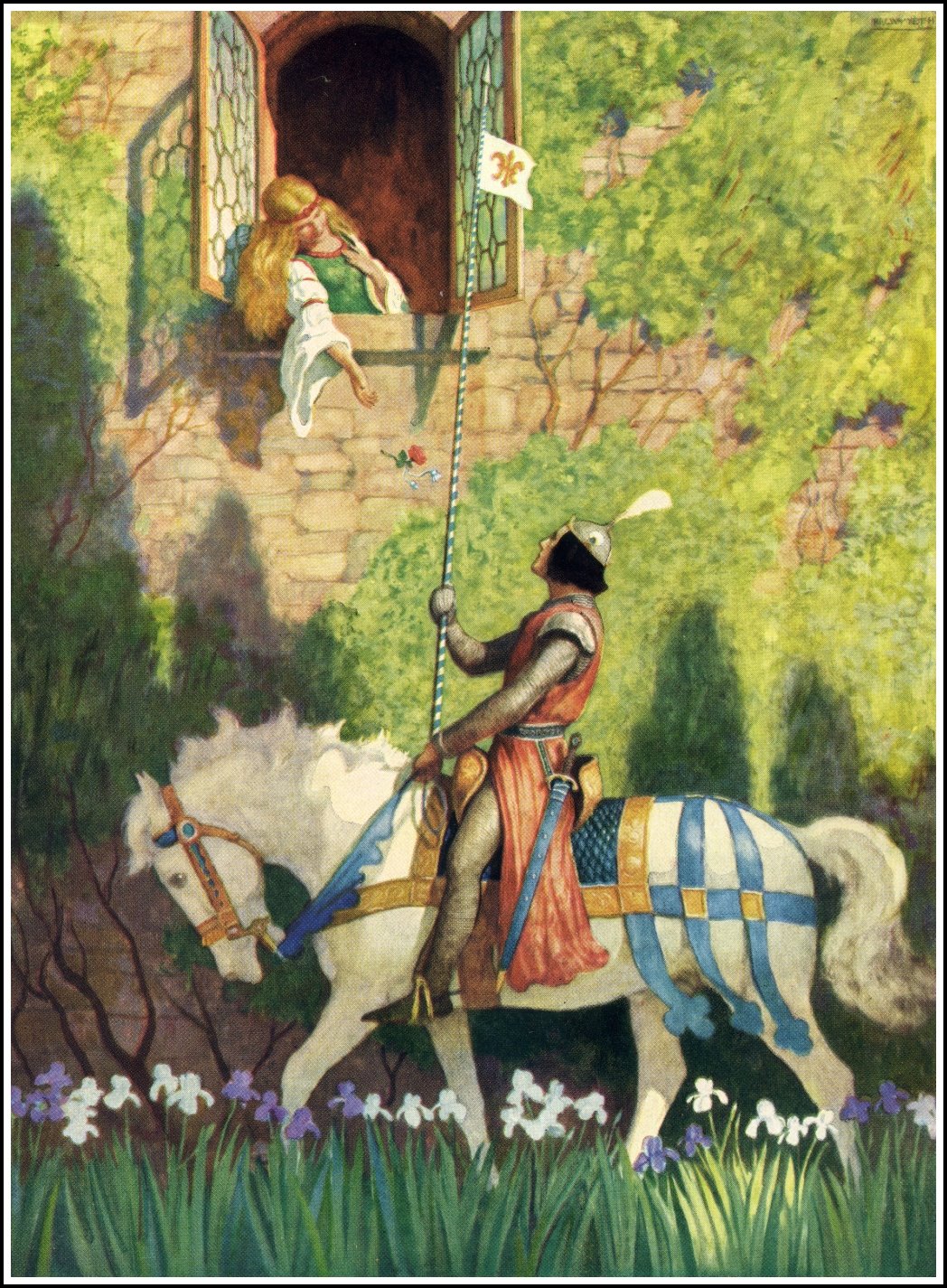
The paladin is a sub-class of fighting-man. Paladins are chivalrous champions of Law and Goodness. They might resemble the “knights in shining armor” of fairy tales or perhaps the rigid, honorable samurai of Japan. The point of paladins is purity. They do their best to remain mentally, spiritually and physically pure. From this dedication and the iron will required to maintain it, they derive a number of blessings to aid them in their struggle against Chaos and Evil.

  • Prime Attributes: Strength & Charisma, 13+ (+5% experience)
  • Hit Dice: 1d10/level (Gains 4 hp/level after 10th.)
  • Armor/Shield Permitted: Any.
  • Weapons Permitted: Any.

Paladins can detect evil (as the cleric spell) by concentrating. They emanate a permanent aura that protects them as per the spell protection from evil.

Paladins are immune to all diseases, including mummy rot and lycanthropy. Their touch can cure disease (as the cleric spell) once per week at level 1, twice per week at level 6 and three times per week at level 12.

A paladin can cure 2 hp per level by laying on of hands. This can be used on the paladin or on others, and the healing can be divided among recipients as the paladin chooses.

At level 3, a paladin gains the ability to banish undead as a cleric two levels lower.

At level 4, the paladin gains the service of a divine warhorse (or other mount) if he successfully completes a quest to locate the animal. The divine mount is unusually strong, loyal, and ready to serve the paladin in her crusade against evil. Should the paladin’s mount die, a year and a day must pass before another can be called. When riding their divine mount, a paladin gains the mounted combat ability (see Boons).

  • Divine Warhorse: HD 5; AC 6 [13]; Atk 1 bite (1d3), 2 hooves (1d4); Move 18; Save 12; Special: None.

Upon reaching level 6, a paladin becomes immune to fear, natural or supernatural. Allies within 10 feet of the paladin gain a +2 bonus on saving throws against fear effects.

Once per day, a paladin of level 9 or higher may attempt to smite evil with one normal melee attack. Smite evil gives the paladin a +2 bonus to hit, and a bonus to damage equal to the paladin’s level. This ability can only be used on supernatural creature of darkness an evil, such as anti-paladins, demons or the undead. The paladin can attempt to smite evil once per day.

At level 12, a paladin’s touch is capable of removing all ailments from a creature, including disease, poison, ability score damage, level drain, hit point damage, confusion, curses and insanity. The paladin can apply this healing touch but once per day.

Level Experience Hit Dice Attack Save Title
1 0 1 +0 18 Squire
2 2,700 2 +1 17 Scutifer
3 5,500 3 +2 16 Banneret
4 12,000 4 +3 15 Gallant
5 24,000 5 +4 14 Companion
6 48,000 6 +5 13 Knight
7 95,000 7 +6 12 Paragon
8 180,000 8 +7 11 Peer
9 360,000 9 +8 10 Paladin
10 700,000 10 +9 9 Paladin
11 1,000,000 +4 hp
+10 8 Paladin
12 1,300,000 +8 hp
+11 7 Paladin

S&W Format

Hit Dice: 1d6+2 per level, +3 hit points per level after level 9

The Ranger Sub-Class
The ranger is a sub-class of fighting-man. Rangers are warriors trained to operate in the wilderness. They are self-sufficient, cunning and well trained at fighting the barbarian tribes (human, humanoid and otherwise) that lurk on the fringes of civilization.

  • Prime Attributes: Strength & Wisdom, 13+ (+5% experience)
  • Hit Dice: 1d10/level (Gains 4 hp/level after 10th.)
  • Armor/Shield Permitted: Chainmail, leather, padded, ring and shield.
  • Weapons Permitted: Any.

Rangers have a +1 bonus to surprise (i.e. surprise on a roll of 1-2 on 1d6) and a +1 bonus to avoid being surprised (i.e. surprised on a roll of 1 on 1d8).

When fighting tribal humanoids (bugbears, gnolls, goblins, hobgoblins, kobolds, orcs, and the like) or giants (giants, ogres, and the like), a ranger inflicts extra damage equal to their level.

With a successful saving throw, a ranger can find and follow a creature’s trail for 5 hours. When tracking humanoids or giants, the ranger does so at a +2 bonus. The ranger can also determine the approximate number of creatures and their type. Rangers can also use this ability to hide tracks.

Rangers have a 2 in 6 chance to notice traps and concealed openings in a natural surrounding merely by passing within 30 feet of them. They are also capable of disarming and building simple snares and pit traps (1d4 damage).

A ranger’s training includes learning how to survive in the wild, climb cliffs and trees, conceal themselves in natural environments, move silently in natural environments and concoct and counteract natural poisons. When a ranger’s success with one of these skills is in doubt, the player should roll a saving throw to avoid failure.

At level 6, a ranger chooses one specific type of creature (i.e. goblin, gnoll, or hill giant) as his favored enemy. The ranger gets a +2 bonus to hit his favored enemy and a +2 AC when fighting his favored enemy. Further, when tracking his favored enemy, a ranger receives a +2 bonus to the tracking save. The ranger is always able to neutralize poisons of the favored enemy, whether manufactured or natural.

Level Experience Hit Dice Attack Save Title
1 0 1 +0 18 Woodsman
2 2,250 2 +1 17 Scout
3 4,500 3 +2 16 Guide
4 9,000 4 +3 15 Wanderer
5 18,000 5 +4 14 Voyager
6 40,000 6 +5 13 Pathfinder
7 75,000 7 +6 12 Warden
8 150,000 8 +7 11 Hawkeye
9 250,000 9 +8 10 Ranger
10 500,000 10 +9 9 Ranger
11 725,000 +4 hp
+10 8 Ranger
12 950,000 +8 hp
+11 7 Ranger

S&W Format

Hit Dice: 1d6+2 per level, +3 hit points per level after level 9
Armor Permitted: Chainmail, leather, ring and shield.
Spellcasting: If you do not use a druid class, replace druid spells with cleric spells.

Level Experience Hit Dice Attack Save Title
1 0 1 +0 16 Woodsman
2 2,500 2 +0 15 Scout
3 5,000 3 +1 14 Guide
4 10,000 4 +2 13 Wanderer
5 20,000 5 +2 12 Voyager
6 40,000 6 +3 11 Pathfinder
7 80,000 7 +4 10 Warden
8 160,000 8 +5 9 Hawkeye
9 320,000 9 +6 8 Ranger
10 440,000 +3 hp
+7 7 Ranger
11 560,000 +6 hp
+7 6 Ranger
12 680,000 +9 hp
+8 5 Ranger

Art by N. C. Wyeth via Golden Age Comic Book Stories

On Science

My last post mentioned a scientist. This is a class I came up with as an alternative to the magic-user. Essentially, I got on a “turn-literary-archetypes-into-classes” kick, and this was one of the results. It was never play-tested, so maybe we’ll technically call this one an NPC class.

Scientist
The scientist is an NPC dedicated to understanding the World of Nod and its bizarre, supernatural physics and applying this knowledge to the discovery and creation of new inventions. In laymen’s terms, what the magic-user does with spells, the scientist does with gadgets, gizmos and chemical formulas.

Scientists have been a staple of pulp fiction for a century, though they are most often encountered in “Sword & Planet” and “Scientifiction”, as it was once called. The archetypal scientist is an older man with a brilliant mind and a collection of fantastic inventions that help the hero of the story (which is sometimes him, but more often not) overcome obstacles. Just as wizards often play the role of villain in “Sword & Sorcery” stories, the mad or evil scientist is often the antagonist to the heroic swordsman’s protagonist.

Although one could draw inspiration from any number of the “natural philosophers” of the Middle Ages and Renaissance, no person better exemplifies the scientist we are seeking to create than Leonardo Da Vinci. Had he only lived in a fictional, fantastic world such as Nod, Da Vinci might have invented any number of mechanical contrivances.

Benjamin Franklin is the next major inspiration for our scientific adventurers, not the least of which because he “discovered” electricity (or “electrical fluid” as it was called in the 18th century) and invented and named the battery which serves as the foundation for our scientist’s make-believe inventions.

The original mad scientist in literature was Victor Frankenstein from Mary Shelley’s 1818 novel Frankenstein; or, The Modern Prometheus. Victor Frankenstein discovers the ability to return life to dead tissue and in the process creates the first flesh golem, though rather than being a mindless automaton, Frankenstein’s creature is quite intelligent.

As a counterpoint to the mad scientist, one need only look to Dr. Hans Zarkov, comrade of “Flash” Gordon. Over the course of the Flash Gordon comic strips, movies and books, Zarkov invents flying machines and invisibility rays, all while assisting his erstwhile ally in defending the Earth from the depredations of Emperor Ming.

The following is open game content.

Scientist
Prime Attributes: Intelligence, 13+ (5% experience)
Hit Dice: 1d4/level (Gains 1 hp/level after 10th.)
Armor/Shield Permitted: None.
Weapon Permitted: Dagger, club, staff, dart, light crossbow.

Scientists begin play with one small invention or three formulas (see below) and only 1d6 x 10 gp to spend on equipment. They must own a journal, their equivalent to the magic-user’s spell book.

Scientists spend most of their lives reading books and absorbing all sorts of knowledge and wisdom. At the Referee’s discretion, the scientist can recall old legends and/or lore on the roll of 1-2 on 1d6. In addition, they can make a saving throw in order to recall, understand or learn a new language (regardless of their intelligence score or the number of languages they already know).

A scientist’s powers of observation give them an improved chance of noticing secret or concealed doors and detecting the presence of noxious gases (i.e. detect on a roll of 1-2 on 1d6). Unfortunately, a scientist’s fascination with minutia makes them more likely to be surprised than others.

A scientist is capable of brewing formulas (i.e. potions) and discovering and creating new inventions (see below).

When a scientist reaches 9th level (genius) he will attract a level 1 scientist as his lab assistant if he builds a laboratory overlooking a major metropolitan area.

Inventions & Formulas
Scientists are capable of building machines and brewing chemical formulas that duplicate the effect of magic-user spells. Formulas are single-use items that work exactly like potions. Inventions are multiple use items that must be powered by “batteries” of the sort Ben Franklin invented (or miniature versions of the same). An invention can be used 1 time plus 1 time per scientist level minus the level of the duplicated spell before it must be recharged over night.

Before a scientist can brew a formula or build an invention, he must discover how to do so. This process of discovery cost 1,000 gp per spell level to be duplicated for standard spells, and 2,000 gp per spell level for entirely new creations. One week is required per spell level, with a chance of success equal to 25% plus 5% per level of the scientist minus 10% per level of the spell. The maximum chance of success is 95%.

Inventions and formulas must be discovered separately, even if they have the same effect.

Inventions come in three sizes: Small, Medium and Large. Small inventions can be held in one hand and rarely weigh more than 10 pounds. Medium sized inventions can be moved about clumsily by man-sized creatures using both their hands. A medium-sized invention uses 10 times the materials of a small invention, and costs 10 times as much to build. A large invention will fit (or nearly fit) inside a 10’ x 10’ room. Large inventions use 100 times the materials of small inventions, and cost 100 times as much to build. Formulas are treated as small inventions and weigh as much a standard coin or gem.

The level of spell a scientist can “fit” into an invention of a given size is as follows:

  • Scientists of level one to three can fit level one spells into small inventions, level two spells into medium inventions and level three spells into large inventions.
  • Scientists of level four to six can fit level one and two spells into small inventions, level three spells into medium inventions and level four spells into large inventions.
  • Scientists of level seven to nine can fit level one to three spells into small inventions, level four spells into medium inventions and level five spells into large inventions.
  • Scientist of level ten to twelve can fit level one to four spells into small inventions, level five spells into medium inventions and level six spells into large inventions.

Brewing a formula costs 25 gp times the spell level times the level of the scientist. A level one formula brewed by a level three scientist, for example, costs 25 x 1 x 3 gp, or 75 gp, to concoct. A level four formula brewed by a level nine scientist costs 25 x 4 x 9 gp, or 900 gp, to concoct. The Referee may want to create a list of rare ingredients for each formula the scientist discovers in lieu of the scientist just making a check.

Inventions cost 500 gp per spell level to create, and their manufacture requires five days plus two days per spell level. Thus, an invention that duplicates the level two spell acid arrow would cost 1,000 gp and require nine days of work to realize.

Players and Referees should come up with fantastic, quasi-scientific names for a scientist’s inventions, whether they are inspired by the natural philosophers of the Renaissance or the mad scientists from pulp fiction.

Level Experience Hit Dice Attack Save Title
1 0 1 +0 17 Tinkerer
2 2,600 2 +1 16 Chemist
3 5,200 3 +1 15 Scholar
4 10,400 4 +1 14 Philosopher
5 20,800 5 +1 13 Sage
6 42,500 6 +2 12 Professor
7 85,000 7 +2 11 Polymath
8 170,000 8 +2 10 Doctor
9 340,000 9 +2 9 Genius
10 500,000 10 +3 8 Genius
11 750,000 +1 hp
+3 7 Genius
12 1,000,000 +2 hp
+3 6 Genius

S&W Format

Hit Dice: 1d6-1 per level, +1 hit point per level after level 9

Level Experience Hit Dice Attack Save Title
1 0 1 +0 15 Tinkerer
2 2,200 2 +0 14 Chemist
3 4,400 3 +0 13 Scholar
4 8,800 4 +1 12 Philosopher
5 17,600 5 +1 11 Sage
6 35,000 6 +2 10 Professor
7 70,000 7 +2 9 Polymath
8 140,000 8 +3 8 Doctor
9 280,000 9 +3 7 Genius
10 430,000 +1 hp
+4 6 Genius
11 580,000 +2 hp
+5 5 Genius
12 730,000 +3 hp
+5 4 Genius

Psychic Phenomena

In my previous post of encounters on the Wyvern Coast, I referenced a psychic class, which I now present here. What follows is open game content.

The Psychic Sub-Class
The psychic is a sub-class of magic-user that learns to focus his innate mental powers to create astrounding psychic phenomena. Psychics must go though a training regimen not dissimilar to monks. But where monks train their bodies, psychics train their minds.

  • Prime Attribute: Intelligence & Wisdom, 13+ (+5% experience)
  • Hit Dice: 1d4 (Gains 1 hp/level after 10th level.)
  • Armor/Shield Permitted: Leather, padded.
  • Weapons Permitted: Club, dagger, dart, hand axe, light hammer, short bow, sickle, sling, spear, staff.

The most basic ability a psychic has is his “sixth sense”, which warns him of danger. Because of their sixth sense, psychics are only surprised on a roll of 1 on 1d8. Psychics receive a +1 bonus on saving throws made to avoid traps, and can spot secret or hidden doors as well as an elf.

Psychics train their minds to be a veritable fortress of intellect. This gives them a +1 bonus on saving throws against mental magics (ESP, charm person, etc) and the powers of other psychics. At 6th level, their intellect fortress becomes a tower of iron will and their saving throw bonus improves to +3.

At levels 1, 3, 5, 7, 9, and 11 the psychic opens the door to a new psychic power from the following list. To use a power, the psychic must succeed at a saving throw, and his victim (if there is one) must fail a saving throw. The subject of a psychic power must be within the psychic’s field of vision. If, during the day, a psychic fails a saving throw to activate a power, that power closes to him for the remainder of the day and until he spends one hour in meditation the next day.

Psychic Powers
Astral Projection: The psychic can enter a trance and project his astral spirit from his physical body. This astral spirit is incorporeal and unable to interact with the physical world. Astral spirits can only communicate using the power of telepathy. An astral spirit can travel freely over the physical world, and can enter the ethereal and astral planes at will. The astral spirit can interact with objects and creatures on the ethereal and astral planes, and can communicate normally therein. If a psychic’s astral spirit is killed, his physical body dies as well.

Channeling: By opening his mind to the cosmos, the psychic can commune with higher planes (as the magic-user spell contact other plane). Channelling is a difficult power to control, and imposes a -5 penalty on the psychic’s activation saving throw. A failure to activate this power results in the psychic’s personality (or alignment) changing (as determined by the Referee) for 1d6 days.

Clairaudience/Clairvoyance: A psychic with these abilities can see or hear the going’s on in a different place. If the psychic has never been in this place, or does not know somebody present, his saving throw to activate this ability is made at a -5 penalty. Separate saving throws must be made to use clairaudience (remote hearing) and clairvoyance (remote seeing).

Cloud Minds: With this ability, a psychic can cloud people’s minds, making himself invisible to them. Just as with the magic-user spell invisibility, an attack by the psychic spoils the effect. If used on multiple subjects, the psychic suffers a -1 penalty to his saving throw to activate the power for each subject beyond the first.

Dowsing: Using a simple dowsing rod, the psychic can find the nearest source of fresh water. He can also use this power to discover the location of precious metals and gems (as a wand of metal detection), but suffers a -3 penalty to his activation saving throw.

Ego Whip: This is the psychic’s ability to stun another sentient creature by causing terrible pain and trauma in their mind. A stunned creature remains stunned for a number of rounds equal to the psychic’s level. An ego whip can only be used on a single creature.

Empathic Projection: This is the ability to project powerful emotions (anger, joy, sorrow, fear) in the mind of a subject. It is up to the Referee to determine the effects these emotions might have on a situation. A psychic who fails his saving throw to activate this power must make an additional saving throw or be struck with the emotions himself.

ESP: With this ability, the psychic can read a subject’s mind, as with the magic-user spell of the same name.

Id Insinuation: By insinuating his own thoughts and memories in an opponent’s mind, the psychic causes either confusion (as the magic-user spell) or insanity (as the magic-user spell). Attempting to cause insanity imposes a -10 penalty on the psychic’s activation saving throw. A failure to activate this power properly forces the psychic to make a saving throw himself or suffer the effects of the power himself.

Illusion: The psychic can use this ability to plant powerful illusions inside a person’s mind. In general, these illusions will correspond to the basic spells of an illusionist, with a penalty equal to the illusion’s level assessed to the psychic’s activation saving throw.

Mesmerism: This is the ability to put others into a trance, thus gaining the ability to question them truthfully or implant suggestions in their mind. Implanting a suggestion works as the magic-user spell of the same, and imposes a -5 penalty on the psychic’s saving throw to activate the power.

Mind Thrust: With a sharp thrust of his mental powers into the mind of one sentient opponent, the psychic inflicts 1d6 points of damage plus one point of damage for every point difference between his own and his opponent’s intelligence scores. If an opponent’s intelligence score is unknown, assume that it is a 10.

Psionic Blast: A psionic blast works like an ego whip, but instead stuns creatures in 30-ft cone emanating from the psychic’s forehead. A psychic suffers a -5 penalty to activate a psionic blast.

Psychic Surgery: Psychic surgery can be used to double a creature’s natural healing or to grant a subject a +1 bonus to save against diseases. It can also be used to heal or inflict 1d6 points of damage. This requires the psychic to physically touch the subject, and the psychic’s saving throw to activate the power is made at a -5 penalty. At 5th level, the psychic can heal or inflict 2d6 points of damage. At 10th level, the psychic can heal or inflict 3d6 points of damage.

Psychometry: This is the psychic’s ability to read the psychic vibrations given off by an object or place, allowing him to learn elements of its history such as who last held the device, how it is used, or traumatic events that took place there. In effect, it works like the magic-user spell legend lore. The Referee might impose penalties on the psychic’s saving throw to activate this power depending on the age and provenance of the object or place being read.

Pyrokinesis: This is the ability to cause objects to burst into flames. The ability can only be used on flammable objects, and inflicts 1d4 points of damage per psychic level. Activating the power requires a full round of concentration on the part of the psychic. Failure to this activate this power requires the psychic to make an additional saving throw to avoid being damaged himself.

Telekinesis: This is the ability to move small objects with one’s mind. For precise telekinetic control of a small object, a -5 penalty is imposed on the psychic’s saving throw to activate this power. Otherwise, impose a penalty of -2 per 10 pounds of the object being moved.

Telepathy: With this ability, the psychic can project his thoughts into the minds of other sentient creatures. Penalties may be applied to this ability based on the distance of the psychic’s target or when he tries to communicate with several people at once.

Teleportation: This power allows a psychic to teleport (as the magic-user spell) objects. The psychic can teleport creatures, but suffers a -5 penalty to his saving throw to activate the power. Teleporting multiple objects or creatures imposes a -1 penalty to his activation saving throw per creature or object beyond the first.

Transvection: A psychic can use transvection to cause himself to levitate (as the magic-user spell). It can also be used to fly (as the magic-user spell), but such use imposes a -5 penalty to the psychic’s activation saving throw.

.nobrtable br { display: none }

Level Experience Hit Dice Attack Save Title
1 0 1 +0 17 Learner
2 2,200 2 +1 16 Mentalist
3 5,000 3 +1 15 Sensitive
4 10,000 4 +1 14 Channeler
5 20,000 5 +1 13 Esper
6 40,000 6 +2 12 Savant
7 75,000 7 +2 11 Yogi
8 150,000 8 +2 10 Guru
9 300,000 9 +2 9 Mind Lord
10 450,000 10 +3 8 Mind Lord
11 750,000 +1 hp +3 7 Mind Lord
12 950,000 +2 hp +3 6 Mind Lord

S&W Format
Hit Dice: 1d6 per level, +1 hit point per level after level 9
Armor/Shield Permitted: Leather.
Weapons Permitted: Club, dagger, dart, hand axe, short bow, sling, spear, staff.

Level Experience Hit Dice Attack Save Title
1 0 1 +0 15 Learner
2 1,800 2 +0 14 Mentalist
3 3,600 3 +0 13 Sensitive
4 7,200 4 +1 12 Channeler
5 14,400 5 +1 11 Esper
6 30,000 6 +2 10 Savant
7 60,000 7 +2 9 Yogi
8 120,000 8 +3 8 Guru
9 240,000 9 +3 7 Mind Lord
10 390,000 +1 hp +4 6 Mind Lord
11 540,000 +2 hp +5 5 Mind Lord
12 690,000 +3 hp +5 4 Mind Lord

Barbarians and Bards

This post continues the look at the hybrid character classes I used in my last campaign, featuring the barbarian and bard. What follows is open game content.

The Barbarian Sub-Class
The barbarian is a sub-class of fighting-man. Where fighting-men rely on training and skill to win the day, the barbarian uses ferocity and instinct. Most barbarians are members of uncivilized tribes of humans, demi-humans or humanoids. “Civilized” barbarians can represent men and women with hair-trigger tempers and a zest for violence.

  • Prime Attributes: Strength & Constitution, 13+ (+5% experience)
  • Hit Dice: 1d12/level (Gains 5 hp/level after 10th.)
  • Armor/Shield Permitted: Leather, padded, ring and shields.
  • Weapons Permitted: Any.

Attacks from the flank receive no bonus to hit a barbarian. Bonuses for attacks against a barbarian’s back are halved.

Barbarians mistrust the doings of magic-users and illusionists. When presented with displays of such magic they must succeed at a saving throw or be stunned with fear for 1 round.

At third level, the barbarian can go berserk in combat, gaining a +2 bonus to hit and damage, but suffering a -2 penalty to her armor class. The barbarian’s berserk fury lasts for a number of rounds equal to 1 + the barbarian’s level. While in her rage, the barbarian focuses on her foes until they are dead. If her rage continues after her foes are gone, she will attack her nearest ally unless she makes a successful saving throw. This ability can be used whenever the barbarian engages in combat.

At fifth level, a barbarian can continue to fight after losing all of her hit points if she is in a berserk fury. When the berserk fury ends, the barbarian succumbs to death.

Level Experience Hit Dice Attack Save Title
1 0 1 +0 17 Tribesman
2 2,100 2 +1 16 Savage
3 4,700 3 +2 15 Plunderer
4 9,400 4 +3 14 Raider
5 20,000 5 +4 13 Reaver
6 40,000 6 +5 12 Shield-Biter
7 80,000 7 +6 11 Berserker
8 160,000 8 +7 10 Conqueror
9 320,000 9 +8 9 Barbarian Prince
10 600,000 10 +9 8 Barbarian Prince
11 800,000 +5 hp
+10 7 Barbarian Prince
12 1,000,000 +10 hp
+11 6 Barbarian Prince

S&W Format

Hit Dice: 1d6+3 per level, +3 hit points per level after level 9
Armor Permitted: Leather, ring and shields

Level Experience Hit Dice Attack Save Title
1 0 1 +0 15 Tribesman
2 2,500 2 +0 14 Savage
3 5,000 3 +1 13 Plunderer
4 10,000 4 +2 12 Raider
5 20,000 5 +2 11 Reaver
6 40,000 6 +3 10 Shield-Biter
7 80,000 7 +4 9 Berserker
8 160,000 8 +5 8 Conqueror
9 320,000 9 +6 7 Barbarian Prince
10 440,000 +3 hp
+7 6 Barbarian Prince
11 560,000 +6 hp
+7 5 Barbarian Prince
12 680,000 +9 hp
+8 4 Barbarian Prince

The Bard Sub-Class

The bard is a sub-class of fighting-man, a warrior-poet whose music works magic. Bards are usually charismatic rogues, stealing hearts as readily as they cross steel. They are walking repositories of legends and stories. Their music is capable of stiffening the resolve of comrades, lulling guards into a daze, or charming lads and lasses.

  • Prime Attributes: Intelligence & Charisma, 13+ (+5% experience)
  • Hit Dice: 1d10/level (Gains 4 hp/level after 10th.)
  • Armor/Shield Permitted: Leather, padded, ring, shield.
  • Weapons Permitted: Bows, club, dagger, dart, hand axe, mace, war hammer, javelin, long sword, short sword, sling, spear, and staff.

Bards can decipher and interpret legends and secret writings by making an saving throw modified by their intelligence bonus/penalty. This includes unfamiliar languages, codes and incomplete messages. Bards can also use this ability to decipher and then cast spells from arcane scrolls, though the intelligence saving throw to do so is made at a penalty equal to the level of the spell being cast.

By playing music, singing or reciting heroic verse, bards can inspire listeners to surpass their normal level of performance, granting allies a +1 bonus to all saving throws for a number of rounds equal to the bard’s level. A bard can do this a number of times per day equal to their level. The bonus imparted increases with the bard’s level, to +2 at sixth level and +3 at twelfth level.

With a successful saving throw, a bard acquires or remembers some information pertaining to local notables, a legendary item, a noteworthy place or any other relevant bit of information. Acquiring the information may involve speaking to the locals or doing research in a library. It can also lead to a partial or complete understanding of a local or secret language, including the thieves’ cant, the secret language of druids or the trail signs of rangers. This ability cannot reveal the exact powers of a magic item, but may give a hint to its history, general function or activation. The Referee may make the saving throw harder based on the obscurity of the knowledge.

At fourth level, a bard gains the ability to place a single creature into a trance with a performance. The bard can use this ability three times per day, and can maintain the effect for a number of rounds equal to the character’s level.

When attempting to fascinate, the target makes a saving throw to resist. If the saving throw fails, the creature sits quietly and listens to the bard for the duration of the effect. While fascinated, the creature is considered prone and suffers a -4 penalty to saving throws and armor class. If the creature’s saving throw succeeds, the bard cannot attempt to fascinate that creature again for 24 hours. Any obvious threat to the fascinated creature, such as the casting of a spell, drawing a sword, or aiming of a weapon, automatically breaks the effect.

At fifth level, the bard may attempt to charm (as the spell charm person) a fascinated creature. At eighth level, the bard may attempt to implant a suggestion (as the spell) in a fascinated creature. At twelfth level, a bard may attempt to instill antipathy/sympathy (as the spell) on a fascinated creature. In each case, the creature receives an additional saving throw to resist the additional effect.

The number of creatures the bard can fascinate at once is equal to two less than the level of the bard. Thus, a fourth level bard can fascinate two creatures, a sixth level bard can fascinate 4 creatures and a twelfth level bard can fascinate 10 creatures.

At ninth level, a bard can inspire heroism in one other creature. For every two levels the bard attains beyond ninth level, the bard can inspire heroism in one additional creature. To inspire heroism, the bard must use song, poetry or some sort of oration. A creature inspired gains a +2 bonus to attacks and saving throws and +2 hit points per level for one minute.

Level Experience Hit Dice Attack Save Title
1 0 1 +0 18 Dilettante
2 1,500 2 +1 17 Raconteur
3 3,250 3 +2 16 Jongleur
4 7,500 4 +3 15 Versifer
5 15,000 5 +4 14 Goliard
6 30,000 6 +5 13 Poet
7 60,000 7 +6 12 Minstral
8 120,000 8 +7 11 Troubadour
9 240,000 9 +8 10 Meistersinger
10 450,000 10 +9 9 Meistersinger
11 625,000 +4 hp
+10 8 Meistersinger
12 800,000 +8 hp
+11 7 Meistersinger

S&W Format

Hit Dice: 1d6+2 per level, +3 hit points per level after level 9

Level Experience Hit Dice Attack Save Title
1 0 1 +0 16 Dilettante
2 1,700 2 +0 15 Raconteur
3 3,400 3 +1 14 Jongleur
4 6,800 4 +2 13 Versifer
5 13,600 5 +2 12 Goliard
6 25,000 6 +3 11 Poet
7 50,000 7 +4 10 Minstral
8 100,000 8 +5 9 Troubadour
9 200,000 9 +6 8 Meistersinger
10 320,000 +3 hp
+7 7 Meistersinger
11 440,000 +6 hp
+7 6 Meistersinger
12 560,000 +9 hp
+8 5 Meistersinger

The Fighting-Men of Nod

What follows is the fighting-man class I used for my last campaign. Nothing ground-breaking here, but I do include some original level titles that I’m pretty happy with. The following content is declared open game content.

THE FIGHTING-MAN
You are a warrior, trained in battle and in the use of armor and weapons. Whatever type of fighting-man you choose to play, you will probably end up on the front lines of your adventuring party, going toe-to-toe with dragons, goblins, and evil cultists, hacking your way through them and taking the brunt of their attacks. The fighting-man character is best equipped of all the character classes to dish out damage and absorb it, too. Clerics heal, and magic-users cast spells, but the down-and-dirty hack and slash work is up to you. You’re going to serve as the party’s sword and shield, protecting the weaker party members and taking down the enemies before you. Perhaps one day they will tell legends of your battle prowess, and followers will flock to your castle stronghold where you revel in your fame, riches, and newly earned nobility. Fail, of course, and you’ll die, just another forgotten warrior in a dangerous world.

  • Prime Requisite: Strength, 13+ (+5% experience)
  • Hit Dice: 1d10/level (Gains 4 hp/level after 10th.)
  • Armor/Shield Permitted: Any.
  • Weapons Permitted: Any.

Against creatures with one hit dice, a fighting-man makes one attack per level each round.

Fighting-men may choose one weapon with which to specialize. Once a specialized weapon is chosen, it cannot be changed. For fighters between 1st and 6th level, this specialization imparts a +1 bonus to hit and a +1 bonus to damage using that weapon. At 7th level the bonuses increase to +2 to hit and +2 to damage.

At 10th level, a fighting-man can make two attacks per combat round against creatures with 2 or more Hit Dice.

Level Experience Hit Dice Attack Save Title
1 0 1 +1 18 Yeoman
2 2,000 2 +2 17 Warrior
3 4,000 3 +3 16 Champion
4 8,500 4 +4 15 Duelist
5 17,000 5 +5 14 Swashbuckler
6 34,000 6 +6 13 Grognard
7 68,000 7 +7 12 Freelance
8 136,000 8 +8 11 Hero
9 272,000 9 +9 10 Warlord
10 500,000 10 +10 9 Warlord
11 750,000 +4 hp
+11 8 Warlord
12 1,000,000 +8 hp
+12 7 Warlord

Note on Saving Throws: I should explain that in my hybrid game saving throws were modified by ability score bonuses/penalties. Thus, I would tell a player to make a “strength saving throw”, requiring them to modify their roll with their character’s strength bonus or penalty.

S&W Format
Hit Dice: 1d6+2 per level, +3 hit points per level after level 9

Level Experience Hit Dice Attack Save Title
1 0 1 +0 16 Yeoman
2 2,000 2 +0 15 Warrior
3 4,000 3 +1 14 Champion
4 8,000 4 +2 13 Duelist
5 16,000 5 +2 12 Swashbuckler
6 30,000 6 +3 11 Grognard
7 60,000 7 +4 10 Freelance
8 120,000 8 +5 9 Hero
9 240,000 9 +6 8 Warlord
10 360,000 +3 hp
+7 7 Warlord
11 480,000 +6 hp
+7 6 Warlord
12 600,000 +9 hp
+8 5 Warlord