Taking a Bite out of the Dungeon

World traveler, bon vivant – the gourmand is both, traipsing across the globe to experience everything it has to offer. Even dungeons cannot escape the curiosity of the gourmand – after all, how are you to know what fresh shrieker or violet fungus tastes like if you don’t crawl into the underworld and harvest it yourself!

The gourmand is a strange class, though there some method to this madness. I got it in my head to produce an article about random fantasy cookery – i.e. random recipe with random ingredients – and then thought that a gourmand might be a good accompaniment to the concept. My inspiration comes from two sources. The first are traveling eaters like Anthony Bourdain and Andrew Zimmern – Zimmern especially for his iron stomach and nearly infinite courage in putting exotic things into his mouth. My second inspiration was the ever-lovin’ blue-eyed Volstagg, heftiest of the warriors three and proof that one can survive the dangers of a fantasy realm without being built like Conan (the Barbarian, not O’Brien).

The Basics 
Hit Dice: 1d8 per level, +2 hp per level after 10th.

Prime Requisite: Constitution, +5% bonus to earned XP if 13+. A gourmand needs a strong stomach to tread where their palette takes them.

Armor: Gourmands can wear any armor but plate – it’s too restrictive. They can use shields.

Weapons: Gourmands have traveled all over and gotten into plenty of trouble, so they’re capable of using most weapons. They are barred only from those that take more intense training – swords and bows.

Special Abilities 
Gourmands specialize in eating – in quantity and variety. A gourmand’s goal is to taste everything that is edible and non-poisonous at least once. They aren’t fools or cannibals – they aren’t going to nibble a zombie or give green slime a try – but they are intrigued by owlbear steaks or a tossed salad of assassin vine leaves and treant nuts (okay – that last ingredient doesn’t sound right – but come on – they’re flora, not fauna). Gourmands must have iron stomachs, and their training grants them a +2 bonus on saving throws against poison. Their enhanced search for caloric satisfaction, however, requires them to consume double the normal amount of food for members of their species (i.e. double rations).

Gourmands are driven to try exotic foods. They must consume something new (a new spice, a new meat, a new fruit, etc) once per week or fall into a terrible black mood and suffer a -5% penalty to earned experience. This penalty is cumulative, up to a maximum -20% penalty. Each new food consumed, however, is worth a 100 XP bonus to the gourmand.

Where magic-users keep spellbooks and leech’s leechbooks, gourmands keep cookery books, collecting and inventing all manner of recipes, and recording their culinary experiences. These books must be kept, but they do not offer a gourmand any special abilities or impose on them any special restrictions if lost.

Gourmands are, of course, expert chefs. They can cook almost anything and make it palatable to others, and can take quality ingredients and make dishes so exquisite that they act a balm to body, mind and spirit. A gourmand with a pound of grain (processed, preferably), a pound of meat, a pound of fruit or sweetener (honey, for example), a bottle of spirits (or beer, wine, etc) and a pinch of salt or spice, can prepare a meal for up to six people that can have healing qualities. The gourmand must decide how magnificent his dish will be and then make a percentile roll to see if he succeeds. Failure means he concocts an awful mess with no benefits other than food in the belly and various gastric complaints for the remainder of the night.

Restore Vigor: Restores 1d8 hit points plus one hit point per gourmand level.

Cure What Ails You: Removes any disease afflicting the eater, but does not remove any damage already done by the disease.

Soothe Mind: Frees the eater’s mind from any curse or enchantment.

Revitalize: Restores 3d8 hit points plus one hit point per gourmand level and removes all damage from one ability score.

Restore Spirit: Restores all hit point damage, ability score damage and one lost level.

This fantastic feast can be stretched to feed more than six people, at a -5% penalty to the gourmand’s roll per extra person. Each exotic ingredient added (i.e. owlbear in place of beef) either gives the gourmand a +15% or -5% to his roll. The Referee should determine which (bonus or penalty) with a flip of a coin (or equivalent) without informing the gourmand of the result. The meal takes one hour to prepare and requires basic cooking equipment (pot, pan, knife and fire).

A gourmand’s fame often precedes her, and can be a curse as well as a blessing. Gourmands of first to fourth level never have trouble finding an invitation to dinner in their home town, and have a 1 in 10 chance of an invitation by a local aristocrat. Gourmands of fifth to eighth level enjoy such invitations within their home kingdom or country, gourmands from ninth to tenth level in their home region and gourmands of eleventh to twelfth level throughout the world and gourmands of thirteenth level or higher anywhere in the cosmos.

These invitations come with a price, of course, for the host expects the impress the gourmand and receive a hearty endorsement of their table. The gourmand, however, becomes increasingly picky as they grow older, and their dedication to their art and philosophy require them to render an honest verdict of the sampled fare. A gourmand that has dined must roll 1d20 and beat his own level to find the fare satisfying. Every 100 gp spent on the feast by the host grants a +1 bonus to the roll, up to a maximum bonus of +5. However it goes, the gourmand must give a monologue on the quality and creativity of the prepared feast and then suffer a reaction roll from his host. If he praises the feast, the reaction roll is made at a +3 bonus. If he derides it, the reaction roll is made at a -3 penalty. Naturally, the companions of a gourmand are also invited to these repasts, and they must suffer the same consequences as the gourmand.

The final challenge of the gourmand is one of weight. Each week the gourmand does not spend in vigorous exercise (i.e. fighting monsters or at least running away from them) results in a gain of one pound. Pound gained in excess of what would be considered “standard” or “average” for their species and gender, are treated as weight from equipment and can thus slow them down.
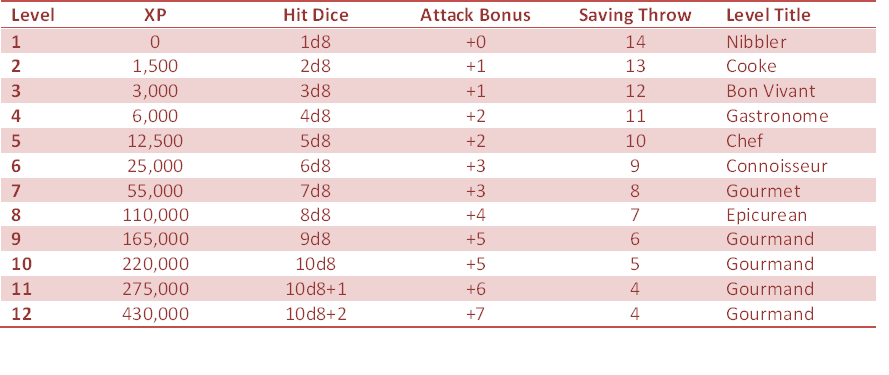
Image by Frans Hals

A Bevy of Bujin

As regular readers know, my Mu-Pan hexcrawl is based on Mike Davison’s excellent Ruins and Ronin ruleset (and by reading this sentence, you are now contractually obligated to go buy it – sorry, the law’s the law).

R-n-R is, in turn, based on Swords and Wizardry White Box, so it keeps things simple. There are four classes – Bujin (fighting-man), Sohei (cleric), Shugenja (magic-user) and Half-Ogre. In addition, Mike has released the Ninja, Kensai, Headhunter and Henyeyokai classes on his blog. The bujin is, essentially, a samurai that can make use of the heaviest armor in the game and any weapon.

Unfortunately, Mu-Pan is based as much on China as Japan, and that leaves a few gaps where fighting-men are concerned, primarily in the form of the shaolin monk. Of course, there’s a perfectly good monk in NOD 1 and S-n-W Complete, but I decided I wanted to minimize reliance on other rulebooks when writing Mu-Pan. Besides which, there are some important differences in terms of Hit Dice between White Box, Core and Complete. To that end, I came up with this little system for modifying the existing bujin to model different kinds of Asian warriors, from wandering swordsmen to fighting monks to members of dart bureaus.

Keep in mind, this is a rough draft. I’d love to hear comments on the concept.

The bujin as written is designed to be a heavily armored warrior, serving on the front lines of an adventuring band, his o-yoroi armor deflecting deadly blows while his flashing katanas cut down foe after foe. This is a fine archetype of Asian fighting prowess, but it stands at almost the opposite end of the spectrum from Asia’s other great fighting archetype – the unarmed martial artist. To model your bujin as something other than a samurai, this houserule permits you to reduce your allowable armor in return for a special ability. The less armor you are permitted (and thus the more damage you’re likely to take in combat), the more special abilities you can have.

Maximum Armor Bonus | Special Abilities
+0 | 4
+2 | 3
+4 | 2
+6 | 1

Special Abilities

Combat Sense – You are normally surprised on a roll of 1 on 1d8 and can make a saving throw to avoid back stabs from ninjas and thieves.

Deflect Missiles – Once per round, you can make a saving throw to avoid an otherwise successful missile attack.

Estimate Foe – For each round you do not attack your opponent, you gain a +1 bonus to hit, Armor Class and damage for the remainder of the combat against that opponent.

Headlong Charge – You run at an opponent or ride at an opponent and attempt a single attack at a +2 bonus to hit along the way. You must run at least 20 feet to use this ability, and you suffer a -2 penalty to your AC during any round in which you make a headlong charge.

Fists of Iron – Your unarmed attacks do 1d6-1 (1d4) points of damage.

Flurry of Blows – You can make one attack against a secondary opponent every other round.

Iron Hold – With a successful attack you wrap your opponent up using your arms and even legs; equivalent of a hold person spell until your opponent makes a successful saving throw (penalty equal to difference between your strength and their strength). If your attack fails, you suffer a 1 point penalty to Armor Class until your next turn.

Ki Shout – You harness all your power and put it into a single melee attack, gaining a +2 bonus to damage if you hit. You can unleash a ki shout only once per day.

Mighty Leap – You can make a 6 foot horizontal and 3 foot vertical leap if heavy encumbered, 8 foot / 4 foot leaps if lightly encumbered and 10 foot / 5 foot leaps if unencumbered.

Mounted Archery – You suffer no penalties to firing a bow from an unsteady platform, like a boat, horse, flying carpet, etc.

Parry Blows – You can trade an attack during a round for a +1 bonus to your AC or the AC of a creature or object no more than 3 feet away from you.

Parry Death Blow – Once per combat you can make a saving throw to retain 1 hp when a successful blow would otherwise have killed you.

Swift Motion – You roll a separate initiative from your group, and may take whichever initiative roll is better. Your movement rate is also increased by three.

Image by Wayne Reynolds via Paizo. I’m a WAR junkie, so when I saw this image pop up today on their blog, I had to appropriate it.

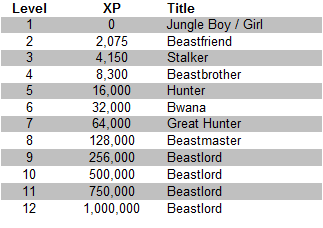
The Beastmaster

The beastmaster is a human or humanoid raised in the wild by animals. Perhaps the earliest beastmaster in literature was Enkidu, the wild man encountered by the mythic hero Gilgamesh. Romulus and Remus, the legendary brothers responsible for founding the city of Rome, are raised by a she-wolf, though there are no accounts of them having acquired extraordinary abilities.

The earliest beastmaster in modern literature is likely Mowgli, the jungle boy of Rudyard Kipling’s Jungle Book, first published in the story “In the Rukh” in 1893. Mowgli is raised by wolves after becoming lost in the jungle as an infant. Because of this upbringing, Mowgli learns the language of animals. Mowgli also has a loyal animal friend, Bagheera the black panther.

A female beastmaster appeared in 1904 in the form of Rima the Bird Girl in W. H. Hudson’s novel Green Mansions: A Romance of the Tropical Forest. Rima lived in South America, and was feared by the natives for her “magical” powers, which included talking to the birds, befriending animals and plucking poisoned darts from mid-air. Unfortunately, Rima’s story ends in tragedy, as she was burned alive by the native tribesmen.

In 1912, Edgar Rice Burroughs created the most famous beast-master in literature in Tarzan of the Apes. Tarzan was a child raised in the African jungles by intelligent great apes called Mangani. In the wake of Tarzan’s popularity came a wave of books, comic books, movies, radio shows and television shows starring the “Lord of the Apes”. This lead to dozens of imitators, from Bomba the Jungle Boy to Marvel’s Ka-Zar.

From Mowgli, Rima, Tarzan and their many imitators, we can sketch out the special abilities of the beastmaster archetype. He or she must be a person raised since infancy or childhood by animals in the wilderness. The beastmaster’s feral childhood gives them a number of special abilities, but also makes them an outside in the society of human beings.

Prime Attribute: Constitution
Hit Dice: 1d6+3 (+4 hit points per level after 9th)
Armor Permitted: Shields, no armor.
Weapons Permitted: Any
Attack: As fighting-man
Save: As fighting-man

Beastmaster Class Abilities
Beastmasters cannot speak anything but the language of animals at 1st level. They can pick up a few words of common by 2nd and speak it haltingly by 3rd level.

The beastmaster can move as silently as a panther in the wilderness. This means he surprises his enemies more often than normal men. His own senses, made keen by a life in the wild, mean he is surprised less often than normal men.

The beastmaster can camouflage himself in the foliage to the point of becoming virtually invisible if he does not move.

Beastmasters are skilled trackers. When attempting to follow tracks, they can make a saving throw to avoid losing the trail.

The beastmaster is as swift as the animals who raised him. He increases his speed by +3. An unarmored and unencumbered beastmaster therefore has a speed of 15 rather than 12.
Since they are used to fighting without the benefit of armor, beastmasters develop a fluid, mobile fighting style that grants them a flat -2 [+2] adjustment to their Armor Class.

Beastmasters can banish or control animals (but not monsters) the same way a cleric can banish or command the undead. The beastmaster rolls using the same table. For beastmasters, a result of “D” indicates that the animals are forced into his command for a period of 24 hours.

A 1st level beastmaster can choose to have one animal with no more than 1 HD into his loyal animal companion. The animal friend will only accompany the beastmaster if it is treated like a friend. More powerful animal friends can be acquired at higher levels; an animal of 2-5 HD can be chosen at 6th and an animal of 6-10 HD can be chosen at 12th level.

Sample Beastmasters

W. H. Hudson’s RIMA the Bird Girl

Rima lives in the tropical forests of Guyana. Rima is the daughter of woman who could also speak the secret language of the birds. Rima’s people, it is revealed, were a pacifistic, vegetarian tribe who were wiped out by native tribesmen and plague. Rima is herself hated by the tribesmen who know of her, for they fear her unnatural abilities.

Human Beastmaster Lvl 3
Str 13, Int 9, Wis 15, Con 13, Dex 13, Cha 11
HP 23; AC 6 [13]

Unlike Mowgli and Tarzan, Rima is not portrayed as a warrior. She is a slight girl with dark hair who wears a smock made from spider webs.
Rudyard Kipling’s MOWGLI, “Little Frog”

Mowgli is a young man from India who was raised from infancy by a pack of wolves. Mowgli’s many adventures include his killing of Shere Khan the tiger and his rescue of the civilized couple who adopted him, his discovery of a great treasure in a ruined temple (and his discovery of what men will do to one another to claim such a treasure) and his leading of the wolves in their war against the dholes.

Human Beastmaster Lvl 6
Str 13, Int 10, Wis 12, Con 13, Dex 16, Cha 10
HP 46; AC 6 [13]

Mowgli fights using his “tooth”, a long knife that deals 1d4 points of damage. His high strength grants him a +1 bonus to hit and damage in combat. Mowgli’s boon companion is a black panther named Bagheera (HD 3, 18 hp, treat as a leopard).
Edgar Rice Burrough’s TARZAN, Lord of the Apes

Tarzan is actually John Clayton, Lord Greystoke. As an infant, his family was stranded on the West coast of Africa by mutineers. He is raised by a tribe of intelligent great apes after his mother died of natural causes and his father is killed by the leader of the apes. Over the course of his adventures, Tarzan marries an Englishwoman named Jane Porter, fights Germans, explores lost cities and even delves into the subterranean world of Pellucidar.

Human Beastmaster Lvl 12
Str 16, Int 14, Wis 13, Con 15, Dex 15, Cha 14
HP 85; AC 6 [13]

Although he can pass in civilization, Tarzan prefers his life in the jungle. He usually carries a knife into combat. Tarzan is often accompanied by his faithful Waziri warriors and Jad-bal-ja, the Golden Lion (HD 5+2, 32 hp).

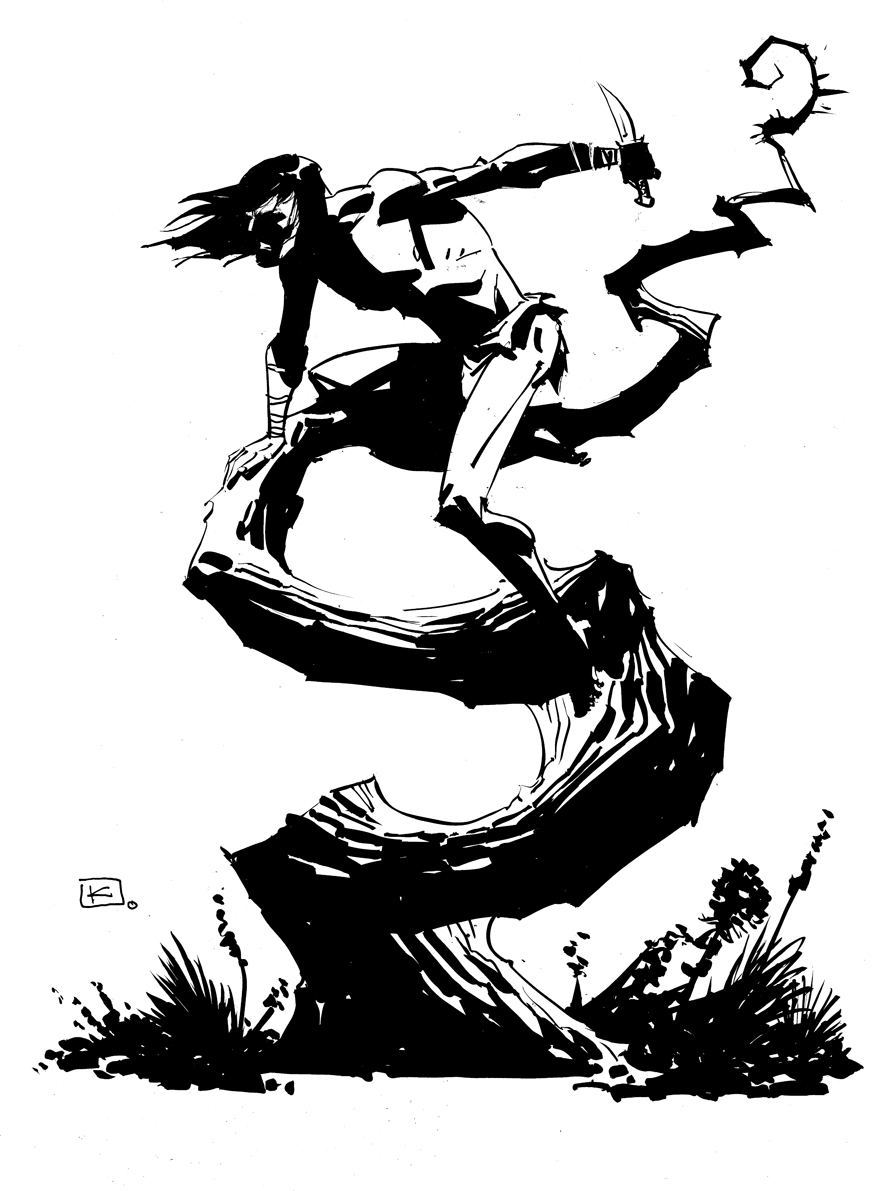
Image by Andy Kuhn. He draws comics.

Cyclopeans – Playable Race for PARS FORTUNA

Having watched Krull over the weekend – a dandy fantasy movie, in my opinion – I was inspired to do something inspired by the cyclops in that movie. The cyclopean is designed for PARS FORTUNA, but should be readily usable in other old school-style games …

CYCLOPEAN (ARIMASPIAN)
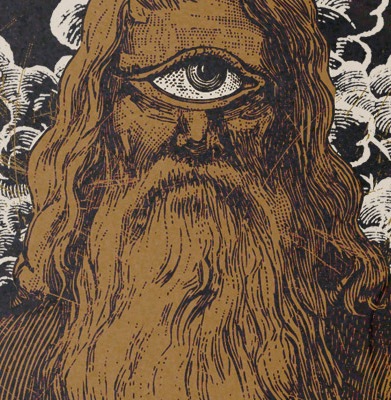
The Cyclopeans are tall, rugged humanoids with a single, large eye located in the center of their face. Cyclopeans have skin tones that range from the color of aged parchment to a rich, glossy umber. Their hair is usually worn long and shaggy, and is always blue-black in youth and adulthood, turning white as a Cyclopean enters his or her later years. The Cyclopeans eye might be any color in the spectrum, with amber and blue being the most common colors, and mauve and mottled green/brown being the rarest.

A warlike people, the Cyclopeans nonetheless have a philosophical side – probably an artifact of their unique ability to see into the future. Born fatalists, they know well the curse that accompanies their power, and take care to only pierce the veil of time when their lives, or the lives of their loved ones, depend on it. Most Cyclopeans dwell in the wilds or on the fringes of civilization, making a living as trappers, hunters and bandits. They have a passion for fighting, but lack the organization of the Oraenca or their flair of the Ilel. Cyclopeans like to rush into battle, casting their military forks and then drawing their hand weapons to close with the enemy. Cyclopean warriors usually wear light or medium armor and carry shields, military forks and broadswords. They might also carry slings and knives.

Cyclopeans see in the Skathra kindred spirits, both for their wild ways and their divinatory powers. They respect the Bo’al, Oraenca and Olvugai as worthy warriors, and though they fear the deadliness of the Ilel, they can’t quite bring themselves to respect them.

Cyclopean names are short and to the point, and are usually followed with a wad of spittle if the name is despised or a clang of the fork on the ground if revered. Common names include Bach, Brel, Cert, Oban, Tohr and Venn for males and Azra, Jula, Kento, Mala and Trena for females.

Cyclopeans adventure for money, fame and a love of action. Cyclopeans like to stay on the move and stay in the action, for it helps to keep their fatalistic moods at bay.

Racial Abilities
All cyclopeans have the following special rules:

1. Cyclopeans have poor depth perception and peripheral vision. All opponents are treated as though they have a knack for surprising them. Cyclopeans suffer a -1 penalty to hit with ranged attacks, except when using their military forks, with which they train from childhood.

2. Cyclopeans have a knack for wilderness survival and reading people’s faces. This helps them discover falsehoods and guess at intentions.

3. No more than once per day, a Cyclopean can peer into the future. They will either glimpse a moment of Weal or a moment of Woe (50:50 chance). The moment glimpsed will be connected to their current endeavors or goals, and can be described with as much or as little detail as the Referee thinks appropriate. A Cyclopean might, for example, glimpse himself or a friend opening a door and being struck dead by a trap, or looking behind a curtain and discovering a secret door. Perhaps the door or curtain is unique and the Cyclopean will easily recognize it when they come to it – perhaps not. Perhaps the Cyclopean will never come across the possible future they have glimpsed. In general, this power acts as a free “clue” to something in the Cyclopean’s current adventure.

4. Whenever a Cyclopean glimpses the future, they hasten their own demise. For the next 24 hours, the Cyclopean suffers a -2 penalty to saving throws made to avoid death, damage or danger.

Class Abilities
Cyclopeans have the following class abilities:

Prime Requisite: Constitution (+5% bonus to earned XP if 13+)
Hit Dice: 1d6+2 (or 1d10), +2 hp per level after 9th
Saving Throws: As warrior
Attack Bonuses: As warrior
Restrictions: Cyclopeans can use any weapon, light and medium armor and shields.
XP Advancement: As the Oraenca

Cyclopean characters turn their racial knack for reading faces into a skill.

Cyclopeans can go berserker once per day. This berserkergang can only be entered once they have suffered damage in battle or once they have inflicted damage in battle. Once the berserker state is entered, the Cyclopean remains in it for a number of rounds equal to their Constitution divided by 3. They cannot exit the berserker state prematurely without passing a saving throw, and will attack anything in reach while under its spell. While berserk, a Cyclopean gets two melee attacks per round and inflicts +1 damage with melee attacks, but suffers a -2 penalty to Armor Class. A Cyclopean suffers from exhaustion for a number of hours equal to the rounds of combat they spent while berserk unless they spend a full turn after the battle resting.

Picture nabbed from HERE

Retro-Engineering: Darkness and Dread

In the annals of the old school wave that hit the d20 system in the 2000’s, Darkness & Dread from Fantasy Flight Games is generally, and unfairly, overlooked. Ostensibly, Darkness & Dread was intended as a tool box for running dark fantasy, horror-style games with the d20 rules. In fact, it plays very much like a weird love child of old D&D and Warhammer Fantasy Roleplay, with d20 serving as a surrogate mother.

This is most obvious in the classes – all 24 of them. All of the classes have either five or ten level, and all can be entered into after first level (remember, in d20 you don’t gain levels in a class, you just gain levels, choosing to take that level in whatever class you like) only if one has a requisite number of points in a given skill – a nod to WFRP’s career system. Moreover, they divide the careers into categories (Academic, Expert, Laborer and Orator) and have an optional rule that permits one to randomly determine their profession at 1st level – another nod to WFRP. Like old school D&D, the classes are much lower powered than their d20 equivalents. The spell casting classes (Acolyte, Alchemist, Apprentice and Herbalist), for example, never make it past 4th level spells (the apprentice). The game also suggests that treasure be doled out at 10% the normal level (i.e. fewer magic items – and in d20, you get loaded down with magic items). Most of the classes depend on the skill point system in d20, so don’t necessarily translate well into older editions that tend to hand-wave skills and ignore professional and craft skills. A few make for nice additions to a low-powered game, or interesting variations on the old standbys.

Acolyte (Academic)
Within a religious hierarchy, the acolyte is an administrator, a priest assigned to a small village, or a similar minor underling.

Prime Requisite: Wisdom and Charisma, 13+ earns +15% experience
Hit Dice: 1d6
Armor Permitted: Leather
Weapons Permitted: Club, dagger, staff, light and heavy crossbow
Attack As: Cleric
Starting Gold: 1d4 x 10 gp
Entry Requirements: To take levels in acolyte after 1st level, one must gain the sponsorship of a religious organization and complete training in its basic tenets.

Special Abilities
Acolytes gain access to a small number of divine spells. Acolytes prepare and cast spells as clerics. They can select spells from the following list:

Level 0: Detect magic, detect poison, light, purify food & drink
Level 1: Cause fear*, cure light wounds*, detect evil
Level 2: Bless, find traps, hold person, speak with animals
Level 3: Continual light, cure disease*, darkness, prayer

* Denotes a reversible spell

Ward the Unholy: Acolytes can call on their god to hold supernatural creatures at bay. This divine blessings grants the acolyte and her allies a +1 bonus to AC and a +1 bonus to saving throws against magic and mind effects. To use this ability, the acolyte must have 5 gp worth of incense, holy water, and other religious paraphernalia at hand. These items are consumed when the acolyte uses this ability. The acolyte can do this once per day at 1st level, gaining an additional use at 3rd, 6th and 9th levels.

Tend to the Flock: At 5th level, an acolytes time spent dealing with the people in his parish makes him skilled at managing large crowds and leading mobs of commoners and other folk who adhere to his faith. By chanting prayers and benedictions, the acolyte can calm others and steady their nerves. All allies within 60 feet of the acolyte who are 3 or more levels below the acolyte’s total level gain a +2 bonus to save vs. fear and a +1 bonus to hit in combat. The acolyte can use this ability twice per day, and each use lasts for 5 rounds + the acolyte’s Charisma modifier.

Strength of the Faithful: At 10th level, the acolyte is perhaps one of the most accomplished members of his church hierarchy. His faith is unshakable in the face of the horrors that lurk just beyond the knowledge of mortal men. He gains a +2 bonus to saving throws against fear. In addition, once per day he can choose to automatically succeed at a single save against fear.


        Spells
Level XP HD Save 0 1 2 3
1 0 1 15 1
2 1,000 2 14 1
3 2,000 3 13 1 1
4 4,000 4 12 2 1
5 8,000 5 11 2 1 1
6 16,000 6 10 2 2 1
7 32,000 7 9 3 2 1 1
8 64,000 8 8 3 2 2 1
9 100,000 9 7 3 3 2 1
10 140,000 10 6 4 3 2 2

Prospector (Expert)
Prospectors seek out veins of gold and other precious metals, but many of them also delve into forgotten ruins in search of lost treasures and valuable relics from an earlier era.

Prime Requisite: Dexterity & Intelligence, 13+ earns +15% experience
Hit Dice: 1d8 (or 1d6+1 if you prefer)
Armor Permitted: Leather
Weapons Permitted: Club, dagger, dart, javelin, mace, morningstar, sling, spear, staff, light and heavy crossbow
Attack As: Thief
Starting Gold: 2d4 x 10 gp
Entry Requirements: To take levels in prospector after 1st level, one must already have the ability to search for and disable traps.

Special Abilities

Skills: Prospectors can use the following skills as a thief (using whatever rules you prefer for thieves): Climb Walls, Find & Remove Traps and Open Locks. They are also capable of appraising the value of metals and stones and they can survive in the wilderness.

Trap Mastery: Prospectors are experts at setting traps and concealing pits. Damage from these traps depends on the prospector’s level, with traps doing 1d6 damage at 1st level, 1d8 damage at 2nd level, 2d6 damage at 3rd level, 3d6 damage at 4th level and 4d6 damage at 5th level.

Oiled Reflexes: If a 3rd level prospector is about to set off a trap due to a failed attempt at removing it, he can immediately make a second remove traps attempt to keep it from triggering. If this second attempt fails, the trap is triggered. If it succeeds, the trap is not removed, but does fail to trigger.

Danger Sense: 5th level prospector’s can re-roll failed saving throws against traps once per day, or twice per day if their intelligence score is 13 or greater.


Level XP HD Save
1 0 1 14
2 1,000 2 13
3 2,000 3 12
4 4,000 4 11
5 8,000 5 10

Pit Fighter (Laborer)
Pit fighters are down-and-dirty gladiators who fight for money, fame and glory.

Prime Requisite: Strength & Dexterity, 13+ earns +15% experience
Hit Dice: 1d10 (or 1d6+2 if you prefer)

Armor Permitted: Leather and shield
Weapons Permitted: Any weapon
Attack As: Fighting-Man
Starting Gold: 2d4 x 10 gp
Entry Requirements: To take levels in pit fighter after 1st level, one must already have an attack bonus of at least +1 and must train as a gladiator for 1 month.

Special Abilities

Frenzy: Once per day, a pit fighter can enter a berserk fury for 5 rounds + the pit fighter’s constitution bonus. During the frenzy the pit fighter gains a +1 bonus to hit and damage, +1 hp/level, +2 on all saves against fear and a -2 penalty to AC. When the frenzy ends, the penalty to AC continues until the encounter is over.

Dirty Fighter: Pit fighters do whatever it takes to overcome their enemies. If a pit fighter of 3rd level or higher attacks from the rear or attacks an opponent who is surprised or flanked by an ally, he does double damage.

Fearless Frenzy: At 5th level, pit fighters gain a second use of frenzy each day and are completely immune to fear.

Level XP HD Save
1 0 1 14
2 1,000 2 13
3 2,000 3 12
4 4,000 4 11
5 8,000 5 10

Medium (Orator)
Mediums are those rare, special individuals who have the ability to pierce the psychic veil, using ESP, object reading and other talents.

Prime Requisite: Wisdom & Charisma, 13+ earns +15% experience
Hit Dice: 1d6

Armor Permitted: None

Weapons Permitted: Club, dagger, staff, light and heavy crossbow

Attack As: Magic-User
Starting Gold: 1d6 x 10 gp
Entry Requirements: To take levels in medium after 1st level, one must already have a wisdom score of 13 or higher and must have failed a saving throw vs. fear from some supernatural creature.

Special Abilities

Skills: Mediums can pick pockets as well as a thief of equal level. In addition, they receive a +1 bonus to reaction checks when speaking for their party and collect double the normal number of rumors.

Sense the Unseen: With quiet study and meditation, mediums can read the emotional background of a specific area, such as a room, a forest clearing or a short section of road. By studying the area for a peaceful hour, the medium can learn if a traumatic event took place there by making a successful saving throw with a -2 penalty per year since an event took place. If the medium doesn’t know about a particular event, she can use this method to learn of the last traumatic event that took place there. If the saving throw is successful by more than 3 points, the medium gains a hazy, incomplete mental picture of the event. If she beats the saving throw by 6 or more points, she gains a perfect mental picture of the event, but will suffer any fear effects associated with the event. This power can also be used to read a specific object, like a dagger or article of clothing.

Sixth Sense: At 3rd level, a medium can make a saving throw to detect any supernatural or undead creature that comes within 100 feet of him. If the check succeeds, he senses the creature’s general location. The power of the sensation depends on the Hit Dice of the creature detected: It is faint for creatures with 1-3 HD, disturbing for creatures to 4-8 HD, powerful for creatures with 9-12 HD and overwhelming for creatures with 13+ HD.

Pierce the Veil: A 5th level medium can cast her sight into the land of the dead. She may cast speak with dead once per day.

Level XP HD Save
1 0 1 15
2 1,000 2 14
3 2,000 3 13
4 4,000 4 12
5 8,000 5 11

Other excellent mini-classes include the antiquarian, engineer, physician, sage, artisan, kennelmaster, merchant, thief, tracker, grave robber, sewerjack, veteran, worker, beggar, gambler, grifter and minstrel. One immediately recognizes some old class titles from old D&D.

Darkness & Dread, written by Mike Mearls, has many more excellent ideas that I’ll cover in future editions of Retro-Engineering. In the meantime, if you’re heading into Middenheim or considering sending your players into Hammer Film territory, check Amazon for a copy – the book is pretty easily adapted to older editions of the rules.

New Class for Thanksgiving: The Puritan

A while back, I got it into my head to design classes based on characters from fiction, since there are indications that AD&D rangers are really just Aragorns (why else can a woodsman specifically use crystal balls?) and the barbarian class owed a bit to everybody’s favorite Cimmerian. Thus were born the Beastmaster (to be published one day), the She Devil (again, you’ll have to wait) and today’s blog post, the Puritan. The Puritan can be regarded as a darker alternative to the Paladin (the turkey leg to the paladin’s turkey breast, so to speak). Enjoy – and HAPPY THANKSGIVING!

Historically, the puritans were an English religious sect that operated in the 16th and 17th centuries. The terms “puritan” and “preciseman” were coined as insults; the people called themselves “the godly”. The puritans, by and large, were interested in returning Christian worship to what they believed was a purer form. In general, this involved problems they had with the trappings and rituals of the Catholic Church and its progeny, the Anglican Church. In England and the United States, puritans are often associated with strict moral guidelines, religious zealotry and witch hunts.

Religious reformers offer little grist for the mill when creating a new character class, unless Robert E. Howard enters the picture. In 1928, Howard introduced Solomon Kane in a story entitled “Red Shadows”.

Solomon Kane is an English puritan who leaves his country to adventure. As with many adventure-oriented characters of the time period, very little time is dedicated to Solomon Kane’s history, although the poem “Solomon Kane’s Homecoming”, we learn that he lost his love, Bess, at some point before he became an adventurer. During the course of his adventures, Kane battled brigands, sorcerers, pirates, vampires and slave-traders. Most of his adventures take place in Europe and Africa.

Prime Attribute: Wisdom (13+ for 5% XP bonus)

Hit Dice: 1d6+2/level (Gains 2 hp/level after 10th)

Armor Permitted: Leather, ring armor, buckler.

Weapons Permitted: Any.

Puritan Class Abilities
Puritans have a +2 bonus on saving throws made against fear and its effects. In addition, they have a +2 bonus on saving throws made against the spells and magical effects of creatures of chaos or evil.

Puritans enjoy a +1 bonus to hit and damage creatures of chaos or evil. Moreover, their weapons are capable of damaging creatures normally only damaged by magical or silver weapons.

When a puritan turns his gaze on a creature for at least one minute, he can determine that creature’s alignment. This cold stare is unnerving to those of a chaotic or evil disposition, forcing them to succeed at a saving throw or hurry away.

A puritan’s devotion to the gods of law grants him the ability to turn undead, as a cleric, but at a -2 penalty. In addition, he can call down one minor miracle (i.e. level one cleric spell) each day simply by grasping a holy symbol or book and invoking the name of his Creator. The puritan does not have to memorize or prepare this spell in advance. At every odd level, the puritan gains the ability to call down one additional level one cleric spell, thus two at third level, three at fifth, four at seventh, and so on.

Level
Experience
Hit Dice
Attack
Save
Title
1
0
1
+0
15
Confessor
2
2,200
2
+0
14
Penitent
3
4,400
3
+1
13
Pilgrim
4
8,800
4
+2
12
Preciseman
5
17,000
5
+2
11
Firebrand
6
35,000
6
+3
10
Hexenhammer
7
70,000
7
+4
9
Shepherd
8
140,000
8
+5
8
Zealot
9
280,000
9
+6
7
Puritan
10
380,000
+2
+7
6
Puritan
11
480,000
+4
+7
5
Puritan
12
580,000
+6
+8
5
Puritan

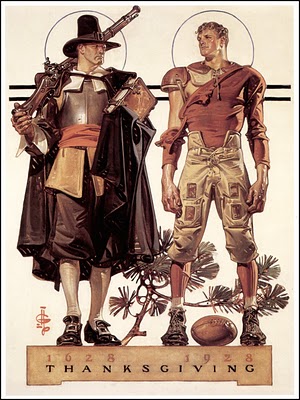
Image: Puritan Jemuel Landes regards traveler “Steel” Sullivan with some suspicion – he claims to be a “football” star from the land of Cleve, but he’s probably a witch. Art by J. C. Leyendecker via Golden Age Comic Book Stories.

The Traveler

An astounding array of creatures passes through the Land of Nod, from elves to native-born humans to  ambulatory fungi and floating brains. But among the more interesting are the so-called Travelers. Travelers are human beings, often from our own waking world, who navigate the Land of Nod with the power of their dreaming mind. Although seemingly awake and aware, all travelers actually exist in a state of semi-consciousness, living out their fancies thanks to the shaky fabric of reality that makes up the nonsensical tapestry called Nod. Travelers are adventurers first and foremost, with a thirst for new and strange vistas. Travelers are imaginative and creative and often impulsive, for they are used to reality shifting to please them and sometimes taken back when events do not comply with their wishes.

PRIME REQUISITES: Charisma and Wisdom
 
HIT DICE: 1d6+1 (+2 hit points per level after 9th)
 
WEAPONS PERMITTED: Any.
 
ARMOR PERMITTED: Leather, ring, chainmail, shields.
 
FOCUS: To use his special abilities, a traveler must possess a focus object and must be holding it in his hand. To use his abilities, the traveler must activate them with a successful saving throw. He must then remain in a somewhat calm reverie; emotional and physical disruptions can stop the traveler in his tracks and necessitate further saving throws to maintain the reverie.
 
From 1st to 4th level, a traveler can impose his will upon his immediate surroundings. To use these abilities, he must be grasping a walking stick with a silver tip. Such a stick can be obtained for 30 gp, and can be used as a club in combat.
 
From 5th to 8th level, a traveler can use his powers to explore on a global scale. To use abilities gained from 4th to 6th level, the traveler must possess a golden compass. Such a compass can be constructed by an expert jeweler at a cost of 500 gp.
 
From 9th on, the traveler learns to pierce the veil of time itself. In order to use his new abilities, he must possess a pocket watch made of gold and studded with diamonds. Such a device can be constructed by an expert jeweler at a cost of 3,000 gp.
 
Creatures wishing to accompany the traveler on his extra-dimensional trips must take care. The traveler can travel with one person per two levels. These hangers-on must keep their eyes closed tight while traveling or go mad. Even with their eyes closed, they are ripped from their own sense of dimension and time, and thus must pass a saving throw or become nauseous for 1d4 rounds after they finish their trip.
 
SLEEP RESISTANCE: Although not immune to sleep, travelers enjoy a +2 bonus to save against sleep spells and effects. Strangely, when knocked into unconsciousness by a sleep spell a traveler still perceives the world around him, and can act on it by animating inanimate objects. The traveler can animate one small object at 1st level, one man-sized object at 4th level and one large object at 7th level. The object acts with the traveler’s will. If destroyed in combat, the traveler loses 1d6 hit points for a small object, 2d6 for a man-sized object and 3d6 for a large object.
 
ECCENTRICITIES: The traveler’s ability to perceive the spaces between dimensions gives them a slightly alien mindset that reveals itself in their eccentricities. At each level beyond 1st, a traveler must roll on the following table. The term “unnerved” indicates that the traveler suffers a -1 penalty to all d20 rolls while in the presence of the thing that unnerves him. Rolling an eccentricity a second time makes it more intense (i.e. being unnerved imposes a -2 penalty, etc).
 
D20
Eccentricity
1
Unnerved by a certain color
2
Unnerved by small animals or children
3
Must stand next to the tallest or shortest or fattest or thinnest person in a room
4
Frightened by gourds and melons
5
Can only eat or never eat with his fingers
6
Accidentally reverses the meanings of words
7
Becomes unnerved, morose, angry or giddy when traveling in one of the cardinal directions
8
Suffers from agoraphobia
9
Stares at people and takes long pauses before he speaks
10
Will not drink water, only wine
11
Unnerved by sea creatures and seafood
12
Laughs at innapropriate moments
13
Unnerved (or even frightened) by an innocuous word or phrase
14
Never calls people by their names, only nicknames that change from day to day
15
Only walks backwards across bridges or under arches
16
Feels the need to touch people while talking to them
17
Unnatural fear of cabbages and other leafy vegetables – this becomes panic at the sight of leafy plant monsters
18
Will not willingly get on a boat – mumbles something about the stars when asked to
19
Talks to himself, often in the middle of the night, increasing the chance of wandering monsters by 1
20
Super fastidious and clean
 
NON-EUCLIDIAN PRINCIPALS: A 1st level traveler perceives that the shortest route between two points is a non-Euclidian curve and increases his speed by 3 (or by 30 ft in some system or 5 ft in others). To use these abilities, he must be grasping a walking stick with a silver tip. Such a stick can be obtained for 30 gp, and can be used as a club in combat.
 
MAKE HASTE: For exactly one minute per day, the 2nd level traveler can operate under the effects of a haste spell. The traveler must take care not to exceed one minute of hasted movement, for beyond this he begins aging 1 year for every minute of hasted activity.
 
BETWEEN DIMENSIONS: The 3rd level traveler’s inherent perception of the space between dimensions allows him to slide between them, duplicating the effects of the dimension door spell. He can do this once per day without incident, but additional uses carry with them an increasing chance of attracting the attention of an inter-dimensional being such as a demon or ethereal marauder. The second time in a day that a traveler uses dimension door carries a 1 in 6 chance of a weird encounter. Each additional use increases the chances by 1.
 
NORTH STAR: At 4th level, a traveler always knows which direction is north and can duplicate the effects of a Find the Path spell by making a successful saving throw. A failed saving throw gives the traveler false information, usually sending him in the opposite direction that he desired.
 
THROUGH THE SHADOWS: The 6th level traveler learns the true nature of shadows, and gains the ability to step into them and emerge many miles away as though using the spell teleport. The journey through the shadows seems to take a normal amount of time to the traveler (i.e. covering 6 miles on foot in 8 hours of travel), but in fact takes only 1 minute per mile traveled. The traveler suffers the same possibility of error while navigating the shadow realm, but does not run the risk of teleporting low or high, though their soul can be lost in the spaces between realities.
 
AMONG THE STARS: At 8th level, the traveler can fall into a deep sleep and travel in astral form, per the Astral Spell. If awakened while so travelling, the shock of returning to his senses robs the traveler of half his hit points (the heal naturally) and his bloodcurtling scream may attract wandering monsters.
 
PLANE SHIFT: The 10th level traveler can use his ability to slide between dimensions to visit other planes and realities. Traveling to another reality does not necessarily mean the traveler has the ability to survive in that reality, so care must be taken not to visit a place hostile to life.
 
FOURTH DIMENSIONAL THINKING: The 12th level traveler reaches the pinnacle of his art and learns to move frictionles between the falling sands of time, effectively stopping time around himself per the spell Time Stop.
 
Level
XP
HD
Attack
Save
Title
1
0
1
+0
15
Rover
2
1,500
2
+0
14
Wanderer
3
3,000
3
+1
13
Vagabond
4
6,000
4
+1
12
Navigator
5
12,000
5
+2
11
Explorer
6
30,000
6
+2
10
Discoverer
7
60,000
7
+3
9
Psychopomp
8
120,000
8
+3
8
Imaginant
9
175,000
9
+4
7
Traveler
10
230,000
+2
+5
6
Traveler
11
300,000
+4
+5
5
Traveler
12
370,000
+6
+6
5
Time Lord

+300,000 XP per level thereafter

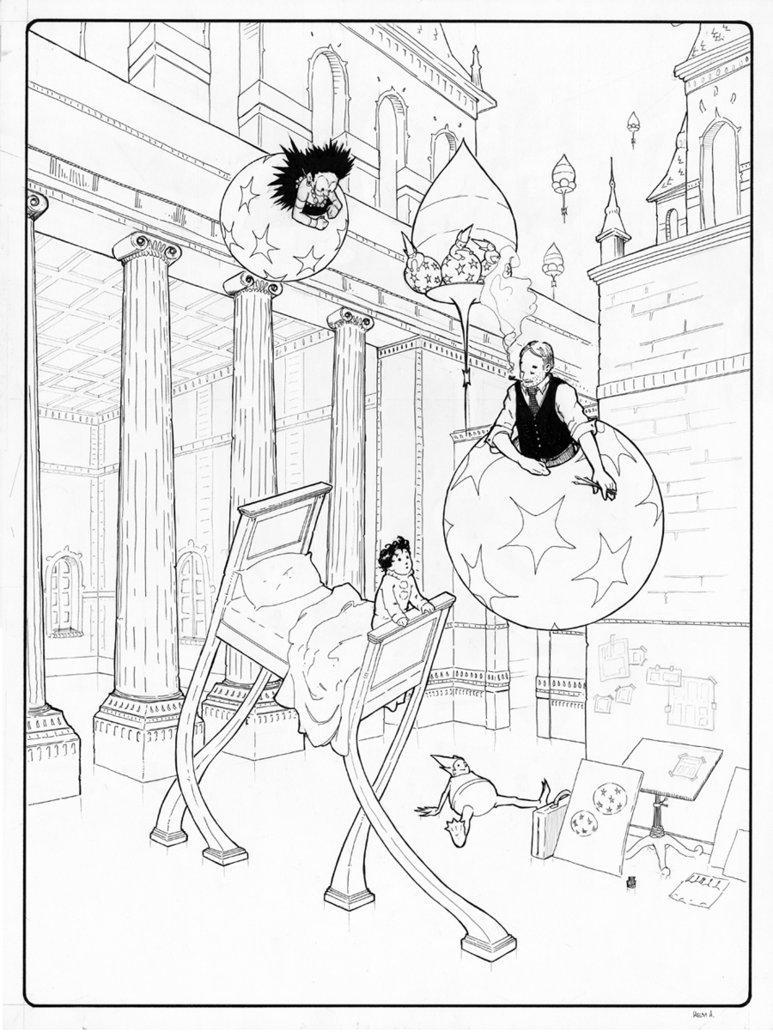
Top illustration by Helsa Amadi
Bottom illustration by Winsor McCay

The Gods of the Motherlands – Part Two

Continuing the Gods of the Motherlands with Hercules through Minerva.

Also – For those that purchased an electronic copy of NOD #4, I have attached the missing cover. You should be able to download it again with the cover – if not, let me know and I’ll send it to you as a PDF.

Hercules
Donar, Heracles
Lawful god of strength, adventure, heroism and rebirth
Wields a club
Patron deity of Guelph
Served by elohim and cherubim
Symbolized by a lion
Clerics can cast the magic-user spell Strength

Hercules is strength personified. While still an infant, he strangled two huge snakes with his bare hands. Hercules is a fearless adventurer whose many escapades are the stuff of legend. A robust, cheerful man, he has an appetite for food and women that almost equals that of his father.

Hercules appears as a stout man with a long beard, usually wearing a lion’s skin or leather armor, brandishing a large, wooden club. Hercules is the son of Jove by the mortal woman Alcmene. Being born by Jove from an extra-marital tryst has earned Hercules the enmity of Juno, protector of marriage and sister-wife of Jove.

Hercules is best known for his Twelve Labors, quests he had to complete to atone for killing his own children when he was driven insane by vengeful Juno. The labors included killing a giant lion, hydra, giant deer, giant boar, cleaning stables, killing the Stymphalian birds (giant cranes with metal beaks), capturing a giant bull, rounding up carnivorous horses, stealing the girdle of Hippolyte, queen of the amazons, herding the cattle of Geryon, fetching the Apples of Hesperides and capturing Cerberus, guard dog of Hades. Because many of these labors included slaying giant beasts, Hercules is often taken as a patron by rangers.

Grande Tourney (July 22 – August 7): During the Hercules’ tournament, people compete at various athletic and musical contests. Brass tripods are awarded to the victors.

Jove
God, Jupiter, Zeus
Lawful god of the upper sky and royalty
Wields a lightning bolt
Patron deity of Nomo
Served by angels and air elementals
Symbolized by a lightning bolt
Clerics can cast the magic-user spell Lightning Bolt as a 5th level spell, dealing damage as though 2 levels lower.

Jove is the king of the gods, though his command over them is far from absolute and his decisions are often challenged. Jove is the god of the sky, the ruler of all high things, including the clouds, rain, wind, thunder, and mountain summits. He is the protector of laws, friend of the weak, and dispenser of justice. Jove is also worshiped as Father Oak, or the Green Man, the masculine force of procreation.

Although Jove can take any form he wishes, he often assumes the form of a powerful, bearded man with regal bearing when he visits the mortal world. His true form is that of a ball of fiery light so intense that no mortal can look upon him without bursting into flames.

Jove is the husband of Juno, queen of the gods. He is the father of Minerva, Apollo Helios and Hercules. His brothers are Neptunus, ruler of the oceans, and Plutus, ruler of the Underworld. Jove’s father was Saturn, king of the titans.

Gulestide (December 22-28): Gulestide is not only a time of feasting and merriment, but also a time when the world is turned upside down; masters and slaves, teachers and students and nobles and peasants switch places for a time, with the proceedings led by an elected Lord of Misrule.

Juno Regina
Hera, Saturnia
Lawful goddess of women, marriage and cattle
Wields a spear
Served by angels and erinyes
Symbolized by the cow, peacock or pomegranate
Clerics of Juno can, at 5th level, summon an erinyes once per month to punish an oath breaker

Juno is the goddess who protects women and the sanctity of marriage. She is known for her vengeful nature, especially toward the paramours of her husband Jove. She is the queen of the gods, often depicted enthroned and wearing a diadem and veil. Poets usually describe her as cow-eyed, indicating large, beautiful eyes.

Offerings to Juno take the form of pomegranates and poppy seeds, or ivory ornaments in the shape of pomegranates and poppy seeds.

Juno is the wife and elder sister of Jove and the daughter of Rhea and Saturnus. Her children by Jove are Mars, Juventas, Discordia and Ilithyia, goddess of childbirth. She reputedly created Vulcan without the aid of her husband in response to his creation of Minerva.

Matronalia (June 1): On this day, women perform rites in the temple of Juno. They are permitted to wear their hair down and not permitted to wear belts or any knots in their clothing. Husbands are expected to say prayer for their wives and children give presents to their mothers.

Mars
Ares, Camulus
Chaotic god of war
Wields a spear
Patron deity of Azsor
Served by demons
Symbolized by a spear and shield
Clerics of Mars are permitted the use of swords, though they must be cleaned of blood after use and anointed with expensive oils (worth 10 gp with each use)

Mars is the god of blood lust and slaughter. He is fond of strife, anger, and unrestrained blood-letting. As such, he is not a very popular god and is only worshiped by a large numbers of people in the city-states of Guelph and Nomo. Vultures and dogs are sacred to him.

Mars usually appears as a large man with burning, hateful eyes and a permanent scowl etched across his mouth. He wears ornate platemail armor and carries a flaming sword.

Mars is the son of Jove and Juno, the husband of Bellona and the lover of Venus. He is attended by Deimos (terror) and Phobos (fear) in battle, his sons by Venus, and by Adrestia, his daughter by his sister Discordia. Other members of his retinue are Nike, the deathless spirit of victory, Kydoimos, the demon of the din of battle, the Makhai (battles), the Hysminai (man-slaughters) and Alala, personification of the war cry. Mars’ other children by Venus are Cupid and Harmonia.

Armilustrium (November 12): On this day weapons of the army are purified and stored for the winter. The army is assembled and reviewed and garlanded with flowers. Trumpets blare and citizens gathered with their arms and armor take part in a procession with torches and sacrificial animals. Young noblemen dressed as ancient warriors with red capes take part in ritual dances.

Mercurius
Hermes, Lugus, Psychopompos
Lawful god of trade, gambling, thieves
Wields a club
Patron deity of Blackpoort
Served by elohim
Symbolized by a cadeuceus, tortoise, cock or winged sandals
Clerics can cast the magic-user spell Charm Person

Mercurius is the god of travelers, merchants, thieves, gamblers, athletes and eloquent speech. He also serves the gods as a messenger and an arbitrator of disputes. As a god of travelers and a slayer of giants (Argos, in particular), some rangers choose to worship Mercurius as their patron.

Mercurius is depicted as a handsome, athletic youth wearing a broad-brimmed traveler’s hat and carrying a white caduceus (winged rod entwined by two serpents).

Mercurius is the son of Jove and Maia, a daughter of Atlas. His children include Faunus, the god of satyrs, Hermaphroditus, a man merged with the nymph Salmacis, Fortuna, goddess of fortune, and Autolycus, prince of thieves and grandfather of Ulysses.

Shrovetide (April 1): Merchants sprinkle their heads, ships, wagons and merchandise with holy water. Shrovetide is a day of raucous celebrations with a carnival atmosphere.

Minerva
Athena
Lawful goddess of wisdom, crafts, strategy and war
Wields a long sword
Patron deity of Gwenth
Served by angels
Symbolized by an owl
Clerics can cast the magic-user spell Shield (see below)

Minerva is Jove’s favorite daughter and the virgin goddess of strategy, architecture, sculpture, spinning, weaving, horses, ox olives, prudence, and wise counsel. Though she is a warrior goddess, she is no less skilled in the arts of peace, inventing the potter’s wheel, teaching men to tame horses and helping them to build great ships. Minerva is also a patron of chivalry and knighthood.

Minerva is depicted as a statuesque woman of great beauty attended by an owl. She wears the Aegis, a breastplate of goatskin with serpent fringes, a shield that bears a gorgon face, and a helm decorated with a winged lion.

Minerva was created by Jove without a mother, and as a virgin has no offspring of her own. She is often accompanied by Nike, the goddess of victory. She has aided many heroes, including Ulysses, Jason and Hercules.

Candlemas (February 1): The highlight of the day are candle-lit processions and rites of purification. It is especially an artisan’s holiday. Women consult fortune tellers on this day, plays are exhibited, and contests for orators and poets are held.

The Gods of the Motherlands – Part One

The Priestly Colleges
Although many deities are worshiped in the Motherlands, the following deities are the most popular and well known. Most city-states have a temple or shrine to each of them. Each city-state in the Motherlands has a college of priests (usually 10 to 20), with one priest assigned to manage each temple. The college is headed by a pontiff, and each temple priest is assisted by a staff of lesser clergy. Some city-states have an upper college dedicated to the Motherlander deities and a lower college that oversees the temples of foreign deities.

Apollo Helios
Apollon, Apulu, Belenus
Lawful god of sun, music, archery and herdsmen
Wields a bow
Patron deity of Antigoon
Served by elohim and nymphs
Symbols are the lyre, crook, sunburst or cross
Clerics can cast the magic-user spell Fireball as a 5th level cleric spell, dealing damage as though 3 levels lower.

Apollo Helios is the god of the sun, archery, medicine, healing, light, truth, oracle, colonists, patron defender of herds and flocks, music and poetry, homosexuality, harmony, order, reason and plague. He helps ripen crops, destroys pests, cures illnesses, and protects shepherds and their flocks. Apollo is not entirely beneficent. He carries a bow with terrible arrows that visit plague and disease upon the targets he fires them at.

In his true form, Apollo Helios is a beardless young man of divine beauty who radiates warmth and light. Apollo Helios always carries a lyre or longbow; in fact, the object he carries can take either form as the god desires.

Apollo Helios is the son of Jove and Leto, half-brother of Mars, Minerva and Hercules and twin brother of Diana.

Midsummer’s Day (May 15): People build huge bonfires and walk themselves and their livestock between them to protect them from the diseases of warm weather. Masked mummers frolic and folk stay up all night making merry.

Atlas Telamon
Lawful god of strength, perseverance, exploration
Wields a club
Patron deity of Dweomer Bay
Served by devas, giants
Symbolized by a globe or compass
Clerics can cast the magic-user spell Enlarge

Atlas is worshiped not only as a deity of strength and endurance, but also as a god of exploration and cartography. He is the strongest of the titans who separates the heavens from the earth. Atlas appears as a giant of man holding the tools of exploration: compass, sextant, spyglass and globe.

Atlas is the son of Japetus and Clymenem, the daughter of the titan Oceanus. His brothers are Prometheus, Menoetius and Epimetheus. His own children are mostly daughters, and include the Hesperides by Hesperis, the Hyades and Pleiades by Aithra, and Calypso, Dione and Maera by unspecified goddesses.

Atlas’ temples are supported by merchant societies and in turn fund cartographers and explorers. Temples of Atlas are decorated with images of exotic lands, animals and people. The classic cleric of Atlas will wear three-quarters plate and be found at the head of a column of explorers plunging into unknown lands.

Ceres Dea Frugu
Demeter
Neutral goddess of grain, agriculture and fertility
Wields a staff
Patron deity of Lyonesse
Served by fey creatures, earth elementals and erinyes
Symbolized by a poppy, sow or mare
Sacred animals are the bear, crow and horse
Druids can cast the spell Respite from Death

Ceres is the queen of the fruitful earth, goddess of agriculture, and patron of motherly love. Without her blessing, no crops may grow on the earth. Ceres will not hesitate to use this fact to blackmail men and other gods if the need exists. Ceres also has control over the weather. A sow is sacrificed to her when a death occurs in a family. Ceres is a usually a benevolent goddess. If her worshipers ignore their duties, however, she does not hesitate to destroy their crops and send famine upon them.

In her true form, Ceres is a beautiful woman, but she can change her own shape and that of others at will. She carries the cornucopia, or horn of plenty, and a scepter.

Ceres is the daughter of Saturn and Rhea and sister of Jove, Juno, Vesta, Neptunus and Plutus. She is the mother of Persephone by Jove. When pursued by Neptunus, she took the form of a mare to escape him. She could not hide her divinity, though, and Neptunus took the form of a stallion and coupled with her, producing a daughter called “the Damsel”, who leads the avenging erinyes, and a black-maned, divinely swift, speaking horse called Arion.

Lammastide (August 1): Celebration of first fruits, when loaves are baked from the first harvested grain and shared with friends and family.

Respite from Death (Druid Level 4): A recently killed comrade’s soul is released from the Land of the Dead as a shade for a limited time. If the person’s body has not been destroyed, it can re-animate it as a zombie with the mentality of the deceased (with one half of the deceased memorized spells, determined randomly, and all special class abilities except saving throws and attack bonuses, which are per a zombie’s statistics). The shade can persist in the re-animated body for 24 hours only. If the body cannot be inhabited, the shade uses the statistics of a shadow, but can only remain for 1 hour. In either case, the soul cannot subsequently be raised, resurrected or reincarnated for a period of 9 months.

Diana Prima Dea
Artemis, Brigantia, Nicevenn
Neutral goddess of maidens, the moon and hunting
Wields a bow
Patron deity of Tremayne
Served by dryads, nymphs and giant animals
Symbolized by a boar or the moon
Sacred animals are the eagle, boar and wolf
Druids may cast the spell Coursing Hound

The huntress Diana is the patroness of young girls and the mistress of beasts and all wild things. Because she will have nothing to do with men, she is a favorite goddess of the Amazons. Except for helping women during childbirth, she avoids involving herself in mortal concerns and matters. She values her privacy, and will severely punish any man violating it. Merchants, always on the hunt for profits, also pray to her to give them persistence.

In her true form, she appears as a slim young girl wearing buckskins and carrying a longbow. She is sometimes mounted upon a stag. Oak groves are sacred to her. Diana is the daughter of Jove and Latona and the twin sister of Apollo Helios. She is associated with the water nymph Egeria and the woodland god Virbius.

Diana’s high priest is the rex Nemorensis, or “King of Groves”, stationed near a sacred lake near Tremayne. The rex Nemorensis attains the position through a trial by combat, killing the reigning king of the grove. Combat may only be initiated, though, if the challenging druid is able to pluck a golden bough from one of the trees in the sacred grove.

Those trees in whose dim shadow
The ghastly priest doth reign
The priest who slew the slayer,
And shall himself be slain.

Whitsuntide (May 15): On this day Whitsun Ales (fairs) and horse races are held, mummers dress as wild forest men, and hunting is forbidden.

Coursing Hound (Druid Level 2): The druid conjures a ghostly hound that can track on a roll of 1-5 on 1d6 (-1 chance for each day since the tracks were made, additional -1 chance if the tracks have been obscured by snow, hard stone or running water). The hound exists for 24 hours and cannot attack or be attacked.

Hecate
Hekat, Trivia
Neutral goddess of ghosts, witchcraft and curses
Wields a dagger
Served by demons and the fey
Symbolized by a torch and key
Sacred animals are the wolf, serpent and horse
Priests can cast the spell Entrancing Dance

Hecate is the enigmatic and dark virgin goddess of the undead and witchcraft. She is also associated with childbirth and rearing, doorways, walls, crossroads, torches and dogs. Most city-states, towns and villages honor her with, at the very least, a shrine and a lichfield. She is also associated with the concoction of medicines and poisons, thus making her a patron of alchemists, apothecaries and assassins. Hecate is served by chaotic clerics and druids.

Hecate is depicted as a three-headed goddess, either with the heads of three maidens or with the heads of a dog, serpent and horse. She is the daughter of the titans Terra and Uranus, the Earth and Sky.

The most common offering to Hecate is meat left at a crossroads. Dogs are sometimes sacrificed to her. A more intense ritual requires one to bathe in a stream of flowing water at midnight, don dark robes, dig a pit and then offer a libation of honey and blood from the throat of a sheep. The libation is placed on a pyre next to the pit by the petitioner, who then leaves the site, never looking back.

Hallowtide (Nov 1): The boundaries between the Mortal World and the Ethereal Plane are thinnest on this day. People light bonfires, stay up all night, drink beer and enjoy the end of the harvest season.

Entrancing Dance (Cleric/Druid Level 3): As the priest dances, all those present (except the priest’s allies, unless the priest chooses to affect them as well) must save or become entranced. A new save must be made each round the priest dances without interruption (i.e. takes damage), and a dancing priest loses any dexterity bonus to Armor Class. Entranced creatures take on a bestial aspect and begin attacking one another savagely (+2 to hit and damage) until no rivals survive or the dance stops.

On the Classic Elements and Their Masters

So, I was pondering doing an elementalist class a couple weeks ago, and today jotted down some ideas. Here’s the class “in progress” – I’d love to know what people think …

Elementalist
Command elemental spirits to perform tasks – the effect is the equivalent of casting spells. An elementalist can attempt to command these spirits a number of time each day equal to his Charisma score divided by 3, rounding down. [maybe at 6th level, this increases to Charisma divided by 2, rounding down?]

Elementalists must own and carry a grimoire of the true names of known spirits – they add to this as they adventure, but not in the manner that magic-users add spells to their spell books

An elementalist is a ritual caster; each day he chooses to focus himself on a particular element and in turn must wear an appropriately colored robe (red, blue, yellow or white) and carry a ritual tool – athame, goblet, censer or wand. Without the robe and the tool, he cannot command elemental spirits.

Elementalists cannot command spirits opposed to their chosen element for the day, but they can command all spirits that are not opposed to them. When commanding elementals spirits that match their daily focus, they receive a +1 bonus to their command checks (see below).

Command checks are the equivalent of a cleric’s ability to turn undead, and use the same table substituting the spell level for the undead’s Hit Dice. Elementalists can also turn elementals opposed to him and command elementals favorable to him. Elements refers to elementals, genies (efreet, djinn, janni), sylphs, salamanders and other creatures composed entirely or mostly of elemental stuff.

The elementalist has four spell lists, each tied to a different element (with a few spells appearing on all four lists). Spells marked with an asterisk (*) are new and described below.

[Maybe his communications with spirits helps him avoid surprise (i.e. surprised on 1 in 1d8 instead of 1 in 1d6), avoid pit traps, find secret doors – essentially, he’s in communication with the landscape/dungeon and maybe gets some forewarning]

Level One
1 Burning Hands (F)
2 Feather Fall (A)
3 Magic Stone (E)
4 Produce Flame (F)
5 Purify Food & Drink (W)
6 Ray of Frost (W)

Level Two
1 Fog Cloud (W)
2 Heat Metal (F)
3 Levitate (A)
4 Pyrotechnics (F)
5 Stinking Cloud (A)
6 Strength (E)

Level Three
1 Fireball (F)
2 Fly (A)
3 Lightning Bolt (A)
4 Protection from Normal Missiles (A)
5 Stone Shape (E)
6 Water Breathing (W)

Level Four
1 Create Water (W)
2 Ice Storm (W)
3 Solid Fog (A)
4 Spike Stones (E)
5 Wall of Fire (F)
6 Wall of Ice (W)

Level Five
1 Cloudkill (A)
2 Cone of Cold (W)
3 Conjure Elemental (U)
4 Passwall (E)
5 Transmute Rock to Mud (E)
6 Wall of Stone (E)

Level Six
1 Find the Path (E)
2 Invisible Stalker (A)
3 Lower Water (W)
4 Move Earth (E)
5 Part Water (W)
6 Stone to Flesh (E)

Level Seven
1 Aerial Servant (A)
2 Control Weather (A)
3 Delayed Blast Fireball (F)
4 Earthquake (E)
5 Reverse Gravity (E)
6 Wind Walk (A)

Level Eight
1 Horrid Wilting (W)
2 Incendiary Cloud (F)
3 Repel Metal or Stone (E)
4 Whirlwind (A)

Level Nine
1 Imprisonment (E)
2 Meteo Swarm (F)

Prime Req: Charisma
Fights As: Magic-User
Hit Dice: Magic-User
Saving Throws: Magic-User
Armor & Weapons: Leather, magic-user weapons

Level Titles
1. Grammarian
2. Reciter
3. Incantator
4. Lector
5. Elementalist
6. Dracunculus
7. Draco
8. Pentalpha
9. Solomon

Thoughts –

1. I might need to invent a few spells to fill in the gaps. I wanted about three spells per level per element up to level 5, and then one or two from 6-9.

2. The big question is the use of the Turn Undead table for casting spells. As written, a 1st level elementalist would be able to make, on average, three or four attempts at casting a spell each day. They could attempt to cast 5th level spells (5% chance of success), 4th level spells (10% cos), 3rd level spells (25% cos), 2nd level spells (40% cos) and 1st level spells (55% cos). Limited number of tries, limited chance of success – but is it too limited? Not limited enough?

A 1st level elementalist that sticks to 1st level spells can, on average, cast about 2 spells per day, so double that of most magic-users. If that elementalist tries to get off a fireball, he only has a 25% chance to do it, and even if he does it, it will only do 1d6 damage. This is probably okay.

At higher levels, the elementalist is still limited to just a few attempts per day, meaning he falls behind the magic-user as a spell caster – fewer spells and less variety. In exchange, I’m giving him leather armor and the ability to turn (and command) elemental creatures – not bad, but maybe not good enough. He might still be worth it if he advances in level faster than the magic-user, but advancing quickly in a crappy character class is little compensation.

So, still some work to be done here. If you have any suggestions, let me know.