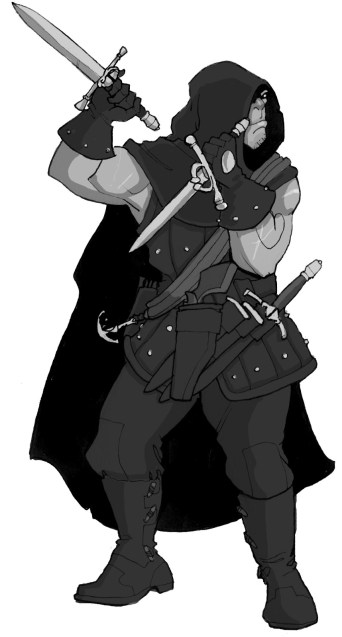
Bionic Warriors and Space Hippies

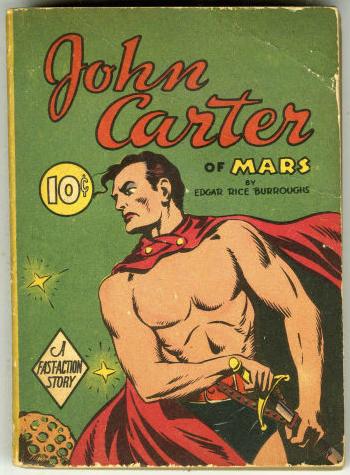
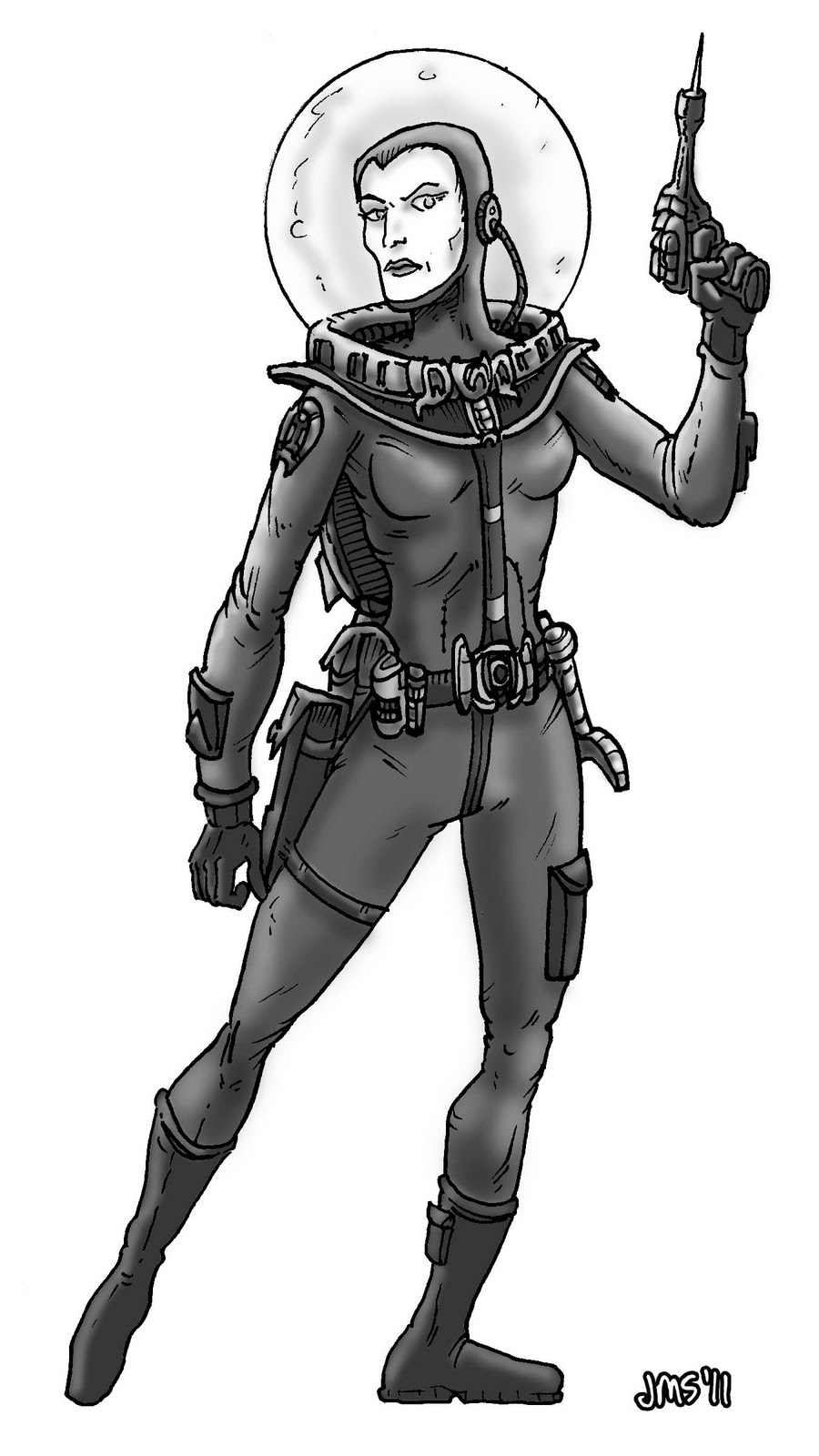
It could take up to 6 million quatloos to get a body like this!

Two new classes for the wonderful worlds of Space Princess

BIONIC WARRIOR
Bionic warriors are usually space warriors or astronauts who have been rebuilt due to injuries sustained in the line of duty. They are strong and quick, and come with their own built-in super science. Some hold a grudge against the scientists who built them, while others are glad to use their new-found abilities to help others.

HIT DICE: Bionic warriors roll d10 to determine hit points

REQUIREMENT: STR and DEX of 6 or higher

SKILLS: Bionic warriors can add their SKILL to the following tests: Climb (STR), Leap & Swing (STR) and SWIM (STR)

STARTING GEAR: Bionic warriors start with a hand weapon, ray gun and snazzy jumpsuit

.nobrtable br { display: none }

Level Hit Dice Skill Luck
Robo-Man/Woman 3 3 2
Cyber-Man/Woman 5 6 1
Bionic Man/Woman 8 10 0

Bionic warriors have three random bionic implants in their bodies. These implants can be disabled with other super science devices (electro-scramblers, EMPs, etc.).

ROLL / IMPLANT
1. Bionic brain (ie. mento-helmet)
2. Bionic calves (leaps as though had a SKILL of 12)
3. Bionic claws (retractable claws allow an additional claw attack for 1d4 points of damage)
4-6. Bionic ears (can listen at doors as though the bionic warrior had a SKILL of 12)
7-9. Bionic eyes (i.e. night goggles)
10. Bionic feet (i.e. gravity boots)
11. Bionic finger (finger acts as a basic ray gun with 3 shots per day and can be used to disable devices as though the bionic warrior had a SKILL of 10)
12-13. Bionic fists (fists are as potent as laser swords)
14. Bionic jaw (gains additional bite attack that deals 1d4 points of damage)
15. Bionic lungs (immune to toxic, narcotic and poisonous fumes and gases and can hold breath for 10 minutes)
16-17. Bionic nose (i.e. locator)
18. Bionic skeleton (i.e. exoskeleton)
19. Bionic skin (i.e. body armor)
20. Bionic thighs (increases movement from slow to normal, normal to fast or fast to very fast)

SPACE HIPPIE
Space hippies travel the star-ways, spreading their message of enlightenment. Space hippies are adventurous sorts. Some are rugged individualists, while others are just posers looking for a handout and their next smoke of Venusian red, but all space hippies cast disdain upon the “Herberts” – authority figures who don’t share their beliefs.

HIT DICE: Space hippies roll d6 to determine hit points

REQUIREMENT: MEN of 4 or higher

SKILLS: Space hippies can add their SKILL to the following tests: Identify substance (KNO), calm situation (MEN), hide (DEX), move silently (DEX), charm strangers (MEN), play instrument (MEN)

STARTING GEAR: Space hippies start with a musical instrument the clothes on their backs – they disdain weapons, but will fight to defend themselves from the Herberts (and space monsters) using their feet and fists. Space hippies aren’t looking for trouble, but they can handle what they find.

.nobrtable br { display: none }

Level Hit Dice Skill Luck
Joker 2 4 3
Star Child 5 8 1
Groovy Guru 7 12 0

Space hippies are capable of evoking emotional states with their music. This requires a play instrument test, with the following difficulties and effects:

PEACE, BROTHER (DC 15): This music calms hostile creatures. All who hear it cease fighting and can only begin fighting again after one round, and even then they must pass a MEN test (DC 15) to begin fighting. A combatant who is attacked can always choose to defend themselves.

THE BLUES (DC 15): All whom the space hippy targets must pass a MEN test or become very, very glum, suffering a -2 penalty to all tests and attacks.

RIGHT ON! (DC 10): All whom the space hippy targets are filled with righteous energy and enjoy a +2 bonus to all tests, but not to attacks.

KEEP ON KEEPIN’ ON (DC 10): All who hear this that are under the effect of some mental effect can make a new test at +2 to shake it off.

SPACE TRUCKIN’ (DC 15): Pilots who hear this music enjoy a +1 bonus on all pilot tests.

AQUARIUS RISING (DC 25): All whom the space hippy targets with this masterful song can spend one free luck point on any test or attack they make while the effect lasts. This can only be done once per adventure.

PROTEST (DC 20): This protest song has the ability to counter any sonic ability or attack (including damage-dealing harmonics) used by an opponent.

Animals and simple beasts suffer a -2 penalty to tests against these effects, while militant aliens enjoy a +1 bonus. The effect lasts as long as the space hippy plays their music +1d4 rounds.

B&T Lost Classes: The Dragon Disciple

I love classes. Since I picked up my first Dragon ages ago and discovered the concept of the “NPC class” (like we weren’t going to try to play them), I’ve loved classes. I’ve posted quite a few on this blog. When it came to Blood & Treasure, I wanted to stick to the classes in the SRD – i.e. the classic classes of AD&D plus the sorcerer. I decided, to make Blood & Treasure a little different, I would throw in one more, in this case converting the Duelist prestige class into a class of its own. That gave me 13 classes, which I somewhat doubled by giving examples of variant classes one could create with a little reassembly of existing parts.

All along, though, there were a few other classes I wanted to throw in. The psychic (my version) was one of them, but I decided with four dedicated spell casters in the game already (cleric, druid, magic-user and sorcerer), one more was overkill. From the SRD, three other classes caught my eye. The first was the soulknife, and it nearly made it in. The other two, both prestige classes, were the shadowdancer and dragon disciple. I’m calling these three the “lost classes” of Blood & Treasure, and I’m posting them here, starting with the dragon disciple.

And yeah, I know, I’m posting “lost classes” from a book that hasn’t been published yet. So sue me.

DRAGON DISCIPLE
Dragon disciples are men and women who enter into secret dragon societies with the object of harnessing the powers of dragons and eventually transforming themselves into dragons. All of them have the mystic blood of dragons flowing through their veins, and by energizing their chakras, they can become dragons themselves.

Requirements: Dragon disciples must have intelligence, constitution and charisma scores of 13 or higher.

Hit Dice: d10 (+3 hit points per level from 10th to 20th).

Armor: None.

Shield: No.

Weapons: Club, crossbow (any), dagger, hand axe, javelin, kama, nunchaku, punching dagger, quarterstaff, sai, shuriken, siangham, sling and spear.

Skills: Escape, find secret doors and listen at doors (see Heroic Tasks below).

CLASS FEATURES
Dragon disciples are scholars as much as they are warriors, and have the abilities of a sage (see Henchmen).

At 1st, 4th, and 7th level, a dragon disciple gains a +1 bonus to their existing natural armor. As his skin thickens, a dragon disciple takes on more and more of his progenitor’s physical aspect.

At 2nd level, a dragon disciple gains claw and bite attacks if he does not already have them. Medium-sized dragon disciples deal 1d6 points of damage with bite attacks and 1d4 points of damage with claw attacks. Smaller dragon disciples reduce these values by one dice size, while larger dragon disciples increase these values by one dice size.

As a dragon disciple gains levels, his ability scores increase as follows:

Level | Boost
2nd | Str +1
4th | Str +1
6th | Con +1
8th | Int +1

At 3rd level, a dragon disciple gains a minor breath weapon. The type and shape depend on the dragon variety whose heritage he enjoys (see below). Regardless of the ancestor, the breath weapon deals 2d6 points of damage of the appropriate energy type.

Dragon Variety |  Breath Weapon
Black |  Line of acid
Blue |  Line of lightning
Green | Cone of corrosive gas (acid)
Red |  Cone of fire
White | Cone of cold
Brass |  Line of fire
Bronze | Line of lightning
Copper |  Line of acid
Gold |  Cone of fire
Silver |  Cone of cold

At 7th level, the damage of the breath weapon increases to 4d6, and when a disciple attains dragon apotheosis at 10th level it reaches its full power at 6d6. Regardless of its strength, the breath weapon can be used only once per day. A line-shaped breath weapon is 5 feet high, 5 feet wide, and 60 feet long. A cone-shaped breath weapon is 30 feet long.

At 5th level, the dragon disciple can use nonvisual senses to notice things it cannot see. He usually does not need to make checks to notice and pinpoint the location of creatures within 60 feet, provided that he has line of effect to that creature.

Any opponent the dragon disciple cannot see still has a tactical advantage against him.

At 9th level, a dragon disciple grows a set of draconic wings. He may now fly at a speed equal to his normal land speed.

At 12th level, a dragon disciple takes on the half-dragon template. His breath weapon reaches full strength (as noted above), and he gains +2 to strength and +1 to charisma. His natural armor bonus increases to +4, and he acquires the low-light vision of elves, darkvision to a range of 60-ft, immunity to sleep and paralysis effects and immunity to the energy type used by his breath weapon.

Primitives and Time Travelers for Space Princess

A couple of new class ideas popped into my head to day for Space Princess, so here goes …

PRIMITIVE

An obscure primitive earthman

Not every warrior in the universe is a star warrior. Quite a few – maybe most warriors – hail from less advanced planets, or have even found themselves transported astrally or bodily through time from a less advanced society. These men and women are called primitives, and they are no less heroic for not having studied practical astrophysics or 25th century literature.
 
HIT DICE: Primitives roll d10 to determine hit points

REQUIREMENT: STR and DEX of 4 or more

SKILLS: Primitives add their SKILL to the following tests: Avoid Notice (DEX), Climb (STR), Leap & Swing (STR), Swim (STR), Tracking (KNO)

STARTING GEAR: Hand weapon, ancient ranged weapon (bow or crossbow deal 1d6 damage; spend one luck for a primitive fire arm that deals 1d8 damage), enough arrows, bolts or ammunition for 20 shots

.nobrtable br { display: none }

Level Hit Dice Skill Luck
Fighting-Man 3 3 3
Swordsman 6 6 1
Warlord 9 10 0

Primitives love to throw themselves into hand-to-hand combat. They score double damage with their fists or hand weapons, and enjoy a +1 bonus to initiative.

Unfortunately, primitives are quite unfamiliar with the futuristic technology common in Space Princess. They suffer a -5 penalty to use super science; the penalty either applies to a test to activate or repair the technology or as a penalty to hit with super science weapons. Each time a primitive is exposed to super science, they afterwards can attempt a KNO test (DC 15). If successful, they reduce their penalty by 1 point, and can eventually eliminate the penalty completely.

TIME TRAVELER

Image found at Wikipedia

The complexities and wonders of space are nothing when compared to time! The time traveler is an expert in quantum mechanics who owns a “quantum device”, also known as a time machine. Time travelers need not be from the “present” of Space Princess – they could be from the far future or even the distant past. There are rumors that a gentleman scientist living in 1895 created one of the first time machines.
 
HIT DICE: Time Travelers roll d8 to determine hit points

REQUIREMENT: KNO and MEN of 6 or more

SKILLS: Time travelers add their SKILL to the following tests: Quantum Mechanics (KNO)

STARTING GEAR: Quantum device, hand weapon, one super science item

.nobrtable br { display: none }

Level Hit Dice Skill Luck
Time Cadet 2 4 3
Chronic Argonaut 5 8 1
Time Lord 7 12 0

Time travelers have four tricks they can perform with their quantum device. Each one requires a Quantum Mechanics test. Failed tests can be re-tried as many times as the time traveler likes, but the quantum device can be safely used three times per day. Each additional use has a 1 in 6 chance of opening a time rift (see below).

Dimension Door (DC 20): The time traveler can move through a rift in space up to 30 feet away. Any attempt to slide into a space taken up by another physical body results in failure. This can be combined with a Leap Forward in time by increasing the DC by 2 for every round of time to be displaced. The distance one moves with a Dimension Door can be increased by 5 feet for every 1 point increase in the DC.

Leap Backward (DC 15): The time traveler leaps backward in time, materializing within their own body. This has the practical effect of giving them a “do over” on some action they have just attempted.

Leap Forward (DC 15): The time traveler leaps up to three rounds ahead in time. Essentially, they disappear for 3 rounds and then re-appear in the exact same spot, in the exact same position, three rounds later. Each round the time traveler wishes to add to this duration increases the DC of the test by 1.

Time Stop (DC 25): You make time cease to flow for everyone but you. You are free to act for 1d4+1 rounds of apparent time. You can still be harmed by energies that were already in effect (i.e. by walking through a laser beam that has been frozen in time). While the time stop is in effect, other creatures are invulnerable to your attacks. You cannot move or harm items held, carried, or worn by a creature that has been time stopped, but you can affect any item that is not in another creature’s possession. You are undetectable while time stop lasts.

If a time rift is opened by the quantum device, roll 1d6 to determine the effect:

1-2. The rift opens and a carnosaur steps through to savage the time traveler and his allies.

3-4. The rift opens and 1d6 morlocks step through to menace the time traveler and his allies.

5. Each creature within 30 feet must pass a MEN test or be thrown 1d10 rounds (roll for each creature) into the future (per the leap forward ability).

6. The temporal energies of the rift alter the people within 30 feet of it. Each person must make a MEN test (DC 20) to avoid these alterations. Those who are altered either become brutish cave people (i.e. change class to Primitive) or evolve into mental supermen (i.e. change class to Esper).

Variant Classes in Blood & Treasure

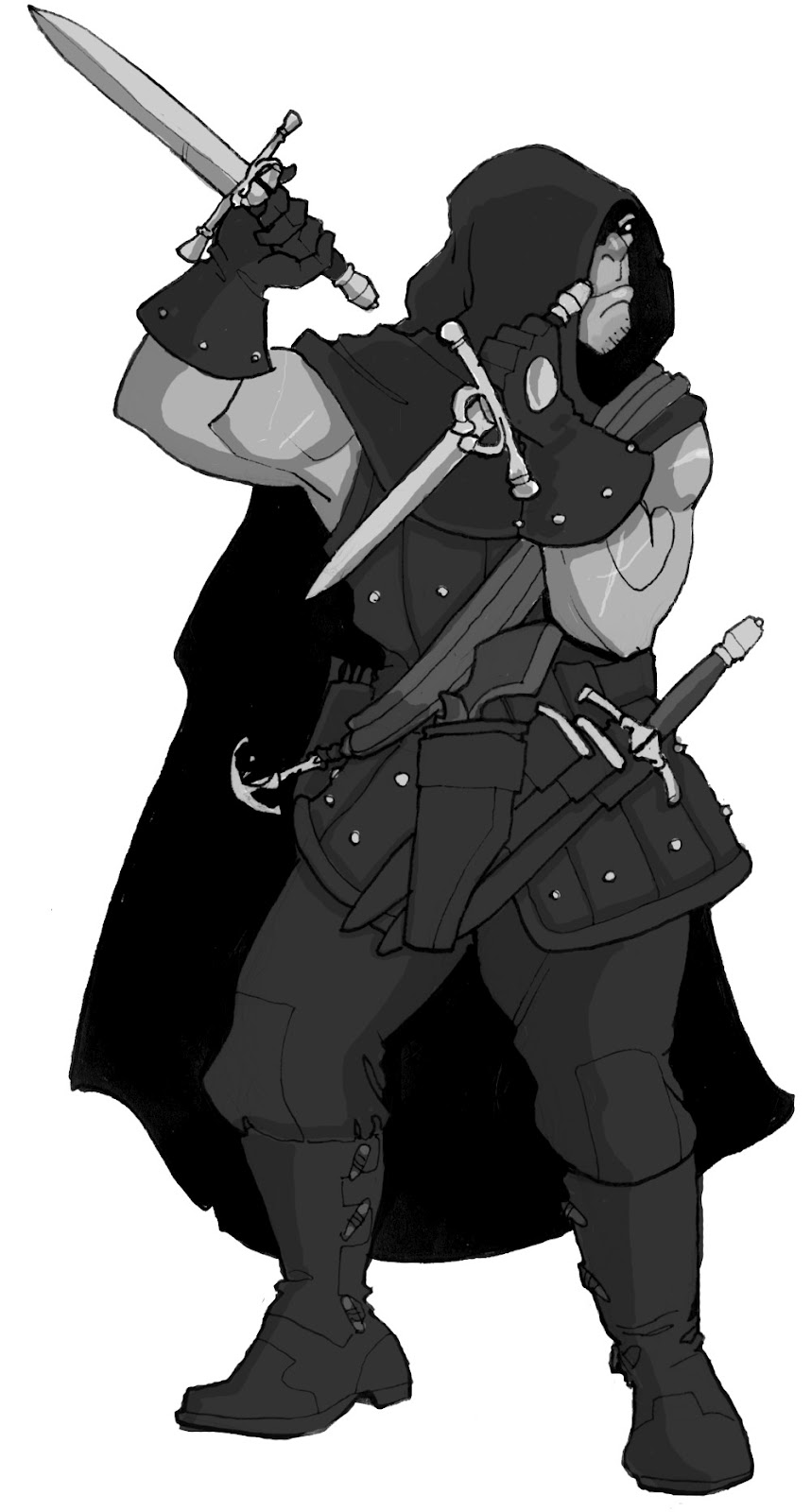
Half-Orc Assassin (or Bounty Hunter?) by Jon Kaufman

My main goal in Blood & Treasure was to use as much of the treasure (i.e. creative ideas as opposed to rules rules rules) in the SRD as I could. Now, there are plenty of things in the SRD that, deprived of one rule or another wilt and die. Most of the prestige classes fit into that category, for example, and there were a few spells, feats, etc that just could not make the leap.

At this point, I’ve written 90% of the game, needing only to write down some ideas on creating dungeons and on running characters through the wilderness and city. Almost all of this material comes from the “core” SRD and the psionics material (a few classic powers turned into spells and some of the classic monsters). That leaves me with two more “books” – Unearthed Arcana and the Epic Level Handbook.

The Epic Level Handbook I’m mostly ignoring, though I am poaching a few monsters and cutting their Hit Dice and Armor Classes in half (or close to it). They’ll work well with 20th level adventurers. Unearthed Arcana is primarily about alternate rules systems, and since B&T is intended to work with most classic forms of D&D and the retro clones, those systems are of no interest to me. That leaves some of the variant races, classes, etc.

The variant races are not terribly interesting to me, to be quite honest, and could probably be hand waived by a Referee. Since B&T is clocking in at around 270 pages, I really don’t want to devote any of those precious pages to desert halflings or fire dwarves. (Crap, just writing fire dwarves makes me want to include fire dwarves … must resist). The variant classes, on the other hand, gave me an idea. Why not, to show how easy it is to make a variant class, include one for each of the main classes.

In the case of magic-users, I already have the specialist mages. In the case of clerics, it gives me something to do with the cleric domains, using their granted powers as a way to make specialty priests. The fighter gives me a chance to do a quick and dirty conversion of the dwarven defender, recasting it as simply a defender. For the paladin, the blackguard (I’d go with anti-paladin, but I’m not 100% sure that wouldn’t get me in trouble – at your table, call it whatever you like).

Here are a few of the other variant classes included in B&T:

Bounty Hunter (Assassin Variant)
Some Referees and groups of players may feel uncomfortable about having an assassin in their midst, especially if the party is to include a paladin or other lawful characters. Feel free to use the bounty hunter as a slightly less “evil” version of the assassin.

The bounty hunter replaces the assassin’s 5th level death attack with a “knockout punch” attack. The attack works in the same manner, but the result is unconsciousness for 1d6 turns instead of death.

The bounty hunter learns to cast spells from the ranger spell list instead of the assassin spell list.

Specialty Priests (Cleric Variants)
The clerics presented above are fairly basic agents of Law and Chaos, or, in the Medieval sense, of God and the Devil. One can expand the horizon of the cleric by using specialty priests of different deific domains.

Each domain corresponds to the portfolio of a god or goddess and gives the specialty priest a special power that can be used in place of the traditional cleric’s turn or rebuke undead ability. Specialty priests can be neutral as well as lawful or chaotic.

AIR: A deity of air might be a deity of the sky and heavens, such as Jupter, Zeus, Anu or Varuna, or a more minor deity of a particular wind. Air priests can turn or destroy earth elemental creatures.

ANIMALS: Priests of animal deities might be dedicated to a particular animal like Bast, goddess of cats, to animals in genral, or to deities of the hunt, like Artemis. Animal priests can speak with animals at will.

CIVILIZATION: Deities of civilizations might be lawgivers like Marduk of the Babylonians, founders of great civilizations, like Romulus of Rome, or simply the patron deity of a city or kingdom. They are almost always lawful deities. A civilization priest can use calm emotions once per day and gains a +2 bonus to all reaction checks.

DEATH: While death deities are usually considered chaotic, mainly because living creatures have a general disregard for dying, they need not be chaotic. Hades was one of the kings of creation, along with his brothers Zeus and Poseidon, and thus arguably a lawful deity. The demon lord Orcus is also associated with death, via his control of the undead. Death priests may use a touch of death once per day. They must make a successful melee attack against an opponent and roll 1d6 per cleric level. If the roll is higher than the target’s current hit points, they die with no saving throw.

EARTH: Earth deities run to the deities of mineral wealth, like the Roman Plutus, deities of stone and earth, like the Egyptian Geb, and deities of the land, like the Chinese Tu Di Gong. Earth priests can turn or destroy air elemental creatures.

EVIL: Deities of pure evil or primordial chaos are quite common in mythology and religion. For pure evil, there is, of course, Satan in all his guises in the Abrahamic religions, a primordial deity like Tiamat, or a fictional deity such as H.P. Lovecraft’s Azathoth. Evil priests can smite lawful creatures as a paladin smites chaotic creatures.

FIRE: Priests of fire include priests of hearth deities (who are usually lawful), priests of the element of fire (who may be neutral) or priests of hellfire (and thus chaotic). Fire priests can turn water elemental creatures instead of turning undead creatures.

GOOD: Deities of good are always lawful, and include such heroic deities as Mithra of the Zoroastrians (or Mithras, his Greco-Roman incarnation), archangels like Michael, or saints, such as Cuthbert or George. Priests of good can smite chaotic creatures in the same manner as a paladin.

KNOWLEDGE: Deities of knowledge are often also deities of magic, the Egyptian Thoth being a good example. One might consider some saints, like the Venerable Bede, as a deity of knowledge. Priests of knowledge have the same abilities as sages (see Henchmen below).

LOVE: Gods and goddesses of love may be gentle and kind, and thus lawful, or lustful and passionate, and thus chaotic or neutral. A priest of love is probably chosen as much for their charisma as for their wisdom. Love priests can, once per day, make a charisma skill check with a bonus equal to their cleric level.

MADNESS: Deities of madness are always going to be chaotic in nature. They might include the fictional Nyarlathotep created by H.P. Lovecraft or the Greek demigoddesses known as the Mania. A priest of madness gains a +2 bonus to save vs. mind control, and can cast confusion once per day.

MAGIC: Deities of magic include the lawful Thoth, the more neutral Hermes Trismegistus and the chaotic Hecate. Priests of magic can use scrolls and wands as though they were magic-users of the same level

PLANTS: A plant priest is not unlike a druid. Plant deities are sometimes wild, like Dionysus, the god of wine, but often they are associated with fertility and agriculture, like the Germanic Freyja or the Greek Demeter. Plant priests can rebuke or command plant creatures.

STRENGTH: Deities of strength are often deities of heroism. Heracles, the Greek demigod, is probably the most famous deity of strength, but there is also the Roman goddess of strength, Strenua, and the daughter of Thor, who was called Thrud. Once per day, a priest of strength can gain a bonus to a Strength skill check equal to their cleric level.

SUN: Though sun deities are usually lawful, peoples who inhabit extremely hot climates may cast them as chaotic. The Egyptians, for example, had lawful Ra, the god of the morning sun, and chaotic Set, the chaotic god of the noonday sun. Sun priests may only attempt to turn undead three times per day, but once per day, a sun priest can destroy undead with a successful turn undead check instead of just turning them.

TRAVEL: Deities of travel are often also deities of communication and merchants. Some examples include lawful Mercury of the Romans, and chaotic Eshu of the Yoruba of West Africa. For a total time of one round per level, priests of travel can operate under the effects of the freedom of movement spell.

TRICKERY: Trickster deities are rarely lawful, but they need not be chaotic. Some tricksters simply balance the playing field between man and god, or keep the gods from becoming too egotistical, such as Raven of the American Indians or, to some extent, Monkey of Chinese mythology. Others are true agents of chaos, such as the Norse Loki. Trickster priests add hide, move silently and legerdemain to their class skills.

WAR: War is one of the oldest human endeavors, and most pantheons contain one or more deities of war. War gods include the chaotic Ares and Tezcatlipoca and the more lawful Athena and Tyr. War priests can use edged and piercing weapons.

WATER: Water deities are usually divided between deities of the oceans and seas, lile Susanoo, Aegir, Mananan Mac Lir and Neptunus, and the lesser deities of fresh water. Water priests can turn or destroy elemental fire creatures.

WEATHER: Weather deities are fairly close to air deities in form and function, and one could argue that Jupiter and Zeus are more associated with lightning than with the sky for many people. Some thunder gods have managed to survive in popularity into modern times, such as Thor in comic books and Raiden in video games. Weather priests add survival as a class skill, and add lightning bolt to their list of third level spells.

Beastmaster (Variant Druid)
The druid intercedes between humans (or demi-humans or humanoids) and the natural world. The beastmaster is part of the natural world, dwelling apart from civilization and maybe having even been raised by animals. Beastmasters gain the AC and movement bonuses of the monk and the favored enemy ability of the ranger, but lose the ability to use armor and shields and the druid ability to change shape.

Blackguard (Variant Paladin)
The paladin is a champion for law, and while the assassin is something of a champion for chaos, they do not fit into the traditional role of the black knight. Note, “blackguard” is traditionally pronounced as “blaggard”.

The blackguard is, for all intents and purposes, the opposite of the paladin. Any ability of the paladins that works against chaotic creatures works against lawful creatures for the blackguard. Instead of healing with their laying on of hands ability, blackguards inflict damage. Where paladins cure disease, blackguards cause disease. Blackguards retain the paladin’s immunity to fear.

Blackguards must do all in their power to glory in the seven deadly sins: Avarice (take all, share nothing), Gluttony (take more than you need), Lust (take what you desire), Envy (nobody should get something I do not), Wrath (give into hate), Sloth (let somebody else do the work) and Vainglory (tell everybody just how wonderful you are). Failing to wallow in the seven deadly sins at every opportunity has the same effect on a blackguard that breaking his code has on a paladin.

Warlock (Variant Sorcerer)
Warlocks are, depending on one’s definition, the male form of witches or simply another term for a male spell caster. This version of the warlock merely draws inspiration from the first syllable of the name, turning the sorcerer into slightly improved combatant.

A warlock loses one daily spell per level and one spell known per level. In return, they roll 1d8 for hit points and may use up to leather armor and wield the following weapons: Battleaxe, club, dagger, flail, hand axe, heavy mace, heavy pick, kukri, light hammer, light mace, light pick, longsword, morningstar, rapier, sap, scimitar, short sword, sickle, spear, trident and warhammer.

If you treat these as classes, that would bring the class total in B&T to13 normal classes and 12 variant classes (no variant for the duelist yet), for a total of 25. This, along with multi-classing and the ability of humans to switch classes should give folks who are big on options plenty to work with, while the lower power levels should keep “min-maxing” to a minimum. If you’re really itching to be a troll bounty hunter/warlock, though, and you have a Referee who is willing to allow it (and are willing to put up with a pretty severe level limit), you’re good to go, and hopefully will not overshadow the human fighter standing next to you.

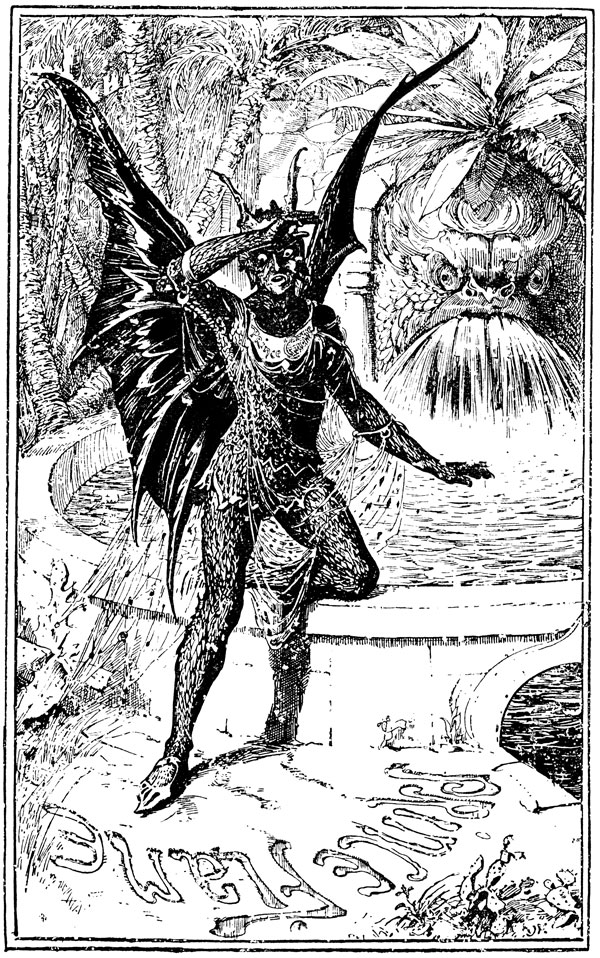
The Esper – A New Class for Space Princess

And so it begins …

ESPER

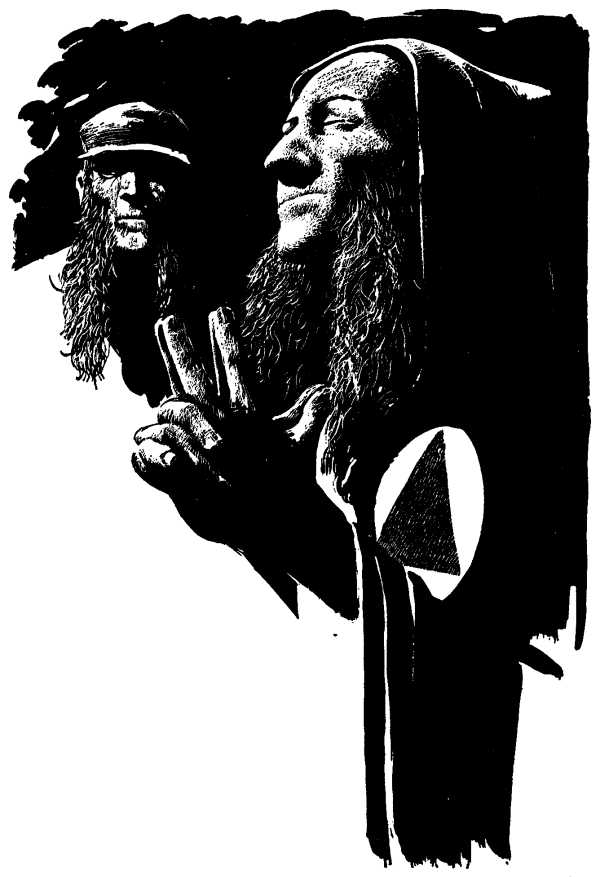
Illustration by John Schoenherr

It’s a well known fact that approximately 0.000056% of sentient beings in the galaxy have latent psionic powers that can, with training, be fully realized.

One path of training goes through the monasteries of the psychics, who combine their psionic training with physical exercise and the art of laser swordsmanship. The other path of training is through the academies of the espers, who ignore the physical to attain mental perfection.

Many espers wear the saffron uniforms of Star Patrol’s Science Section (Psi Division), while others work for governments and private companies, giving them an edge in negotiations and helping them explore strange new worlds for resources. Still others operate independently of organizations as freelance troubleshooters, criminal masterminds or cult leaders.

HIT DICE: Espers roll d6 to determine hit points

REQUIREMENT: STR score of 4 or lower, MEN score of 5 or higher

SKILLS: Espers add their SKILL to the following tests: Activate Psychic Power (MEN)

STARTING GEAR: Ray gun, crystal pendant (for meditation and focus)

.nobrtable br { display: none }

Level Hit Dice Skill Powers Luck
Mentalist 2 4 3 3
Savant 4 8 6 1
Guru 6 12 9 0

The esper has a number of psychic powers depending on his level, plus ESP as a bonus power. Espers can also spend their starting luck points to buy additional powers. To use a power, an esper must make an activation test – essentially a MEN test against a Difficulty Class (DC) determined by the power to be activated. No power can be used more than once per hour. The player can choose these powers from the psychic’s power list in the main rulebook.

Espers can also attempt to activate powers that are not in their repertoire, but suffer a -10 penalty on their activation test to do so. Powers not in an esper’s repertoire can only be activated once per day.

Random Idol Generator

Need a quick and (moderately) interesting idol for that forgotten temple? How about this …

Size (d8)
1. Tiny (1-ft. tall)
2. Small (3-ft. tall)
3-6. Medium (6 to 9 ft. tall)
7. Large (12 to 15 ft. tall)
8. Huge (20+ ft. tall)

Gender (d6)
1-2. Male
3-4. Female
5. Androgynous
6. Genderless

Head/Face (2d8)
2. Animal head
3. Ball of darkness
4. Ball of light
5. Beautiful
6. Bulbous (over-large)
7. Double faced (per Janus) or multi-headed (1d8+1 heads)
8. Grotesque
9. Handsome
10. Inverse pyramid
11. Long and narrow
12. Monstrous (angel, demon, dragon, medusa, etc.)
13. None (either chopped off (50% chance holding own head in hand) or never there)
14. Pinhead
15. Square
16. Wrinkled/aged

Eyes (2d8)
2. Blazing
3. Blindfolded
4. Cast light in beams
5. Closed
6. Cold and appraising
7. Faceted like an insect
8. Gems (1d6 x 100 gp each)
9. Gouged out
10. Jewels (1d6 x 1,000 gp each)
11. Joyful
12. Large and soft
13. Mournful
14. Multiple (d6)
1-3. Third eye in center of forehead
4-5. Four eyes (stacked)
6. Nine eyes radiating around head
15. Suspicious
16. Voids

Mouth (2d8)
2. Absent (i.e. no mouth)
3. Alluring
4. Beak or snout
5. Contorted with rage
6. Fanged
7. Grimace of pain
8. Muffled (hand clamped over it or bound by cloth)
9. Open wide in full-throated song or scream
10. Shy grin
11. Slit
12. Sly smile
13. Stoic and noble
14. Tongue sticking out
15. Toothless
16. Tusked

Position/Body (d12)
1. Animal (random animal or monster)
2. Dancing
3. Dying or sleeping
4. Enthroned
5. Hovering horizontally (face up or face down)
6. Kneeling
7. Locked in battle (with random monster)
8. Lotus position
9. Reclining
10. Running
11. Standing
12. Upon a mount (random animal or monster)

Features (d100)
01-02. Adorned with jewelry
03-05. Adorned with silks
06-07. Animated (per closest golem)
08-10. Beneath a waterfall
11-12. Carrying book or tome (1% chance of magic book, 10% chance of spellbook)
13-14. Carrying globe (1% chance of crystal ball)
15-17. Carrying instrument
18-19. Carrying lightning bolt (1% chance of javelin of lightning)
20-21. Carrying regalia
22-23. Carrying tool
24-25. Carrying weapon (1% chance of magic weapon)
26-27. Covered in chains or ropes
28-29. Covered in sheen or stains (blood, dung, holy oil, slime, wine)
30-31. Darkness, 10-ft. radius
32-34. Draped in garlands of flowers or herbs
35-36. Encased in ice or crystal
37-38. Energy drain (drains 1d3 levels when touched by wrong alignment)
39-41. Engraved or tattooed (10% chance of glyph of warding)
42-43. Ethereal
44-45. Fires beams of energy at unbelievers (as 10 HD monster, 6d6 damage)
46-48. Furry or hairy
49-51. Hollow (filled with fire, occupied by priest, etc.)
52-53. Long neck
54-55. Magic mouth (chants, screams, speaks)
56-57. Magic portal (opens gate or teleports people or sends them into Astral Plane)
58-60. Multiple arms (1d4 x 3)
61-62. Overgrown with fungus
63-64. Overgrown with vines
65-66. Oversized genitalia
67-69. Painted realistically
70-71. Scaled
72-73. Surrounded by aura of light
74-76. Surrounded by chained animals (lions, bears, etc.)
77-79. Surrounded by chained slaves or penitents
80-81. Surrounded by magic circle (random alignment)
82-83. Surrounded by magical music (1% chance of uncontrollable dancing)
84-85. Surrounded by moat (acid, alligators or piranha, bottomless pit, lava, molten metal, oil, ooze, perfume, portal into other world, spikes, water (holy or unholy), wine or spirits)
86-88. Surrounded by offerings
89-90. Surrounded by plumes of flame
91-92. Surrounded by spirits (ghosts, poltergeists, shadows, etc.)
93-94. Surrounded by vapors (laughing gas, narcotic, oracular, perfume, poison, stench)
95-97. Trapped with pit in front of it
98-99. Wearing armor (1% chance of magic armor)
100. Actual deity summoned when touched or spoken to

Material (d20)
1. Basalt
2. Granite
3. Marble
4. Porcelain/terracotta
5. Alabaster
6. Malachite
7. Porphyry
8. Obsidian
9. Iron/Steel
10. Bronze
11. Hepatizon
12. Brass
13. Copper
14. Silver (if large or huge, re-roll, taking this result if re-rolled)
15. Gold (if medium to huge, re-roll, taking this result if re-rolled)
16. Platinum (if small to huge, re-roll, taking this result if re-rolled)
17. Adamant (if small to huge, re-roll, taking this result if re-rolled)
18. Gemstone (if small to huge, re-roll, taking this result if re-rolled)
19. Light (holographic)
20. Flesh (via foul magic)

Metal idols have a 5% chance of being automatons in the classic sense of the word

How about some samples?

IDOL 1: A huge brass idol of a kneeling, androgynous figure. It’s head is a ball of darkness and it holds aloft a crown.

IDOL 2: A large idol of a genderless figure with a head shaped like an inverse pyramid (i.e. narrow chin, top of head large and flat). It has cold, appraising eyes and its mouth is hidden by its left hand. The figure is mounted atop a rearing dragon and surrounded by plumes of flame. The entire idol is carved from basalt.

IDOL 3: This medium idol depicts a dying man with a grotesque face and a mouth like the snout of a bat. It has large, empathetic eyes and its hands are folded over its chest. The idol is carved from obsidian and is encased in a block of ice.

Hail the Evolutionary

I had reason this week to think about the old science-fiction novel Last and First Men by Olaf Stapledon. In this seminal work, Stapledon explores the future evolution of mankind, through 18 different forms, many of them of our own creation using genetic engineering. Now, I will admit that I haven’t yet read the book (it’s waiting in line behind about six others), but the idea inspired me, so with a little research on Wikipedia (which I think is usually sufficient when preparing game material – any more information than that and you become too obsessed with making things perfect instead of fudging things for the sake of playability) I present this rather odd little class … the Evolutionary.

EVOLUTIONARIES

Evolutionaries are strange men and women who devote themselves to the writings of a mad monk who described, in startling detail, the physical path that led from the basic oozes (i.e. oozes begat plants with begat vermin which begat animals which begat magical beasts which begat monstrous humanoids with begat humanoids which begat humans) to the human form. Within their bodies, he claims, lies the potential for stepping into future stops on this mystic path, allowing these evolutionaries to actually change their form as they learn and grow. With each form, they gain new abilities.

Hit Dice: d8 (+3 hit points per level after 9th)

Attack As: Clerics

Weapons Permitted: Any

Armor Permitted: Leather armor, ring armor and shields.

All evolutionaries must be humans to start with. They tend to be arrogant and overbearing, for they believe they know a truth beyond truth. It is for this reason that their relations with clerics and druids are somewhat strained, though they acknowledge their power and accept their blessings. Evolutionaries adventure that they might grow and collect monies to support their church and its sage fathers and mothers, the “Last Men”.

.nobrtable br { display: none }

Level XP HD Save Title
1 0 1d8 15 First Man
2 2,000 2d8 14 Second Man
3 4,000 3d8 13 Third Man
4 8,000 4d8 12 Fourth Man
5 16,000 5d8 11 Fifth Man
6 35,000 6d8 10 Sixth Man
7 70,000 7d8 9 Seventh Man
8 150,000 8d8 8 Eighth Man
9 300,000 9d8 7 Ninth Man
10 500,000 10d8 6 Last Man
11 700,000 9d8+6 5 Last Man
12+ 900,000 9d8+9 4 Last Man

Note – The level titles reference “man”, but can just as easily be read as “First Woman”, for the class is open to either gender.

At each level, an evolutionary changes his or her physical form. All evolutionaries enjoy a +2 bonus to save vs. polymorph and other effects that would forcibly transmogrify them. If an evolutionary is killed and reincarnated (per the spell), they always lose one level and return to the form of a sub-man (see below).

An evolutionary’s ability scores remain stable from form to form (though some forms increase or decrease them slightly), and their memories and personality remain fairly stable as well.

First Man (1st level): The first men and women are humans. They learn insights in defeating the ancient forms of humanity. At first level, this gives them a +1 bonus to hit and damage oozes and a +2 bonus to save against the special attacks of oozes.

Second Man (2nd level): Upon attaining the second level, the evolutionary’s form changes. They become taller, adding at least 3 feet to their forms. Their necks thicken and their heads grow over-large for their bodies (improve Wisdom by 1 to a maximum of 18), their legs become as stout as a dwarf’s and their toes merge together. The second man’s skin becomes as firm as carved granite and finely molded, their skin luminous and their eyes large and the color of jade. A second man gains the ability to use ESP three times per day and gains combat insights against plants.

Third Man (3rd level): The third man shrinks in stature, becoming slight and lithe (improve Dexterity by 1 to a maximum of 18). He has sunny brown skin covered by downy red gold hair. His eyes are golden, his face compact and with a cat-like muzzle, with full lips and distinctive large ears. The third man’s six fingers are long and supple, like antennae of living steel. The third man loses the ESP ability of the second man, but gains a thief’s ability (as a 3rd level thief) to move silently, climb and pick pockets.

Fourth Man (4th level): The fourth man makes a startling transformation into a giant, floating brain. The fourth man improves his intelligence and wisdom scores by 1 (to a maximum of 18) and gain the ability to cast spells as a 4th level magic-users. They store their spells in their minds, rather than spellbooks, and begin with as many spells as they can cast per day, determined randomly. Fourth men move by flying at the normal movement rate and can levitate in place. Since they have no bodies or hands, they cannot wear armor or use weapons or other forms of equipment. Their thick skins give them an armor bonus of +2 and they can attack by slamming into opponents, dealing 1d4 points of damage. As in previous forms, they gain combat insights against vermin.

Fifth Man (5th level): In the form of the fifth man, the evolutionary regains a humanoid form, twice the height of a human being (+1 bonus to Strength, to a maximum of 18). Armor in this form costs twice as much as normal and they are capable of using two-handed swords in one hand. They have eight fingers on their hands (the sixth finger of their third form splits in this form into two tiny fingers and a thumb), and regain the ability to pick pockets as a 5th level thief. A fifth man has no hair other than a thick skull cap of ruddy brown hair and large eyebrows to shade their eyes. The fifth men gain resistance to fire and combat insights against normal and giant-sized animals.

Sixth Man (6th level): The sixth form of an evolutionary is a bit of a throwback. They become much reduced in stature, to roughly the size of a halfling or dwarf, and their Intelligence and Strength are both reduced by 1 point (to a minimum of 3), while their Dexterity and Constitution increase by 1 point (to a maximum of 18). Sixth men are expert hunters, gaining the ability to track as a ranger of 6th level, and their combat insights extend to magical beasts.

Seventh Man (7th level): The seventh man increases in height, being about as tall as an elf, and his bones become hollow (-1 penalty to Strength and Constitution, to a minimum of 3). In this lighter form, they suffer only half damage from falls. He develops skin flaps under his arms, which give him the ability to fly at twice his normal movement rate. He also improves his Dexterity score by 1 point (to a maximum of 18). These folk must wear specially prepared armor (costs double normal) if they are to fly while armored. Their vision becomes exceedingly keen, allowing them to see in darkness as well as a dwarf and to find secret doors as well as an elf. They retain the sixth man’s ability to track as a ranger, and their combat insights extend to monstrous humanoids.

Eighth Man (8th level): The eighth form of an evolutionary is that of a substantial humanoid (+1 to Strength and Constitution, to a maximum of 18) with a long, narrow head (-1 to Wisdom and Charisma). Eighth men are rather pedestrian and conservative in their views, and have a straight-forward attitude pleasing to dwarves. Their minds are logical and their insights piercing them, giving them a +2 bonus to save vs. illusions and mind-controlling or altering effects, and the ability to find and remove traps as a thief of 8th level. Their combat insights extend to all non-human humanoids, and they gain the ability to modify a human being (per polymorph) into any other humanoid form once per day with a successful touch attack.

Ninth Man (9th level): The form of the ninth men is that of a dwarfish human, almost as broad as he is tall. They are thickly muscled (+2 bonus to Strength, to a maximum of 18) and have thick skin that provides an additional +2 armor bonus. Ninth men have a +2 bonus to save vs. hold spells and any effect that would check a person’s progress or hinder their ability to move. Their combat insights apply to all humanoids, including humans. They are immune to poison. They retain the eighth man’s ability to polymorph human beings, but can now do so with their gaze rather than touch.

Last Man (10th level): The last man is the final form of the evolutionary, the end of all his struggles and tribulations. The final form is highly variable. It is always humanoid in form, but its precise form is determined by the player.

Last men exist in a group mind with all other last men, giving them an effective bonus of +2 to intelligence, wisdom and charisma, to a maximum of 18. They can communicate telepathically to a range of 1 mile, and can set up a telepathic group mind with up to six other humanoid creatures once per day, allowing them to communicate telepathically with one another at a range of up to 1 mile.

The last men’s group mind also allows them to contact other plane once per day, asking the group mind questions as though they were actually contacting a higher power.

Last men have an alien mindset that gives them a +2 bonus to save vs. mind reading and mind control. They can use ESP one per day on other humanoid creatures, and can use polymorph other once per day on any non-humanoid creature, though its new form must be in of type only one level higher or lower than its original type (i.e. a plant could be polymorphed into an ooze or a vermin form).

The Last man is immune to polymorph and shapechange.

SUB-MEN: The sub-men are brutish humanoids who stand about the size of an elf, but are much broader and bulky. They have a +1 bonus to starting Strength and Constitution (to a maximum of 18) and a -1 penalty to starting intelligence and wisdom (to a minimum of 3). Sub-men may advance as fighters.

En Garde: The Duelist

When I dove into the Blood and Treasure project, I had two goals in mind. First and foremost, make it as rules light as possible so that the game is compatible with old school games – that also means reining in some of the power creep that was present in the 3rd edition. Second – use as much of the material in the SRD as humanly possible. Now, sometimes the first goal precludes the second. Some spells – primarily the “mass” spells were, in my opinion, part of the power creep issue. If such a spell wasn’t in an older version of the rules, it didn’t make it into Blood and Treasure. Other spells and feats played off of rules or minutia that I ejected, so they didn’t quite make it in. In all, I retained 95% of the spells, all of the monsters and probably 95% of the magic items.

One thing that didn’t make it in, however, were prestige classes. Initially, I wanted to find a way to use them. The concept isn’t as new school as some folks might thing. The paladin was originally open only to mid-level fighters of lawful alignment – i.e. a prestige class, and the bard that made it into AD-n-D was largely the same. The problem, though, was one of special abilities. So many of the special abilities of the prestige classes just no longer worked in the rules lite environment, and of course many of the prestige classes in the SRD were just patches to get around the fact that multi-classing in the d20 rules did not work properly for spellcasters.

Still, I’m a scavenger at heart, so I was determined to get something out of those prestige classes. The assassin was already slated to become a full class in Blood and Treasure, and looking at the other classes, I saw another that I thought had the makings of full class-hood – the Duelist. Truth be told, I’ve long been a fan of the duelist concept, starting from the first time I watched Cyrano de Bergerac in a freshman English class. So, without further ado, I present the Duelist in “rough draft” form – some changes may occur before it’s official.

DUELIST
Duelists are warriors who learn to fight using trickery, fancy swordplay and quick reflexes rather than armor and shields. Duelists may be swashbuckling rogues or serious and studious masters of fence.

Requirements: Duelists must have dexterity and intelligence scores of 13 or higher.

Hit Dice: d8 (+3 hit points per level from 10th to 20th).

Armor: Leather armor.

Shield: No.

Weapons: Any.

Skills: Balancing and jumping (see Heroic Tasks below).

CLASS FEATURES
A duelist adds her intelligence bonus (if any) as well as her dexterity bonus to her Armor Class while wielding a melee weapon.

Duelists can make special attacks with a +2 bonus to their attack roll.

When fighting defensively, a duelist enjoys a +4 bonus to Armor Class instead of the normal +2 bonus.

At 4th level (romantic), a duelist gains a +2 bonus on initiative rolls.

At 8th level (avenger), a duelist gains an additional +2 bonus on all reflex saving throws and on will saving throws against fear.

At 9th level (duelist), a duelist can choose to establish a stronghold in the wilderness and gain followers (see High Level Play below). A duelist who becomes a lord or lady attracts 1d6 men-at-arms per level, 1d6 first level duelists who wish to train under them and one 3rd level duelist to serve as a lieutenant. These duelists should be generated as characters under control of the player.

At 10th level (duelist), a duelist gains the ability to strike precisely with a one-handed piercing weapon, such as a rapier or dagger, doing double damage on a successful hit. The precise strike can only be attempted in the round after the duelist’s opponent has missed with one of their own attacks. When making a precise strike, a duelist cannot attack with a weapon in his other hand or use a shield. A duelist’s precise strike only works against living creatures with discernible anatomies. At 20th level, the extra damage on a precise strike increases to triple.

At 14th level (duelist), if a duelist chooses to fight defensively, one successful attack against him each round must be re-rolled.

At 18th level (duelist), a duelist using a one-handed piercing weapon may deflect one successful ranged attack per round.

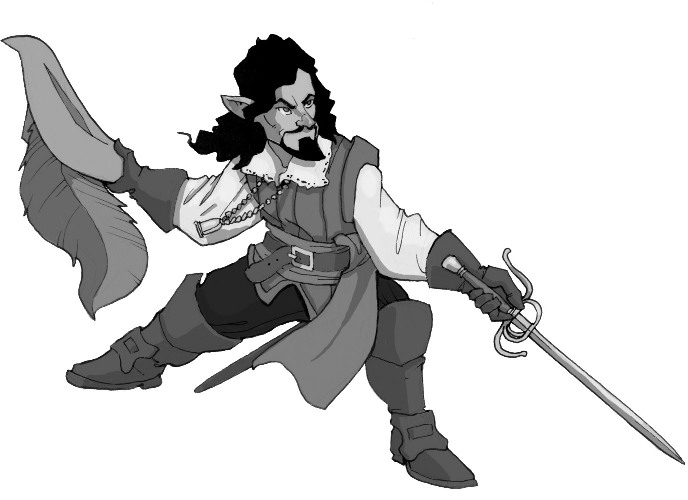
Illustration of a gnome duelist by Jon Kaufman.

Magic-Users in Blood and Treasure

Just a quick sample of the magic-user as it will appear in Blood and Treasure. Nothing earth shattering – mostly did it to show off the sweet illo by Jon Kaufman.

MAGIC-USER

Magic-users are spell casters who can access the widest variety of spells in the game. They are scholars and thus fairly weak combatants.

Requirements: A magic-user must have an intelligence score of 9 or higher.

Hit Dice: d4 (+1 hit points per level from 10th to 20th).

Armor: None.

Shield: No.

Weapons: Club, dagger, dart and quarterstaff.

Skills: Deciphering scripts.

CLASS FEATURES
A magic-user casts spells from the magic-user spell list. A magic-user must choose and prepare his spells ahead of time. Like other spell casters, a magic-user can cast only a certain number of spells of each spell level per day. His base daily spell allotment is given on Table: The Magic-User. Unlike a bard or sorcerer, a magic-user may know any number of spells. He must choose and prepare his spells ahead of time by getting a good night’s sleep and spending one hour studying his spellbook. While studying, the magic-user decides which spells to prepare. He cannot prepare any spell not recorded in her spellbook, except for read magic, which all magic-users can prepare from memory and which they must know to read their spellbook.

A magic-user begins play with a spellbook containing four 0-level spells and three 1st-level spells. At any time, a magic-user can add spells found in other magic-user spellbooks or scrolls to her own or can conduct spell research to learn new or invent spells.

At 9th level (wizard), a magic-user can choose to establish a stronghold in the wilderness and gain followers (see High Level Play below). A magic-user who becomes a lord or lady attracts 1d6 men-at-arms per level (chaotic magic-users can choose to employ goblins, orcs or hobgoblins instead), 1d6 first level magic-users who wish to train under them and one 3rd level magic-user to serve as a lieutenant. These magic-users should be generated as characters under control of the player.

MAGIC-USER SPECIALIZATION
A school is one of eight groupings of spells defined by a common theme. If desired, a magic-user may specialize in one school of magic. Specialization allows a magic-user to cast extra spells from her chosen school, but she then never learns to cast spells from some other schools.

A specialist wizard can prepare three additional spells of her specialty school each day. Each extra spell must be from a different spell level that the magic-user can cast.

The magic-user must choose whether to specialize and, if she does so, choose her specialty at 1st level. At this time, she must also give up two other schools of magic (unless she chooses to specialize in divination), which become her prohibited schools. A magic-user cannot give up the divination school to fulfill this requirement. A magic-user may not change either her specialization or her prohibited schools later. Spells of the prohibited school or schools cannot be cast by the magic-user, even using scrolls or wands.

The eight schools of arcane magic are abjuration, conjuration, divination, enchantment, evocation, illusion, necromancy, and transmutation.

Abjuration: Spells that protect, block, or banish. An abjuration specialist is called an abjurer.

Conjuration: Spells that bring creatures or materials to the caster. A conjuration specialist is called a conjurer.

Divination: Spells that reveal information. A divination specialist is called a diviner. Unlike other specialists, a diviner must give up only one other school.

Enchantment: Spells that imbue the recipient with some property or grant the caster power over another being. An enchantment specialist is an enchanter.

Evocation: Spells that manipulate energy or create something from nothing. An evocation specialist is called an evoker.

Illusion: Spells that alter perception or create false images. An illusion specialist is called an illusionist.

Necromancy: Spells that manipulate, create, or destroy life or life force. A necromancy specialist is called a necromancer.

Transmutation: Spells that transform the recipient physically or change its properties in a more subtle way. A transmutation specialist is called a transmuter.

The Star Warrior

My conception of Space Princess is as a very focused, rules-lite, beer & pretzels game that you and a few friends can break out one day and play without too much prep. For all intents and purposes, it is about dungeon crawls with a pulp sci-fi motif inspired by the original game. I wanted to make a very simple, focused set of rules that worked, and allow others to add on to those rules if they wanted to expand the game into different realms.

With that in mind, and as a way to show the simplicity in the rules, I present the Star Warrior class for the game, along with a sample illustration by Jason Sholtis.

STAR WARRIOR
Star warriors are the rocket-powered heroes of the game, leaping to the fore when things turn ugly. The star warrior is usually a soldier or professional adventurer with marginally more ethics than the scoundrel. They are not as skilled as the scoundrel and scientist and do not have the powers of the psychic, but nobody is more valuable in a fight than a star warrior.

HIT DICE: Star warriors roll 1d10 for hit points.

REQUIREMENT: Strength and Dexterity of 4 or higher.

SKILLS: Star warriors may choose one of the following skills as a skill to which they can add their skill bonus during a test: Avoid Notice (Dexterity), Leap & Swing (Strength), Pilot Ship (Mentality) or Swim (Strength).

STARTING GEAR: Ray gun and hand weapon.

Hit Dice in this game determine one’s attack bonus, much as monster Hit Dice determine attack bonus in other old school games. They also determine hit points and are the basis for one’s DEFENSE (i.e. AC).
The ability scores in Space Princess are really just the ability bonuses, which run from 0 to 8. To roll abilities, you still start with 3d6, so we get the bell curve, and then translate those into the ability scores. An ability score of “4” in Space Princess corresponds to an ability score of “9-12” in most old school games. The game uses four abilities – Strength, Dexterity, Mentality and Knowledge.
The skills work off of the skill bonuses in the chart. If your character has a skill (scientists and scoundrels have more skills than the star warrior and psychic) and is attempting a test, they add the skill bonus to the attempt. Otherwise, they add nothing. Tests are also modified by one’s ability score.
Example: Athena Laserwolf, a veteran, is attempting to out-pilot some space pirates. She has chosen “Pilot Ship” as her skill, and thus adds her skill bonus (6) to her Mentality score (we’ll say it is 5) to get her total Pilot Rating of 11. The space pirate pilot has a total Pilot Rating of 9. Comparing the two ratings, we see that Athena Laserwolf will get a +2 bonus to her roll to keep her distance from the space pirates. She will then roll 1d20, add 2, and try to roll a 10 or higher.
Combat works the same way, except you figure out your combat rating by adding your Hit Dice to either Strength (for melee attacks) or Dexterity (for missile attacks) and compare it to your opponent’s Defense (HD + Dex + Armor). Compare the two to determine the bonus or penalty, roll the dice and try to get a “10” or higher to hit.

Starting gear seems pretty light, but consider the source material – old movies. Once a group is in a space fortress prowling around, they can pick up additional gear and find (or build) pieces of super science (i.e. the sci-fi version of magic items). Naturally, the Referee can provide additional bits of equipment if he or she likes.

Luck points balance the different levels, allowing games that include both old veterans of clone wars and eager young space cadets. A luck point can be spent for an automatic success on a roll – any roll. At character creation, aliens can spend a luck point to gain a new special ability, and any character can spend a luck point to gain a super science item.

So, creating a character means rolling four ability scores, picking a species, class and level, rolling hit points, calculating a few basic ratings (so you don’t have to do it later) and writing down your starting gear. Theoretically, a group can be ready to delve into a space fortress and rescue a space princess in about 10 minutes.