History of NOD Part IV

Wow – so I let myself get lax on updating the blog again. In my defense, I’ve been super busy at work (real work, that one that plays for my mansion and gold-plated yacht) and super busy at home (NOD Companion just needs a little editing and layout work, NOD 22 is coming along nicely, Mystery Men! got a small revision and ACTION X has been reborn as GRIT & VIGOR and is also coming along nicely). So, there’s my excuse. Here’s my post …

HISTORY OF HUMANS AND HALFLINGS

With the power of the elves and dwarves broken, the world was left to the humans and their ilk. We now reach a time a scant five thousand years ago.

As the dragons of Mu-Pan slowly retired into secret places, they left their scions in charge of their warring kingdoms. In time, they would be united in an empire that would have to tolerate numerous dynastic changes and revolutions and stand up to the machinations of the weird lords of Tsanjan.

Thule harbored a rogue elven land called Pohiola. This nightmare kingdom would slowly give way to the invasions of the horsemen of the steppe, as they laid the foundations for such kingdoms as Mab, Luhan and Azsor.

Antilia and Hybresail would remain largely wild places, home as they were to the shattered homeland of elves and dwarves, its human and demi-human populations reduced to barbarism.

In the Motherlands and Lemuria, the human populations learned well from their former elven masters, and founded sorcerous empires founded on demon worship. In time, such empires as Irem, Nabu and Kolos would fall in spectacular eldritch fashion. In their ashes, a new empire was born that would rule much of the Motherlands – Nomo. Nomo was founded when a band of elven adventurers led by Prince Partholon left the shores of Antilia in a dozen longships and make their way to the Motherlands. Finding themselves among a tribe of human barbarians, they soon asserted themselves as their masters, founding the city-state of Nomo and eventually extending their control over much of the sub-continent. Under Nomo’s emperors and empresses a 2,000 year empire was begun which would end only with the disappearance of the Emperor during adventures in the mysterious West.

With the emperor’s disappearance, Nomo fell into factional fighting, with each faction supporting its own candidate for emperor. The former tributary kings and queens in the empire also staked their claims on the throne.

Thus it is in today’s land of NOD. City-states built on the ruins of kingdoms built on the ruins of empires, all threatened by encroaching chaos.

RACIAL CLASS VARIANTS
In Blood & Treasure, I introduced the notion of variant classes. These were meant to illustrate the way one might create new classes using old classes as a base, with fairly minor changes.

BARBARIAN VARIANT: HALF-ORC THUG

Half-orcs often grow up on the mean streets, learning to excel not as trained fighters but as street brawlers. These half-orc thugs advance as barbarians, save for as follows: They may only use padded or leather armor and bucklers, they have the following skills: Bend Bars, Break Down Doors, Climb Sheer Surfaces, Gather Rumors, Hide in Shadows, Jump, Move Silently and Pick Pockets.

PALADIN VARIANT: ELVEN GALLANT

Gallants are elven paladins as dedicated to romance and wooing women as they are to righting wrongs and protecting the weak. While most paladins can be a bit stodgy, elven gallants are rather dashing and devil-may-care.

In a three-fold alignment system, gallants must be Lawful. In a nine-fold system, though, they need only be Good. Gallants cast spells from the bard spell list rather than the paladin spell list.

THIEF VARIANT: DWARF PROSPECTOR

As adventurous as dwarves can be, their first loves are always gold, gems and silver. Many, if not most, get their first taste of adventure as prospectors, heading into the hills or depths in search of metals or stones to mine.

Dwarf prospectors have the following skills: Climb Sheer Surfaces, Find Traps, Hide in Shadows, Listen at Doors, Move Silently, Notice Unusual Stonework, Open Locks, Remove Traps and Spelunking. In addition, they can wield picks and hammers.

THIEF VARIANT: GNOME PRANKSTER

Gnomes are innately magical folk, and some learn from a young age to tailor their magical abilities to the profession of thievery. These gnome thieves are noted for their enjoyment of taunting their victims with pranks and riddles, leaving calling cards and boasting of their thefts before they happen.

In place of a gnome’s normal innate spells, a prankster can cast the following spells: Mage hand, open/closer and ventriloquism.

THIEF VARIANT: HALFLING GYPSY

Many of the halflings that people meet are of a breed known as the pikey – wanderers from the east who live a semi-nomadic life among the larger races, making a living telling fortunes, picking pockets, stealing pies (they love pies) and bilking the naive.

Gypsies have the abilities of thieves, save they replace the backstab ability with the bard’s ability to fascinate. Their skills are as follows: Balance, Climb Sheer Surfaces, Escape Bonds, Gather Rumors, Hide in Shadows, Move Silently, Pick Pockets, Train Animals and Trickery.

History of Nod, Part III – The Dwarves

Today, we cover the ancient history of the dwarves of NOD, with a special bonus at the end covering the identities of the major Kabir and Igigi.

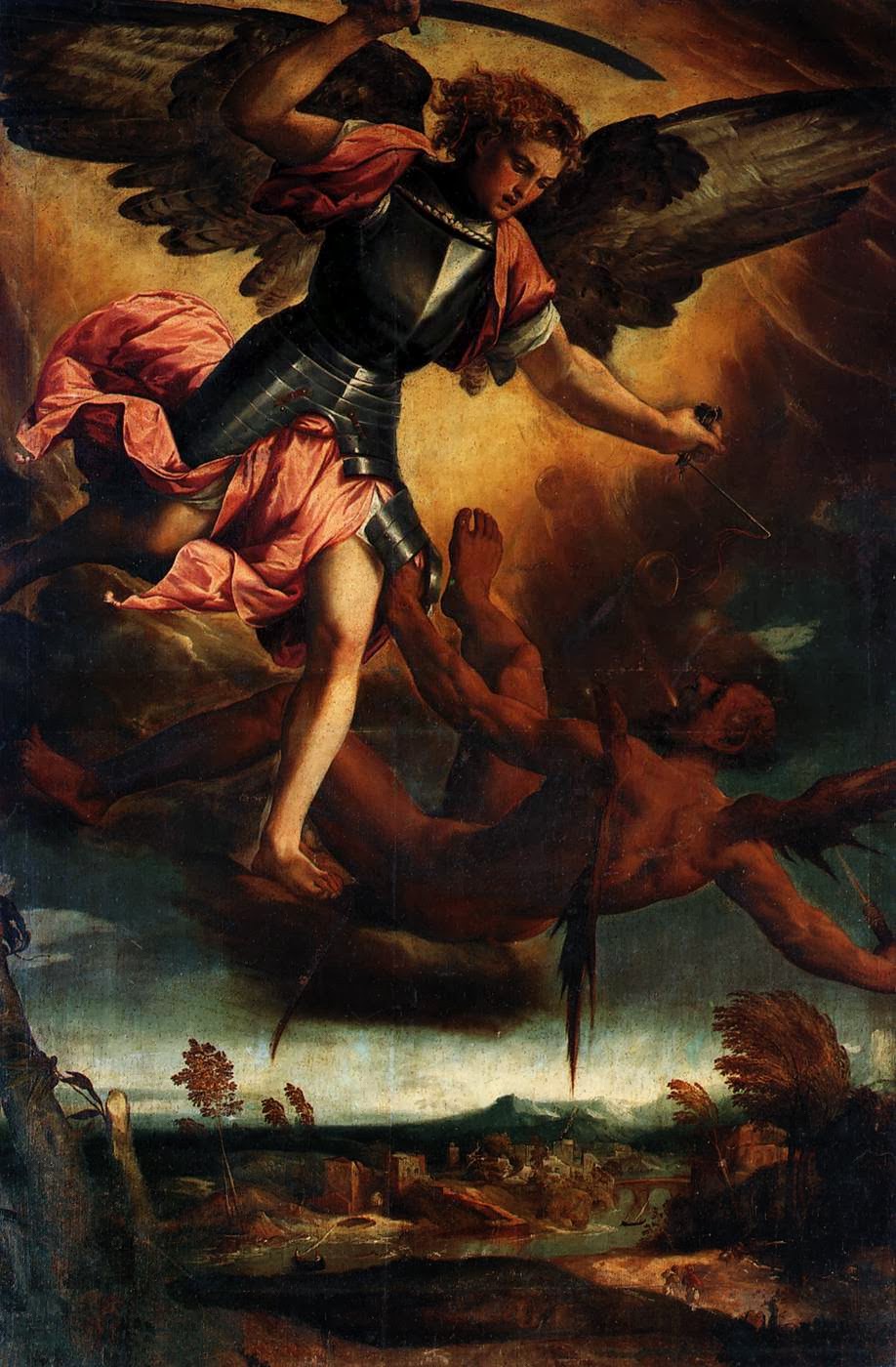
Image by Jon Kaufman (pachycrocuta at DA – check him out for commissions!)

The ancient elves, being fey creatures, were physically malleable. Not to the extent of the Kabir, of course, who could assume any shape they pleased. The elves were humanoid in shape, and humanoid they would stay. But when they were angry, their faces twisted and their bodies distorted (sometimes called a warp spasm), and when they were happy, they almost glowed with joy. An elf’s children were physical duplicates of their parent’s emotional and spiritual selves.

As the ancient elves grew darker, their children grew uglier. Thus were born the orcs, goblins, bugbears, hobgoblins and dwarves. These waifs were turned out into the wilderness by their disgusted parents to die, but many were rescued by entities who saw them either as useful pawns in their own sinister games, or in the case of the dwarves, who were born of greed, by the compassion of Ys, who believed they might be brought up to do good in the world despite their parentage.

Ys was correct about the dwarves, hiding them in the mountains and under the hills, and shepherding their development until they were honorable men and women, industrious, clever and just. Of course, they were still greedy and stubborn as all get out, but nobody is perfect.

As was mentioned before, the dwarves were no match for the ancient elves, and were forced to pay tribute to them. A dwarf loves his gold, and being cheated of it brought a terrible hatred for the elves among the dwarves, and they bent their minds to one day throwing off this indignity. They were a patient folk, the dwarves, and they had much time to plan and scheme. They forged weapons of power and hid them away, and watched as the debauched elves grew insular and petty. They had long ago stopped having children with one another, choosing instead to produce children with their more handsome human slaves, that they might escape the aforementioned curse of “ugly children”. In time, there were many more humans and half-elves in their kingdoms and empires than true elves. The time the dwarves had waited for had finally arrived.

In this time, the disparate elven kingdoms had come under the control of a queen-of-queens, an elf called Vinrix. Vinrix was the most powerful elf of her age, and nothing to be trifled with. When her people came to the high king of the dwarves, Dvalinn, with demands that a hundred-thousand of his people be delivered into slavery to build her monuments, he declined, and sent back from his halls a few bloodied and blinded survivors carrying the heads of their comrades. This, of course, meant war.

War between the elves and dwarves centered around the dwarven holds in the Bleeding Mountains, which in those days were known as Golden Mountains. The elves besieged the dwarves in their mountain holds, as Dvalinn had desired, and slowly but surely the dwarves chipped away at the strength of the elven armies, slaying their great wizard-lords with such mundane things as rockets and cannon. More importantly, they undermined the positions of the elves, and bypassing their enemy’s lines worked their wiles on the human slaves that formed the bulk of the elves’ strength. Before the elves knew it, their human subjects were in open revolt, and they were forced to divide their armies again and again until they were spread thin across the globe.

It finally came about that the dwarves left their strongholds to challenge the army of Vinrix in the field. The elves had made camp around the base of the Crown Stone, the keystone their magical network of standing stones, which augmented their eldritch power and denied it to most other folk. There the dwarves went with humans and others in tow, and joined battle with their ancient enemies. Eventually, it was a matter of High King against Empress, and finally, her back pressed against the Crown Stone itself, the dwarf made a last mighty swing with his hammer and missed. The hammer, forged in the raging elemental fires beneath the earth, tempered in the immaculate grudges of the dwarves, cracked the great stone his people had raised, and everything was cast in a brilliant white light.

Those who were far enough away to have seen the event and survived tell of a great white light that lasted but an instant and then disappeared, followed by a great rush of wind. Vinrix and Dvalinn and their armies were gone, as was the Crown Stone and, with it, the network of standing stones. Some toppled physically, others remained standing, but the great network that channeled magical energy was gone. Where once there stood the Crown Stone on a lush prairie, there was now a great, gaping gulf – a piece torn from the Material Plane. A few bits of land floated in this black gulf, this void-scar on the landscape, but the rest was gone.
With the magic dissipated across the globe, the impossible cities of the elves toppled and those who were left found themselves the inheritors of wrack and ruin.

Needless to say, the elves were none too happy about this. To be sure, the greatest of their cities still stood, fabled Tara Tilal, but most of the others were gone. The elves were now weakened, and they were forced into the wilderness by their former slaves. While some repented and turned back to their ancient gods, many others had revenge on their minds, and magical communications sent a great many (perhaps two-thirds) of the surviving warriors and wizards marching to the wondrous western mountains known as the Pillars of Asur, where that grand old kabir’s great temple stood. They gathered in the foothills and swore oaths and forged weapons and summoned demons, and then started up those slopes to topple their ancestor-god’s house of worship.

They did not get far, though, before the old god himself did appear and whisper a single curse. The sun would be denied these elves for all eternity; it would become to them a hateful thing of pain, burning eyes and flesh, an eternal reminder of their fall from grace and final punishment. These elves turned and fled from their god and the sun, which burned their skin black, and hid themselves in dark places under the earth, and would come to be known in future centuries as the drow. They would eventually have their revenge on the dwarves, though, as they excited the fires that burned beneath the Golden Mountains and gathered the foul goblin folk who dwelled near them and finally freed the last of the elder things that were chained therein. As hundreds of volcanoes exploded simultaneously, the skies were blackened and the holds of the dwarves were cracked and destroyed. The goblins swarmed these strongholds and the dwarves were forced to flee. The Golden Mountains had become the Bleeding Mountains, so named for the red rivers of lava that now flowed there and for the copious amounts of dwarf blood spilled by the goblins. The dwarven diaspora had begun.

THE MAJOR KABIR

ASUR: Kabir of the Sun; ruler of The Noble Procession (the aristocratic and beautiful, chivalrous and vain fey, especially the ancient elves and even the rebellious drow who are their closest relatives)

BEL: Kabir of death and rebirth; rules the Mourners (fey concerned with the dead, such as banshees)

GHOBB: Kabir of geology; rules the Keepers of Kitchen and Pantry (the household fairies, as well as the useful folk of the fairy world such as leprechauns and brownies)

KARN: Kabir of the hunt; rules the Bloody-Minded Lot (mean-spirited killers and torturers, such as red caps and trolls)

NUDD: Kabir of the oceans, the “ancient mariner”, who went to sea and never again set foot on land; he might be said to rule the fey of the water, though he shows little interest in doing so and generally leaves them to their own devices

TUT: Kabir of mischief; rules the Merrie-Met (tricksters, dancers, and makers of mischief like satyrs and sprites)

YS: Kabir of fertility; rules the Painters of Flowers and Dapplers of Dew (the fey that make the world go ‘round, the nature-workers of Nod such as the flower fairies, nymphs and dryads, as well as the storm giants – though nobody really rules those folks)

THE MAJOR IGIGI

ALAD: Igigi of Benevolence (NG)

AZAG: Igigi of Morbidity (NE)

AZUR: Igigi of Virtue (LG); After Azur’s destruction by Zid during its crusade in the Material Plane against evil, when it stretched itself too thin and made itself vulnerable, Azur was shattered into seven archangels (solars), generally known as the Seven Virtues.

GUZU: Igigi of Rage (CE)

NIM: Igigi of Love (CG)

SUUL: Igigi of Madness (CN)

ZID: Igigi of Logic (LN)

History of Nod, Part II – Elves and Gnomes

Another chunk of Nodian history …

THE ELVES AND GNOMES

The gnomes and elves are offshoots of the fey, the elves being descended from the fey and dragons and the gnomes descending from the brownies, pixies and sprites, probably from congress with more mundane humanoids.

Though the elves are actually a younger race than human beings, they are longer lived, and they fancy themselves the senior partners in the firm – wiser, more beautiful, more graceful, etc. The ancient elves, being only a few generations removed from the Kabir, were virtual demi-gods and terribly powerful. In no time, they spread their influence and their kingdoms across the face of the world, and their general lack of morality and compassion for lesser creatures drove them to enslave other folk. True, their influence did not spread to Mu-Pan, where their dragon sires held sway, but the rest of NOD was theirs to do with as they pleased.

The elves demanded tribute from the dwarves (more on them later) and drove them to construct a network of towering standing stones that formed the natural flow of magic on NOD into a network they could tap to work wonders. This network also denied magical access to most other folks. With this magical power, the elves constructed impossible cities and walked the planes of reality. They were the greatest explorers of their age, mapping the cosmos and making enemies far and wide.

The power of the ancient elves was staggering, but not without limits. Their magic flowed from the Kabir via elven druids, and the dictates of the Kabir irritated the arrogant elves. They raged against their ancestor gods, and in time they were heard by the demons, that still haunted NOD, and the fallen angels who now inhabited Hell at the center of NOD. These agents of Chaos and Evil reached out to the ancient elves with promises of power unlimited, asking nothing in return, for they knew the elves, unhampered by compassion or morality, would do exactly what their new tutors would like to be done to the world.

Tune in next time for the dwarves and the destruction of everything the elves held dear (i.e. their power)

What Alignment is the Universe?

More “History of NOD” coming very soon, but a brief thought on alignment in games today.

Is there a God (or gods) and how does He/She/It/Them want people to behave?

This is the big religious question, of course, and one I don’t want to answer here (or have answered in the comments – hint hint). But it got me thinking about religion/mythology/alignment in game worlds.

In many game worlds, the presence, identity and even ultimate aims of the divine powers is rarely in question. In most campaigns, a list of gods and goddesses is provided, each with a portfolio and an alignment, and players with a cleric pick their favorite and off they go.

What, though, would be result if nobody (no players, anyhow) really knew anything about who ran the universe?

Sure, there might still be pantheons that people worship, but what if those pantheons were just collections of names and mythological stories. What if what actually lay beyond the Material Plane was unknown to 99.9999% of the population, and those who did have some knowledge of it were super high level and thus generally unavailable for consultation? To put it in other terms, what if nobody knew what the universe’s alignment was? Clerics and players would have to creep along, wary of breaking an unwritten divine law and suffering the consequences if they did – loss of spell access, no healing, no resurrection, visits from divine enforcers, general bad luck, etc.

You could still have the different angels/demons/devils/demodands/modrons/etc. – you just don’t know which faction is in charge of the universe and which faction is just pretending to be control of the universe. Imagine too the excitement of stepping into the Outer Planes not knowing what you would find or who’s religion (i.e. alignment) was the One True Alignment. Maybe the Universe is Lawful Neutral, maybe its Neutral Good, maybe its Chaotic Evil, maybe it is completely unaligned. You won’t know unless you ascend to the Outer Planes and knock on some doors. In the meantime, players collect clues and interpret portents in-game and do their best to figure it all out, just as folks do in the real world.

However you structure such a game world, it could be for an interesting place to adventure.

History of Nod, Part I

It’s good to be the God of Nod …

There have been requests, so here it is. It will also appear in the NOD Companion (coming soon … I swear!) I have generally hesitated to get too much into this, since, in my opinion, this is just stuff from my personal campaign. I’d like others to feel free to concoct their own history of NOD if they use it in a campaign. Still, some folks like to get the “official” word on a campaign setting, so I guess this is it.

We begin with the Primordial History of NOD

I first conceived of NOD as a campaign setting about 5 years ago. It had two key sources of inspiration. The first was a map that depicted what some folks believed would be the layout of the continents on Earth millions of years from now. Is NOD meant to be the future of Earth? No. Just liked the map.

The second bit of inspiration came from the fiction of Dunsany and Lovecraft, specifically the Dreamlands. Having grown up on more Tolkienesque fantasy, they were both a revelation and a welcome “shot in the arm” to my imagination. I had created worlds that were little more than fantasy versions of the CIA’s factbook – collections of make-believe countries (mostly based on real world countries) and currencies and languages, etc. Tons of background that would rarely come up when a motley band of tomb robbers, religious zealots, scoundrels and necromancers were descending into the unlit depths of the world in search of fame, fortune and experience points.

NOD, therefore, would be a dream world, one conjured by the dreams, fantasies and mythologies of everyone who ever lived (but mostly dreams, fantasies and mythologies that I made up myself, or that were in the public domain – after all, I live in the real world and don’t fancy getting hit with a lawsuit!)

NOD is composed of dreams. In that regard, it has no geological or cosmological history. It wasn’t, and then it was, and slowly, it got itself crammed with all sorts of fantasy nonsense to entertain and annoy people who like to play fantasy games.

The LAND OF NOD once floated in a great sea of undiluted Chaos. Beset by demons and their ilk, and other things born in nightmares, those organisms that tried to eke out a life on the little planet had a tough time of it. Fortunately, what exists in the Material World has a soul in the Ethereal Plane. Like souls tend to flock together in great eddies in the Ethereal Plane, and these collections of souls, united by common purpose, gain a sort of divine sentience. It was thus that Ka, the first deity, was born.

Ka was composed of the souls or spirits of everything alive, and in fact still is. In those primordial days, though, Ka was mostly composed of the spirits of simple organisms and beasts (as they outnumbered sentient beings by a significant margin), and thus embodied (so to speak) the desire to survive.

Seeing its subjects beset by the creatures of Chaos, Ka injected bits of itself into the Material Plane – like sticking one’s fingers into the bowl of jelly. These protrusions of Ka took material form in the Material Plane, and they are called the Kabir. The Kabir might be considered the first of the fey, though in game terms they would be considered outsiders. Their shapes were variable, but primarily humanoid, for humans, the most advanced animals on NOD, gave them the benefit of their own advanced minds.

The Kabir went to war with the demons and other chaos creatures. In this war, they created soldiers from the stock of creatures already living on NOD, and in this way gave birth to the fey, the giants and the dragons. In time, they achieved a sort of victory, and life flourished on NOD. In time, Ka was shattered, or at least smaller eddies formed within Ka. These were the animal lords, each a collection of animal souls united by the drives of their component species, and more alignment-oriented entities, composed of the souls of sentient beings based on their own dedication to philosophical concepts like Law, Chaos, Good and Evil. These entities could also project pieces of themselves into the Material Plane, appearing not only as the planets that orbit around NOD, but also as the various outsiders (devils, angels, etc.) that plague and aid humans and demi-humans.

The structure of the Nodian cosmos was the product of ZID, the “god” of Reason and the Need for Order and Organization, through the workings of the polyhedroids, who are its manifestations in the Material Plane. They derived the crystal spheres that guide the movement of the planets and constructed from raw chaos the Firmament, which holds the undiluted chaos of the cosmos at bay, the churning of this chaos serving as the motivating force that keeps the Nodian cosmos in motion.

The Kabir eventually retired from the Material Plane to the pocket dimension of Fairyland, leaving their fey children behind to serve as nature’s agents on NOD. Since NOD has no innate physical laws to govern it, all that happens in NOD must happen through an intelligent agent. The polyhedroids are in charge of the big things, like gravity and the conservation of matter and energy, while the natural flourishes like the seasons are overseen by the various fey courts.

Next up … a brief history of the elves and gnomes

Times, Not Planes

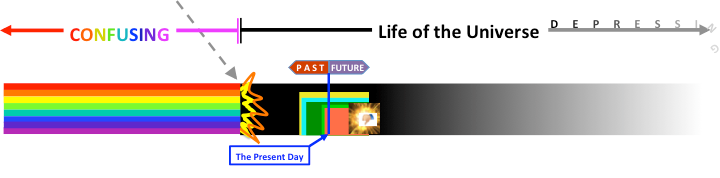
This morning, I spent a few moments reading THIS POST. Go on. Click it. Don’t be afraid.

This is the multiverse. It’s a straight line and the Prime Material is Now. Have fun!

It’s a nice little exploration into time, and it got me thinking.

In the traditional D&D cosmos, we have a Material Plane (both Prime and Alternate, of course), Elemental Planes, Astral Planes, etc. While reading the above linked post, the bit about the hell hole Earth used to be – asteroids, volcanoes, magma and such – got me thinking about the Elemental Plane of Fire. I guess really it sounds more like the Para-Elemental (or is it Quasi-Elemental? Dang you Gygax!) Plane of Magma. Either way, it made me think about a system whereby there are no alternate planes, just alternate times.

Plane shifting is actually time shifting, and everyone who is anyone throughout the history of the cosmos wants to get in on the here and now (i.e. the current campaign you’re running) because it’s super bitchin’ and has stuff like assassins, manticores, coffee, magic swords and polymorph self.

So those fire (and magma, and lava and whatever) elementals do not come from the Plane of Fire, they come from many millions of years ago, representing the dominant life forms on Planet X (or whatever you choose to call the place where fighters slay dragons and thieves remove traps in your campaign) when it was just a ball of hot rock beset by asteroids and volcanoes. Water elementals and their ilk come from a more recent past, when the planet was covered by oceans and the only annoying material lifeforms they had to contend with were microbes (ah, the good old days).  When a magic-user conjures them, he is plucking them from their own time and dropping them against their will into the here and now.

Metron or Planetar?

With this system, you replace the idea of demons/devils/angels/demodands/daemons (need I go on) with weird alien creatures from the distant past and distant future. Entities of Pure Chaos (i.e. the slaad) hail from that rainbow period before the Big Bang. The entities of Pure Law dwell at the end of the universe, when heat is gone and there is no change or movement. What dwells in the periods between is up to you. Maybe demons come from the period just after the Big Bang. Maybe solars/planetars/devas are the enlightened future of humanity, their powers derived from genetic manipulation and nanobots rather than magic as magic-users understand it. Just dress them up like the super-advanced aliens from Star Trek and go to town (“Ah, you primitive humans are so violent. To show our enlightened superiority to you, we will pit you against each other in a fight to the death rather than sit down and explain things to you because we’re so amazingly advanced.” Never made sense to me. The whole “humans are ultra-violent and deadly” thing seems a little off as well, when you consider our species has gone from a population of 2 to 7,000,000,000 …). Heck, just gating in a mecha to fight an air elemental (that hails from the time of the gas cloud that precedes the creation of the Solar System, of course) could make the whole concept worth while.

It could make for an interesting variation for your campaign. If you keep the secret of the universe from your players (and they don’t read this post) it might be enjoyable for them to slowly piece it all together and, if they become high enough level, to try to bend the system to their advantage. It also gives entities from the recent future/past a reason to be messing with their recent past/future, as they seek to bend the system to their own advantage, with the hapless PC’s caught in the middle.

Something to consider.

On Almanacs and Thin Ice

Once upon a time, I was suffering through an earache and a bit of a cold. I had an earache as a baby, and the doctor told my mother I would be susceptible to them for the rest of my life, and he wasn’t wrong. I’d usually get once about once a year, and they’d last about a week.

Anyhow – the ear pain would spike in the evening, and I’d seen some goofy commercial on TV about home cures that included using a hair drier to dull the pain of an earache. So there I was, lying on the couch, aiming a hair drier at my ear (it worked, by the way, and still does) and reading a book I’d picked up at the grocery store earlier that day on a whim – The Old Farmer’s Almanac. It was chock full of interesting things to read, and I’ve been a subscriber for many years, the book becoming more valuable once I started growing vegetable gardens.

Believe it or not, The OFA isn’t a bad book to have around if you’re a gamer. The back section of the book is full of interesting tidbits about the natural world, and as a subscriber, I also get a reprint of the OFA from 100 years ago and 200 years ago – right now, I’m looking through the 2014, 1914 and 1814 OFA’s. If you’re running a game set in the early 19th century in the United States, those 19th century Alamanacs could come in quite handy.

One interesting thing I found in the almanac tonight was a bit on ice thickness – in particular, how much weight, in general terms, ice could hold based on its thickness. This brought to mind the usefulness of a random ice thickness table for referees running games set in the frozen north, or in more temperate climes under the grip of Old Man Winter.

ROLL D10

1. Thin ice – breaks on contact
2. Deceptive ice – breaks when one has walked 1d6 paces
3. 3 inches – enough to hold a single humanoid (medium) on foot
4. 4 inches – enough to hold a group of humanoids in single file or a single ogre or frost giant
5. 7 inches – enough to hold 2 tons (a horse, ox or large giant or iron golem or cloud giant)
6. 10 inches – enough to hold 3.5 tons (a fire giant)
7. 12 inches – enough to hold 8 tons (an elephant or storm giant or titan)
8. 15 inches – enough to hold 10 tons (a triceratops)
9. 20 inches – enough to hold 25 tons (a brontosaurus or elder earth elemental)
10. 30 inches – enough to hold 70 tons (half a tarasque?)

Building Better Henchmen

Do you like random tables? I do.

Do you like henchmen? I do.

Do you like random henchmen? I hope so …

The following tables can be used to make more interesting, if not useful, henchmen for your classic fantasy game. I think I might adapt these to ACTION X and use them as the default for minions.

Note – for those who don’t play Blood & Treasure (yes, I’m aware that’s 99.99999999% of all gamers), treat a “knack” as succeeding on a roll of 1-2 on 1d6, or as a flat +3 bonus to skill checks

TABLE THE FIRST – HENCHMAN PERSONALITY

1. Sniveling coward – has move of 40 and must check morale before each fight

2. Greedy bastard – tries to steal treasure at every turn

3. Junior paladin – braver and more heroic than he/she should be, but also a Lawful (Good) moralist about things

4. Dastardly spy – working for an opposing group of adventurers, making a map and reporting back

5. Secret cultist – member of a secret chaos cult, will betray the party if possible

6. Sword-for-hire – has to be paid (1×6 x 5 gp) for sticking his neck out, but +1 to hit with swords

7. Old veteran – a bit slower (move 20), but good at solving puzzles

8. Pack mule – can carry 150% normal weight, tends to be quiet and dull

9. Rebellious princess – (or prince) a rich brat who wants adventure but is still in the aristocratic mindset, has a tendency to complain and command

10. Rugged he-man – or she-woman; strong, brave and competent and a bit arrogant

11. Mother hen – very concerned about the adventurers and their health and well-being

12. Hyper-active – gets bored easily, often moves off on his own (especially when carrying something important)

13. Lucky duck – +2 bonus on all saving throws; lucky and knows it

14. Rakish devil – hits on the opposite sex, makes lascivious innuendos at the drop of a hat, has an over-fondness for booze

15. Death magnet – 1 in 6 chance that any random bad thing happens to this poor slob, but they enjoy a +2 bonus to all saving throws

16. Terrible jinx – increases chance of random monster encounters by 1 (or 5%), imposes a -1 penalty to saving throws for all in the party by their mere presence

17. Lazy complainer – move rate of 20, like to rest once per hour, complains about physical exertion, eats double rations

18. Delusions of grandeur – claims skills he or she does not have

19-20. Mundane henchmen – nothing special at all about this henchman

TABLE THE SECOND – HENCHMEN SKILLS

1. Academic – knack at deciphering and appraising the value of goods

2. Acolyte – can cast 1d4 zero-level cleric spells, each once per day; charges double

3. Acrobat – knack for jumping and ???

4. Animal Handler – knack for riding and taming animals

5. Apprentice – can cast 1d4 zero-level magic-user spells, each once per day; charges double

6. Athlete – knack at climbing walls and swimming

7. Deceiver – knack at forgery and disguise

8. Investigator – knack and finding traps and discerning alignment

9. Negotiator – +2 bonus to reaction checks if does the talking and knack for discerning alignment

10. Pick Pocket – knack at move silently and pick pockets

11. Rogue – can backstab for x2 damage once per day, knack at thief skills; charges double

12. Savage – berserker in combat, knack at barbarian skills, comes with loincloth, shield and spear; charges double

13. Sentinel – knack for finding secret doors and listening at doors

14. Shadow – knack for move silently and hide in shadows

15. Spelunker – darkvision to a range of 30 feet, dwarf knacks

16. Survivor – knack at survival and climbing walls

17. Swordsman – has one combat feat of the TK’s choice and comes with chainmail, shield and hand weapon; charges double

18. Thugee – can backstab for +2 damage and use poison safely, knack at assassin skills, comes with black leather armor and two daggers; charges double

19. Whirling Dervish – can attack twice per round with melee weapons, comes with leather armor, short sword and dagger; charges double

20. Woodsman – +1 to hit animals, knack at ranger skills, comes with leather armor, longbow and short sword; charges double

PAY SCALE

Just thought of this. What if the henchman’s pay scale determines what they’ll do …

Copper a day – will carry torches and bags, but will not fight

Silver a day – as above, plus will fight in second rank

Gold a day – as above, plus will fight in front rank

Platinum a day – as above, plus will check for traps and go into rooms first

You Pull the Lever and …

1. It electrifies just enough to hold your hand tight and inflict 1 point of electricity damage per round.

2. Your hand sticks to it … you just grabbed a mimic, buddy.

3. It comes out of the wall with a shower of sparks.

4. Your fingers tingle and then begin changing to stone (save vs. petrification); if this save fails, it begins to affect your arm (another save), etc.

5. Loud bells begin ringing, shaking dust from the ceiling and alerting all monsters on the level to your presence; some come running for a free-for-all, while others begin setting traps.

6. The floor opens beneath you (10-ft. pit; 50% chance of spikes; 25% chance of water; 10% chance of a crocodile; 5% chance of 4 skeletons; 1% chance of a magic item).

7. The floor opens beneath you (chute down to next dungeon level).

8. The ceiling opens above you, water pours down (1d4 damage).

9. The ceiling opens above you, green slime pours down.

10. The wall falls down, revealing a treasure room.

11. The wall falls down, revealing a clutch of rust monsters.

12. The walls falls down … on you (save or crushed for 2d10 damage).

13. Iron walls rise from the floor to block all exits, poisonous gas begins filling room.

14. You teleport to a random location on this dungeon level.

15. You teleport to a random location on a lower dungeon level.

16. You teleport back to the surface.

17. The room makes a 180-degree turn (save or knocked prone on floor); you are now in a mirror universe.

18. You gain the ability to use one random 1st level magic-user spell, one time. On a second pull, you gain a spell, but only if it can be plucked from the mind of a comrade. On a third try, you lose any spells you had memorized/prepared. On a fourth try, you summon a marilith demon, because seriously, how many damn times are you going to pull this lever?

19. You change into a random animal with as many hit dice as you have levels; your own mind is submerged beneath the psyche of the beast; this change lasts for 10 minutes.

20. You turn off all lights in the room (torches, light spells, etc.) off; pulling again reverses this.


I know, been a while. Very busy at work, also busy writing NOD Companion and Action X – which don’t lend themselves to excerpts just yet. I have a few posts planned for this week, though, so hang in there with me.

Intrigue at Court with Random Factions

Adventurers, at least those in the mid- to high levels, are probably no stranger to royal courts. What better patron to foot the bills and look the other way when people start getting fried by stray fireballs than a king or queen?

King, queens and their courts are centers of power, though, and power breeds a certain sort of paranoid hunger. After all, working for a living is for suckers. Getting paid to do nothing other than figure out a way to keep out of a field or factory for another day is pretty sweet gig, but also pretty competitive. This makes royal courts hotbeds of intrigue. Courtiers compete in the most civilized way (well, if you consider poisoning people civilized … Conan probably would, hence his hatred of civilization) for power, and in monarchical terms, that means the favor of the king and/or queen.

When adventurers wander into court, they often enter wealthy (from all that plundering), and romantic (from all that murder and mayhem). They’re like fantasy rock stars, and that means there’s a good chance they’ll receive the favor of the king or queen. That makes them a target. But a target for who?

RANDOM FACTIONS
The following is really just a collection of notions about court factions disguised as random tables. They involve determining five things about potential factions:

Cause: This is the cause or notion that ties the faction together. Power is the real tie, of course, but every faction has a few idealists who actually believe what their leader says.

Size: This is the overall size of the faction at court. It is given as a percentage of the members of court, which would include minor nobles, royal ministers, ladies in waiting, pages and folks like jesters, court magicians, court chaplains and heralds. The total size of a royal court is up to you, the GM.

Symbol: This is the overt or covert symbol of the faction.

Leader: This is the leader, again secret or public, of the faction.

Allies: This is a powerful ally of the faction.

CAUSE
Causes might be straight-forward political desires, philosophical notions, religious beliefs or rather silly fashion trends. Note – if a faction desires a particular course of action, there is likely a faction in court opposed by them.

D20
1 Attack the nearby humanoids – the faction wants an aggressive policy in the borderlands
2 Attack a nearby city-state/nation
3 Raise taxes, especially on adventurers and merchants
4 Ban adventuring – nothing but upstarts and pirates
5 Seize property from high-level adventurers – too much money on the borderlands, not enough loyalty
6 Encourage more settlements in the borderlands (i.e. subsidize stronghold construction)
7 Desire a ban on the use of magic-user style magic – witch hunters who claim magicians are secretly controlling the country
8 Cynics – support a lifestyle that rejects a desire for wealth, power, sex and fame (for others, of course, not the folks in court!)
9 Epicureans – pleasure is good (Epicurus meant knowledge, his followers probably don’t), superstition and divine intervention (i.e. clerics) are bunk
10 Stoics – emotions are bad; essentially fantasy Vulcans who primarily exist to drive chaotic players nuts
11 Skeptics – want everything investigated to within an inch of its life before a decision can be made
12 Chaos – worshippers of chaotic/evil deities – probably a secretive faction
13 Neutrality – seek a middle way between Chaos and Law; resist those alignments and their adherents
14 Law – worshippers of lawful/good deities – demand virtuous, honest behavior from government and the adventurers who work for it
15 Fashion – a faction of fashionable men and women, seemingly non-political but generally in favor of more power and wealth for aristocrats and more obedience from everyone else
16 Regional – a faction of humans from a particular region of the kingdom
17 Racial – a faction of demi-humans and their human supporters from within the kingdom
18 Peasants – not peasants at court, but aristocrats who want to champion “the people” – want all that adventurer and noble wealth spread around (except their own; oh, and they’ll be happy to take a cut of the distributed wealth as well, thanks)
19 Moralists – more than just the “government should be honest” Lawfuls, these folks want to see morality pushed from the top down – no sex, no booze, no … well, anything adventurers are going to want to buy with their ill-gotten gains
20 Traitors – a secret faction who wants to undermine the existing political structure – either getting rid of the monarchy in favor of something else, or replacing the current monarchs with one’s of their choosing

SIZE OF FACTION
Roll 1d4 and multiply by 10; this gives you the percent of the court that supports this faction and actively works for its goals

HEAD OF FACTION
You can go 50/50 on whether the head of the faction is male or female. Alignment could be determined by the faction itself, or just make it up. The leader’s race should match that of the king and queen or the ruling elite of the kingdom unless the faction’s cause is racial or the leader is monster (see below). When leader is determined, roll for the chance they are a court officer first. If they are not, then roll to see if they are a minister.

D8
1 Aristocrat (1d4 Hit Dice) – member of a wealthy family; probably not of the nobility; 10% chance the leader is a court officer; 1% chance the leader is a court minister
2 Knight (1d4 Hit Dice) – member of a minor noble family (Knight or Dame); 25% chance the leader is a court officer; 10% chance the leader is a court minister
3 Noble (1d4 Hit Dice) – member of a more powerful noble family (Baron, Count, Duke, etc.); 50% chance the leader is a court officer; 25% chance the leader is a court minister
4 Minor NPC (1d3 for level) – member of a class; if the faction is political, the leader is probably a fighter; if philosophical, leader is probably a magic-user; if religious, leader is probably a cleric; otherwise, use whatever you like; 25% chance the leader is a court officer; 10% chance the leader is a court minister
5 Medium NPC (1d4+3 for level) – see above; 50% chance the leader is a court officer; 25% chance the leader is a court minister
6 Major NPC (1d4+7 for level) – see above; 75% chance the leader is a court officer; 50% chance the leader is a court minister
7 Spy – leader is an assassin working for a foreign power or a powerful monster; whatever the faction appears to be, it is really working towards the furtherance of that foreign power or monster; faction includes 1d4+2 additional low-level assassins; other members are unaware of the faction’s true purpose; 50% chance the leader is a court officer; 10% chance the leader is a court minister
8 Monster – the faction is led by a monster that can masquerade as a human being (doppelganger, shapeshifter, vampire, etc.); 50% chance the leader is a court officer; 25% chance the leader is a court minister

SYMBOL OF FACTION
Note that a secret faction will likely just use option 5 or 6.

D6
1 Members wear a small shape cut from paper and plastered on the face
2 Members wear a particular color or pattern of colors (stripes, checks, etc.)
3 Members wear a particular item of clothing – a sash, feathers, hat, boots of a particular height
4 Members carry a particular type or style of weapon (silver daggers, etc.)
5 Members communicate with a secret language (code words, alignment language, hand signals)
6 Members have a symbol tattooed on their bodies, probably in a place usually concealed by clothing, but which can be displayed if necessary

ALLIES OF FACTION
Allies might be secret backers or controllers of the faction, or simply powerful people that are not officially members but show favoritism for the faction and its cause.

D8
1 None – the faction has no powerful ally
2 Officer of Court
3 Minister of Court
4 Member of royal family other than king or queen
5 Queen (if applicable, otherwise no ally)
6 Queen Mother (if applicable, otherwise no ally)
7 King (the faction is currently in favor at court)
8 Powerful monster (demon, angel, devil, vampire, lich, aboleth, mind flayer, etc.)