The Trouble with Merchants

Depending on what style of fantasy campaign you are designing, merchants can be a problem. In a medieval milieu, they link villages, towns and cities together, providing important lines of communication and making items cheaper by their trade. They make maps and charts and make travel less dangerous and less mysterious. This is fine in a reality-based campaign, of course, but can present problems with a fantasy campaign.

On the other hand, merchants and their travails can be a powerful ally in building a fairy tale world of hundreds of small kingdoms, dangerous, mysterious wilderlands and, in the true Gygaxian spirit, unrealistically expensive equipment if you make them few and far between.

The real world is one in which trade may be about as old as war, or possibly older than organized warfare. In my research into the prehistoric world (i.e. pre-writing, pre-Bronze Age), I was amazed to find that stone beads manufactured in India/Pakistan had found there way at least as far as the Balkans, and that trade between groups over long distances was not terribly rare. Even when human beings had very primitive transportation – no wheels, no horses or other beasts of burden and only the simplest water craft – they managed to trade with one another over sometimes quite long trade routes. Impressive.

Of course, what those prehistoric merchants and their ancient and medieval counterparts did not have to deal with was a fantasy random encounter chart. Sure, there were storms and accidents, and probably some lions, tigers and bears, but no dragons, water elementals, genies, demons, devils or purple worms, not to mention large tribes of humanoids who might just as soon kill you as talk with you. Even a relatively weak demon or devil, immune to normal and silver weapons and with decent magic resistance, could destroy a large caravan protected by men-at-arms.

When we take these factors into account, we can make successful journeys by 0-level or low-level humanoids very rare. In fact, we can make such journeys primarily the activity of mid-level adventurers, with side jaunts into dungeons and the like along the way. Imagine if the average kingdom maybe got visitors from neighboring kingdoms (those within 50 miles, we’ll say) once a year, tops. Visits from further away might occur once a decade, or once a century. People who were thought to be mythical – the two-headed purple folk of Hvaroo – might pull up one day in a large galleon loaded with spices and magic no living person in your home kingdom has ever seen, and will probably never see again in their lifetime!

By doing so, we can create a world of very small clusters of settlements – kingdoms, of course, for in fairy tales almost every ruler is a king or queen – separated by tracts of very dangerous wilderness. The settlements don’t even need to be very far apart – two or three days journey with dangerous encounters in between can be enough to ruin an expedition, and each ruined expedition makes future expeditions more unlikely due to the loss of money, the loss of key personnel, etc.

Each kingdom must largely rely on its own resources, agricultural, mineral, etc., and this means you can make certain resources or items the specialty of specific kingdoms. Maybe only a few kingdoms have armorers who know how to make full plate armor, most just stick to boring old chainmail or platemail. If you want the full plate, you have to travel. Likewise, certain gemstones required by material components – diamonds are mined in Vardak and since the trade caravans and ships sent there failed to come back, you have to go there yourself to get the large diamond you need to cast the magic spell to blah blah blah. You get the idea.

Of course, we also need to ignore a little more reality and allow these petty kingdoms to develop a level of technology that would generally be impossible without trade. Hey – it’s fantasy. We can fudge a few things to get the atmosphere right.

Rare trade means you get to populate your world with dozens of petty kingdoms with their own strange customs, laws and problems. Just as Australia developed some very unique animals due to its separation from other land masses, each kingdom can develop some pretty unique traits due to largely being cut off from the rest of humanity. Some random tables like the ones at Chaotic Shiny can help generate ideas – you can use unique royal titles (all hail the Grand Karnak of Carsonne), come up with one or two strange taboos (everyone knows you must not wear red in the presence of the Queen – off with their heads!), give the place something to be proud of (in Falala we have the world’s foremost sage specializing in dragons ) and throw in some fun costumes (it has always been the way to wear hats upside down in Urnok), dialects, currency, cookery, etc. and travel becomes not only more interesting, but also easier to keep track of for players. A string of villages and towns that all have vaguely Medieval French names and customs might be hard to keep track of, but really odd kingdoms will stick in the mind.

Player Motivation

I was recently thinking about the people I’ve played games with over the years, and what motivated them. I think a big part of being a successful Game Master is figuring out what gives players a thrill and then trying to find ways to work those things into your game.

Understand, I’m not talking about winning here. Most (if not all) players enjoy winning. Everyone can’t be a winner all the time. But consider war games, even such a venerable war game as chess. In a game of chess, one player wins and one player loses (unless there’s a draw), and yet people keep coming back to the game. Winning really isn’t everything.

The motivations I’m talking about are the situations that give people a charge while playing a game. Sitting behind my GM screen, I could see, as events unfolded, the way eyes would light up. Taking note, I tried, when it was possible, to present the situations people enjoyed in every session to give people a charge and leave them smiling at the end of the night, even when things didn’t go quite as planned.

Oh, and when you run into a player for whom winning is everything, don’t let them into your group. Nothing but heartache and headache will follow. Unless you actually are the parent of the player in question, it’s not your job to teach them how to be a good loser. Maturity matters.

Here are the player types I remember:

1) Combat Junkie – loves rolling dice. Loves a good challenge, whether it’s a big monster that has to be swarmed or a mass of minor monsters that have to be waded through, or some weird challenge they have to figure out. While it is true that players in the early version of the game often did their utmost to avoid combat and walk away with the treasure (more on that in a moment), many modern players come for the dice rolling, and put up with the exposition in between.

2) Ladder Climber – loves to level up, buy the better armor, build the stronghold, etc. They love success. This doesn’t mean they throw a fit when they don’t win, or their character loses a level or dies. That’s part of the game. But they really love moving up the ladder, getting the new skills and abilities, and generally showing progress.

3) Make Believer – love to play a roll. Maybe they’re wicked, maybe they’re motherly or fatherly, maybe their something else, but they like the chance to interact with fictional characters and help write the game along with you.

4) Problem Solver – loves to figure things out. Sometimes these are min-maxers, who place all their focus on bending the game rules to their will. Those guys are a pain in the ass. The best ones are the ones who enjoy solving problems that are in-game – puzzles, riddles, strategy, tactics, mysteries. They love the mental challenge that does not involve dice rolling.

The tricky part about running a game, of course, is balancing these different interests. It is possible that not everybody will love every game all the time – in fact, this is likely. But throwing people a bone in the midst of an adventure that doesn’t push their buttons is a good idea, and can make the game better for everyone else.

For example, we’ll take the good old fashioned dungeon crawl. Dungeon crawls have been so successful over the years because they tend to make #1, #2 and #4 happy. Plenty of monsters, so plenty of opportunities for combat. Plenty of XP and treasure, so the ladder climber is happy. Problem solvers get traps, tricks, etc. to keep them interested. However, the make believer doesn’t always get what they want in a dungeon crawl. What to do? Throw in the prisoner who was kidnapped by the monsters and needs help getting back to their home. Throw in the hesitant monster who wants to parlay (but can she be trusted). Give them some personalities with whom they can interact, and better yet – in whose life they can have an impact – and the rest of the dungeon crawling becomes more palatable.

Here are a couple ways to “throw players a bone” without breaking the game …

Pointless Fights – You don’t want to overdo this – and it’s very easy to overdo – but once in a while throw the combat junkie a melee party. Throw a mass of minor monsters into the game who probably will not score a TPK, but who give the junkie a chance to roll some dice. Think of this as the opening scene of an action movie, where the hero and his or her prowess is introduced by them beating the crap out of a bunch of pointless mooks. It doesn’t really forward the story, and since it’s the first scene you know the hero is in no danger, but it’s a bit of fun nonetheless. Again – don’t do this too often, and if you’re playing something other than an old school game where the combat can be played out with relative ease, think hard before you do it at all.

Story Arcs – A story arc that shows up as recurring characters or a situation that gradually gets dire and then gradually gets better by the players’ actions can help keep the ladder climbers (who need more power to face the greater evil), make believers (who can make a fictional difference and interact with the recurring characters) and problem solvers (who must unravel the villain’s master plan … even if there isn’t one*) happy, without too much extra work or time spent for the GM.

* Sometimes, the best master plan is actually created by the players. As they discuss what they think is happening, adopt their ideas, or roll randomly for who is right, and then from time to time throw in a curve ball. They think they’re figuring it out, when in reality they’re writing the script.

The players have some work to do as well. Much ink has been spilled over what the Game Master should do to keep players interested … but what about the players? Think about it – the Game Master has probably invested far more time, energy and money into the game than the players, and they outnumber him or her by four or five or six to one … but it’s the GM’s job to make the game successful? Doesn’t sound right, and it isn’t right.

What the players can do to help make a game a success is to recognize what their fellow players enjoy, and to indulge them their obsessions. In fact, try to get into those obsessions yourself. Player X likes role playing, Player Y likes rolling dice. Instead of rolling your eyes when the other player is getting what they like, try to find the fun in it yourself. Get outside the old comfort zone, fake it to make it, grow as a gamer – you never know what you’re missing until you try.

Just a few thoughts on playing the game … more crunchy stuff to come. The Monster book will be out tonight .It would be out already, but I can’t use rpgnow at work … I can’t imagine why? Oh well – time to write about real estate – see you all later!

A Weird Day at the Faire

Oh, the little faire looked pleasant enough – a sort of company picnic for the feudal set, with children running about and young men trying to show off for the ladies. People strolling, eating, drinking, singing, dancing – a good time.

But since the murder-hobos are involved, there had to be something sinister lurking just under the surface …

Roll d20 and then d4 a few times to generate some interesting or weird encounters at the faire – something the PCs can bump into as they wander. Some of these might even prove of value as game hooks – players arrive too late to stop something from happening, but are called on by the king to investigate and set things right.

Click to enlarge


Dragon by Dragon – May 1981 (49)

May of 1981 saw me turn 9. I hadn’t heard of D&D back then (and wouldn’t for another 3 years), but if I had heard of D&D, and subscribed to Dragon Magazine, this is what would have shown up in my mailbox that month.

Pretty cool cover, right? There’s more inside, in a 12-page section dedicated to the work of Tim Hildebrandt.

Of course there’s more than just my Hildebrandt in this issue … let’s check it out.

First up is a new ad by Ral Partha, this time featuring their new line-up of Adventurers miniatures. I got curious this time and decided to look up Ral Partha’s address – 5938 Carthage Ct, Cincinnati OH.

It came up with this impressive edifice:

I’ll show off a few more old RPG addresses in this post if I get a chance.

Now that we’ve looked at Ral Partha’s old digs, let’s get to the fun of complaining readers, in this case William G. Welsh, on the archer class in last issue:

“Second — “Kobolds, goblins, dwarves, gnomes and halflings cannot become archers.” In the last chapter of the third book of the Lord of the Rings trilogy, there are no less than three incidents where the effectiveness of hobbit archers is demonstrated. Also, refer to the AD&D Monster Manual, p. 50, under halflings, under special attacks, note “+3 with bow or sling.”

This stuff kills me. The answer from the editor was:

“None of the ideas presented in articles in DRAGON magazine are official rule changes or additions, unless the article specifically says so (and there haven’t been very many of those). The people who write articles that we publish aren’t trying to get everyone to play the way they do, and we certainly don’t hold that opinion ourselves. As is the case with many of the game rules themselves, the articles in DRAGON magazine are suggestions, ideas and alternatives.”

It amazes me when that has to be said, but if comment sections on the internet have done anything, it’s to prove that things like that still need to be said. Could various school systems around the globe please spend a few minutes explaining to people what “opinion” means?

The meat and drink of this issue, other than the special art section, is about tournaments. No, not knights trying to poke each other with lances and Robin Hood splitting an arrow, but D&D tournaments. If I’m honest … I have no interest at all in them, but I’ll try to give them a quick review.

The first article discusses fairness in scoring tournaments, giving a long list of actions that should go into scoring points, and explaining that DM’s need to make sure players know how they’ll be scored. Sounds logical to me.

The next bit discusses improving on the Slave Pits tournament adventure, followed by Mentzer’s reply that “It isn’t that easy”. I can remember getting the Slave Pits module as a kid (I guess about 4 years after this issue was published) and being confused about the whole tournament concept – how you didn’t use the full map, and scored things. As a kid, I wasn’t sure if I was supposed to care about this stuff or not.

Strangely enough, the article complaining about the adventure is really complaining about the size of the teams in the AD&D Open, specifically that nine-person teams are too large. Mentzer explains the problem – not enough Dungeon Masters at the tournaments. Can’t argue with that.

Dig this:

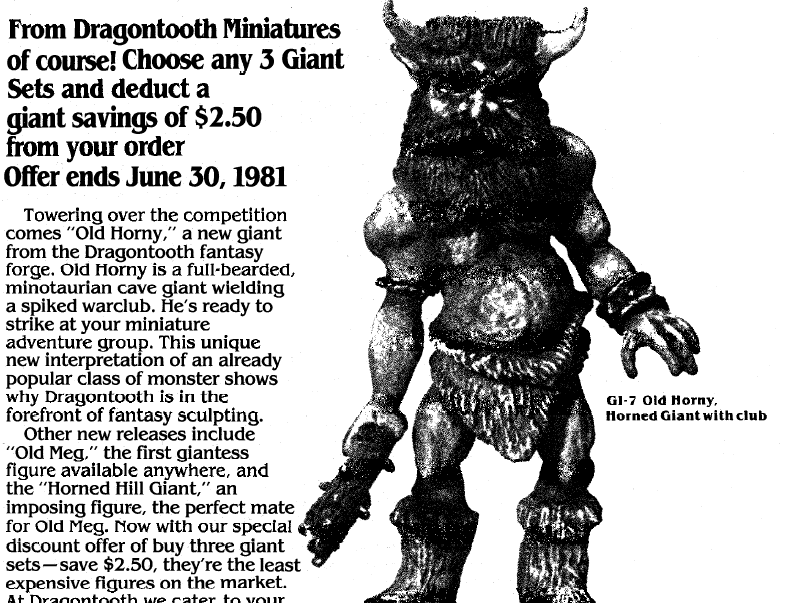
Old Horny indeed. Let’s hope those horns on his head were the source of his nickname. And here, keeping with the theme of this post, is Dragontooth Miniatures old location:

Or is it? A Hilton? I’m thinking perhaps the old building was torn down and replaced. That, or Conrad Hilton had a secret hobby.

The next few articles are a bit too timely to make sense to talk about here – GenCon is growing, , GenCon East fills the Origins ‘hole’ (I’m sure that’s not as filthy as it sounds) and there are nine ways to win the painting contest at GenCon.

Okay, enough of that convention stuff. Next up: Samurai!

This is an interesting take on the character class. The editor’s note mentions that the author, Anthony Salva, holds a first degree black belt in Hapkido. The class that follows is heavily influenced by this, and it’s really a bit more like an alternate monk than the samurai most people would expect.

That said, it’s a pretty groovy class. It’s tough to make it in – you need Str 15, Dex 17 and Int 15 to qualify, but the class is open to gnomes, halflings, elves, half-elves and humans.

This version of the samurai cannot use armor, but his AC improved by 1 per 4 levels. They can use two-handed swords, short swords, bows and staffs, and a samurai of 4th level or higher can obtain his “personal weapons”, which are sacred to him. It mentions the weapons of honor – “Katana, Wakizashi and Nunchakos” are described later in the article.

Apparently Dragon Magazine got there first. Source

The samurai’s special abilities are as follows: Jump front kick (-3 to hit, 2d6 damage), judo throw, ceremony of fealty-weapons of honor (4th level; and here it mentions that katana do 1d12 or 1d10 damage, wakizashi 2d4 or 1d8 and nunchako 1d8 damage), sweep and double chop (5th level), crescent kick/side kick combination, back roundhouse kick, illusionist spell ability (8th level), “360” and downward kick, the slaying hand (10th level), flying side kick (requires movement, -3 to hit, 1d20 damage) and a samurai who becomes a shogun (13th level) has a 25% chance to obtain 30 psionic power points. They go on a bit later to mention they can reduce falling damage, hide in shadows and move silently as a thief, and can dive and roll over obstacles.

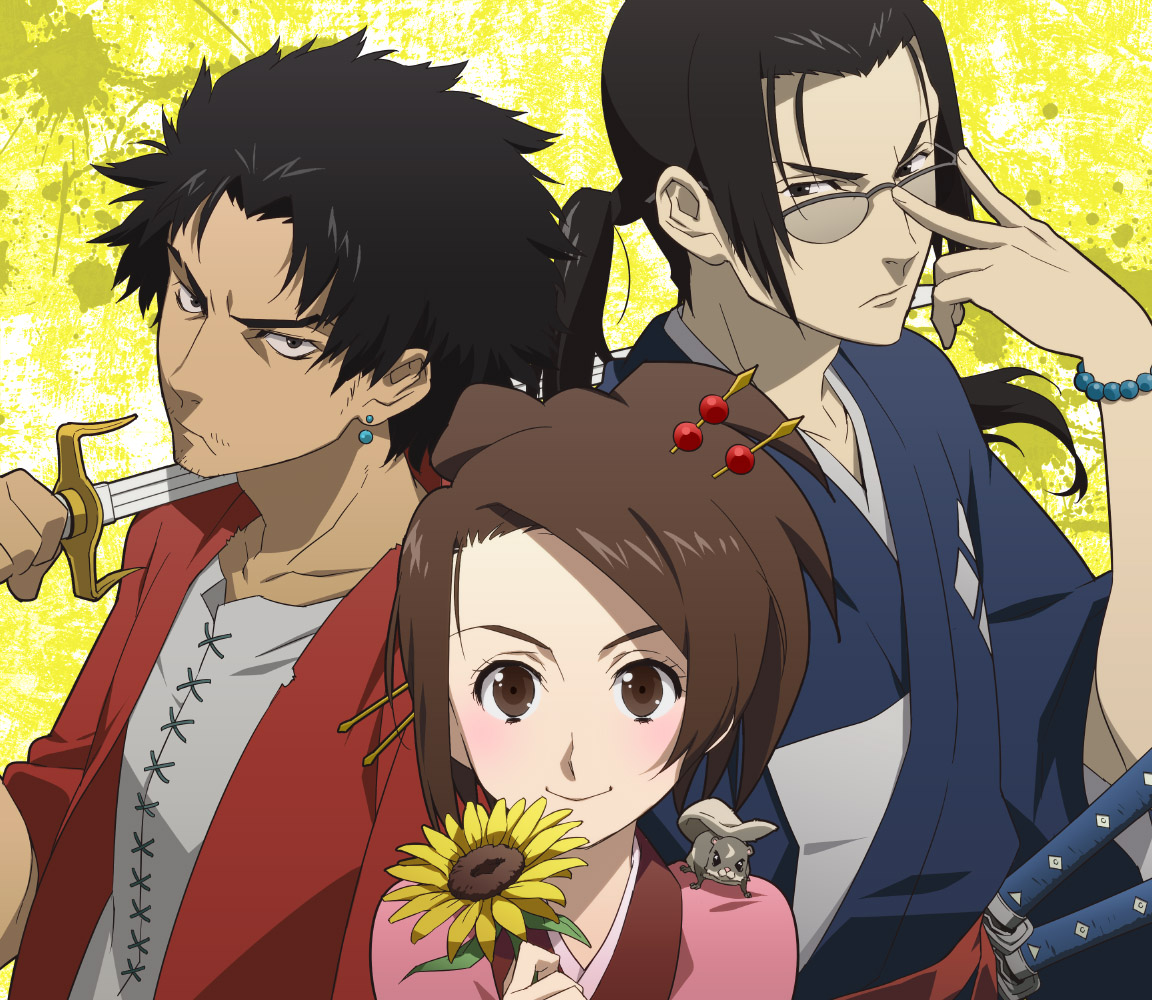
This class would probably be a blast to play, especially as a gnome. I’ve often thought that the monk would make a pretty good “cartoon hero” class, and this version of the samurai has me thinking of Samurai Champloo and other anime samurai. If anyone has experience with this class, please drop a note down below and let us know how it went.

Merle Rasmussen now brings us a nice Top Secret article about special ammunition – armor-piercing, dumdum, gyrojet, duplex, etc. Lots of stats (and I mean lots with a capital “L”), but probably useful info for other games as well.

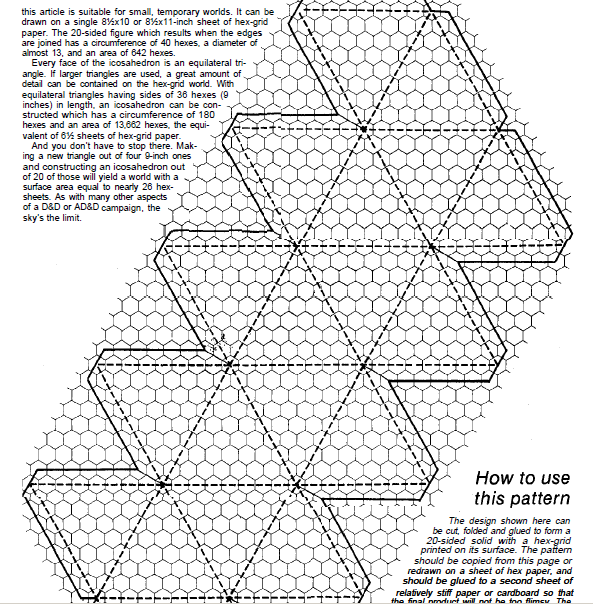
Karl Horak has an article called “Getting a world into shape”, which gets into different shapes for campaign worlds, as in cylinders, polygons, etc.If you want a campaign world in the shape of a 20-sided die, this is the article for you.

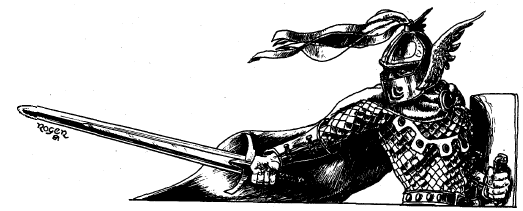
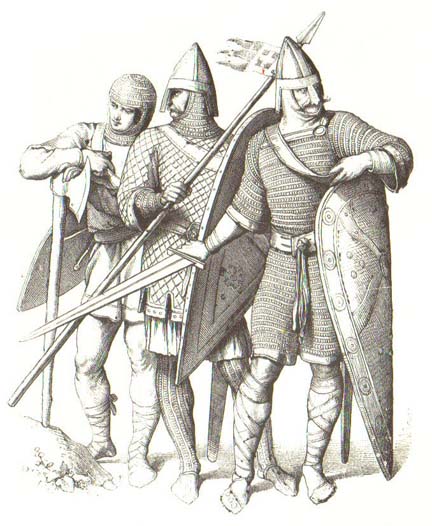
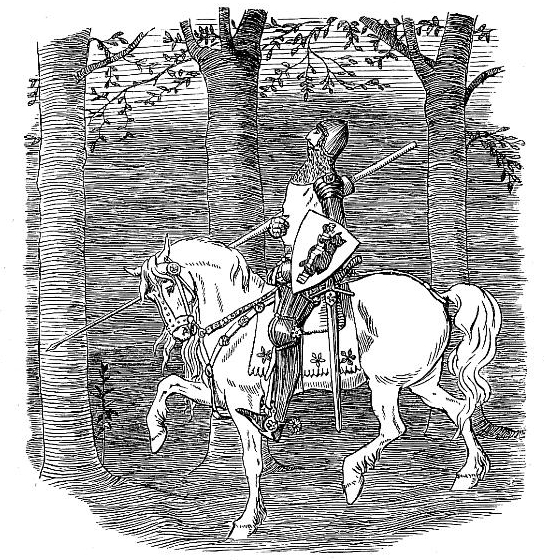
Giants in the Earth in this issue presents some Poul Anderson characters – Holder Carlsen (14th level paladin) and Hugi (5th level gnome fighter). The art by Roger Raupp is great:

He’s always fantastic with knights and warriors. The article also has stats for T. J. Morgan‘s Ellide (6th level fighter)

G. Arthur Rahman has an article on historical names – Anglo-Saxon, Byzantine, etc. Very useful then, less so now with the resources of the internet at one’s disposal.

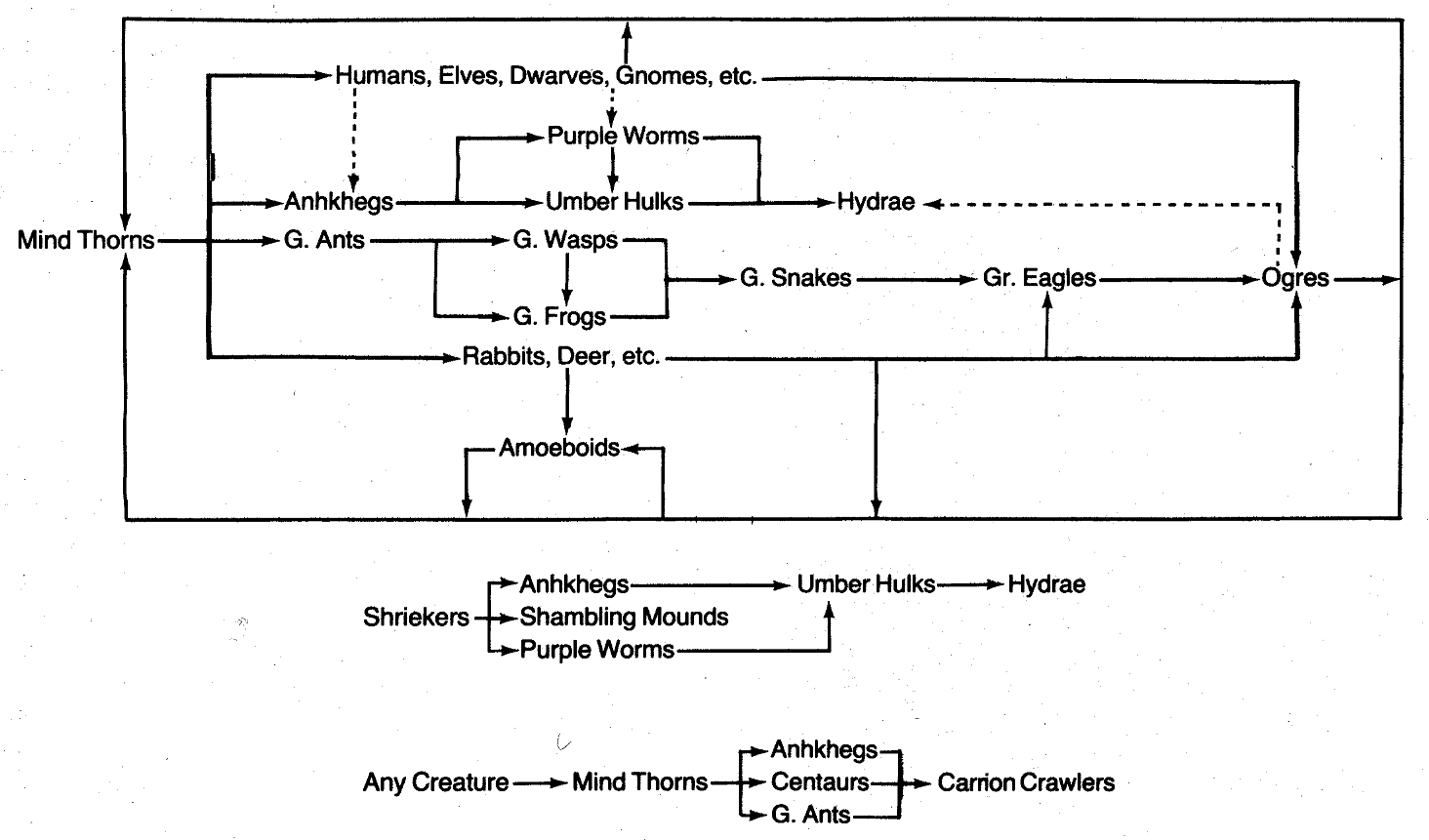
Jon Mattson‘s article “Monster mixing – AD&D creatures adapted to a C&S campaign” show that Dragon was not yet the house organ for TSR that it would become (though it always had more outside content than White Dwarf once it became GW’s house organ). While the article is quite useful for players of Chivalry & Sorcery, it also has an interesting piece at the end – a flowchart of AD&D monster predation:

And now you know.

Up next in the magazine is the section on Tim Hildebrandt‘s art. I’d post some images (aside from the cover above), but a Google search (or clicking on the artist’s name up above) will do you more good these days. Take a look – I think you’ll like what you see. I will post this quote from the interview with the artist:

“One thing leads to another thing leads to another thing and you start growing and growing. Things keep expanding, and the more I do myself, the more I see that there is to learn.”

Lots of wisdom in those words.

The Dragon’s Bestiary in this issue features the Loren Kruse’s Nogra (“a small creature with long, sharp claws which somewhat resembles a hairless lynx”). The basic stats for Blood & Treasure are below:

Nogra, Small Magical Beast: HD 2, AC 15, ATK 1 bite (1d4), MV 20′, SV F12 R11 W15, INT Low, AL Neutral (N), XP 200 (CL 3), Special-Body secretes a substance which absorbs all light (including into the infrared and ultraviolet spectrums), liquid is also a contact poison (save or blinded for 2d4 rounds), light sensitivity

Leonard Lakofka has a new class for this issue (which hopefully doesn’t do halflings wrong) called the Alchemist. Another old Dragon classic. It seems like such an obvious class for D&D, but it’s tricky. My version was essentially Dr. Jekyll, to give it a twist and make more than a guy who isn’t remotely as useful as a magic-user. Lakofka’s is, in fact, not an adventurer.

Lakofka’s alchemist has to have Str 9, Int 10, Wis 6, Dex 9, Con 14 and Cha 16 to qualify, and they must be human, elf or half-elf, with only the humans hitting the highest levels. They only earn XP by “plying their trade”, not adventuring. They can make pottery, blow glass, identify potions, manufacture poisons and manufacture magic potions. It’s a useful class, and could be adjusted to be an adventurer, but as a non-adventuring NPC I’m not sure why one needs to go to the trouble of having levels. It seems like a “novice-veteran-master” approach would work just as well, or even just “the alchemist can do what the DM to needs her do” concept. That being said, Lakofka always puts a lot of work into these things, and his alchemist is no different and thus is worth the read.

Gary Snyder now gets into the weeds on the issue of wishes and how to adjudicate them. This brings up a great point about fantasy gaming and gamers. I’ll often be watching some TV show or movie and think, “That plot element would never work in a game – the players would kill that guy in a heartbeat / or they would never touch that statue, ’cause statues are always trouble in a dungeon.” The idea of wishes probably seemed so simple when the game was first written, and then creative players got hold of the concept and made DM heads explode. Snyder gives ten rules to keep wishes in check which have largely been adopted into the game.

It’s followed up by a short article/story about wishing by Roger E. Moore.

Paul Montgomery Crabaugh has an artcle about travel and clothing in DragonQuest.

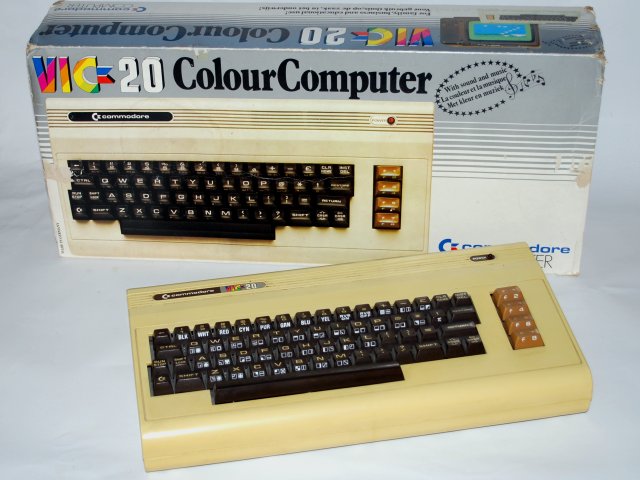
If you need a time keeper program in BASIC, Mark Herro has you covered in this month’s The Electric Eye. Blast from the past to see those IF … THEN statements and GOTO commands. I learned BASIC on a VIC-20, which is actually still sitting in my closet.

Side note – I love this Grenadier miniature …

Great sculpt

Side note II – A bit of Wormy

And now on to White Dwarf 25, the June/July 1981 issue. I’ll keep this one brief, and just cover the bases:

Lewis Pulsipher has the third part of the Introduction to D&D series, covering spellcasters. Great art in this one.

Trevor Graver has Optional Skill Acquisition for Travellers. This one ditches the random tables (which are pretty cool) for a skill point system. Control vs. Chaos, the eternal struggle in game design.

Roger Musson has a nice article on The Interesting Dungeon – worth the read.

Tony Chamberlain & Paul Skidmore have an interesting “clerical AD&D skirmish for a large number of players” called Lower Canon Court. This is another one that would probably be fun to play with a big group on Google+.

This issue has some clever magic items – the bowl of everlasting porridge, the bell of watchfulness – a notion on determining handedness in games by Lew Pulsipher (left-handed males 8%, females 4%), and Roger E. Moore has a bit on fake torture items.

Andy Slack has Vacc Suits in Traveller.

Dream Demon!

The Fiend Factory this issue is themed The Black Manse, and has stats for Dream Demons (which are really cool) by Phil Masters, the Incubus by Roger E. Moore, Brain Suckers by John R. Gordon and the Guardian by Simon Tilbrook. As always, the art is top notch. It’s a shame there was never a Fiend Folio II – so many great monsters were left behind.

Lewis Pulsipher‘s second article this issue is on “What Makes a Good AD&D Character Class”. I would answer – people want to play it and it doesn’t screw up the game. This is pretty much what he says, focusing especially on the class not being overpowering. His example of an overpowering class makes me actually want to create it – The Guardian class he posits can listen at doors, use x-ray vision, become ethereal and has a psionic boomerang defense that kills some mind flayers. I dig it.

And that’s that … Have fun on the internet!

Spell Hooks

I’ve been busy editing Blood & Treasure Second Edition for the last couple weeks, a great deal of that time spent on the spells. I’m trying to streamline them wherever possible, and there are plenty of them to edit.

While doing so, it’s occurred to me how many of them are really more NPC spells than PC spells. That’s not to say they cannot be used by PCs, but they often require more forethought than most players can realistically use (i.e. they are meant for plots, rather than reactions to plots), and they are not as action oriented as most PCs need in dungeon delving.

These NPC spells are useful for GM’s to use as adventure hooks or encounters. Here are three such ideas:

Magic Jar

Magic jar is a natural, but I don’t know that is sees much use as an adventure hook. An evil magic-user hides his essence in some vessel, and uses it as a base of operations for possessing the adventurers or their henchmen, slowly picking them off, one by one, until they are destroyed.

The plan would work as follows: There’s a plain vessel in one of the rooms of a dungeon. It’s plain so the adventurers leave it alone. An evil magic-user has used it as a magic jar. When adventurers first enter the room, he possesses one of the henchmen, grabbing the vessel before he leaves. He using the form to spy on the party, maybe steal something, maybe put one or more adventurers or henchmen in mortal peril in a way that is not obviously his fault. Since the henchman is carrying the vessel with him, the magic-user can possess others, slowly tearing the party apart from the inside. Perhaps he is ultimately leading them to their doom elsewhere, where he can leap back into his own preserved form.

Secret Chest

In this scenario, an adventurer moving on the Ethereal Plane stumbles (literally) across a secret chest that was abandoned there long ago. The chest is hard to open, and probably contains something dangerous that was never meant to be found or released.

Simulacrum

The adventurers are hired by a simulacrum (they don’t know this) for a mission to rescue the original magic-user. The simulacrum has 50% of the original’s experience and knowledge, so she’s useful in the party, but not too useful, and there are important gaps in her knowledge that relate to finding the original.

Here’s the rub. The original is in mortal peril, and will die before rescued. The original is also evil, and on a very dangerous mission. After the original dies, the simulacrum begins gaining more experience and knowledge, and begins to gain the evil alignment of the original. Now, the simulacrum is leading the adventurers into a trap, where she can sacrifice them to gain the immense power the original was after.

The Wages of Fame

William Tell

I’ve seen a few systems in games for measuring the reputation or fame of adventurers. They make sense, to some extent – folks spending their kind of money and killing monsters the way they do should be pretty well known in a campaign area. But should they? And how? And what do they get from it? And why am I asking so many questions? Huh?

Here’s an idea for handling fame without adding too much in the way of rules or complications. It might suck, but here it is anyways.

Accumulating Fame

How do people become famous in a medieval milieu? For the purposes of D&D and similar games, it makes sense to tie fame to deeds. Hey, if Bob jumps over a cow at the local faire, people in the village will know that Bob is famous for jumping. They’ll tell others, and maybe for several villages around Bob will be known as “the jumper”. So it goes with adventurers.

Since fame is tied to deeds, it also makes sense that fame is tied to XP. XP are handed out for deeds, therefore XP equals fame.

Or does it?

In our example above, everyone saw Bob jump over the cow. If Bob had done it without witnesses, and just claimed to have jumped over a cow, he might have become known as Bob the Liar rather than Bob the Jumper. So, in this system, XP only turn into fame when the deeds that generated the XP are either witnessed by the public at large, or can be proved. If you want to use this system, you’ll need to put a second XP number in parentheses after the normal XP number.

You accumulate these “fame XP” by doing things in front of people, or you need to spend or display the treasure you looted, and you need to bring back trophies (at least one really good one, the gorier the better) to show that you defeated monsters or black knights or wizards. If you do these things, you count those XP towards your fame level.

Since we have a separate “fame XP”, we also have a separate “fame level”. For simplicity’s sake, use the Fighter’s XP progression in your game as the Fame XP progression.

Fame levels are as follows:

The Upside of Fame

So, what do these fame levels get you?

First level fame is worth nothing.

From 2nd level onward, they enjoy the following benefits:

1) They have a percent chance of drinking for free and picking up interesting rumors in taverns

2) They have a percent chance of getting an invite to dine with notables equal to their fame level, the chance depending on the size of the settlement

3) You can employ an extra number of henchmen equal to your fame level, and their base loyalty is increased by a number of percentage points equal to your fame level

4) You can request audiences with princes, kings, emperors, high priests, etc. You have half this chance of requesting a boon in exchange for a favor, and a percent chance equal to your fame level of requesting a boon in exchange for nothing

The Downside of Fame

Fame has a downside as well. When you enter an area, your fame might proceed you. You can cut the chances of being recognized by wearing a disguise and using a different name, but lose the benefits of fame (see above) if you do so. Here’s a twist – if you are moving in a group and not everyone in the group is disguised, your chances of being noticed are increased by 5% per undisguised person.

If you are recognized, one of the following happens:

Challenges: You will be challenged to a duel (magical or martial) or test of skill by other notables in the area. This will be public. Losing these challenges actually reduces your fame XP level by as much as it would have increased if you had won.

Quests: If you are neutral or lawful (good), and there’s trouble afoot, you will be asked to handle it. If people have been kidnapped or there are monster’s raiding the area, you are expected to solve it. If you refuse, you lose enough XP to take you down a fame level. You suffer the same consequences if you fail at the quest.

Justice: If you are chaotic (evil), you are set upon by the authorities in the area, or bounty hunters or people you wronged in the past. In other words, being famous and evil means being hunted.

For this reason, characters might discover that fame is a double-edged sword.

Death

Nobody wants to die, but dying famous is probably better than dying unknown for an adventurer. When a character dies, the following happens:

6% chance per fame level of a folk song being composed in their honor

4% chance per fame level of a biography being written about them

2% chance per fame level of a monument being erected where they died or a civilized place nearby

For clerics, druids and paladins, there is a 1% chance of them being canonized

Now, total these honors received. This is the percent chance (thus, maximum 4%) that upon death they are received by “the gods” into their company as a quasi-deity. They can still be used as PC’s, with powers deemed suitable by the DM, but only in the company of other quasi-deities or demi-deities and the like. Congratulations!

Man-At-Arms-A-Rama

When I get half a second (after Blood & Treasure Second Edition and NOD 29 and Mystery Men! Second Edition), I want to write a quick book called 200 Lines about 100 Men-At-Arms. A nice random selection of folks, with some tables for names, and such. I took the time to peruse a whole crap load of Osprey plates featuring different warriors throughout time, and thought, in the meantime, I’d share how those men-at-arms were equipped.

So here’s over 400 men-at-arms and their equipment, arranged by time period (-35c means 35th century BC, 5c means 5th century AD, and I’m sure you can figure it out from there). Use them as henchmen or randomly encountered warriors or random starting gear for fighters or whatever else you can think of. If you have a d408 you’re golden. You could also roll 1d5, then either 1d100 or 1d8 to generate a random man-at-arm.

1. Sumerian heavy footman -35c Shield, spear
2. Nubian warrior -30c Shortbow, club, 20 arrows
3. Philistine heavy footman -30c Banded cuirass, short sword
4. Semite archer -19c Shortbow, battleaxe, 20 arrows
5. Syrian archer -14c Shortbow, 20 arrows
6. Hittite charioteer -13c Lamellar, shield, spear
7. Bedouin warrior -12c Sickle sword, 2 javelins
8. Sea People mercenary -12c Shield, spear, longsword
9. Egyptian heavy footman -12c Padded, shield, spear, curved knife
10. Egyptian heavy footman (ancient) -12c Shield, khopesh or battle axe
11. Libyan tribesman (ancient) -12c Short sword
12. Egyptian archer -12c Shortbow, 20 arrows
13. Nubian archer -12c Shortbow, 10 arrows
14. Sherdan warrior -12c Shield, short sword
15. Mycenaean noble -12c Dendra armor, tower shield, spear, short sword
16. Myceaean warrior, late bronze -11c Shield, battle axe, short sword
17. Myceaean warrior, late bronze -11c Shield, spear, short sword
18. Hittite warrior -9c Shield, spear
19. Assyrian footman -8c Shield, spear, dagger
20. Assyrian footman -8c Buckler, disc, spear, dagger
21. Assyrian footman -7c Shield, spear
22. Assyrian archer -7c Shortbow, short sword, 10 arrows
23. Elamite archer -7c Shortbow, 20 arrows
24. Assyrian archer -7c Lamellar shirt, shortbow, dagger, 20 arrows
25. Assyrian footman -7c Lamellar shirt, tower shield, spear
26. Assyrian horseman -7c Lamellar shirt, short bow, spear, dagger, 20 arrows
27. Assyrian royal guardsman -7c Lamellar shirt, shield or tower shield, spear
28. Persian immortal footman -6c Scale cuirass, shield, hand axe
29. Greek hoplite -5c Linothorax armor, shield, spear, dagger
30. Etruscan officer -5c Shield, disc, falchion
31. Sindo-Meothic nobleman -5c Lamellar, shield, spear, short sword, dagger
32. Scythian nobleman -5c Leather, short bow, short sword, 20 arrows
33. Scythian noblewoman -5c Leather, short bow, short sword, 20 arrows
34. Scythian heavy horseman -5c Lamellar, composite bow, horseman’s pick, 2 javelins
35. Companion horseman (Alexander the Great) -4c Light lance, short sword
36. Companion officer (Alexander the Great) -4c Scale shirt, light lance, short sword
37. Libyan archer -4c Shortbow, 10 arrows
38. Phoenician marine -4c Padded cuirass, shield, falchion, 3 javelins
39. Persian horseman -4c Battleaxe
40. Persian horseman -4c Short sword, 3 javelins
41. Persian footman -4c Shield, spear
42. Persian royal footman -4c Shield, spear, composite bow
43. Thracian heavy horseman -4c Breastplate, short sword, 2 javelins
44. Thracian light horseman -4c Buckler, 2 javelins, short sword
45. Thracian footman -4c Shield, 2 javelins, short sword
46. Thracian horseman -4c Breastplate, shield, light lance, short sword
47. Getic heavy horseman -4c Lamellar, light lance, short sword
48. Getic horse-archer -4c Composite bow, short sword, 20 arrows
49. Prodromoi horseman -3c Light lance
50. Footman -3c Battleaxe, short sword
51. Foot companion -3c Shield, spear, short sword
52. Iberian footman -2c Mail/scale shirt, spear, short sword
53. Iberian footman -2c Mail/scale shirt, shield, spear
54. Iberian horseman -2c Mail/scale shirt, buckler, light lance, short sword, barding
55. Liby-Phoenician heavy footman -2c Mail shirt, shield, spear, short sword
56. Gaul footman -1c Mail shirt, shield, longsword, spear, javelin
57. Gaul horseman -1c Longsword
58. Parthian horse-archer -1c Composite bow, 10 arrows
59. Western Han spearman -1c Lamellar breastplate, spear
60. Western Han swordsman -1c Lamellar breastplate, buckler, long sword or short sword
61. Western Hand crossbowman -1c Heavy crossbow
62. Roman warrior 1c Banded cuirass, shield, short sword, dagger, spear
63. Celtic light footman 1c Buckler, longsword
64. Han lancer 1c Lamellar breastplate, light lance, longsword
65. Han mounted archer 1c Composite bow, 10 arrows
66. Myrmillo (gladiator) 2c Shield, short sword
67. Dacian warrior 2c Scale shirt, shield, short sword
68. Persian cataphract 2c Banded mail, light lance, longsword, barding
69. Armenian cataphract 2c Chainmail + lamellar, light lance, longsword, barding
70. West Sassanian armored horseman 2c Mail shirt, composite bow, light lance, longsword, barding
71. Kushan footman 2c Scale shirt, shield, spear, short sword
72. Eastern Han archer 2c Short bow, 20 arrows
73. Vietnamese Auxiliary 2c Scale shirt, buckler, spear
74. Eastern Han armored foorman 2c Shortbow, short sword, 20 arrows
75. East Parthian cataphracts 3c Lamellar, light lance, composite bow, longsword
76. Parthian horse-archer 3c Composite bow, dagger
77. Clibanarius from Ahwaz 3c Mail shirt, composite bow, spear, short sword, barding
78. Three Kingdoms armored horseman 3c Scale shirt, light lance, composite bow, longsword
79. Three Kingdoms Northwest rebel footman 3c Shield, spear
80. Northern Han Dynasty catapract horseman 4c Scale, light lance, longsword, barding
81. Northern Han Dynasty armored archer 4c Scale breastplate, composite bow, 10 arrows
82. Sassanid Persian cataphract 4c Lamellar, light lance, composite bow, barding
83. Tanukhid auxiliary horseman 4c Spear, short sword
84. Alamannic warrior 4c Shield, spear, short sword, throwing axe, dagger
85. Visigoth 4c Shield, short sword, spear, javelin
86. Japanese footman 4c Lamellar breastplate, shield, spear, short sword
87. Japanese foot commander 4c Lamellar breastplate, spear, short sword
88. Hun warrior 4c Scale, spear, scimitar, composite bow, 20 arrows
89. Roman horse officer 4c Scale, shield, short sword
90. Roman sailor, Saxon short fleet 4c Short sword
91. Roman horseman 5c Mail shirt, shield, longsword, light lance
92. Roman foot officer 5c Shield, spear, longsword
93. Aksumite warrior 5c Shield, spear, short sword
94. Frankish 5c Mail shirt, buckler, short sword, spear
95. East Sassanian horseman 5c Composite bow, longsword, 10 arrows
96. Han tribal leader 5c Lamellar breastplate, composite bow, longsword
97. Ephthalite nobleman 5c Longsword
98. Saka horseman 5c Shield, longsword
99. Kushan nobleman 5c
100. Tashtyk tribesman 5c Lamellar shirt, shield, longsword, composite bow
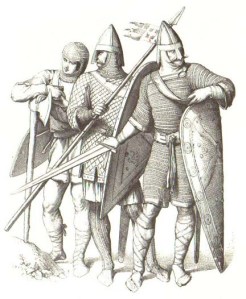
101. Hsing-nu horseman 5c Padded + lamellar, composite bow, light lance, scimitar
102. Japanese clansman (footman) 6c Lamellar, spear, longsword
103. Lakhmid elite horseman 6c Mail shirt, composite bow, scimitar
104. Byzantine footman 6c Scale shirt, shield, longsword
105. Sassanid clibanarius 6c Lamellar, shield, footman’s mace, longsword, barding
106. Sassanid war elephant 6c Driver, archer (scale shirt, composite bow), warrior (mail shirt, 7 javelins)
107. Nomadic Iranian horse-archer 6c Composite bow, short sword, light lance
108. Chionite-Ephthalite horse-archer 6c Buckler, composite bow, 3 javelins, 20 arrows
109. Byzantine footman 6c Chainmail + lamellar, shield, longsword
110. Northern Ch’I Dynasty armored footman 6c Leather, shield, longsword
111. Northern Wei Dynasty frontier guard 6c Padded armor, shield, spear
112. Sui Dynasty guardsman 6c Breasplate, greatsword
113. Liang Dynasty armored horseman 6c Scale, light lance, longsword, composite bow, barding
114. Liang Dynasty swordsman 6c Shield, longsword
115. Arab footman 7c Mail shirt, shield, spear, short sword
116. Persian horse-archer 7c Leather coat, composite bow, longsword, dagger, 10 arrows, barding
117. Avar heavy horseman 7c Lamellar, light lance, scimitar, barding
118. Slavic tribal footman 7c Shield, handaxe, 2 javelins
119. Sassanian aswar in Yemen 7c Lamellar shirt, shield, longsword
120. Sassanian aswar officer in Oman 7c Mail shirt, composite bow, longsword, light lance
121. Arab boy warrior 7c Shortbow, 5 arrows
122. Khurasani heavy horseman 7c Lamellar, buckler, light lance, scimitar, composite bow, barding
123. Sassanid clibanarius 7c Chainmail, buckler, light lance, barding
124. Umayyad elite horseman 7c Chainmail + lamellar, shield, light lance, longsword
125. Umayyad light horseman, Egypt 7c Light lance, longsword
126. Pictish horseman 7c Scale shirt, spear, short sword, 3 darts
127. Pictish footman 7c Buckler, short sword, spear, 3 javelins
128. Iberian horseman 8c Mail shirt, shield, light lance, longsword
129. Arab officer 8c Shield, longsword
130. Ghulum cavalry guardsman (Abbasid Empire) 8c Composite bow, dagger, 40 arrows
131. Abna footman (Abbasid Empire) 8c Mail shirt, 2 javelins, dagger
132. Transoxanian Turk horseman 8c Lamellar shirt, scimitar, composite bow, 10 arrows
133. Umayyad infantry guardsman 8c Mail shirt, shield, spear
134. Umayyad infantry guardsman 8c Scale, shield, longsword
135. Umayyad cavalry guardsman 8c Buckler, light lance
136. Umayyad infantry archer 8c Composite bow, footman’s mace
137. Japanese footman 8c Padded, short sword
138. Khirgiz horseman 9c Lamellar breastplate, shield, light lance, scimitar
139. Khirgiz tribal horseman 9c Lamellar breastplate, light lance, longsword, composite bow, 10 arrows
140. Khirgiz tribesman (mounted) 9c Lamellar, longsword, composite bow, barding
141. Alan nobleman 9c Composite bow, scimitar, dagger, 10 arrows
142. Khazar horseman 9c Chainmail, light lance, hand axe, scimitar
143. Khwarazm Muslim mercenary 9c Mail shirt, shield, spear, dagger
144. Berber footman 9c Lamellar, buckler, longsword, spear, 2 javelins
145. Sindi horseman 9c Buckler, battleaxe
146. Transoxanian horse-archer 9c Lamellar, buckler, spear, longsword, composite bow
147. Egyptian horseman 9c Scale, spear, hand axe, longsword
148. Eastern Kiev tribal warrior 9c Padded, spear
149. Scandinavian merchant-venturer 9c Mail shirt, shield, battleaxe
150. Eastern Magyar horseman 9c Lamellar, buckler, light lance, longsword
151. Japanese sohei 10c Naginata, scimitar
152. Hamdanid horseman 10c Scale shirt, shield, light lance, short sword
153. Muslim-Armenian frontiersman 10c Padded, shield, battleaxe
154. Malatya frontier warrior 10c Padded, shield, short sword
155. Saljuq Turcoman horse-archer 10c Buckler, composite bow, 10 arrows, scimitar
156. Bedouin auxiliary 10c Buckler, short sword
157. Arab tribesman 10c Buckler, light mace, dagger
158. Varangian guard 10c Chainmail, lamellar, shield, battleaxe, longsword, dagger
159. Nubian footman 10c Padded, shield, spear
160. Rus mercenary 10c Shield, poleaxe, longsword
161. Scandinavian mercenary 10c Scale shirt, shield, spear, short sword, dagger
162. Anglo-Danish warrior 10c Short bow, battleaxe, dagger, 10 arrows
163. Byzantine skutatos 10c Scale shirt, shield, spear, short sword
164. Byzantine peltastos 10c Padded, shield, spear, 2 javelins, short sword
165. Byzantine skutatos 10c Lamellar/mail, shield, spear, short sword
166. Azerbaijan footman 10c Lamellar, shield, spear, scimitar
167. Byzantine cataphract (klivanophoros) 10c Chainmail, buckler, light lance, battleaxe, longsword, barding
168. Byzantine footman 10c Padded, shield, hand axe
169. Byzantine scutatoi spearman 10c Chainmail + scale, shield, spear
170. Andalusian footman 10c Padded, buckler, spear, short sword
171. Berber-Andalusian light horseman 10c Buckler, spear
172. Byzantine kataphractos 10c Chainmail + lamellar, shield, longsword, dagger
173. Khazar-Kagan horseman 10c Composite bow, longsword or warhammer
174. Saxon housecarl 11c Chainmail, shield, longsword, pole axe
175. Andalusian horseman 11c Chainmail, buckler, spear, short sword
176. Andalusian infantry archer 11c Mail shirt, composite bow, 20 arrows
177. German knight 11c Chainmail, shield, longsword
178. Norman knight 11c Chainmail, shield, light lance, longsword
179. Bohemian footman 11c Padded, shield, spear, longsword
180. Polish heavy horseman 11c Scale, shield, light lance, longsword, hand axe
181. Italo-Norman mercenary horseman 11c Chainmail, shield, light lance, longsword
182. Italo-Norman mercenary footman 11c Scale mail, shield, longsword
183. Northern Italy horseman 11c Chainmail, shield, longsword, light lance
184. Northern Italy urban militia 11c Chainmail, shield, spear
185. Northern Italy rural militia 11c Footman’s mace, dagger
186. Hiberno-Norse jarl 11c Spear, javelin, short sword
187. Varangian guardsman 11c Chainmail, shield, poleaxe, longsword
188. Kiev commander 11c Lamellar, longsword, light mace
189. Kiev warrior 11c Lamellar, shield, longsword
190. Kiev urban militiaman 11c Shield, battleaxe
191. Fatimid Caliphal guard 11c Mail shirt, shield, longsword, 2 javelins
192. Sahara tribal horseman 11c Spear
193. Fatimid horseman 11c Lamellar shirt, buckler, spear
194. Fatimid urban militiaman 11c Padded, buckler, glaive
195. Byzantine kataphractos 11c Scale shirt, shield, pike, longsword
196. Japanese sohei 12c Lamellar, glaive, short sword
197. Italo-Norman nobleman 12c Chainmail, shield, light lance, longsword
198. Sicilo-Norman crossbowman 12c Chainmail, light crossbow, short sword, 10 bolts
199. Sicilian reduta 12c Scale shirt, spear, dagger
200. Byzantine skutatos 12c Scale shirt, shield, spear, short sword
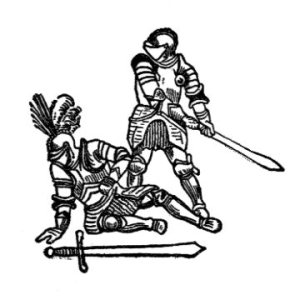
201. Norwegian backwoodsman 12c Padded, shield, longsword
202. Swedish crossbowman 12c Lamellar, shield, spear, light crossbow, 20 bolts
203. Norwegian knight 12c Chainmail, shield, longsword
204. Danish knight 12c Chainmail, shield, longsword
205. Danish footman 12c Mail shirt, shield, longsword
206. Danish militia footman 12c Mail shirt, shield, battleaxe
207. Volga Bulgar horseman 12c Mail shirt, light lance, scimitar, hand axe
208. Kipchaq horseman 12c Mail shirt + lamellar, composite bow, scimitar, 10 arrows
209. Seljuk mercenary footman 12c Mail shirt, buckler, horseman’s mace, longsword
210. Lotharingian footman 12c Mail shirt, shield, longsword
211. German knight 12c Chainmail, shield, longsword
212. Heavy footman 12c Chainmail, shield, spear, longsword
213. Veronese footman 12c Chainmail, shield, spear, longsword
214. German knight 12c Chainmail, shield, light lance, longsword
215. Italian knight 12c Chainmail, shield, horseman’s mace, longsword
216. Milanese footman 12c Shield, falchion
217. Seljuk horse-archer 12c Composite bow, longsword
218. Bedouin warrior 13c Mail shirt, buckler, spear, short sword
219. Mongol light archer 13c Padded, composite bow, scimitar, 20 arrows
220. Mongol heavy horseman 13c Lamellar, shield, scimitar, horseman’s mace, hand axe, barding
221. Iraqi footman 13c Chainmail, spear, short sword
222. Anatolian footman 13c Mail shirt, shield, spear
223. Anatolian horseman 13c Chainmail, composite bow, horseman’s axe, curved knife, 10 arrows
224. Ghulam heavy horseman 13c Chainmail + lamellar, shield, spear, short sword
225. Western Russian horseman 13c Chainmail + lamellar, shield, longsword, 3 javelins
226. Boyar nobleman 13c Chainmail, longsword
227. South-Eastern Russian horseman 13c Chainmail, shield, composite bow, scimitar, 10 arrows
228. Khwarazmian horseman 13c Chainmail + lamellar, light lance, short sword, composite bow, barding
229. Mamluk askari 13c Shield, longsword
230. Mamluk askari horseman 13c Shield, spear
231. Mamluk amir 13c Chainmail, buckler, spear, longsword
232. Mamluk askari 13c Buckler, composite bow, longsword, 10 arrows
233. Sicilian Saracen archer 13c Padded shirt, shortbow, 10 arrows, longsword
234. Sicilian Saracen archer 13c Padded shirt, buckler, shortbow, 10 arrows, longsword
235. Sicilian Saracen horse-archer 13c Shield, composite bow
236. Sicilian crossbowman 13c Light crossbow, dagger
237. Syrian amir 13c Chainmail, longsword
238. Templar knight 13c Chainmail, buckler, light lance, longsword
239. Tunisian Berber bodyguard 13c Lamellar breastplate, shield, spear, longsword
240. Turcoman auxiliary footman 13c Buckler, battleaxe
241. Turkish archer 13c Composite bow
242. Knight 13c Chainmail, buckler, longsword
243. Almohad elite warrior 13c Mail shirt, shield, footman’s mace, longsword, dagger
244. Danish sergeant 13c Mail shirt, shield, longsword, spear
245. Danish rural levy 13c Mail shirt, shield, battleaxe, short bow, 20 arrows
246. Danish knight 13c Chainmai, buckler, light lance, longsword
247. Russian crossbowman 13c Mail shirt, light crossbow, short sword
248. Urban militiaman 13c Padded, shield, spear, longsword
249. Light foot archer 13c Padded, battleaxe, shortbow, 20 arrows
250. Knight 13c Chainmail, shield, longsword
251. Southern French sergeant 13c Chainmail, shield, battleaxe, longsword
252. French royal knight 13c Chainmail, shield
253. Southern French crossbowman 13c Padded, heavy crossbow, dagger
254. Braboncon knight 13c Chainmail, shield, longsword
255. Braboncon mercenary horseman 13c Padded, short bow, scimitar, 10 arrows
256. Cuman auxiliary footman 13c Chainmail, leather apron, shield, spear, longsword
257. French squire 13c Padded, dagger
258. Mongolian foot officer 13c Lamellar, composite bow, scimitar
259. Mongolian archer 13c Lamellar, composite bow, 10 arrows
260. Mongolian heavy mounted archer 13c Lamellar, composite bow, 10 arrows, barding, scimitar
261. Mongolian light mounted archer 13c Leather, composite bow, 10 arrows, scimitar
262. German knight 13c Chainmail, shield, longsword
263. German knight 13c Chainmail, leather apron, shield, bastard sword, longsword
264. Berber archer 13c Shortbow, dagger, 20 arrows
265. Berber horseman 13c Shield, light lance, short sword, dagger
266. Spanish crossbowman 13c Mail shirt, shield, light crossbow, short sword
267. Byzantine footman 13c Shield, scimitar
268. Epirote Byzantine footman 14c Mail shirt, shield, composite bow, scimitar, spear
269. Byzantine Bulgarian footman 14c Mail shirt, shield, spear, scimitar
270. Mamluk Khassaki horseman 14c Lamellar, shield, longsword
271. Amir’s mamluk horseman 14c Light lance
272. Halqa trooper horseman 14c Lamellar breastplate, composite bow, handaxe, 10 arrows
273. Mamluk horse-archer 14c Padded, buckler, composite bow, 10 arrows, scimitar
274. Mamluk heavy horseman 14c Lamellar, battleaxe, short sword
275. Mongol refugee footman 14c Lamallar shirt, composite bow, spear, 10 arrows
276. Grenadine mounted crossbowman 14c Light crossbow, dagger
277. Grenadine qadi 14c Longsword, holy book
278. Grenadine light horseman 14c Mail shirt, buckler, spear, longsword
279. Hussite footman 14c Padded, shield, godentag, longsword
280. Hussite handgunner 14c Padded, shield, handgonne, longsword, dagger
281. French crossbowman 14c Mail shirt, shield, medium crossbow, dagger
282. French militiaman 14c Chainmail, shield, footman’s mace, dagger
283. Southern French light footman 14c Mail shirt, buckler, longsword, dagger
284. Serbian auxiliary horseman 14c Mail shirt + lamellar, composite bow, 10 arrows, light lance, longsword
285. Bulgarian auxiliary footman 14c Padded, composite bow, 10 arrows, scimitar, dagger
286. Western Russian light horseman 14c Chainmail + lamellar, shield, light lance, scimitar
287. Western Russian heavy horseman 14c Platemail, shield, bastard sword, barding
288. Novgorod urban horseman 14c Mail shirt, shield, battle axe, scimitar, composite bow
289. Turkish sipahi 14c Mail shirt, shield, horseman’s mace, composite bow, 10 arrows
290. Knight 14c Platemail, buckler, longsword
291. Swiss knight 14c Plate armor, heavy lance, longsword, dagger
292. Bohemian archer 14c Longbow, dagger, 20 arrows
293. German footman 14c Mail & plate, battleaxe, longsword, dagger
294. Central Italian horseman 14c Mail & plate, longsword, shield, dagger
295. German knight 14c Chainmail, longsword, shield, dagger
296. Catalan man-at-arms 14c Platemail, shield, longsword
297. North Italian footman 14c Mail shirt, shield, spear, dagger
298. North Italian crossbowman 14c Padded, buckler, light crossbow, short sword
299. Venetian footman 14c Mail & plate, shield, longsword
300. Lombard knight 14c Platemail, longsword, dagger
301. North Italian handgunner 14c Handgonne, dagger
302. Italian heavy footman 14c Platemail, glaive
303. Knight 14c Chainmail, shield, longsword, light lance
304. Footman 14c Chainmail, shield, spear, short sword
305. Crossbowman 14c Chain & scale, longsword, light crossbow, 10 bolts
306. English crossbowman 14c Mail shirt, heavy crossbow, dagger, 20 bolts
307. English archer 14c Padded, longbow, pole arm (guisarme), 20 arrows
308. Italian army commander 14c Chainmail, longsword
309. Austrian man-at-arms 14c Platemail, battleaxe, longsword, dagger
310. English bowman 14c Mail shirt, buckler, longbow, short sword
311. Footman 14c Platemail, shield, falchion, dagger
312. Byzantine light footman 14c Mail shirt, shield, spear, longsword
313. Byzantine horseman 14c Chainmail, shield, longsword, dagger
314. Golden Horde Mongol horseman 14c Lamellar, composite bow, scimitar, 20 arrows
315. English footman 14c Mail shirt, shield, bardiche, short sword
316. English footman 14c Mail shirt, shield, warhammer, short sword
317. English footman 14c Padded doublet, buckler, hand axe, dagger
318. West Anatolian footman 14c Chainmail, shield, spear, dagger
319. Ottoman Gazi 14c Lamellar, shield, composite bow
320. Turcoman tribal horseman 14c Padded, shield, composite bow, longsword
321. Timur’s cavalry officer 14c Chainmail, composite bow, light lance
322. Timur’s Tarkhan ‘hero’ 14c Platemail, composite bow, light lance, scimitar, barding
323. English longbowman 15c Unarmored, longbow, dagger, 40 arrows
324. Crossbowman 15c Padded, heavy crossbow, 10 bolts, shield, dagger
325. English archer 15c Mail shirt, longbow, longsword
326. Knight 15c Chainmail, shield, longsword, dagger
327. Handgunner 15c Mail shirt, handgonne, dagger
328. Mounted archer 15c Padded, longsword, short bow
329. Longbowman 15c Padded, dagger, longbow
330. Muscovite horse archer 15c Mail shirt, composite bow, scimitar, 20 arrows
331. Muscovite musketeer 15c Padded, musket, dagger
332. Muscovite officer 15c Platemail, buckler, scimitar
333. Danish man-at-arms 15c Platemail, longsword, dagger
334. Danish handgunner 15c Platemail, musket, warhammer
335. Danish militia crossbowman 15c Platemail, heavy crossbow, longsword, 10 bolts
336. Italian knight 15c Platemail, longsword, dagger
337. Italian light footman 15c Padded, shield, spear, longsword
338. Artilleryman 15c Padded, dagger, bombard
339. Eastern Russia horseman 15c Lamellar/mail, light lance, shield, scimitar
340. Eastern Russia prince on horse 15c Lamellar (gilded), longsword, dagger
341. Byzantine varangopoulos 15c Platemail, buckler, bastard sword
342. English guardsman 15c Chainmail, shield, pole axe, longsword
343. Cretan guardsman 15c Mail shirt, shield, spear, longsword
344. Knight 15c Plate mail, longsword
345. English man-at-arms 15c Plate armor, halberd, longsword
346. Knight 15c Plate armor, horseman’s mace, barding
347. Mounted crossbowman 15c Mail shirt, breastplate, light crossbow, longsword
348. Flemish mercenary footman 15c Platemail, pike, longsword
349. Ottoman-Balkan yaya 15c Padded, spear, scimitar, dagger
350. Ottoman footman 15c Chainmail, shield, hand axe, scimitar
351. Man-at-arms 15c Plate armor, glaive, longsword, dagger
352. Serbian knight 15c Platemail, shield, longsword
353. Balkan light horseman (stradiot) 15c Padded, buckler, light lance, scimitar
354. Balkan heavy horseman 15c Plate armor, scimitar
355. Balkan footman 15c Padded, shield, spear, longsword
356. Acemi Oglan 16c Musket, scimitar
357. Billman 16c Padded, billhook, longsword
358. Archer 16c Longbow, dagger
359. Soldier 16c Breastplate, polearm (guisarme), shortsword
360. Inca general 16c Shield, spear, light mace
361. Inca general 16c Spear, light mace
362. Inca warrior 16c Shield, battleaxe
363. Maya general 16c Spear
364. Maya warrior 16c Buckler, spear
365. Maya peasant levy 16c Buckler, sling
366. Aztec archer 16c Shield, shortbow
367. Aztec peasant levy 16c Shield, club, spear
368. Aztec allied captain 16c Pole arm
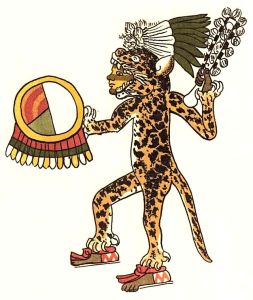
369. Mexica cuahchic 16c Buckler, obsidian axe-sword
370. Mexica warrior priest 16c Buckler, obsidian axe-sword
371. Triple Alliance warrior 16c Padded shirt, buckler, obsidian axe-sword
372. Triple Alliance jaguar warrior 16c Padded, buckler, obsidian axe-sword
373. Aztec soldier 16c Buckler, spear
374. Mexica captain 16c Padded, buckler, obsidian axe-sword
375. Spanish tercio 16c ¾ plate, shield, longsword (estoc)
376. Spanish musketeer 16c Padded shirt, longsword, musket
377. Spanish footman 16c Padded shirt, longsword, spear
378. Spanish hargulatie 16c Arquebus, pistol, longsword
379. Spanish lancer 16c ¾ plate, heavy lance, pistol, longsword
380. German reiter 16c ¾ plate, pistol, longsword
381. Spanish conquistador 16c Padded shirt, buckler, longsword
382. Aztec eagle warrior 16c Padded armor, shield, obsidian ax-sword
383. British petty-captain of foot 16c Mail shirt, ox tongue, longsword
384. British landsknecht captain 16c ¾ plate, spear, longsword
385. Irish auxiliary footman 16c Longsword, 2 javelins
386. Irish border horseman 16c Mail shirt, shield, light lance, dagger
387. Irish galloglass 16c Mail shirt, greatsword
388. Irish kern 16c Padded shirt, glaive
389. Polish hussar 16c ¾ plate (or banded), shield, pistol or dragon, scimitar
390. Polish musketeer 16c Mail shirt, scimitar, musketeer
391. Mamluk Khassaki 16c Chainmail, shield, battleaxe, scimitar
392. Mamluk Qaranis 16c Chainmail, composite bow, 20 arrows, spear
393. Mamluk African handgunner 16c Mail shirt, musket
394. British pikeman 16c Padded coat, pike, longsword
395. British demilance (horseman) 16c ¾ plate, light lance (demilance), longsword
396. British soldier 16c Godentag, longsword
397. British halberdier 16c ¾ plate, halberd, longsword
398. British archer 16c Longbow, dagger, 20 arrows
399. British captain of foot 16c ¾ plate, longsword, dagger
400. Irish gallowglass 16c Mail shirt, greatsword, dagger

401. Irish kern 16c Glaive, short sword
402. Cossack horseman 17c Chainmail, scimitar
403. Winged Tatar uhlan 17c Padded, spear, scimitar
404. Comman Tatar horseman 17c Composite bow, 20 arrows
405. Cossack 17c Musket, scimitar, bardiche or footman’s flail
406. Polish winged hussar 17c ½ plate (banded), heavy lance, scimitar, longsword
407. Ottoman imperial guardsman 17c Buckler, composite bow, scimitar, 20 arrows
408. Ottoman footman 17c Chainmail, spear, shield, short sword
Hell is for Geniuses

In working on my Blood & Treasure revision, I started thinking today about one of the aspects of monsters that often gets overlooked – intelligence. Starting in AD&D, monsters started getting intelligence ratings, and I think most referees note them and use them to help play a monster encounter, but I wonder whether they really take them into consideration.

Let’s take Hell for an example.

Illustration by Thomas Theodor Heine

Many devils have a high intelligence rating, making them the equivalent of college graduates or even geniuses. A few are super geniuses – and we’re not talking Wile E. Coyote super geniuses, but the real deal – folks smarter than Einstein, Elon Musk and Tony Stark put together. They’re also lawful (evil, but lawful), which means they can work together. Imagine it – thousands of super geniuses working together to create a tech boom in the depths of Hell.

There is some literary precedence for this idea. Milton, in Paradise Lost, noted that the rebel angels used engines of war – possible cannon – in their battle against the Heavenly Host. This was probably an early version of casting “modern” warfare, with its noise and smoke and fire, to our typical vision of Hell, or a Hellish landscape.

We could go a step further, and let the devils in a campaign go full steampunk. What a surprise for high level adventurers, who are expecting the cover to a heavy metal album, and instead enter a nightmarish “World of Tomorrow” when they visit Hell – something more Kirby-esque than classical art. This would also mean that the allies of Hell on the Material Plane would have access to some interesting “magic items” – cannons of course, but also rocket packs, difference engines, steam-powered tanks, etc.

This could make for an interesting campaign, as Hell embraces sorcery and super-science and begins equipping mad wizards and anti-clerics with steam-era technology to conquer the Material Plane, with the adventurers left to discover what this stuff is, how it works, where it comes from and, ultimately, how to stop it. Maybe they’ll need to engineer a rebellion in Hell – the low-order devils against their masters, like something from Metropolis. Or maybe they’ll need to ascend the Seven Heavens and petition the solars and planetars for help in storming the Hellmouth – thousands of aasimars and elves and dwarves brightly arrayed against an undead army that looks like it might have crawled out of the trenches of the First World War!

It could be epic.

Illustration by Thomas Theodor Heine

Freaky Friday Campaign Idea – The Trees

I’m going to start trying to produce off-the-top-of-my-head, not-well-thought-out campaign ideas on Fridays, from now until eternity (or until I stop, whichever comes first). Today …

THE TREES!

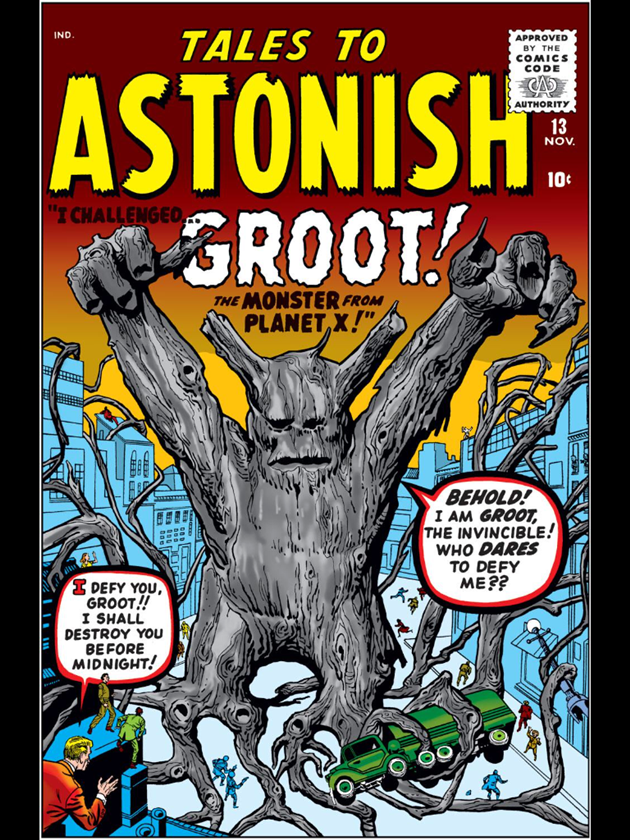
A strange meteor falls from the sky (or a archmage screws up a spell, or Zeus has a fever dream), releasing a bizarre monster (basically Groot, but not the lovable version we saw in our movie houses, but more like the monster from the old comic books … which I never read, and which may also have been lovable) and strange radiations and gases and electricities and vibrations and such. The trees awaken! Everywhere! Billions of them!

All of these trees are treants, and they’re under Groot’s command. Groot is using them to conquer the world. Obviously, wooded areas and elves are hardest hit. The great elven kingdoms perish quickly under a storm of knobby fists and splinters. A few escape the slaughter and attempt to rally the other fantasy races.

The dwarves are besieged in their mountain hideouts.  They’ll try to sit it out … unless the fungi monsters are on Groot’s side as well. Eventually they’ll get hungry, though, and have to grab their father’s axes and get down to business.

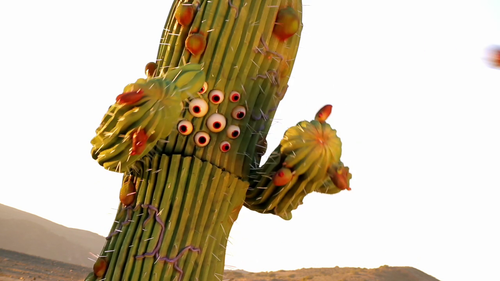
The halflings are attacked by their own orchards (“Are you insinuating my apples aren’t everything they’re supposed to be?”). Humans deploy crack squads of lumberjacks (and the Spanish Inquisition, because, obviously trees expect them least of all), but they’re outmatched by all those damn treants and people are forced into deserts … unless they are the kinds of deserts with cacti ! They’re also trees! Spiked treants who are super good at retaining water! Ye Gods!

Do the treants have allies – heck yeah! Assassin vines, those other vines that make people into zombies, various animated shrubbery … well, plant monsters in general. Maybe dryads chuck in with their new mobile homes as well (damn tree-huggers). Nymphs have always struck me as a bit shifty. They become the Mata Haris of the Arboreal Invasion.

Obviously, the key to survival is to get to Groot and destroy him, and that means … a party of oddball murder hobos. Help us, player characters, you’re our only hope!

Dimensional String Theory

Via Wikipedia

Long-time fantasy gamers get the idea of “planes”. Each plane is its own reality, and it connects in some fashion with other planes, and they’re mostly just where high level characters go to kill things and steal their stuff. Simple enough.

How about we swap out planes for strings.

[Disclaimer – I don’t know anything about actual string theory. I’m just stealing a term because it sounds cool and kind of fits this conception of planes and dimensions in fantasy games]

No, the elemental plane of fire won’t look like a tightrope – it will still be an endless reality of fire and efreet. But it will functionally be a string, as will all the other planes. Dozens of planes, as strings, crisscrossing the multiverse and, at certain points, touching.

At a planar nexus, the reality of two planes (or more) are combined, forming a little pocket dimension (perhaps a planet) that combines the aspects of the planes that are connected. So you might have a plane that combines Elemental Fire with Chaotic Good, or a plane that combines Shadow with Water. Maybe the Astral Plane is where all these strings are located – and maybe when traversing that plane you can accidentally hit a string and find yourself in another plane. The Ethereal is just the blurry edges of the vibrating Material Plane, and can be a passage to these “nexus points” that interact with the Material Plane.

Maybe the Material Plane is just a nexus point between all the different planes of reality?