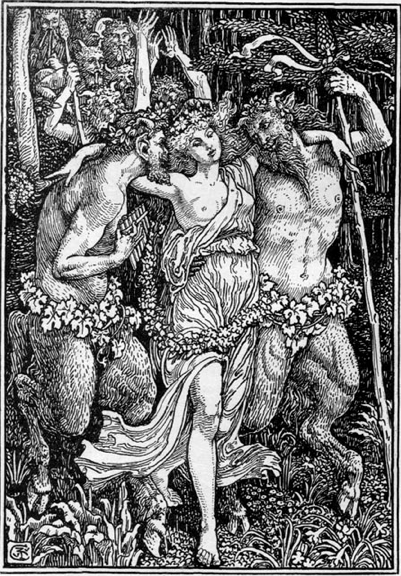
Fiendish Flora: Virginal Creeper [Monster]

VIRGINAL CREEPER
Large plant, Neutral (N), Non-intelligent; Cluster (1d6)

HD 4
AC 13
ATK 1d6 spines per person within 10 feet (1d3 + poison*)
MV 0
SV F10 R17 W14
XP 400 (CL 5)

Virginal creeper is named for the virgin goddess of the hunt, due to its unique form of defense. The creeper is composed of thick green vines that grow from a central, woody core. Each of these vines is covered with thin, greenish-yellow leaves and large, white flowers. Within each flower there are several needle-like spines.

The plant appears to detect people by a sort of tremorsense that extends to 30 feet. Within 10 feet, it begins to rustle and launches its spines, throwing 1d6 spines each round at each target that approaches within 10 feet. These spines are coated in poison that acts as a major adrenaline rush to those who fail a Fortitude saving throw. Each round, the person struck by the poison enjoys a cumulative +1 bonus to strength, up to a +3 bonus, but also suffers 1d4 points of damage as their heart is driven to bursting.

Fiendish Flora: Belial’s Breath

Today I’m kicking off a series of plant monsters, because – well frankly, because when I was walking yesterday some ideas started popping into my head and now I’m going to flesh them out and use them, by golly. So – a plant monster a day until I run out of ideas.

BELIAL’S BREATH
Large plant, neutral (N), non-intelligent; pit (1d6)

HD 4
AC 12 (vines have AC 13)
ATK 6 vines (1d4 + 1d6 fire)
MV 0
SV F10 R17 W14
XP 400 (CL 5)

Belial’s breath, also called salamander vine, is a monstrous plant that grows in volcanic regions, sending tap roots deep into the earth that tap into pockets of heat. The plant appears as a clump of vines that range in length from 4 to 8 feet long. The vines are about 1 inch in diameter and black. They support large leaves that are black on top and crimson on the bottom. The plant produces small yellow flowers that exude a sulfurous smell.

The vines themselves are covered in a tar-like substance that is both sticky and flammable. When the vines detect, by tremors in the ground, the nearness of a creature they snake out and attempt to grab the creature. The stickyness of the vines give them a +2 bonus to grapple attacks. If a grab is successful, the vine bursts into flame. This flame deals 1d6 points of fire damage to its victim as well as to the vines themselves. Each vine has 3d6 hit points; when a vine’s hit points are reduced to 0 by the flame or any other source, it is severed from the plant. The plant’s hit point total is not reduced by damage sustained by the vines. To kill the plant, one must deal damage to the large, crimson bulb that lurks beneath the soil and from which the vines emanate.

Special: Resistance to fire

Using Combat for Non-Combat Tasks

This post is really just me chasing down the thread of an idea, so don’t expect a finished product. Here’s my thought process:

Real life melee combat, medieval or otherwise, is a pretty tough thing to simulate with pen and paper. Folks are making all sorts of moves, offensive and defensive, that are pretty tough to keep track of. Because of this, Gygax and company developed an abstract combat system with hit points, Armor Class, etc.

What if we take this abstract process and apply it to other tasks – i.e. skill checks? Using combat rules really only make sense for non-combat tasks that are a process, and even then only when time is of the essence. They would be especially useful for tasks being performed while combat is underway. In these situations, though, they might work pretty well and create a pretty cool atmosphere in-game.

Before we get into specific examples, let’s break down the elements of the combat rules.

Offense in combat is governed by one’s attack bonus (or THAC0) and Strength bonus, which modifies “hitting” and damaging. In other tasks, a character using one of his class abilities/skills/concepts will “attack as a fighter of his level”, while those attempting things they know little about (little, but not nothing), would “attack as a magic-user of his level”. GMs could adjudicate situations in between these.

Defense in combat is governed by one’s Armor Class, modified by Dexterity, and Hit Points, modified by Constitution. We’ll refer to these concepts as active defense (AC) and passive defense (HP).

So, for task resolution, we need to know which ability scores govern the “attacker’s” offense, active defense and passive defense. We also need, for the “defender”, Hit Dice and Armor Class. Hit Dice here will represent the overall difficulty of the challenge, and to keep things simple, Armor Class will be 10 plus (or minus, depending on your system) the challenge’s Hit Dice.

Let’s begin simply with picking a lock. Specifically, a thief is trying to pick a lock so that the party can escape a combat they don’t think they can win.

The GM decides the lock, since it’s on the third level of a dungeon, has 3 HD and thus AC 13. For this task resolution, he rolls 3d6 and determines the lock has 9 hit points. It will get one “attack” per round, for 1d6 damage, and it turns out it contains a poisoned needle trap, so the attack actually scores 1d6 points of damage and requires the lock picker to pass a save vs. poison when hit.

The lock picker in this case is a 4th level thief. For this task, she’ll attack as a 4th level fighter – the player rolls 4d8 for her “hit points” during this task and gets 15. She’ll “attack” the lock once per round with her tools (and experience), and score 1d6 damage per hit.

For offense, the thief will use her Dexterity modifier to hit and damage. For active defense, we’ll use Intelligence to modify AC, and for passive defense Wisdom will modify Hit Points. I’m sure one could argue endlessly over which ability scores are appropriate to any given situation, but this is just an example so let’s not worry about it.

So, the thief has a +2 Dex bonus, no intelligence bonus and a -1 Wis penalty. If we’re using Blood & Treasure, the thief has an attack bonus of +4 (+6 with her Dex modifier), scores 1d6+2 damage against the lock, has 11 hit points (15 modified down by Wisdom penalty) and AC 10. If you wanted to argue that leather gloves provide a +1 to AC, you probably could.

Each round during combat, the thief and lock attack one another. If the thief is reduced to 0 hit points, she fails to pick the lock, but does not die (unless she also fails a save vs. poison, since this particular lock is poisonous). Perhaps the lock can even make one of it’s attacks an attempt to sunder the thief’s lock pick. If the lock is reduced to 0 hit points, the lock is picked and the thief can open the door and save the party. Heck, it’s even possible that the thief is poisoned in round one, but manages to survive long enough to pick the lock before expiring. Such dramatic possibilities!

Here’s another idea. Imagine a sub-plot in a modern game requires the adventurers to sneak into a museum and steal a valuable diamond. This wasn’t really planned by the GM, so instead of hastily drawing a museum map, figuring out the security guards and cameras, etc. In this case, the museum would be the challenge – maybe 7 HD and AC 17. The GM might also rule it gets three attacks each round, from security cameras (1d6 damage), patrolling security guards (1d8 damage) and infared beams (1d4 damage). If successful, the adventurers, who are all involved in this combat, get to the diamond and take possession of it. If they fail, they are caught – at which point they might be allowed to choose to go quietly or fight their way out, in which case we would enter traditional combat in a room filled with Egyptian antiquities against two armed guards with the police on their way.

Final notion for now – spellcasting. This might be good for a more modern game or a light magic game. The level of the spell is the spell’s Hit Dice (and thus determines Armor Class). The magic-user’s offense is governed by Intelligence, his active defense by charisma and his passive defense by Wisdom.

If the spell wins, it is beyond the magic-user and he cannot cast it. If the magic-user wins, he casts the spell. Obviously, this would now govern the casting time of spells, and one could dispose of preparing spells, instead simply requiring the magic-user to have a spell in their spellbook to be able to cast it. Perhaps some high-level spells could have “special attacks”, like wisdom drain or paralyzation, to make them more dangerous.

Imagine a 7th level magic-user attempting to cast a 9th level monster summoning spell while the party is holding off a balor demon. Heck, multiple magic-users could now join forces in casting a spell, chanting together, one sprinkling the powdered bone while the other waves the wand.

Anyhow – just an idea. I might explore it further and use it in ACTION X. I’d love to hear what folks think of it.

Masters of the Dungeon

The Masters of the Universe came a bit late for me when I was young. A good friend of mine got the entire original release of MOTU for Hanukkah, though, and I remember going over to his house and checking them out, though I don’t think we ever actually played with them. We were getting too old for action figures (i.e. dolls for boys) at that point, and I was never into swords and sorcery anyways – I was more into a G.I. Joe (the original figures, you know, back when Snakeyes was a commando and not a stupid ninja) and Star Wars guy. At the time, MOTU figures struck me as really lame, and the cartoon was just horrible … well, except for this …

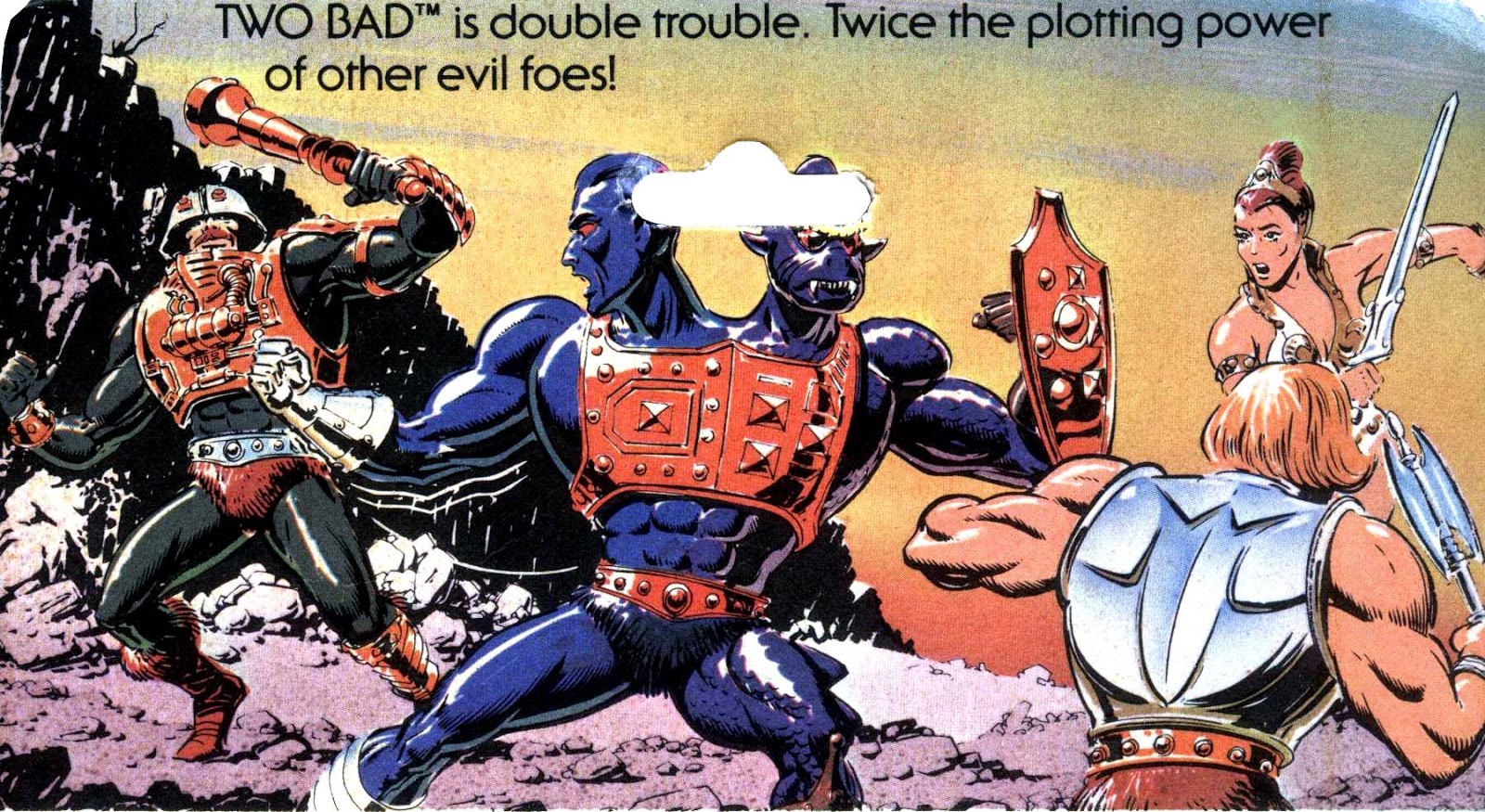
Now that I’m an adult, though, and have embraced my inner stooge and gonzo gaming, I have to admit a fondness for those old figures. Yeah, they’re goofy, but in all the best ways. They also strike me as things that would be amazing to throw at players in a gonzo dungeon – not as individuals, but as monsters on the order of goblins, orcs, bugbears, etc. With that in mind …

DOUBLE-HEADER (Double-headed Evil Strategists)
Medium monstrous humanoid; high intelligence; chaotic (LE); band (1 + 2d4 humanoids)

HD 4
AC 16 (breastplate and shield)
ATK 2 bites (1d4) or slam (1d6 + constrict)
MV 30
SV F14 R11 W10
XP 400 (CL 5)

Double-headers are two-headed humanoids who often lead humanoid war parties due to their high intelligence and mighty muscles. While some two-headed creatures have trouble with competition between heads, the double-header’s heads work in perfect cooperation. While this makes them especially cunning, it also gives them a +2 bonus to save vs. mind-affecting spells and abilities.

KLAWE (Warriors with a Grip of Evil!)
Medium monstrous humanoid; low intelligence; chaotic (CE); snag (1d4)

HD 1
AC 15
ATK 1 claws (1d6 + constrict), mace (1d6) and bite (1d4)
MV 30
SV F13 R15 W16
XP 50 (CL 1)

Klawes are humanoids covered with orange chitin and armed with maces. Their claws are capable of locking their foes in a grip of evil that deals double damage to lawful (good) victims.

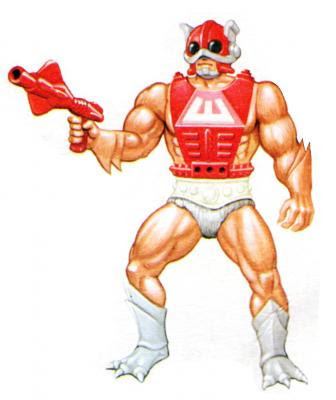
KOZMO (Evil Cosmic Enforcers)
Medium outsider; average intelligence; chaotic (NE); glower (1d4)

HD 3
AC 14 (breastplate)
ATK 1 slam (1d4) or 1 ray gun (1d6 fire)
MV 30
SV F12 R12 W12
XP 300 (CL 4)

Kozmos are humanoids that hail from the outer dimensions. They are used as enforcers by minor evil extraplanar entities. They wear helms with goggles that protect them from gaze attacks and permit them to see into the ethereal and astral planes. Once per day, a kozmo can use the dimension door spell.

LASHER (Evil Tail Thrashing Warriors)
Medium humanoid; low intelligence; chaotic (CE); welt (1d6)

HD 2
AC 14
ATK 1 spear (1d8) and tail lash (1d4 + stun)
MV 30
SV F12 R15 W16
XP 100 (CL 2)

Lashers are cousins of the lizardmen with lashing tails. They have rather ogrish faces with protruding fangs, and pale, glistening green scales.

LOCK-JAW (Evil Warriors Armed for Combat)
Medium humanoid; average intelligence; chaotic (CE); clamp (1d4)

HD 4
AC 14
ATK 1 bite (1d8) and either 1 musket (xxx), 1 hook (1d6) or 1 claw (1d6)
MV 30
SV F11 R14 W14
XP 200 (CL 4)

These cybernetic outlaws know no fear. They are equipped with adamantine jaws that can bite through nearly anything (+2 to sunder attacks; -2 to item saving rolls against them) and mechanical arms with the following possible attachments: Musket, hook (1d6 damage, +2 to disarm attacks) or claw (1d6 damage, +2 to grapple attacks). Lock-jaws can store unused weapons on their belts, and it takes them a full round to exchange one weapon for another.

MAN-BEAST (Savage Henchmen)
Medium humanoid; average intelligence; chaotic (CE); throng (1d8)

HD 1
AC 13
ATK 2 claws (1d3) or 1 whip (10-ft range, 1d4)
MV 30
SV F13 R15 W15
XP 100 (CL 2)

Man-beasts often serve as henchmen to evil lords. Once per day, they can use monster summoning I to summon animals only. Man-beasts can speak the language of animals.

MER-MOK (Ocean Warlords)
Medium humanoids; average intelligence; chaotic (CE); gang (1d6)

HD 1+1
AC 16 (scale breastplate)
ATK 2 claws (1d4) or sword (1d8)
MV 30 (Swim 40)
SV F13 R15 W15
XP 100 (CL 2)

Mer-moks are scaly, green-skinned amphibians that may be distant, telepathic relatives of the sahuagin. They wear breastplates and carry bronze swords. Mer-moks suffer no penalty when fighting with their swords underwater. They can communicate with aquatic animals via telepathy (300-ft. range) and can use this telepathy, once per day, to cast monster summoning II (summons aquatic animals only).

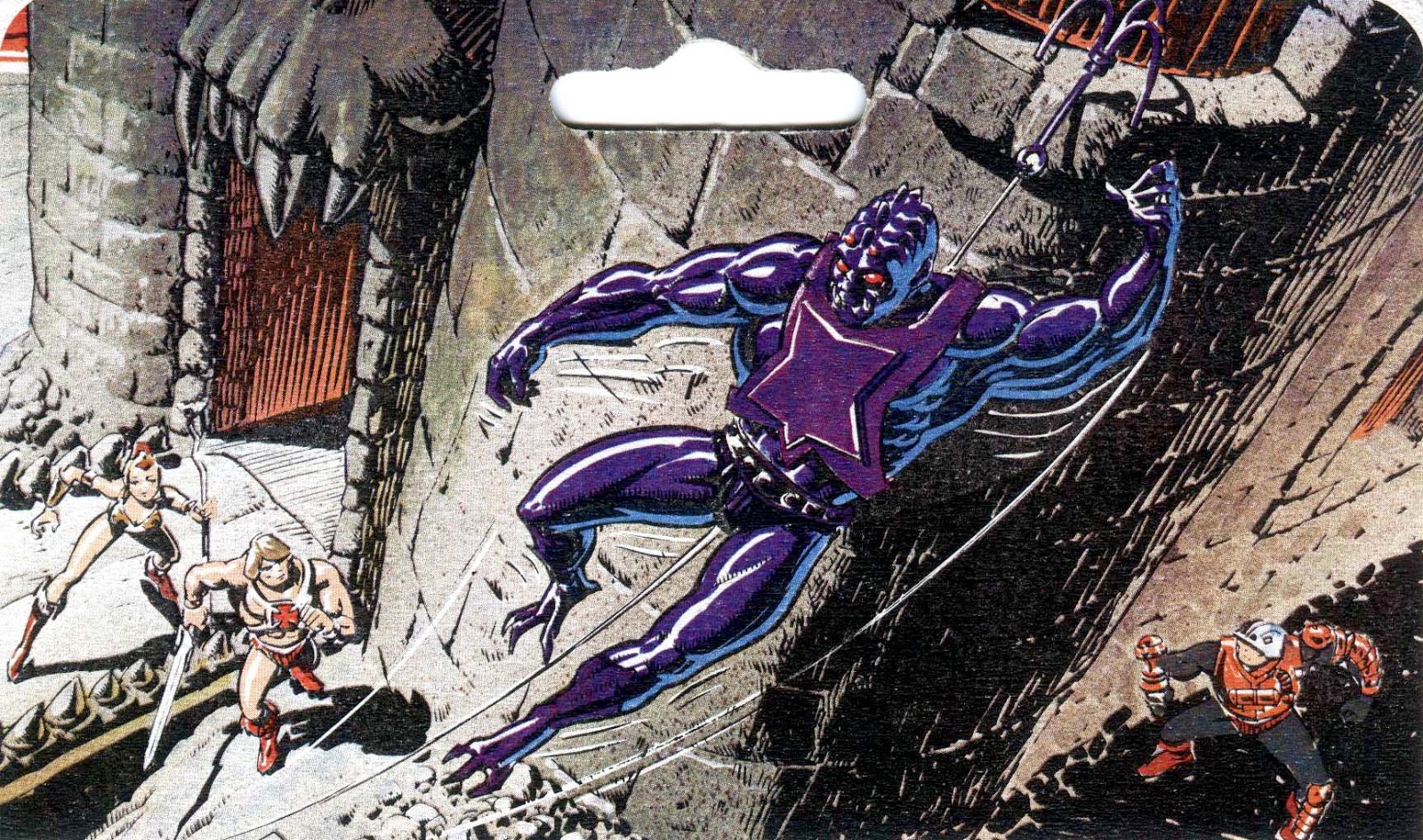
PROWLER (Evil Masters of Escape)
Small humanoid; average intelligence; chaotic (NE); pounce (1d8)

HD 0
AC 14 (breastplate)
ATK 2 claws (1d3) or musket (2d6)
MV 30 (Climb 40)
SV F16 R14 W16
XP 50 (CL 1)

Prowlers are small, halfling-sized humanoids with monstrous, spidery faces, dark blue skin that helps them blend into the shadows (surprise on roll of 1-4 on 1d6). They are capable of moving across walls and ceilings (per the spider climb spell), and use this ability to help them surprise foes when they are forced to engage in melee. They prefer to attack with their slim, accurate muskets, though, striking from the darkness as snipers and then looting the bodies of their victims.

SKULLFACE (Lords of Destruction)
Medium monstrous humanoid; high intelligence; chaotic (LE); solitary

HD 9
AC 18
ATK 2 claws (1d4+2) or sword (2d4+2)
MV 30
SV F11 R9 W8
XP 900 (CL 10)

These lords of destruction are demonic men with skull faces and blue skin. Having the special qualities of demons, they are capable swordsmen and sorcerers. Skullfaces can cast spells as 8th level sorcerers, channeling their magic through their skull-headed staves without needing to speak or gesture. When encountered, there is a 50% chance a skullface will be mounted on a giant black panther and a 50% chance they will be accompanied by their savage henchmen, 1d8 man-beasts.

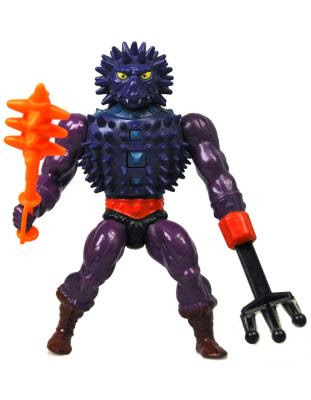
SPIKAZ (Evil Masters of Untouchable Combat)
Medium monstrous humanoid; average intelligence; chaotic (CE); prick (1d6)

HD 1+1
AC 16
ATK 1 trident (1d6) and morningstar (1d6)
MV 30
SV F15 R13 W13
XP 100 (CL 2)

Spikaz are strange humanoids covered in bony protrusions that jut from their leathery hides. Natural smiths, most amputate their lower left arms and replace them with weapons, often tridents or warhammers. They often wield morningstars in their right hands in combat. Those locked in melee combat with spikaz using their natural weapons or small weapons must pass a Reflex save each round or be struck by their spikes, suffering 1 point of damage. Attacking a spikaz with unarmed attacks or grapples automatically inflicts 1d3 points of damage on the attacker with a successful hit.

TRICLOPS (Evil Warriors That See Everything)
Medium humanoid; average intelligence; chaotic (LE); peep (1d4)

HD 3
AC 14
ATK 1 sword (1d8) or eye ray (30-ft range, 1d6 force)
MV 30
SV F12 R14 W14
XP 300 (CL 4)

Triclops possess three eyes spaced evenly around their heads. These eyes make it impossible to surprise a triclops, and give them the power of true seeing (as the spell), x-ray vision and the ability to rays of force that force victims to pass a Fortitude save or be knocked back 2d4 feet and fall prone if they fail a Reflex saving throw. They are also capable swordsmen.

YELLOW AMAZONS (Evil Warrior Goddesses)
Medium humanoid; average intelligence; chaotic (NE); coven (1d4)

HD 3
AC 15 (leather armor)
ATK 1 staff (1d8)
MV 40
SV F12 R14 W14
XP 300 (CL 4)

These saffron-skinned warrior goddesses go into battle armed with iron staves and leather armor. They can channel magic through their staves as though they were 3rd level sorcerers, though without their staves they have no magical abilities.
Enter the Geo-Metrons

Inspired by Adventure Time

In the vast cosmos there are many weird entities to encounter and fight. These are three of them.

Hell-Sphere
Small Aberration, Chaotic (LE), Average Intelligence, Gang (1d3)

Hit Dice: 4
Armor Class: 17 [Silver]
Attack: 2 fire whips (10-ft. range; 1d4 + 1d6 fire)
Speed: Fly 30
Save: F15 R14 W11
XP: 400 (CL 5)

Hell-spheres look like ruby colored spheres about the size of a human head. While they look solid, they are in fact only semi-solid, bridging the material and ethereal planes. Hell-spheres move by flying, and can also levitate in place. They attack by extending semi-solid whips of fire from their surfaces, and are also capable of taking control of living creatures.

To control a creature, a hell-sphere must envelop that creature’s head. This is considered a grapple attack, which the hell-sphere makes at a +2 bonus to hit. Once it has enveloped a creature’s head, the target is allowed a Will saving throw to resist the sphere. If this save fails, the creature is stunned for the remainder of the round. On the next round, it is under the control of the sphere.

A creature under a sphere’s control can use all of its natural abilities, and also gains the special defenses of a devil. The sphere must remain on the creature’s head to control it, and can be removed by a grapple attack (assuming somebody has silver or magical gloves or a net or such to catch it). Attacks against a sphere enveloping a creature score full damage on the sphere and half damage on the creature it is enveloping. While enveloping a creature, a hell-sphere can continue to use its normal attacks in addition to its new minion’s attacks.

Death-Cube
Small Aberration, Chaotic (CE), Average Intelligence, Gang (1d3)

Hit Dice: 3
Armor Class: 16 [Silver]
Attack: 2 rays (50-ft. range, 1d6 negative energy)
Speed: Fly 30
Save: F15 R14 W12
XP: 300 (CL 4)

Death-cubes look like black cubes about the size of a human head. While they look solid, they are in fact only semi-solid, bridging the material and ethereal planes. Death-cubes move by flying, and can also levitate in place. They attack by firing rays of gray energy from their surfaces, and are also capable of taking control of living creatures (per the hell-sphere above).

A creature under a cube’s control can use all of its natural abilities, and also gains the special defenses of a demon.

* Note – this one keeps making want to say Death-Cube for Cutie

Battle-Prism
Small Aberration, Neutral (N), Average Intelligence, Gang (1d3)

Hit Dice: 5
Armor Class: 18 [Silver]
Attack: 2 rays (50-ft. range, 1d6 force)
Speed: Fly 40
Save: F14 R13 W11
XP: 500 (CL 6)

Battle-Prisms look like three-sided pyramids about the size of a human head. Each surface is a kaleidoscope of colors. While they look solid, they are in fact only semi-solid, bridging the material and ethereal planes. Battle-prisms move by flying, and can also levitate in place. They attack by firing rays of prismatic force from their surfaces, and are also capable of taking control of living creatures (per the hell-sphere above).

A creature under a prism’s control can use all of its natural abilities, and also gains the effects of the heroism spell.

Speed of Mercury [New Class]

Long time readers of this blog know that I like weird or unique classes. Equipped with this blog, you could have a party consisting of a 5th level master blaster, 4th level unicorn, 4th level traveler (think Doctor Who) and 5th level cleric (well, you always need a cleric, right?).

This class actually originated as me thinking “Metatron would be an awesome level title – I wonder what of?”

RUNNER

Runners are men and women (or males and females) who specialize in running. Most serve as long-distance messengers or in military organizations as couriers delivering orders and reports back to headquarters. In dungeons, they are capable scouts and middling warriors, and at high levels they begin to emulate the very messengers of the gods.

Requirements: Runners must have Constitution scores of 13 or higher

Hit Dice: Runners roll d6 for hit points up to 10th level; they gain 2 hit points per level thereafter

Armor Allowed: No armor is allowed, but runners can use bucklers

Weapons Allowed: Runners can use light and medium melee and ranged weapons

Advance As: Fighter

First level runners (messengers) are known for their quickness and their utility as messengers. They gain Armor Class bonuses as monks (same progression) and can make Will saves (modified by intelligence) to understand unknown languages and Will saves (modified by their charisma) to make themselves understood to those who do not speak the same language.

A second level runner (sprinter) can run at up to five times his normal land speed (most can only run four times their normal land speed).

A third level runner (courier) gains the Endurance feat for free (even if you do not usually use feats in your game).

A fourth level runner (herald) receives a +1 bonus to all reaction checks, provided they are not acting in an offensive or aggressive manner.

A sixth level runner (emissary) can calm emotions (as the spell) by speaking, provided he is not acting in an offensive or aggressive manner. If those he is trying to calm do not speak his language, he must use his ability (see above) to make them understand, and even then they receive a +1 bonus to save vs. the calm emotions effect. Creatures with no language cannot be calmed.

An eighth level runner (mercurial) becomes superhumanly fast. They can now run at six times their normal land speed. For one round plus one round per Constitution bonus per day they can use the haste or blur spell on themselves.

In addition, an eighth level runner can speak with dead once per day.

A ninth level runner (metatron) gains the ability to communicate with any intelligent creature in their native tongue. In fact, the metatron simply speaks; others understand her in their native tongue.

A twelfth level runner (psychopomp) can move so quickly that they can, when moving at top speed, plane shift once per day into another dimension, and once per day back to their home dimension.

Magical Strings [Magic Items]

Why magical strings? Because the idea popped into my head the other day while I was taking a walk. Enjoy …

Thread of Fate: This special thread is made from entwining gold and silver thread with hair plucked from the head of a hag. When sewn into clothing using a gold needle, the thread permits the wearer of that garment to once attempt to escape death. When faced with any event that would cause their death (hit point damage, a failed saving throw, etc.), the adventurer can ignore the event – i.e. the attack somehow misses, the saving throw is a success, etc. Once death has been escaped, the thread loses its magic unless the garment is subsequently washed in a potion of restoration.

Thread of Guiding: This magical thread, when its spool is dropped to the ground, traces the path of the person who dropped it, rolling along until it reaches its maximum distance of 300 feet. It can be re-rolled onto its spool while one follows it, but will not magically re-roll itself.

Cat’s Cradle: This is a magical string with an amethyst gleam that can be turned into a cat’s cradle by one deft with his hands (Reflex save). While held before a person, it can catch any spell thrown at the person (force effects included, but not energy or physical effects like fire or stones). The magical energies in the thread can then be flung back at the caster (and only the caster) the next round. If these energies are not so thrown within 3 rounds, they ignite the string, which deals 1d4 points of the damage to the holder of the cat’s cradle per spell level.
Obviously, while holding a cat’s cradle, one cannot wield a weapon or shield. Monks can still attack, but since they may only use their legs they suffer a -2 penalty to attack.

Memory Thread: Memory thread is a saffron colored bit of string. When tied to one’s finger, it permits them to remember one thing perfectly without fail. Magic-users can use memory string to remember a single spell of up to 2nd level, essentially gaining an extra spell slot. If the string is removed or destroyed, the memory is lost (though one could still conceivably remember it in the normal, non-magical way).

Spool of Recording: This is a spool of mahogany, well worn, without any thread. When held before a person and the command word (“Victrola”) is uttered, it causes anything said before it by a single person to take the form of a silver thread which is pulled from their mouth and reeled onto the spool. The sound of what the person said is converted into the silver string, so no sound is heard. Spells uttered in this way are disrupted.

If this string is pulled through the eye of a crystal needle, the sound can be replayed. This can only be done once. If the sound is a spell, there is a chance it will go off, based on the level of the spell, with a target chosen by the holder of the spool.

Level 0 to 1 90%
Level 2 80%
Level 3 70%
Level 4 60%
Level 5 50%
Level 6 40%
Level 7 30%
Level 8 20%
Level 9 10%

A string can also be destroyed with fire if the spool’s owner does not wish to hear it.

String Snapper: A string snapper is a magical amulet of bronze embossed with the image of scissors. By rubbing the amulet and then snapping her fingers, the owner can cause all strings within 30 feet to potentially snap. This includes the strings of instruments (though not magical instruments), bowstrings (though not of magical bows) and other taught strings. The strings in question receive a saving throw to resist the effect. Each time the amulet is used, there is a 1 in 6 chance that it dissipates into yellow smoke that smells of sulfur.

Kazoo of Power: This silver kazoo, when blown, produces no noise but causes all strings on bows or musical instruments to begin vibrating. This vibration renders an item useless for its owner, and also sets up a throbbing harmonic that causes 1 point of sonic damage per round to anyone within 10 feet of the item (cumulative). Magical items receive a saving throw to resist the effect of the kazoo of power.

Quantum Lens: A quantum lens looks like a monocle with a silvery sheen. When placed over the eye, it allows one to glimpse quantum strings that crisscross through reality. The lens also allows one to pluck these strings (or at least attempt to) to cause changes in the environment around them. The attempt requires on to make a special task check that is a Will save modified by intelligence (if one is a magic-user, sorcerer or bard) or otherwise made as if one had a knack at screwing with reality (also modified by intelligence). Different quantum effects carry with them different penalties to the task check. In any event, only one such event can be produced per day without attracting the attention of an astral deva, who will attempt to seize the quantum lens from the character with extreme prejudice.

 – Call lightning (-2)
 – Control weather (-8)
 – Control winds (-6)
 – Earthquake (-10)
 – Firestorm (-10)
 – Fog cloud
 – Gust of wind
 – Ice storm (-4)
 – Planeshift (-6)

 – Reverse gravity (-10)
 – Sleet storm (-2)
 – Whirlwind (-10)

Silver Scissors: This is a pair of scissors made from alchemical silver and engraved with various glyphs and words of power. Silver scissors can be used to cut astral threads, those threads that connect a person on one plane with his material self on another after he has traveled through the astral plane. Astral creatures can also be affected by the scissors, the cutting of the thread forcing them back into he astral plane for 24 hours.
Finding a thread is the hard part, of course. Threads usually connect to a creature’s back, and random attacks at a person’s back can be made with the scissors as though attacking Armor Class 22. If one can discern astral threads in some manner, they may attack them as though attacking Armor Class 12. Damage need not be rolled – a successful attack with the scissors cuts the thread.

Woodland Classes I – The Unicorn

A maiden’s best friend, unicorns (and pegasi and other little ponies) are all the craze these days with girls and a few (slightly disturbing) men. We’ve endured many years now of sneering, leather-clad, spiky-shouldered, ridiculously-large-weapon wielding wannabe badasses in dungeons, perhaps it’s time for something sparkly.

Requirements: Wisdom and Charisma 13+, Lawful (Good) in alignment

Hit Dice: d6, +2 per level after 10th

Weapons allowed: None

Armor allowed: Up to chainmail barding

Skills: Find Secret Door, Jump, Listen at Doors, Move Silently, Survival

Advance: As paladin

Attack: As cleric

Saving Throws: As paladin

First level unicorns are medium-sized creatures, with the bodies of goats, heads of horses, snowy-white hair and pearlescent horns growing from their foreheads. They are capable of speaking both Common and Sylvan. They can make one attack each round, either with their alicorn (their horn – yeah, there’s a fancy word for it!) for 1d8 damage, or with their two hooves (as though attacking with two weapons) for 1d4 damage. Unicorns are naturally immune to poison.

A note on climbing: Unicorns, having the legs of goats, are actually quite capable climbers, so long as they have even the smallest ledge (or its equivalent) on which to rest their hooves. For sheer surfaces, unicorns are going to need some help involving ropes and people to pull them.

A 2nd level unicorn’s alicorn strikes as a +1 weapon. This innate magical bonus improves to +2 at 4th level, and +3 at 8th level.

A 3rd level unicorn becomes immune to charm and compulsion-type spells, unless they are cast by a lawful (good) female spellcaster.

A 4th level unicorn gains the innate ability to cast spells with its alicorn. The unicorn prepares and casts spells as a paladin, with each spell being cast from its horn. Spells that require a touch require the unicorn to touch the subject with its horn. The unicorn need not speak to cast these spells, nor otherwise move.

A 5th level unicorn can undertake a quest, guided by a divine vision, to find and gain the service of a chaste, lawful (good) female elven companion. This companion is either a cleric, fighter, magic-user or paladin (roll 1d4) who begins as a 1st level character, but advances one level each time the unicorn advances one level. If the unicorn’s companion dies, it must atone (per the atonement spell) and then wait until gaining another level of unicorn to undertake the quest again.

A 10th level unicorn can establish a serene woodland clearing as its lair. A 12 mile radius circle around the clearing must be cleared of all evil influences before the unicorn can consecrate the clearing. Once consecrated, the unicorn attracts 1d10 creatures to act as guardians of the clearing and associates in its fight for law and good. Roll on the following table to determine these companions.

ROLL D10
1 – Aasimar warrior (2 HD, chainmail, longsword, longbow, 20 arrows)
2 – Brownie
3 – Celestial brown bear
4 – Celestial eagle
5 – Celestial wolf
6 – Druid (1st level; either human, elf or gnome)
7 – Druid (2nd level; either human, elf or gnome)
8 – Dryad
9 – 1d6 pixies
10 – Unicorn

UNICORN SPELLS

First Level: Bless, calm animals, charm person, cure light wounds, detect evil, detect poison, freedom of movement, light, obscuring mist, remove fear, sanctuary, shield of faith, slow poison, virtue

Second Level: Aid, animal messenger, cure moderate wounds, dimension door, lesser restoration, magic circle against evil, neutralize poison, remove paralysis, shield other

Third Level: Charm monster, cure serious wounds, prayer, protection from energy, remove curse, searing light, teleport

Fourth Level: Air walk, cure critical wounds, divine power, holy smite, restoration, teleport without error

Nymphomania II – Seven More Nymphs

And so we come to part 2 of my article on variant nymphs. Enjoy (can’t wait to commission art for this one!)

MELISSAE (HONEY NYMPHS)
Melissae are the nymphs of honey bees. They appear as 4 to 5 ft. tall women of exceptional beauty, with golden skin and honey-colored hair. On their backs are wings like those of a giant bee, and they have a fly speed of 30 feet.

Once per day, a melissae can summon a swarm of bees (per summon swarm). They do not have the gaze attack of normal nymphs, but their kisses act as a charm person spell. Melissae are immune to poison, and most carry a magical mead that acts as a neutralize poison potion. Melissae cast spells as bards rather than druids. They are usually encountered with 1d6 giant bees.

NAIADS (WATER NYMPHS)
Naiads are the nymphs of fresh water, dwelling in rivers, lakes, streams and pools. They are among the more pleasant of their kind, enjoying dalliances with mortal men and rarely doing lasting harm to mortals. Naiads are about 5 feet tall and generally resemble elves. They have pale skin and silvery hair.

Naiads are amphibious. They have a swim speed of 50 feet and are resistant to cold damage.

NEREIDES (SEA NYMPHS)
Sea nymphs dwell in salt water, often constructing small palaces for themselves below the waves. Their leader is the famous Thetis, mother of Achilles. They usually have pale skin and golden hair, with deep blue eyes.

Nereides are amphibious. They have a swim speed of 60 feet. Nereides are resistant to cold damage, have 10% magic resistance and can only be harmed by silver weapons. In place of a normal nymph’s gaze attack , nereides can sing a siren song that affects all within 100 feet. At minimum power, this acts as a bard’s fascinate ability, but nereides can also use it to deliver the following spells: Charm person, charm monster, suggestion, command, confusion or fear.

NYMPHAI HYPERBOREIOI (HYPERBOREAN NYMPHS)
The nymphai hyperboreioi are the nymphs of the taiga. They are hardier and more barbaric than their southerly sisters, and excel at archery. Nymphai hyperboreioi stand about 7 feet tall, have pale skin (often freckled) and flowing red or blond hair. They are always found wearing leather armor (or furs – count them as leather armor either way) and carrying short swords and longbows.

Hyperborean nymphs have 8 Hit Dice and enjoy resistance to cold damage. In their hands, bows and arrows always carry a +1 magical bonus. When making trick shots with their bows, they enjoy a +2 bonus to hit. Hyperborean nymphs do not have the normal nymph’s gaze attack, but they can imbue their arrows with a charm person effect; when an arrow is so imbued, it deals no damage. Rather, it disappears into a cloud of smoke when it strikes a target, and that target must pass a Will saving throw or be charmed.

OCEANIDS (OCEAN NYMPHS)
Oceanids might also be called greater nereides. They are the daughters of Oceanus and Tethys, and thus have titan blood flowing through their veins. Oceanids are exceptionally lovely, with blue-green skin and hair like sea foam. They can appear in the form of mermaids, or as humanoids.

Oceanids have 9 Hit Dice, AC 18 and a swim speed of 90. They can only be harmed by +1 or better weapons, have magic resistance 25% and are immune to cold. They can breathe air or water. Once per day, an oceanid can enlarge herself (as the spell), an artifact of her titan heritage. Oceanids cast spells as 9th level druids. In place of a normal nymph’s gaze attack , oceanids can sing a siren song that affects all within 1 mile. At minimum power, this acts as a bard’s fascinate ability, but oceanids can also use it to deliver the following spells: Charm person, charm monster, suggestion, command, confusion or fear.

Oceanids can control water at will, and they can rebuke water elementals as an evil 9th level cleric can rebuke undead.

OREADS (MOUNTAIN NYMPHS)
Oreads are earth nymphs who dwell in the mountain and rugged hills. They avoid contact with non-fey, and are less apt to seduce a mortal than most of their kin. Oreads have nut-brown skin and auburn hair. Their eyes shine like rubies, sapphires or emeralds.

Oreads are resistant to acid and can use stoneskin (as the spell) at will. They can meld into stone as a dryad can meld into trees, but are not tied to particular stones as dryads are tied to particular trees. Oreads can communicate with burrowing animals as a gnome. They do not have a normal nymph’s gaze attack.

THEMEIDES (GUARDIAN NYMPHS)
The themeides are the daughters of Zeus and Themis (i.e. they’re true demigods), who serve both as prophets and as keepers of divine artifacts (a certain famous saint’s mace, perhaps). While these warrior nymphs appear at first merely as red-headed nymphs with bronzed skin, when attacked one learns of their true nature.

Themeides are only struck by +1 or better weapons, are immune to lightning and fear and enjoy magic resistance 30%. They have 12 Hit Dice. In combat, they can summon chainmail and spears that appear on their person. Both chainmail and spear crackle with energy; while on the nymph they act as +1 magic items and the spears deal +1d6 electricity damage with each hit. When a themeides dies, her armor and weapon disappear.

Themeides cast spells as clerics rather than druids.

Nymphomania (Part 1)

No, not that kind of nymphomania. Get your mind out of the gutter.

I’m talking about the myriad varieties of nymphs in Greek mythology. A few have made their way into the annals of fantasy gaming, but there are so many more, and I need a blog post, so you do the math.

For the nymphs that follow, I’m going to assume that they have modifications of the basic nymph stats and abilities from Blood & Treasure. In other words, I’m not going to put in a full block of monster stats for each one, just list where they differ from what is below.

NYMPH
Medium Fey, Lawful (NG), High Intelligence; Solitary

HD 6
AC 17
ATK Dagger (1d4)
MV 30 (Swim 20)
SV F 12, R 10, W 9
XP 600 (CL 7)

Nymphs are female fey of astounding beauty. The daughters and grand-daughters of the gods, they represent the beauty and mystery of nature. Nymphs speak Sylvan and Common.
All humanoids within 30 feet of a nymph that look directly at a nymph must succeed on a Fortitude save or be blinded permanently. A nymph can suppress this ability if she wishes.

As a gaze attack, a wrathful nymph can stun a creature within 30 feet with nothing more than a sidelong glance. The target creature must succeed on a Fortitude save or be stunned for 2d4 rounds.

Besides their spell-like abilities, nymphs cast spells as 7th level druids.

Spells: 1/day—dimension door

Typical Druids Spells: 0—cure minor wounds, detect magic, flare, guidance, light, resistance; 1st—calm animals, cure light wounds, entangle, longstrider, speak with animals; 2nd—barkskin, heat metal, restoration, tree shape; 3rd— call lightning, cure moderate wounds, protection from energy; 4th—rusting grasp

ANTHOUSAI (FLOWER NYMPHS)
These are the nymphs of flowers. They are smaller than the basic nymph, and have hair that resembles a cascade of hyacinth flowers. Anthousai have 4 HD (and XP 400, CL 5) and AC 15. In place of the nymph’s gaze attack, the anthousai can emit a perfume in a 20-ft. radius that acts as a dose of charm monster and suggestion. Anthousai usually suggest that people leave, or perhaps perform mundane tasks for them.

ASTERIAE (ASTRAL NYMPHS)
The asteriae are the nymphs of the Astral Plane. They have porcelain skin, sapphire eyes and silver hair that floats wild and free in astral space. Astral nymphs are wild and carefree. They are capable of moving as they like in astral space. In place of the normal nymph’s gaze attack, an asteriae can bring blessing or bane with their gaze (per the bane spell or bless spell). In addition, they can gather the energies of the Astral Plane and project them as a sapphire ray from their eyes (per searing light) three times per day. Asteriae cast magic-user spells rather than druid spells.

AURAE (WIND NYMPHS)
Aurae are nymphs of the winds, nestled and caressed by the air spirits, which are fiercely protective of them. They have pale skin and windswept hair of white, and eyes they always seem to reflecting a clear blue sky. Aurae can fly (speed 60) and are unaffected by wind conditions. They can cast gust of wind at will and wind walk once per day. Aurae are chaotic neutral in alignment.

HECATERIDES (ELDER NYMPHS)
The hecaterides are the mothers of oreads and satyrs. They appear as stately, almost matronly nymphs, full of breast and wide of hip and bedecked in silk gowns and wreaths of flowers and spun gold. They are immune to mind control and possess magic resistance 15%. Hecaterides can cast irresistible dance once per day with their gaze attack. Once per day, a hecateride can attempt to summon 1d4 oreads or satyrs with a 60% chance of success. Hecaterides are chaotic neutral in alignment.

HYLEOROI (WATCHERS OF THE WOODS)
Hyleoroi are warrior nymphs charged with the protection of the woodlands. While most nymphs are content to play all day, the hyleoroi are patrollers, often joining other woodland folk like satyrs, brownies and rangers.

Hyleoroi have 8 Hit Dice instead of 6, and therefore have the following saving throws: F11 R9 W10. They wear leather armor and carry a longbow and bronze short sword. Their gaze attack is replaced by an at-will true seeing ability, and they have the special abilities of 4th level rangers.

KABEIRIDES (FORGE NYMPHS)
Forge nymphs are the nymphs of metal, glorying in the riches of the earth. They have skin that runs from bronze to gold and hair in the same colors. Their eyes are like white hot embers. A forge nymph’s gaze acts as a heat metal spell. They enjoy a +3 bonus to sunder metal weapons and armor, and when such items are saving against a sundering attack from a forge nymph, they do so at a -3 penalty. Finally, they are capable of summoning flaming hammers (1d4 + 1d6 fire damage) into their hands.

LAMPADES (TORCH NYMPHS)
[I think I covered these nymphs when I did my Hellcrawl, but I frankly don’t remember and frankly I’m too lazy to look …]

Lampades are the nymphs of the underworld, devotees and companions of Hecate and her priests and magic-users. They have pallid skin that they can cause to become pitch black at will, allowing them a 4 in 6 chance of surprise in darkness. Lampades carry magic torches which they can extinguish at will. The light of these torches forces those in sight of them to pass a Will save or be struck with insanity that lasts 24 hours. At the end of 24 hours, those who have succumbed to madness must pass a Will save or they acquire a random phobia permanently. Lampades do not have the gaze attack of a nymph, but their touch causes 1 point of wisdom damage. They can rebuke undead as 6th level clerics, and cast spells as magic-users rather than druids.

D10 RANDOM PHOBIA
1 Fear of rats
2 Fear of slime and ooze
3 Fear of flying
4 Fear of vile odors
5 Fear of spiders
6 Fear of heights
7 Fear of disease
8 Fear of pain
9 Fear of confined spaces (like dungeons, maybe?)
10 Fear of the dark

When a person is faced with the source of their phobia, they must pass a Will save to overcome it for the encounter. If they do not, they become frightened.

MAENADS (WILD NYMPHS)
Maenads are the nymphs of Dionysus – berserk man-killers drunk on the wine of their god. They look like normal nymphs, save their hair is wild and unkempt and their eyes are bloodshot and savage. They wear leopard furs and have vines tangled in their hair and wrapped around their bodies.

Maenads fight like berserkers, having 2 attacks per round. They can control wolves within 30 feet of themselves (wolf companions of characters may make a Will save to resist this), and can summon 1d4 wolves once per day. A maenad loses a nymphs gaze attack and their blinding beauty, but gains a touch that causes one of the following effects depending on the target’s Hit Dice and if a Will save is failed:

HIT DICE EFFECT
0-2 Confusion (1d6 rounds) + Hideous Laughter (1d6 rounds) + Drunkenness (1 turn)
3-6 Hideous Laughter (1d6 rounds) + Drunkenness (1 turn)
7+ Drunkenness (1d6 rounds)

A drunk character suffers the same effects as a fatigued character.

Maenads can rebuke lycanthropes as a 4th level evil cleric rebukes the undead.