Happy Thanksgiving, Mystery Men! Style

To start off, I want to give thanks for what has been a pretty good year for me. A couple years ago, I wouldn’t have thought I’d now be making a few bucks writing game material and even publishing my own games. I’m thankful for the opportunities I’ve had and for the support folks in the game community have given me. I’m even more thankful for my wife, daughter and family and friends. Things are going well today, but I know that things can change, and I’m determined to be thankful for what I have while I still have it.

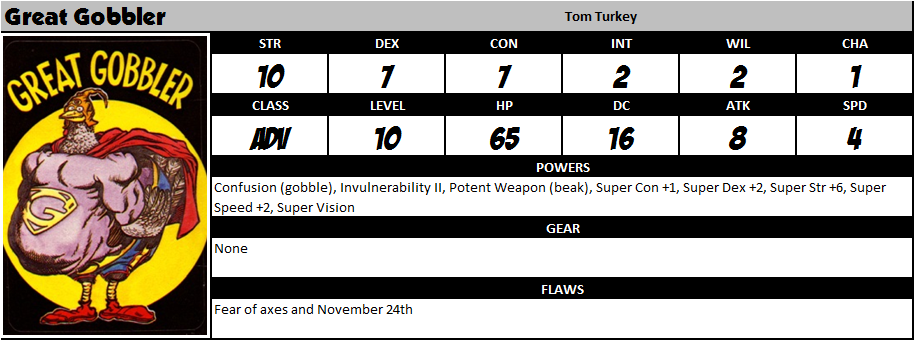
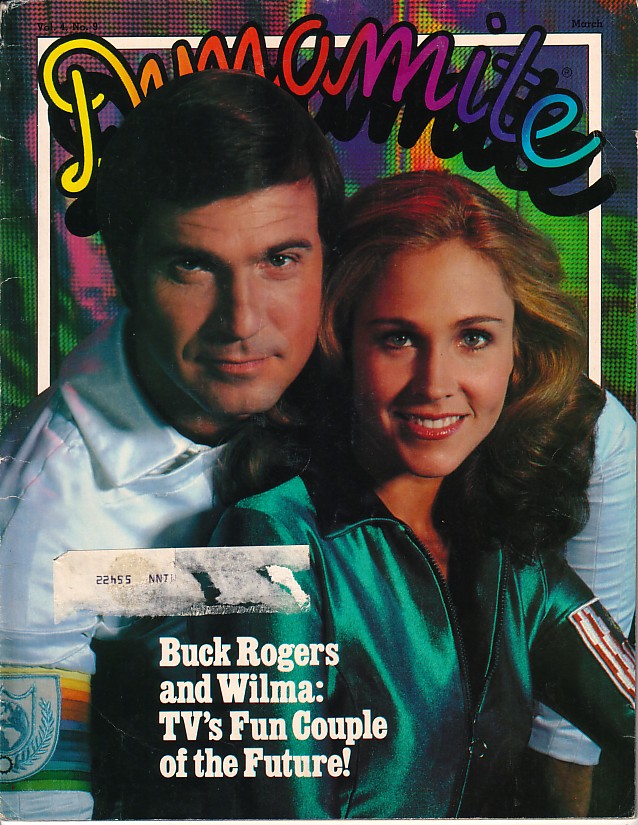
Now then, on to the goodies. When I was a kid, we used to do these book orders in elementary school. One of the items we could get from these four-page “catalogs” was a subscription to one of two magazines (I think one was four younger kids, the other for older kids, though which is which I don’t remember), Bananas and Dynamite. One little article from Dynamite that stuck with me was about “Zero Heroes”. Apparently, these less-than-stellar superheroes were created by B. K. Taylor as a set of stickers. Years later (now, in fact) I managed to find them online (amazing, isn’t it) and happily present you a hero for the holiday (well, kinda).

The Great Gobbler
According to the back of the sticker, the Great Gobbler had some exciting adventures, but his series was finally cancelled because, no matter how exciting they were, people couldn’t get over the fact that he was just a big turkey.

Cover image above from retroCRUSH.

When Monks Aren’t Allowed in Dungeons

So you think monks don’t belong in your fantasy game?

This is what happens when monks don’t have dungeons to delve into …

For the love of Shaolin, give the monks something useful to do. Monks should be kicking orcs in the face, not making spectacles of themselves on weird game shows.

Queen and Kaiser – Some Thoughts


I know – I have lots of projects to work on, but when the muse kisses you on the forehead, you have to put pen to paper or risk forgetting everything. Thus, some notes on Queen and Kaiser.

Theme: Full-throated Victorian adventure. All the characters in a group serve a government – their success turns into success for that country in terms of expanding its empire, inventing new devices – etc.

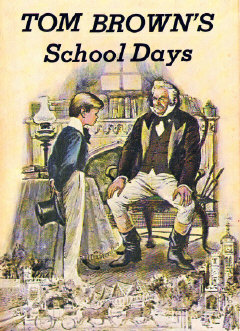
Influences: Jane Austen, Bronte sisters, Lewis Carroll, Thomas Hughes, Rudyard Kipling, Robert Louis Stevenson, Arthur Conan Doyle, H.G. Wells, Jules Verne, H. Rider Haggard, Joseph Conrad, Edgar Allen Poe, Mary Shelly, Charles Dickens, Flashman (of course)

Replace the concept of “race” in most games with class – Low, Middle or High – maybe – might make the rest of the character creation concept too complicated

No classes – characters shaped by random experiences – kind of like Traveller.

Game set circa 1890

Roll experiences based on age of character – different tables for Youth (i.e. school days), 1881-1890, 1871-1880 and 1861-1870. Whatever age range you choose (youth, mature, middle-aged, old), you roll up to three times on a table, declaring the number of rolls before making the rolls.

The basic experiences involves adventures in Victorian England / France / Germany / Russia

One “experience” is called Bend Sinister – this sends you to a different table concerning crime and the underworld, a table one may never escape

One “experience” is called Foreign Service – this sends you to a different table concerning foreign affairs – spying, wars, going native, etc. This table can send you back home to the basic table

One “experience” is called Supernatural – this one goes into Victorian horror and science fiction – one roll, then back to the basic table and no more dips into the supernatural pool – can be ignored if the Referee does not wish to use this material in his or her game

Base the different eras on the literature and historical events of that period

Might restrict the characters in the basic game to English or German, maybe adding different groups in NOD articles – i.e. French, Russian, American, Japanese, Dutch, Ottoman

Characters can be male or female, though experiences might be different

Ability Scores – roll as normal for Target 10

Vigor (strength, fortitude, courage)

Dash (dexterity, quickness, flair for the dramatic)

Study (knowledge, learning, ability to think things through, common sense)

Charm (manners, etiquette, courtship)

You have “hit points” based on your Vigor and “charm points” based on charm, etc. to allow for different forms of combat – Dash can help in all of these things

Hit Point combat is normal fighting

Charm Point combat is about combat in the social sphere- getting the best of a person through being witty, using innuendo, out-talking people – wins people to your side

Skills
Horsemanship (riding tricks, charging, increasing daily movement, polo, steeplechase)

Fencing (swords, axes, spears, walking sticks, knives)

Ballistics (rifle, shotgun, pistol, maxim gun, light cannon)

Fisticuffs (boxing, wrestling)

Archery (bows, crossbows, slings, spears)

High Society (contacts in high society, waltzing, manners, witty conversation, negotiation, waltzing)

Sports (rowing, cricket, football, rugby, darts, billiards, bicycles, croquet, lawn tennis, roller skating)

Command (leading troops, morale checks, military contacts)

Climbing & Leaping (acrobatics, scaling walls and cliffs, leaping over chasms, balancing)

Decipher Scripts (decoding codes, reading ancient tongues)

Detection (finding clues, noticing things, sensing motivations)
Skullduggery (sneaking, cheating, lying, picking pockets, forgery, underworld contacts)

Occultism (uncovering frauds, divining the future, hypnotism, sixth sense)

Prestidigitation (escaping bonds, card tricks, sleight of hand, use of magical props)

Physician (first aid, more complex operations, etc)

Soldier (marching, camp life, cooking, resisting fear under fire)

Scholarship (basic knowledge from university life)

Invention (working with electricity, magnetism and chemicals)

Engineering (working with mechanical objects, building and repairing, clockworks)

Native (local customs and mores, finding one’s way, survival in the environment, native contacts)

Domesticity (managing books, managing servants, cooking, cleaning, first aid, contacts in the shops, commanding others)

Woodcraft (tracking, stalking, knowledge about flora and fauna, survival in home environment)

Husbandry (controlling animals, training animals, taming wild animals)

Seamanship (sea legs, climbing, swimming, gunnery, navigation)

Advance through skills as follows:
– Start at Acquainted (+1)
– Then move to Practiced (+3)
– Then Expertise (+6)
– Finally Mastery (+12)

At expertise, you may take one element of that skill set and advance it to specialization +9 (i.e. with expertise in soldiery you could become a specialist at resisting fear)

At mastery, your previous specialized skill becomes legendary (+15)

Foreign adventures and schooling tutor people in languages. For languages, it goes:
– Smattering (+1) – brief commands and a few words
– Conversational (+3) – can speak with others with no problem
– Literacy (+6) – can read and write in the language
– Fluency (+12) – can write well, have a knowledge of their history and lore and count as having a smattering of all related languages, including ancient dialects

The skills give variable incomes for expertise and mastery, based on the perceived value of the profession – this can be used to procure supplies for expeditions.

Each of the episodes in a life has a dark side as well, requiring one to make an ability check (DC 5, usually) or succumb to an injury, phobia, or some other flaw. The final character may be skilled, but will have some baggage he’s pulling around. Hopefully this makes the character breath and live in the mind of his player!

How about a war wound table?

– Lost limbs – major reduction of movement or dexterity
– Lost eye
– Wounded limbs – reduce movement or dexterity and such
– Permanent hit point loss (no more than 1) – minor wound and scar
– Dengue fever – yellow fever – malaria – reduced Vigor

Expeditions

The game concerns the adventurers being sent on expeditions by the Queen / Kaiser / Czar, etc.

Guides for different adventurers, but always focused on accomplishing a goal (first person to climb a mountain, discovering a lost city, recovering a stolen item, stealing an item, securing a fort, mapping a river, forging diplomatic ties with an aboriginal king or influential noblewoman, etc.)

There would also be a map of the colonial possessions of the empires of the period, and tables for how the world situation changes as adventurers succeed or fail at different tasks. There could always be the threat of a Great War, and the changing political climate could itself spur new expeditions (i.e. “After losing their hold on Rhodesia to the Germans, the Queen’s government has decided they need to obtain the plans for the latest German cruiser which is now stationed off the coast of Tanganyika.)

Foes
Drawn from the archetypes of Victorian fiction, but also from the Gothic romances and horrors, etc. Lions, tigers and bears, of course. Wells’ Martians, maybe.

First two images from Wikipedia


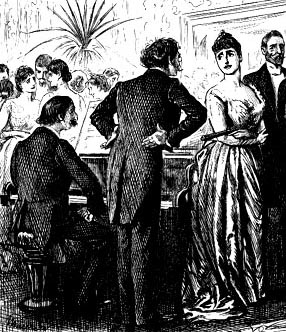
Strongman from the aptly named Olde Strong Men blog. No, I wouldn’t have ever known it existed if I hadn’t searched Google.

Waltz image from the Victorian Web.
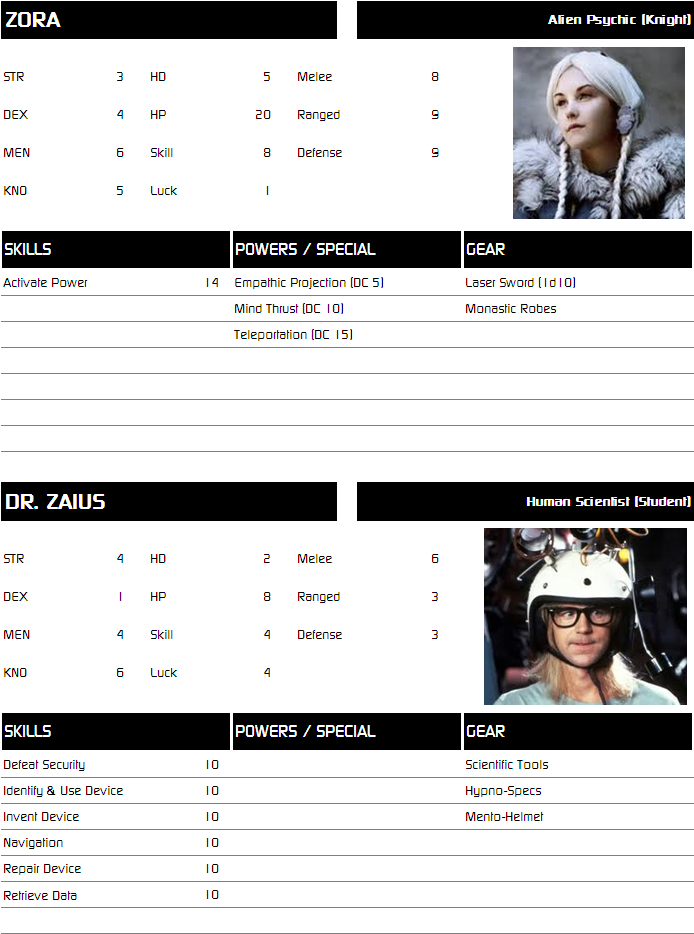
First Playtest Characters for Space Princess

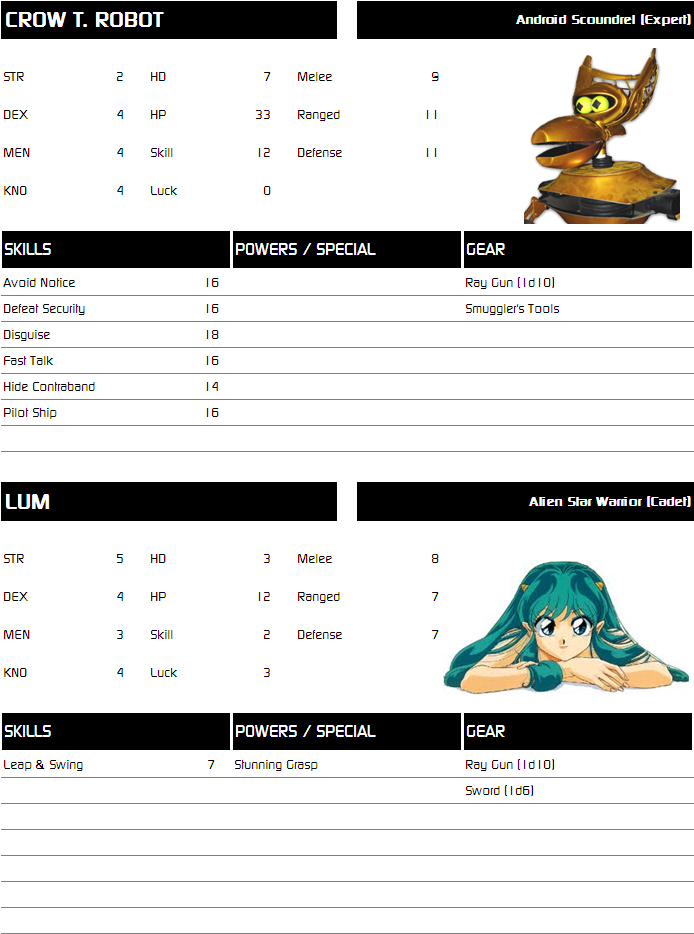
Last night, the kid and I rolled up some characters for Space Princess to test things out a bit. Thus were born these guys …

It was late, so there was no time to actually delve into space fortress and rescue a princess, but we did play out a couple of the “escape in a spaceship” scenarios.
Both went pretty well. In both cases, Crow was flying the Satellite of Love, a blockade runner. Lum was manning the light lasers and Zora the heavy lasers (and she was a crack shot), while Dr. Zaius was working the navigation computer – very slowly, I might add.

The first scenario pitted the blockade runner against four starfighters. After about six rounds of combat, the starfighters had been taken out of play – two having their weapons knocked out, the other two their engines. In essence, the escape was made. The starfighters had little ability to score meaningful hits on the blockade runner, so I might need to supe them up a bit.

In the second scenario, the SOL went up against a dreadnaught. This one was a bit more exciting. Initially, the SOL had no trouble out-maneuvering the dreadnaught. Crow is an expert pilot and the blockade runner is a quicker ship. Zora even scored some early successes with her heavy lasers. But as time went on, the firepower of the dreadnaught began to tell. The SOL‘s armor was degraded, then its weapons systems were taken out, the nav computer damaged (which prolonged making the jump to light speed). Finally, the artificial gravity was knocked out. It looked like Zaius had one shot left at making that jump into light speed and … he did. Just barely.

The kid was charged up over the battle, and even though the mechanics were very simple (pilot check, fire weapons, navigation check), the slow erosion of the blockade runner’s systems and the seemingly inevitable defeat made the process enjoyable. Mind you – one more round, and it’s very likely the SOL was, well, SOL.

Over the holiday I’m going to run the first official play tests of a space fortress, and I’ll post those results next week.

The Glooms – Dungeons and Mines

7.91 Adalark’s Tomb: A tall cenotaph of black marble stands 20 feet tall here. On the top there is a sculpture of a giant serpent, mouth open and fangs bared.

The serpent is the entrance to a small tomb complex located about forty feet below the ground. One cannot fit in the serpent’s mouth, of course, but by reaching deep into its mouth (unfortunately impossible for halflings or gnomes) and touching a stone lodged therein, a person is teleported beneath the ground.

[A] The entry chamber into the tomb is a square room with black marble walls and a 30 foot high ceiling. Against one wall there is a copper plaque bearing the following inscription: “Adalark | Called Great | Was Great | He cannot blame lesser thieves for following in his steps.”

There is a terracotta statue here of a weeping woman looking at the plaque, on hand reaching toward it. Approaching any of the walls in the room causes a sub-section (10’ wide by 10’ tall) of that wall to move backward – apparently one cannot step closer than five feet toward a wall. The walls extend back ten feet, at which point a metal portcullis descends from the ceiling, locking them in. The walls then slowly begin to crawl back to their original position to crush the intruder. The section of the wall with the plaque does the same as the others.

If all four walls are forced back at the same time, the wall with the plaque disappears completely and reveals a second chamber, and the other three traps do not spring.

[B] The trapped chamber opens here onto a balcony overlooking a square room about 10 feet below. In the room below there is gathered the treasure of Adalark the master thief, which consists of three gold ingots (3 lb each), a brass icon of a winged woman (worth 1,000 gp), a cape of deep red velvet (100 gp), six silver shields (250 gp each), thirty pairs of chartreuse gloves (they were Adalark’s trademark), a suit of halfling-sized platemail and 8,000 gp. The interior of the platemail is coated with platinum (2,000 gp worth).

Extending from the balcony there is a wall of force that does not allow one access to the treasures below. The treasure chamber is actually an optical trick called “Pepper’s Ghost”. The treasure is actually located in a room beneath the balcony. A large pane of glass slanted across the open area reflects the treasure, which is illuminated from below using a continual light spell. The most likely way of dropping into the treasure chamber is to use dispel magic to remove the wall of force. Any who then drop into the chamber without being very careful may drop through the glass into a pool of acid below (inflicts 3d6 points of damage from the fall and 1d6 points of damage each round from the acid).

14.87 Boring Wreck: A large earth borer made of steel with brass highlights has been abandoned here by the Master’s synthoids after the drill bit broke. The Master was already on to other projects and never reclaimed it. Eight were-weasels have now adopted it as a lair, and keep 60 cp, 170 gp, fifteen wolf skins (worth 8 gp each) and a small pearl worth 3 gp hidden inside.

20.92 Iromir Mine: Iromir is a natural alloy of iron and mithral. A very deep mine here, run by kobolds (who took it from a clan of svirfneblin), produced a good amount of the material, which the drow favor for their weapons and armor when they cannot find pure mithral. The shipments recently stopped. When a band of orog from the village in [32.98] appeared to investigate, they discovered the mine (it has seven levels) crawling with kobold zombies. There are now fifty orogs camped outside the mine and making some shallow forays into the place.

Image is copyright Wizards of the Coast.

Sunday Grab Bag

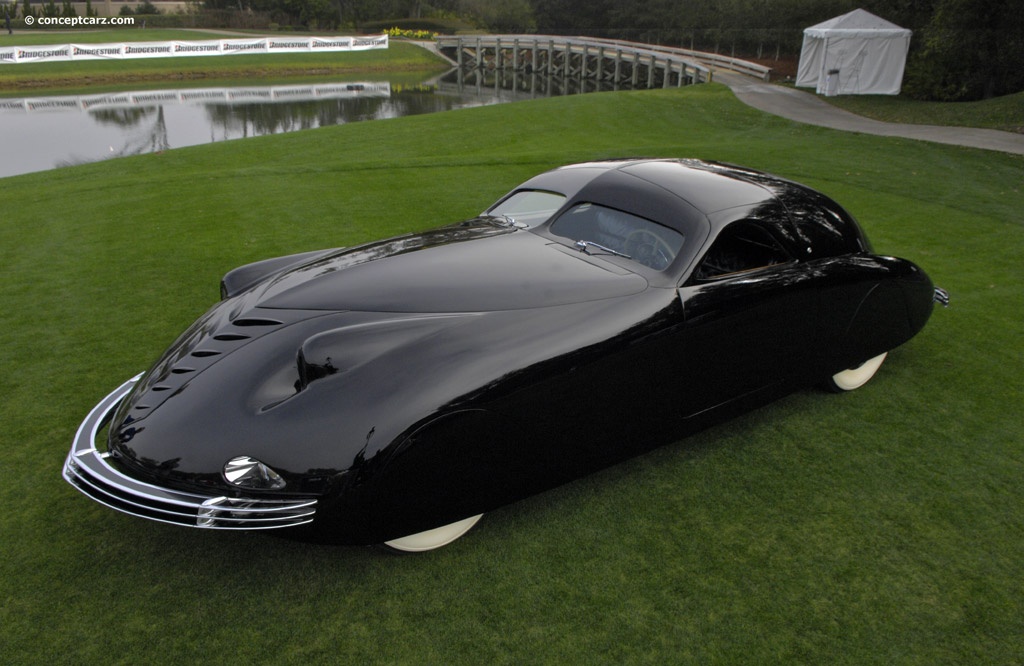
From the Mystery Men-Approved Vehicles Department

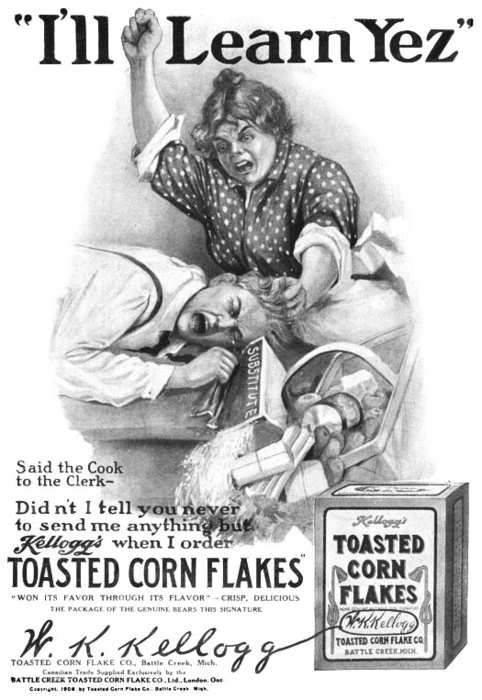
From the Bashful Blue-Eyed Ever-Lovin’ Thing’s Mom Department

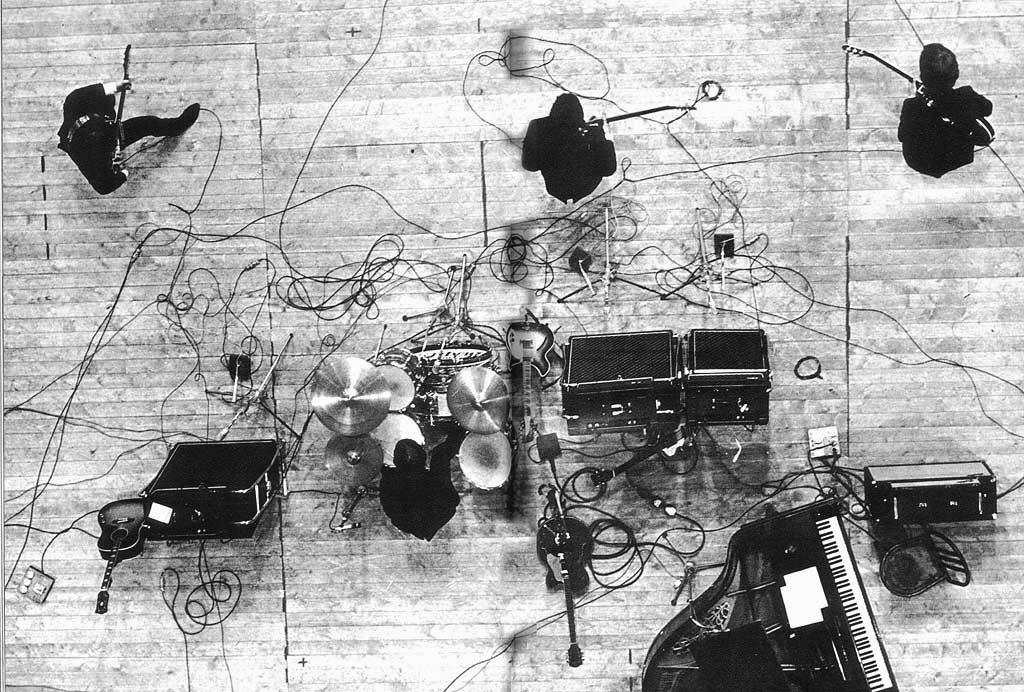
From the Fab Four Department

If you don’t dig Hard Day’s Night, I’m not sure we can be more than friendly acquaintances.

From the Robots Have a Hard Life Department

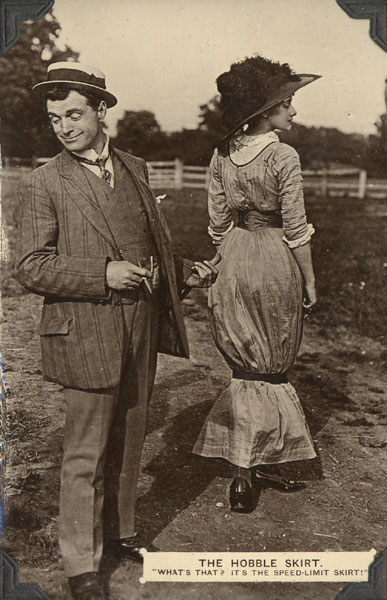
From the “It’s Called a Hobble Skirt” Department

Useful information for fans of Morticia Addams

From the “It Ain’t Just Good to be a Gangsta” Department

From the Red Sonja Department

An image so awesome, I’m afraid I don’t even remember where I found it. Wherever it was, thank you!

Too Many Ideas …

Queen & Kaiser

Role playing in the late colonial period. Semi-Victorian gaming – gentleman of fortune, soldiers, daredevils, naturalists, native scouts, jungle guys and gals, etc. – but the game incorporates the competition between the Great Powers, such that the victories and defeats of the PC’s translate into victories and defeats by their patron power. You’d have to incorporate competitions of manners, honor, exploration, etc. Inspired as more by the satirical cartoons of the period and adventure fiction than realty. Maybe add some steampunk and occult rules for folks who want that, but otherwise keep it plausible rather than fantastic.

Image from wikipedia.

Notable Nobles – Part the Fifth

For the sample nobles today, we go into the elven wood.

Anwenod the Rebel Earl of Arddus
Anwenod is a raven-haired elf earl who dwells on the fringe of the kingdom and near the border marches of the humans. Grey of eye and lean of build, he is a masterful swordsman with a deep interest in the politics of both elves and men. He is currently attempting to woo the daughter of a human baron as a hedge against perceived enemies in the royal court. Anwenod’s retinue consists of his champion, Keryd (elf ftr 3/m-u 2), four elf warriors, two elf sergeants and Cedric, son of the human Baron Donal, who is a visiting dignitary attempting to secure the marriage of his sister Yulisa to the Rebel Earl.

ANWENOD: HD 9 (48 hp); AC 2 [17]; Atk 1 longsword or longbow (1d8); Move 9 (12 out of armor); Save 5; CL/XP 9/1100; Special: Double normal number of followers, cast darkness once per day.

Kaith the Quick, Duchess of Beor
Kaith is a tall elf woman (5’9”, very tall for an elf) with ebony skin and a sharp jaw line. Her hair is short, curly and as black as pitch and her eyes emerald green and radiant. Kaith is a cynical woman, bored with the tedium of life inside the great elfwood. The high queen is her cousin and a tepid rival. Kaith’s retinue includes three scribes, three elf warriors, the harpist Lhart (bard 3) and the human rake Lardre, whose devious antics and disruptive presence help relieve the duchess’ melancholy.

KAITH: HD 5 (29 hp); AC 2 [17]; Atk 1 weapon (1d8); Move 9 (12 out of armor); Save 12; CL/XP 5/240; Special: Double normal number of followers, treasure as CL 15, +1 to initiative rolls.

Morgannet the Renowned, the Spider, the High Queen of Elves
Morgannet is the high queen of the elfwood, a gentle woman with nut-brown skin, gray-green eyes and golden brown hair that falls down to her ankles. She is fine-boned, but with flashing, lively eyes and a vivacious, cherubic face. Despite her childlike appearance, Morgannet is an expert politician. Her spies, the elven thieves (level 3 and 4) Blathet and Dumnann are frequent visitors to every court in the land, and little escapes their notice. Her retinue includes three maids-in-waiting (lesser nobles), seven scribes (for the elves believe that every utterance of their queen is prophetic and must be recorded), four elf longbowmen and their sergeant, Pathogius, a human found as a waif and reared by the elves.

MORGANNET: HD 2 (10 hp); AC 2 [17]; Atk 1 weapon (1d8); Move 9 (12 out of armor); Save 16; CL/XP 2/60; Special: Triple normal number of followers, treasure as CL 20, Charisma 14, Wisdom 13.

Illustration by Arthur Rackham. Found HERE.

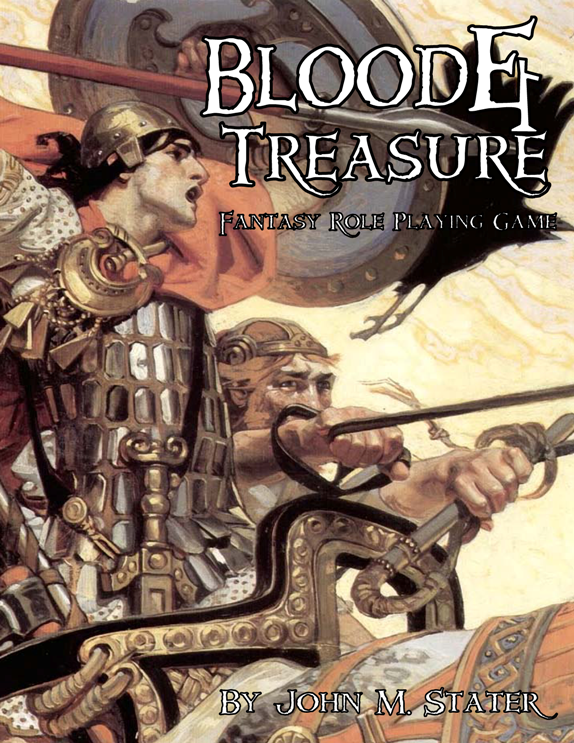
Choosing the Bloody Cover

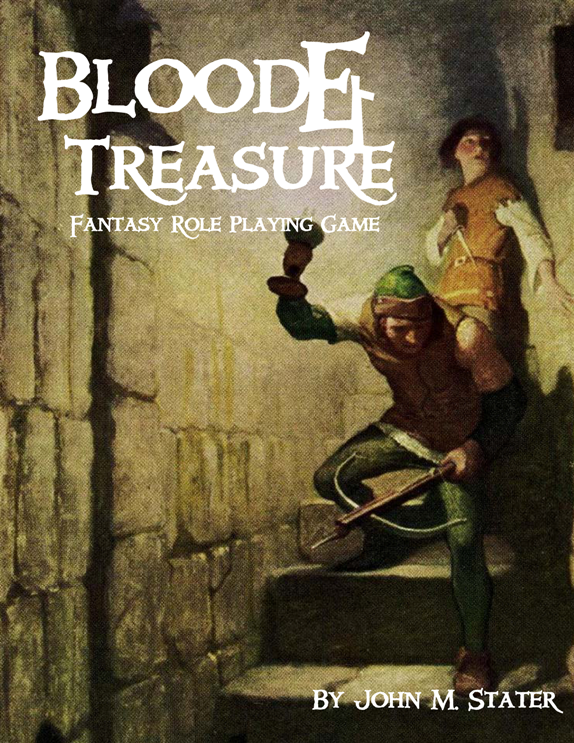
Last night, the child and I started looking at potential covers for Blood and Treasure. I’ve been chipping away at it in between writing the Hell hex crawl, finishing HCC 6 and putting the finishing touches on Space Princess, and I’ve so far finished about 90% of the chapter on characters* (still need to work on strongholds, domains and mass combat), have the basic adventure rules finished (skill checks, combat, dangers, movement/time, etc.) and have spells and monsters from A-C written up. So far, so good.

On to the cover mock-ups …

First image I looked at is one people have seen in my adverts on the back of issues of NOD. I originally found it at Golden Age Comic Book Stories. I like the overall look and feel – descending into the unknown – and it remains a strong contender.

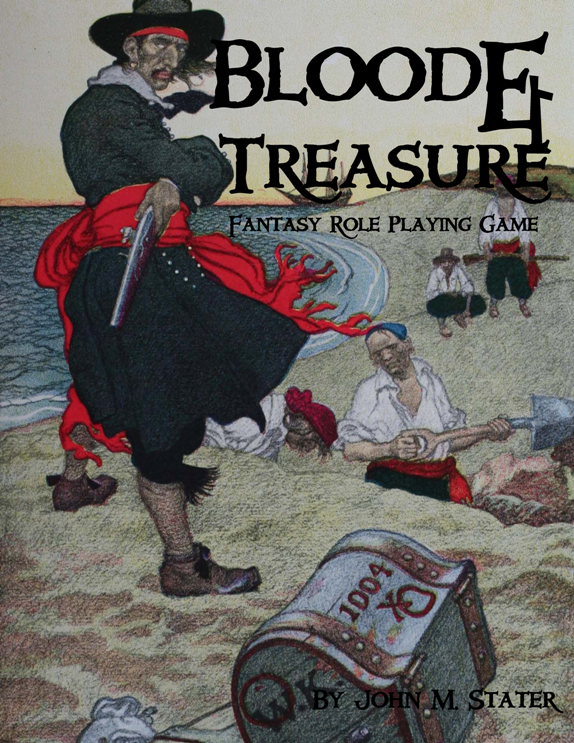
Looking at some other images from GACBS, I found this one which fits the “treasure” theme nicely, but frankly makes the game look like it’s about pirates.

Side Note: I have to write a game about pirates now, because this illustration would rock as a book cover. I’ll put it in the queue after Action X.

J.C. Leyendecker is one of my favorite illustrators. This illustration of Cuchulain is gorgeous. Very heroic – but is heroic the vibe I want for Blood and Treasure? The interior character art I’ve commissioned is meant to look like adventurers who are banged up, dirty and scarred. Nice, but I’m not sure it’s quite right.

The last image was initially just for fun – I didn’t expect I would like it. It is a medieval painting of a cleric being beaten up by demons. No – not the one I just used for NOD 11, but probably depicting the same scene. After I dropped it in, though, I did like it, very much. Even looks like there is a goblin and gnoll in the background.

In the final analysis, for me, it’s between the first cover and the last. Unless I find something else, of course. What are your thoughts, gentle reader?

* Races are going to be the traditional human, dwarf, elf, gnome, halfling, half-elf and half-orc. Classes are going to be all the classes in the SRD (barbarian, bard, cleric, druid, fighter, magic-user, monk, paladin, ranger, sorcerer and thief) plus two of the prestige classes turned into full classes, the assassin and duelist. I think that covers things pretty well.