A couple weeks back, my daughter and I were chatting about games, and I realized that she hadn’t played a wargame yet. I thought at first about brushing up on the old Warhammer Fantasy Battle rules, but then decided it would be fun to use Gygax’s Chainmail rules. I’d never used them before, so it was an opportunity for my daughter and I to both learn something new.

First step – read the rules. Second step – try to reorganize the rules so I could understand them. What the founders of the hobby had in creativity they made up for with a lack of organization! In the process of learning the rules, I discovered some things about old school D&D while I also gained an appreciation for those rules. What follows are a few takeaways for those who dig the old school, and those who have never read Chainmail. FYI – I’m using the third edition rules, which I found online.
Figures in the game are divided into two sorts, each using a different combat table. The lowliest of the figurines are the regular troops. These fellows use one of two combat tables. If each figurine counts as 10 or 20 warriors, you use the mass combat table. On this table, you roll 1d6 (one dice is easier when rolling lots of dice for lots of figures), and have one of six ratings for attack and defense – light foot, heavy foot, armored foot, light horse, medium horse and heavy horse.
The closest thing in later editions of D&D to these figures is the men-at-arms, bandit (brigands), etc. In the first edition of D&D, though, these fellows show up on the character class combat tables – Men, or Men +1.
If each figure represent a single warrior, you use the man-to-man combat table. On this table you roll 2d6, with your chance of hitting based on the attacker’s weapon and the defender’s armor. This isn’t completely different than the mass combat table, but is more fleshed out – lots of weapon types, lots of armor types.
Beyond these normal warriors, you have the monsters, heroes, super heroes and wizards from the fantasy supplement. Wizards get five “levels” – seer, magician, warlock, sorcerer and wizard. Heroes fight as well as four men, and thus in D&D they are fourth level fighters. Super heroes are eighth level fighters, because they fight as well as eight men. Wizards fight as well as two men. There are special heroes called rangers – who are essentially heroes +1 (which is why AD&D rangers have two hit dice at first level).
The hero-types can attack using the mass combat table or man-to-man table against normal troops, or they can use the fantasy combat table to fight other fantasy figures. Against normal troops, heroes take 4 kills to kill, and super heroes 8.
With hero-types, you also see the origin of saving throws. Several monsters have special abilities that the hero-types can ignore if they roll above a number on 2d6.
On the fantasy table, the chances to kill are based on the type of attacker and type of defender. If a balrog is attacking a dragon, it needs to roll an 11+ on 2d6 to kill it. The dragon needs a 6+ to kill the balrog. Elves and fairies use this table (sort of) if they have a magic sword. This suggests that the inability of some monsters to be damaged by anything other than magic weapons or monsters with lots of Hit Dice originates here.
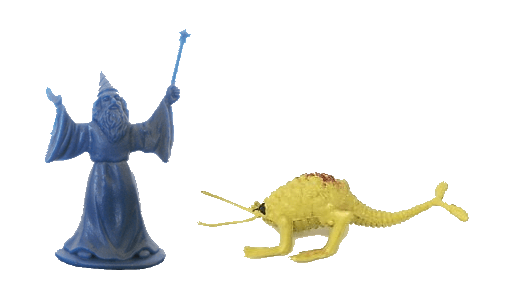
You better leave this one to me guys
OD&D Chainmail Style
If we were to carry these rules over to D&D, we would find some interesting changes. Combat between humanoids would pit weapon versus armor, not attack bonus vs. Armor Class. PC’s above first level would dominate lesser foes by the number of hits it takes to kill them, and by the number of enemies they can attack. This is an important point that often gets lost in later editions. Melee rounds are one minute long. The number of attacks a figure gets are not a representation of how many times he can swing a sword during the round, but rather an abstraction of the number of potential chances he has to inflict damage on an opponent.
In mass combat, hero-types and monsters can attack multiple targets, but not necessarily make multiple “attacks” against a single target. This is reinforced by the fact that in fantasy combat, pitting heroes and monsters against one another, the entire combat is resolved with a single attack roll by each combatant, and no multiple hits are required to kill – it’s just one and done.
Bringing this concept into D&D could be interesting. A monster with two claw attacks and one bit attack can use them to attack three foes, but can only use any one of these attacks against a single figure.
Levels
The fantasy combat table does include the concept of improved attack ability, even though the mass combat table does not. For example:
| Figure | Wight | Giant | Dragon | Balrog |
| Hero | 6 | 11 | 12 | 11 |
| Super Hero | 4 | 9 | 10 | 9 |
| Wizard | 6 | 11 | 9 | 7 |
This table shows the target number (equal to beat) on 2d6 a figure needs to destroy the listed foes. Comparing the hero to the super hero, you see the super hero effectively gets a +2 bonus on his attacks. This translates into different percentage increases due to the nature of rolling 2d6, as opposed to 1d20. It averages out to a +25% bonus across the board (including monsters not on the table above), or a +5 bonus to hit on 1d20. Interestingly, the wizard attacks wights and giants as well as a hero, but is better than a super hero at defeating dragons and balrogs.
Improvement in “level” is more obvious for wizards in Chainmail than for heroes/super heroes. There are the five levels of magic-user, from seer to wizard. In D&D, seer is a title for 2nd level magic-users, magician for 6th level, warlock for 8th level, sorcerer for 9th and wizard for 10th.
With each level, you gain more spells, a greater range for your spells, and your chance to successfully cast spells increases. Yes – chance to cast spells. Spells come in six compexities, with a target number that must be rolled on 2d6 for the spell to happen immediately. Failure by 1 means the spell goes off in the next round. Failure by more than 1 means the spell casting fails completely.
When Chainmail became Dungeons & Dragons, they combined the idea of improved attack ability from the fantasy combat table with the multiple attacks/kills concept in the form of Hit Dice/hit points. The weapon vs. armor idea survived in AD&D as the weapons vs. Armor Class table that most of us ignored as kids, and as the combat system used in Gamma World.
In retrospect, the introduction of levels (and experience points) was a very cool idea, bringing a facet to the game absent in Chainmail. Rather than just being a “hero” wandering around a dungeon looking for treasure, you got to play out the building of a legend, from humble origins as a man-at-arms to eventual super hero status. That innovation is probably what helped build Dungeons & Dragons itself into a legend.


 A year later, we get our first glimpse of the wonderful TARDIS and its pilot, the Doctor, played by William Hartnell. Hartnell had a career in crime movies, and so brings a little subtle menace with him to the role of the mysterious Doctor. I remember reading somewhere that the show was intended to teach children about history … and then I found out the Daleks showed up pretty early in the series and realized that any history education kids were going to get was probably incidental.
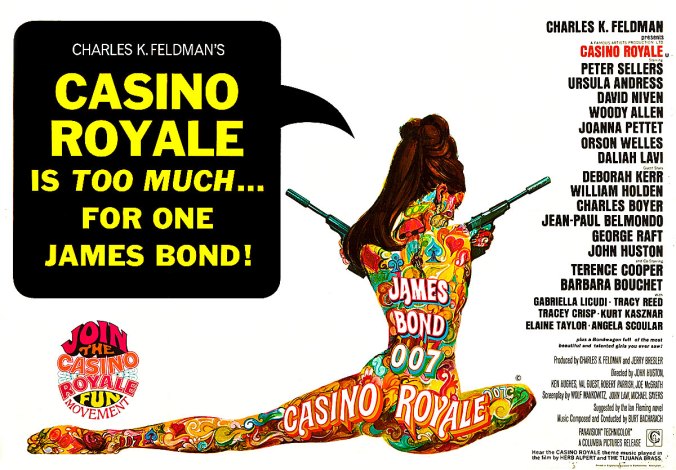
 The Doctor’s first regeneration is followed three years later by Bond’s first regeneration, with George Lazenby taking over for one film to very mixed reviews. Lazenby’s bond was a departure from the formula. Where Connery’s Bond was a more emotionally distant, Lazenby’s Bond gets married in the film to Contessa Teresa di Vicenzo, played by Diana Rigg. This was faithful to the novel, but would not be repeated in the series for many years. Lazenby’s tenure was followed two years later by one more outing for Connery.
 The Third Doctor appears three years before the Third Bond, with Jon Pertwee beginning his celebrated tenure as the Doctor. Pertwee’s Doctor struck me as a bit less irrascible than Troughton’s, but still testy. This is also our first Doctor in color … big, bright, beautiful color. There’s so much right about this run. It was the first run of Who that I saw after I started watching the Tom Baker years, and I wasn’t sure at first that I was going to like it, but I really did.
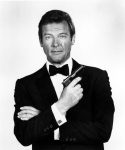 Just as many people associate the classic Doctor with the actor who had the longest tenure in the roll (just wait a minute, he’ll be along any time now), I think my generation probably associates Bond with Roger Moore. Yeah, when we got older, Gen X took the tack that Connery was cooler because he was more serious yadda yadda yadda … but in our hearts we loved Roger Moore. Moore would spend 13 years as James Bond, and though he started off the cold, dashing assassin you would expect, his own more jovial personality ultimately took over. I love camp, so I have no problem with thus, though I totally understand those who don’t like it.
 As the longest Bond tenure was gettig started, the longest Doctor tenure arrived a year later. Tom Baker‘s run was similar to Moore’s run as Bond, starting out with a beautiful alien menace and growing more campy as they years went on. Again – no problem for me. I adore Baker’s Doctor, and he is without a doubt my favorite. He also had my favorite companion in the form of Lela. No, not because of her outfit, but because while the Doctor was figuring out a virtuous solution to a problem she was pulling a knife and saying the obvious – let’s just kill the bad guy. That was a great counterpiece for the Doctor.
 Roger Moore would survive into the 80’s as Bond, but Baker would hand over the role of the Doctor to Peter Davison. I’ll state it up front – I dig Davison in the role. He had a daunting challenge ahead of him taking over for the beloved Baker. I’ll also state, frankly, that I don’t like most of the serials he played in. The writers didn’t give him as likeable companions (again, this is no slight directed towards the actors, who were great), and the stories didn’t always thrill me. Still, there was some good stuff there, and I think Davison should get more credit than he does. I do think, though, that the franchise at this point was losing steam … the assumptions on which it was built were shifting under its feet; and honestly, the Bond franchise was in the same boat.
 The Roger Moore Bond era would be rounded out in the Doctor Who franchise by Colin Baker. Baker’s doctor was a return to the earlier menace of the Doctor’s alien mind, and maybe more so than any other doctor he has a severity that is shocking when compared to the wise fool played by Tom Baker. They say that Colin Baker wanted a more updated look for his Doctor – something not unlike that of the ninth incarnation, but instead the designers tried to catch lightning in a bottle with something more reminiscent of the fourth Doctor.
 Roger Moore was 58 years old when he made A View to a Kill, and was ready to retire. The rumors started swirling that Remington Steele’s Pierce Brosnan was going to be Bond. Cool! Loved Remington Steele, and who better to take over for Moore than Brosnan. This is going to be so great, I can’t wait until … Timothy Dalton? Huh?
 The Fourth Bond was going to be okay, but what about the Seventh Doctor? The first time I watched a Sylvester McCoy serial I was still high on watching Tom Baker, and I wasn’t so sure about this guy. When I got the chance to watch more of them on Retro TV, I found that I really liked McCoy in the role. The angry edge was gone, the tone was sometimes lighter and perhaps more manic, and I really looked forward to more. I think McCoy’s run reminds me the most of Tom Baker’s, so I guess it’s no surprise that I like it. But alas, after three years, the magic was fading and there would be no regeneration for the Doctor. He just faded away …
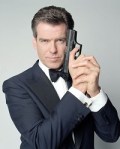 there, it sorta sucked – I think I prefered my tenure in the 80’s). Still, there was excitement and hope for the new series, and that’s always good.
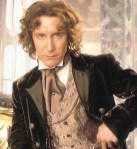 shifted into something I loved in the past from something I was going to watch in the present.
 Head-to-Head Sports Action … Without the Fresh Air
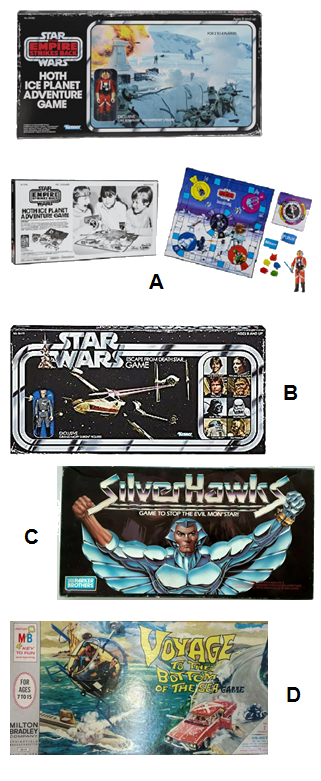 You’ll Never be Bored with these Board Games
 These Figurines Will Liven Up Your Game Table
 Experts Agree – Iron-Ons are the Fashion of the Future!
 Sunday |
 Monday |
  Tuesday |
  Wednesday |
  Thursday |
  Friday |
  Saturday |
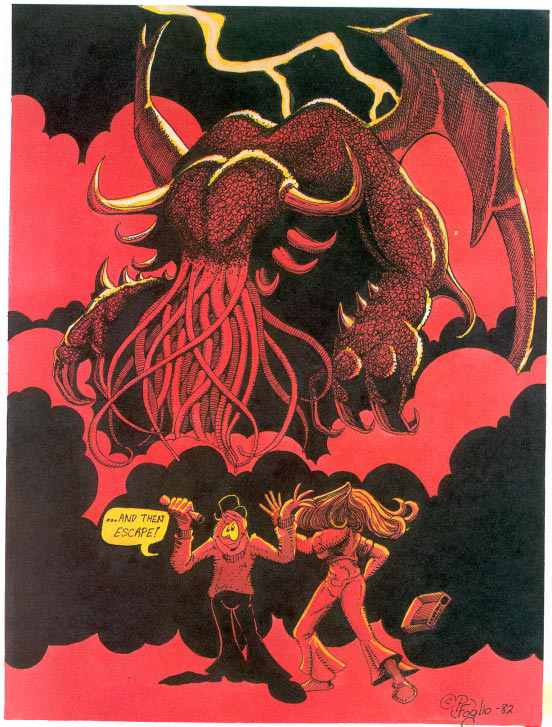
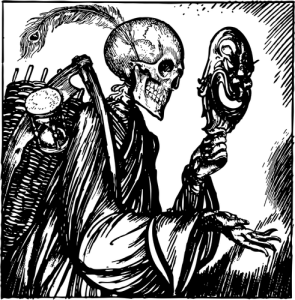 Here’s an idea for a dungeon encounter to frighten, or at least annoy the players.
 working hard and praying for peace, and trying to relax with old TV shows, old movies and some podcasts about fun things. I will readily admit that my interests tend towards the old – movies from the 30’s and 40’s, TV from the 60’s through 80’s, “bronze age” comics, old games, etc. There’s something about the design and awkward charm that really get me, not to mention nostalgia for places and people I’ll never see again.
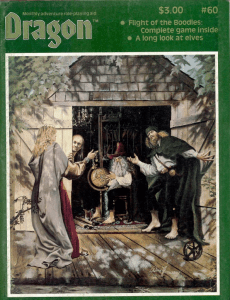
 review than a “here’s what I dug about this issue”.
 The first big piece in this issue is “All About Elves”. You get Roger E. Moore’s “The Elven Point of View”, with super cool Erol Otus art – the ultimate elven fighter/mage. I really dig the idea that only elves can be fighter/mages. There are, of course, lots of cool ideas in the article – Roger E. Moore is one of my favorites. Roger and Georgia Moore then present the Elven Gods – these are the additions to the pantheon beyond Corellon Larethian in Deities & Demigods. These days, I’m more apt to make up my own, but as a kid, articles like this were eye-openers to me. Notions I didn’t know that I didn’t know.
 Gygax’s “From the Sorcerer’s Scroll” is a big load of cantrips. AD&D cantrips were 0-level spells before later editions pumped them up and made them more useful. I think it would be cool to make these available to non-magic-users on scrolls. Most of these cantrips require the player to really use their imagination and creativity to make them useful in a dungeon adventure – so naturally, I love them.
 Happy Fourth of July folks! Remember, it’s not enough to value your own liberty, you have to love other peoples’ liberty just as much as your own.
 Land of Nod