Space Princess Quickie

Okay – if this image by Allen Anderson is actually in the public domain …

… then this crap just got serious.

Also – I have an offer to do some art for the interior … I’m going to have to ponder this for a bit and finish up a couple other projects, but I may pursue this and add yet another game with virtually no sales potential to my ever increasing repertoire.

H/T to Illustrateurs blog for the JPEG image

Eyebots, Horned Tigers & Space Princesses

A couple things today.

First – some cool sci-fi art harvested from the digital tides.

This one makes me think Traveller, but very ’70s slick sci-fi. From the Syd Mead Gallery.

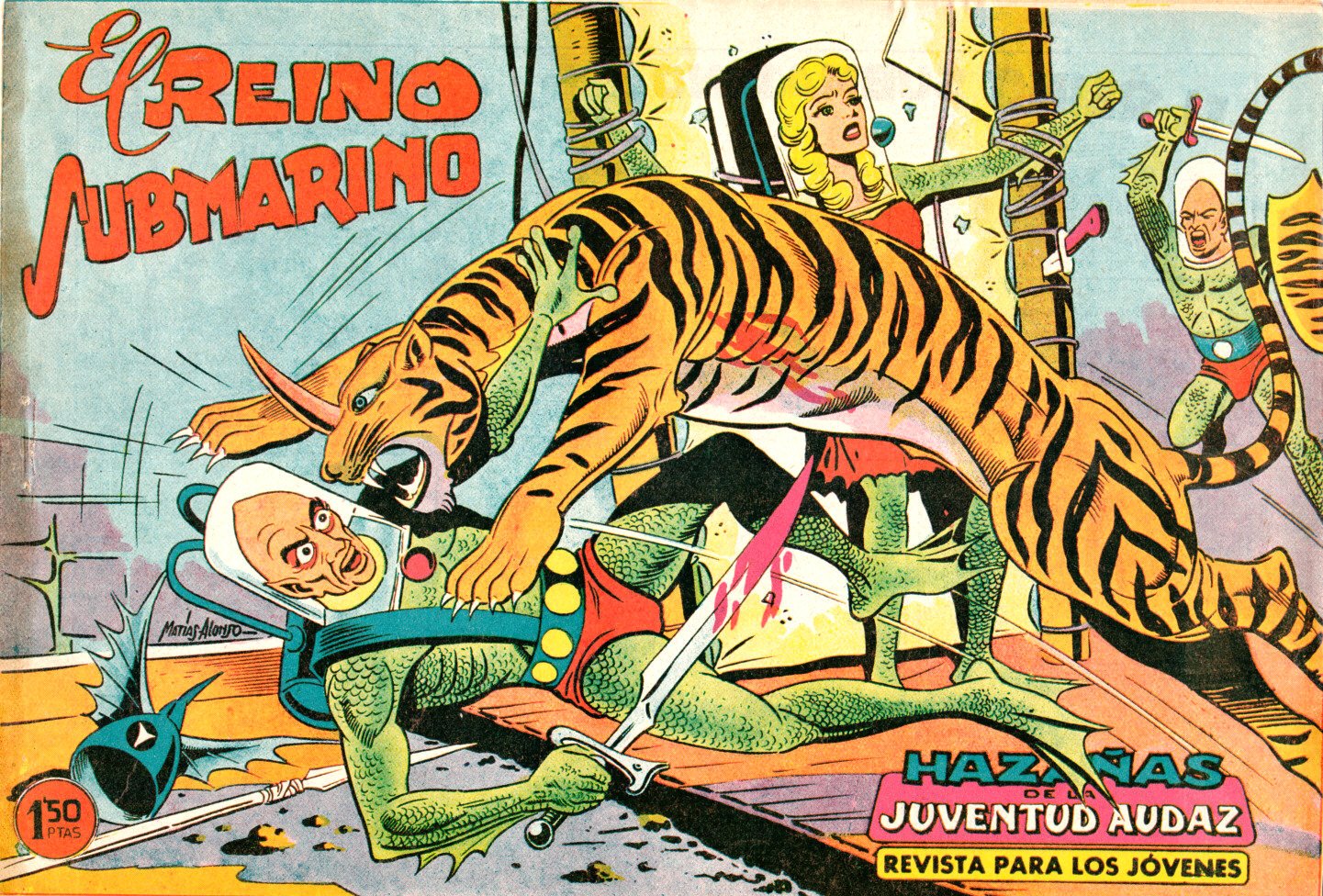
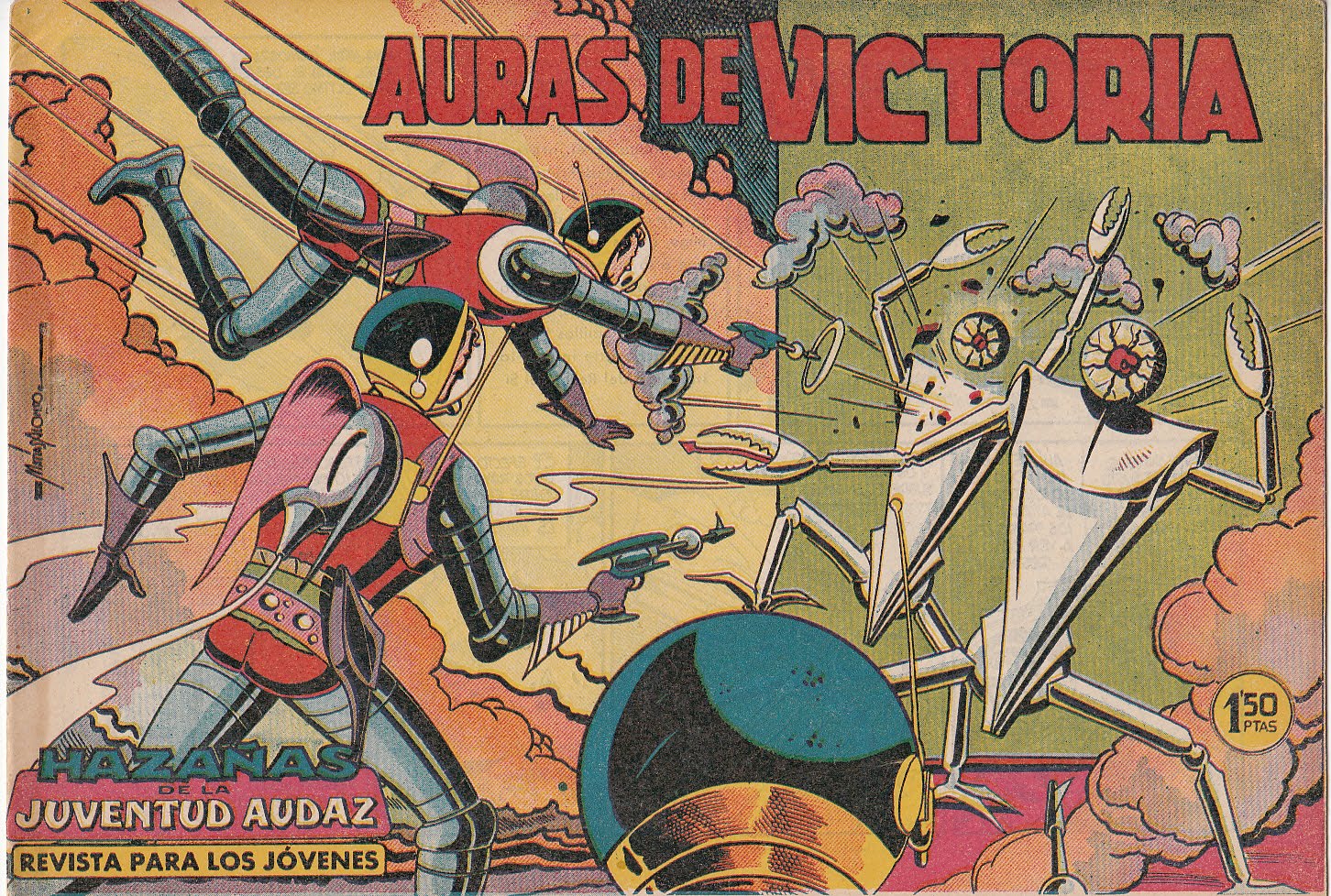
These images are more Encounter Critical to my mind – the kind of game I’m probably way more likely to play than Traveler. To be completely honest, though, I’ve never played either game. I’ve rolled up characters, but never had the chance to play. Found at (like the image above) Super Punch!

Also …

So, I was perusing a blog that asked why sci-fi RPGs never hit it as big as fantasy RPGs. My take was that D-n-D (’cause when you’re talking about uber-successful fantasy rpg’s, you’re talking about D-n-D) was successful because it borrowed things from the fantasy genre without trying to emulate fantasy stories. Instead, it was a wargame set in a dungeon. That kind of game is easier to run than story emulation, and therefore it was more popular. So – my question – would a sci-fi game that attempts to be nothing more than, for example, “save the space princess from the starlord’s fortress” work. I think my next project that I promised I wouldn’t write was just born. And I think I’ll call it Space Princess.

Hmmm – Star Warrior, Scoundrel, Scientist and Psychic … this could be fun.

Update: Jay reminds me of X-plorers. I need to look into that game.

Update 2: In the meantime, I’m thinking about the concept of sci-fi heroes delving into star fortress, and here’s where my mind is wandering:

Four ability scores – Strength (bonus to hit, bonus to hit points), Dexterity (bonus to hit, bonus to defense), Mentality (for psychics) and Knowledge (for scientists) – simple bonuses and used for saving throws (maybe score x3 as a percent + 5% per character level?)

Four classes – As above; I’ve already written a scientist and psychic class that I could adapt, and the star warrior and scoundrel should be pretty easy as well.

Races – Human, Android, Alien – the alien rules would be a “build your own alien” concept – probably would resemble d20 race builds more than anything else. They would probably have a level limit and be able to take levels as star warrior or a multi-class based on whatever ability score they get a bonus to.

Scoundrel skills – Disguise, Defeat Security System, Hide Contraband, Avoid Notice, Fast Talk, Pilot Ship – percentage skills like a thief, except you get six columns with percentage changes and assign the skills yourself; maybe Star Warriors can choose a skill as well?

Would rules that assign levels to players by dice roll – a’la Young Hero (Luke), Experienced Heroes (Han and Chewie), Old Hero (Obi-Wan) – be any good? Maybe a fun option. Also – maybe just five levels with slow advancement in the middle.

Need rules for the space battle when you’ve escaped the space fortress and the minions are chasing you.

I don’t know if I’ll go any further, but it’s fun to think about.

Yun-Bai-Du: City of the Clouds Part IV

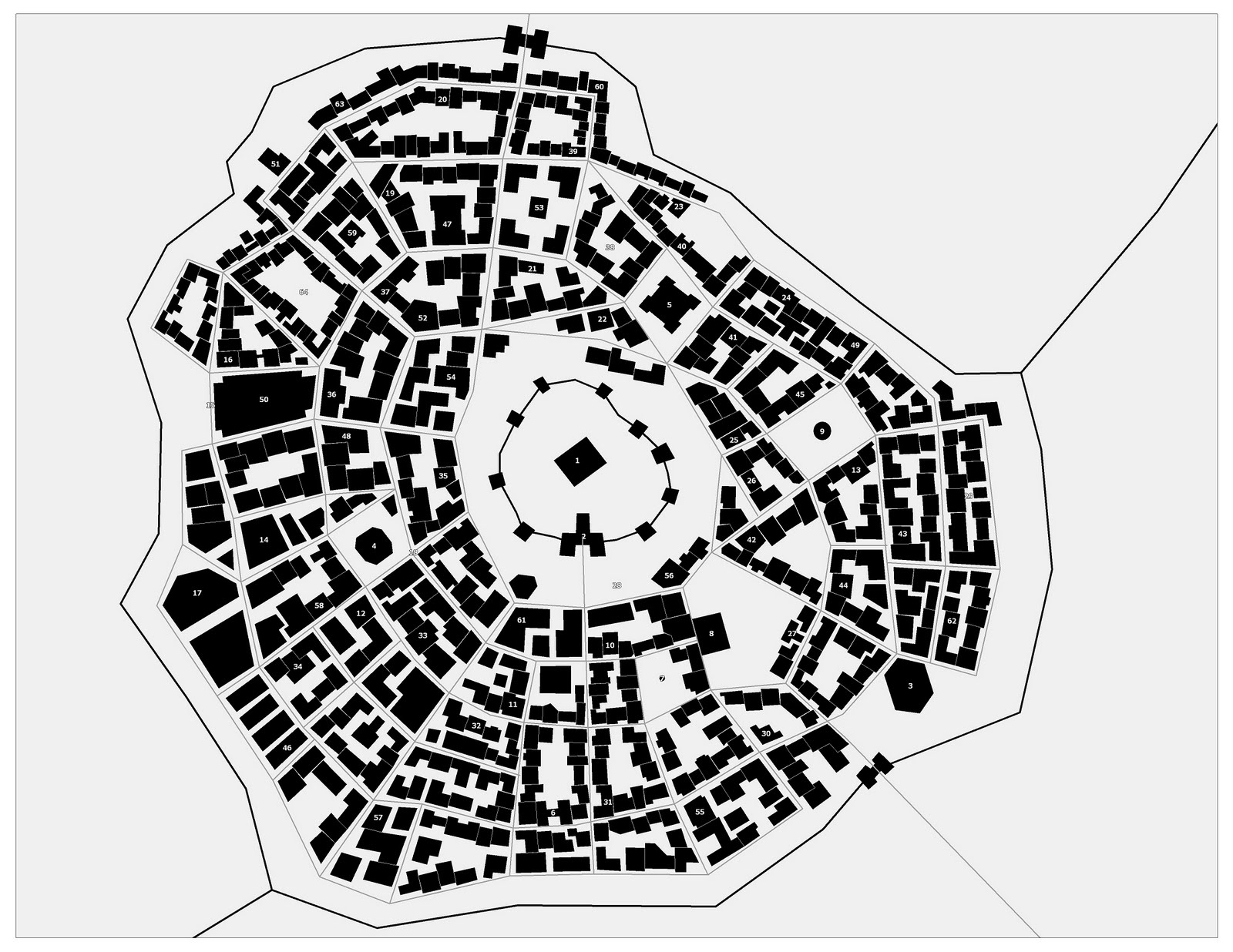
The map is finished except for the street names. By the next posting, I should have the street names in and a side view of this chunk of the city, which is constructed on the slopes of one of eight divine mountains. Here’s a few more locales …

29. Shanties: This low-lying, mucky area of the city-state is covered by a many shanties, the people living as beggars, thieves, fishermen and collectors of refuse. Many have benefited from aid by the Silent Hand, and the children of the shanties are a good source of information for those do-gooders. Notable among them is Juchidug, a recent arrival who claims to have been a captain of the Tiger Empress’ guard in Khatan. This is, in fact, an exaggeration, but he was a member of the royal guard and a favorite concubine of the empress. His indiscretions about his time in the palace and his stories of the empress have reached the ears of Buga [63], and his eventual death at the hands of an assassin is assured.

33. Armorer: The doors of this 2-story brick building have been closed and locked for over a month now, opening only to admit stores of food and fresh water. Smoke billows from the chimney night and day, and people wonder at the presence of a strangely beautiful man in robes of the deepest dye and fringed with the feathers of a white crane. The building belongs to Oorchin, a master armorer of Yun extraction who is very tall and quite fat, with hard eyes and a square jaw. Fearless and haughty, Oorchin has never been shy in bragging of his skills, and the shugenja Kuzhaidan has taken him up on his boasts and has ordered him to complete an enchanted wakizashi. The finished weapon is intended to be a +1 weapon capable of launching arcs of flame when swung. A piece of jet has been shaped into the form of a skull and will be implanted in the hilt of the weapon, while an essence of efreet blood is to be injected into the length of the blade. Kuzhaidan does not permit visitors, other than the aforementioned deliverers, and he allows Oorchin only brief naps – the armorer now regrets his bragging.

40. Healer: This three-story building has lovely wooden accents, carved in the shape of raccoon dogs and cobras. The bottom floor is a parlor of sorts, with a small pantry and kitchen attached. Here, the resident of the house, Temyshid the Healer, entertains prospective patients and friends on red velvet couches around a teak table, also richly carved. Stairs hidden behind a tapestry give access to the second floor, Temyshid’s operating chamber, where she provides such services as acupuncture and minor surgery. She is assisted by her husband, Kaik, a pleasant little man who uses too much cologne. The third floor contains the family living quarters, a chamber for Temyshid and Kaik and another for their four children, as well as a short hallway lined with shelves of glass jars and bottles containing medicinal compounds, herbs and a few odds and ends taken from former patients. Temyshid is younger than her husband, and entirely too bright for her own good. She has golden skin, black hair and blue eyes, with a neat, scholarly appearance. Although a healer, she is unfeeling and immoral.

Pretty Good Sword Fights

Lazy post today – but what they hey! So, a few days ago I posted a video from a 1950’s movie called Knights of the Round Table – a keen little film with some great fight scenes – fast and violent without all the quick cuts common in modern films. Here are a couple others (and yeah, my membership in the Grumpy Old Men of America might show up here a little) …

I wanted to throw in the final fight scenes from Flynn’s Adventures of Don Juan and Adventures of Robin Hood (which, by the way, features the film debut of Trigger as Maid Marion’s horse), but no dice. If you haven’t already seen them, go look for them. Don Juan also has one of my favorite Flynn leading ladies, Viveca Lindfors.

So – Mark of Zorro. Awesome fight scene – every bit the equal of Flynn vs. Rathbone. Please notice that without all the goofy special effects, they had to go to the trouble of constructing an interesting and satisfying scene both in terms of the sword play and the story. I have a hard time believing that CGI and special effects are cheaper than solid writing, but maybe I’m wrong.

I think my favorite fight scene of all time is this one from  Cyrano de Bergerac – “As I end the refrain, thrust home!” I was first shown this film in my freshman English class. There were a few of us D-N-D players in the class – one of my friends carried a briefcase to school and used it to hide the fact that he was reading the DMG and Monster Manual instead of paying attention to the teacher – and I remember having no interest in Cyrano. Poetry, thin swords, etc – no interest. Then I watched Cyrano and discovered not only my favorite literary hero, but also  that the world was much, much wider than the pop culture universe I had been inhabiting. Thanks English Class!

Yun-Bai-Du: City of the Clouds Part III

Another edition of Yun-Bai-Du, finally with a complete (well, 90% complete) map – I still need to put some numbers on it.

Spice Merchant: Sari is a graying Meng merchant who runs caravans between Yun-Bai-Du and Tetsukado, the southern colony famous for its pepper plantations. Very short and thin (outlanders sometimes mistake him for a tall halfling), the plucky merchant has made numerous journeys himself, but now leaves the adventures to his three sons, Toli, Qai and Mayn. Sari’s wife died many years ago, and he now entertains himself with a number of pleasant concubines. Sari is an immaculate man, and his 4-story, 20 room manse is no different. Much of the furniture is teak, with velvet cushions in a variety of vibrant colors. Callous and avaricious, Sari is a devotee to the lords of chaos, and his cellar contains a shrine to Mung, the Lord of All Deaths.

| Sari: HD 6 (22 hp); AC 9 [10]; Atk 1 weapon (1d6); Move 12; Save 11; CL/XP 6/400; Special: None.

Opera House: This large, beautifully decorated opera house is one of three in Yun-Bai-Du. The building is two stories tall and has a footprint measuring 100 ft x 100 ft. The interior consists of the stage/performance area (which measure 60 ft x 60 ft) in the center of the building and around it two stories of storage rooms, dressing rooms, lounges and offices. The performance area consists of a number of sunken boxes in which spectators stand surrounding a square stage. Balconies ringing the room are provided for noble and royal visitors, along with chairs and a steady stream of servants carrying trays of viands and goblets of wine. The house is administered on behalf of the king by Inasar, a fat mandarin of Yun extraction with heavy eyes and a sibilant lisp. Inasar is an unforgiving taskmaster with the staff of the opera house, but he fawns upon the talent, all the while entertaining less than moral thoughts about his star performer, the lovely Madame Ijing, a graduate of the Imperial Music Bureau and a favorite of the deposed Tiger Empress.

Hanging Garden: The street here goes through an ancient hollow. One either side there are embankments covered with flowering vines that hang over the lane, filling it with sweet perfume. Several wooden pegs at the lowest point allow one to cross a trickling stream that runs beneath the embankments. The hollow is inhabited by a tribe of fairy dragons. The dragons dwell in the clumps of flowers, but always descend to investigate intruders and maybe play pranks on them.

| Fairy Dragon: HD 2; AC 4 [15]; Atk 1 bite (1d4); Move 9 (F36); Save 16; CL/XP 5/240; Special: Breath weapon (5-ft cone of confusion), spells (4th level shugenja), invisibility, magic resistance (10%), telepathy (2 miles).

Hat Tricks – 9 Magic Chapeaus

Because you demanded it (not really) – a collection of magic hats for your game …

1. Swallow-Tail Cap: This long cap of silk has two 3-ft long tails – each conical in shape. The right cone is colored a deep maroon while the other is a happy beige. Embroidery around the seems to writhe and dance if one stares at it for a few moments (save or suffer from minor headache and the feeling of spiders running up and down your spine). The wearer of the cap can use it, by concentrating, to jump between dimensions. Alone, he can use the equivalent of the dimension door spell a number of times per day equal to his charisma bonus (minimum once per day). With one person holding onto the cap, he can teleport once per day. With two people holding onto the tails of the cap, he can plane shift once per day.

2. Feathered Cap: This tricorne of weathered blue-black velvet is elegant despite its age, but lacking a feather. When a feather is inserted into the cap, it gives the wearer powers corresponding to the bird. An ostrich feather might increase one’s running speed and kicking damage, a cockatrice feather might grant them the ability to turn people to stone with their bite, and a roc feather – well, that would probably just give them lots of shade and a stiff neck.

3. Scarlet Capotain: This scarlet capotain (i.e. pilgrim’s hat) with a gold buckle makes you look like whomever you are facing, assuming you are facing a human, demi-human or humanoid of roughly the same size. In addition to gaining the person’s appearance, you gain some aspect of their knowledge (i.e. a random skill, class ability, spell or memory), retaining it for 1 hour afterward.

4. Inky Baladava: This black baladava, when wrapped around the face, causes one’s skin to take on an inky appearance, giving them a +15% (or +3) chance to hide in shadows. Each turn spent this way drains the person of 1 point of constitution. These lost points of constitution can be restored only by eating, with one day’s worth of rations or food required to restore one point of constitution. The lost constitution corresponds to lost body weight (i.e. losing 50% of one’s constitution would correspond to losing 50% of one’s body weight). A person who loses all their constitution rises as a ghoul.

5. Master’s Hat: This top hat of felted beaver fur with a red satin lining gives the wearer the ability to speak with animals. Three times per day, the wearer can control one of the following animals – elephant, lion, gorilla, black bear or dog. Once per day, he or she can polymorph a person into one of the aforementioned animals.

6. Bodacious Bowler: This bowler, when set atop the head, casts an illusion over the wearer, making them look like everything they have ever wanted to be. In return, the person loses their voice as long as they wear the hat.

7. Porkpie of Pratfalls: While wearing this little hat, a person enjoys a +4 bonus to saving throws made against taking damage from falls.

8. Sugegasa of Fujin: This wide, conical straw hat creates cool, refreshing breezes for the person who wears it – essentially, allowing them to ignore heat up to 130-degrees Fahrenheit. If the wearer grasps the hat with both hands and whistles, the hat will lift off, giving them the ability to fly clumsily (as the spell) for 1 hour per day.

9. Hat of Many Surprises: This hat changes shape once per turn. The person wearing it does not realize this and will not be made to believe it, even if presented with a mirror, assuming instead that it takes the shape of their favorite style of hat. When removed, the hat assumes that form and keeps it until worn by someone else. Aside from this quirk, the hat grants the wearer a protection from evil effect. Roll on the following table to determine the hat’s current shape. The Referee should make these rolls and everybody but the wearer of the hat should be informed of the result.

1 – Horned helm (i.e. viking helmet) – wearer goes berserk in combat
2 – Bicorne – bonus on finding direction using the stars and immune to sea sickness
3 – Phrygian cap – freedom of movement
4 – Busby – +2 damage on charge
5 – Propeller beanie – intelligence cut in half
6 – Stovepipe hat – cannot lie, can discern lies, +2 damage from back attacks
7 – Bascinet – +1 to Armor Class, double normal range of surprise
8 – Scottish bonnet – must save or begin dancing in the presence of drawn swords
9 – Wool cap – head stays warm in cold weather
10 – Dunce cap – struck with confusion whenever asked a question
11 – Wizard’s hat – cast spells as 1st level magic-user (roll known spell randomly)
12 – Jingasa – language changes to Japanese
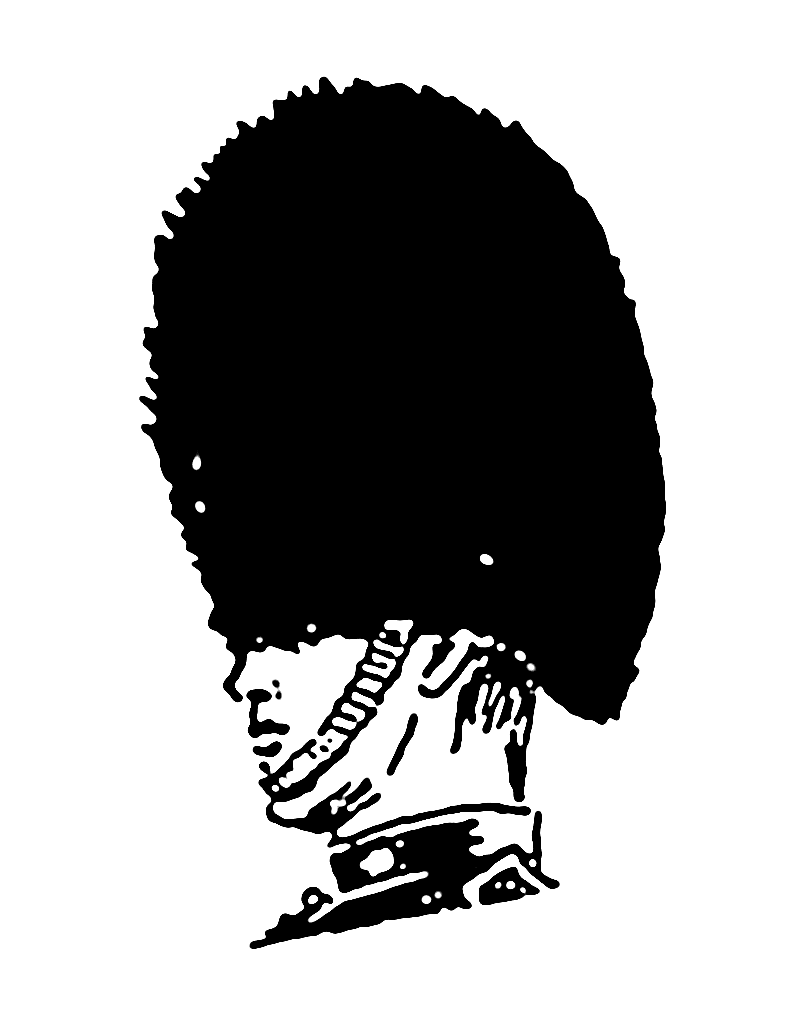
13 – Bearskin – immune to fear
14 – Beret – personality becomes acerbic, strong desire for a cigarette
15 – Cowboy hat – +1 bonus to missile attacks
16 – Cordobes – +1 bonus to attack with sword
17 – Custodian helmet (i.e. British constable’s hat) – can summon a gang of club-armed bobbies as a horn of valhalla summons barbarians
18 – Deerstalker – find secret doors as an elf, notice stonework as a dwarf
19 – Fedora – darkvision 60 ft
20 – Fez – dude, you get to wear a fez – what more do you want?
21 – Ghutrah – immune to the effects of heat and flame
22 – Montera (matador hat) – +1 dodge bonus to AC, +1 to hit and damage bulls, stench kows and gorgons
23 – Mortarboard – cast legend lore once during the turn
24 – Panama hat –
25 – Pith helmet – can cast locate object once during the turn
26 – Santa hat – can command gnomes and elves (per a rod of rulership)
27 – Sombrero – cast sleep once during the turn, but must also save vs. sleep as well
28 – Toque (i.e. chef’s hat) – immune to poison
29 – Trucker hat – +1 to hit and damage with unarmed attacks
30 – Turban – can charm snakes

Shields Again and Knights of the Round Table

So, I’m watching Knights of the Round Table on TCM right now and thought – I need to blog this. I don’t think I’ve ever seen it before, and I rather like the way the aforementioned knights are not treated as super-heroes, but rather men in armor with weapons trying to kill each other – some heroically, some villainously. The fight scenes are nice as well – a good antidote to modern movie fights, which I must admit tend to leave me cold.

Anyhow – Armor vs. Weapons – A little notion popped into my head earlier today about armor and weapons, so I figured I’d throw it into this post as well. Armor at one point was sometimes classified as “proof” against a weapon – usually firearms. This made me think that, assuming you use variable weapon damage, you could classify armor as proof against a damage dice, such that weapons using that dice or smaller would suffer a penalty to hit someone in that armor. So, for example:

Platemail is proof against 1d6
Chainmail is proof against 1d4
Leather is proof against nothing

Thus, attacking a platemail armored knight with a short sword or hand axe or dagger is done at a -1 penalty. Likewise, attacking a man in chainmail with a dagger or club. Obviously, you could alter the specifics as you like. Or perhaps in place of a penalty, you allow those weapons to do but minimum damage (i.e. 1 point plus strength bonus). This could also allow you to reduce the armor modifier for plate, chain and leather and boost the bonus for using a shield. Maybe change the modifier for leather/chain/plate to +1/+2/+3, while shields grants a +3 bonus to AC.

Hex Crawl Chronicle 4 Done!

Yes sir – finished writing HCC 4: The Shattered Empire tonight, so I’m ready to have a cocktail and watch some old movies. I’ll do a quick edit and send it to the Frog God tomorrow, along with the maps. This one involves the Northmen, who appear in HCC 1 and HCC 2 as colonists. In HCC 4 you see the heart of their empire, which is embroiled in a war of succession between the three daughters of the murdered emperor. It’s a standard hex crawl, but attempts to throw in the concept of armies on the march, besieged cities and some royal intrigue, with the adventurers maybe stumbling on the missing Imperial Regalia that one must own to legally take the imperial throne. So – one more down, at least 5 more to go, with the next one being set by the seaside, with seven angry tribes and a band of colonists who escaped the sinking of their island homes far to the east.

Tomorrow – I’ll post something fun – probably another preview of Yun-Bai-Du. I’m almost done with that article for NOD 9, and then I need to finish up a short Pars Fortuna adventure (The Titans’ Door) and a Mystery Men! adventure (Washed Out in Washoe) for that magazine and it will be ready to go. Which reminds me – I need to commission a western-style superhero illo – anyone have a good artist suggestion?

Oh, also this …

Image is The Battle of Alexander at Issus by Altdorfer (I’ve wondered if the Empire’s capital of Altdorf in Warhammer was named for him)

Yun-Bai-Du: City of the Clouds Part II

Now with 100% more map!

The map is still in the rough stages. Here are a couple more locales to go with it.

2. Fortress of the Splendiferous Tiger King: The fortress monastery at the base of the Mountain of the Splendiferous Tiger King is 60 feet tall and composed of sloped walls topped by twenty towers. Each tower rises 20 feet above the top of the crenelated wall and has two levels of sloping red tile roofs. The fortress has an outer gate that is inlaid with red marble and massive iron doors featuring a bas-relief of the Splendiferous Tiger King riding a tiger and dueling a trio of swamp hags to rescue his future wife, the maiden Qorian of the Amber Eyes. The inner gate leads from the mountain to the meadows, and resembles the outer gate in every detail save the gates are smaller and made of thick wood fortified with iron bands.

As with all the priests of Yun-Bai-Du, the sohei of the Splendiferous Tiger King are women. Called the Tiger’s Daughters, they wear red robes embroidered with golden tigers on the sleeves over their armor and are known for the black paint they use to decorate their faces in the manner of a tigress. The Tiger’s Daughters wield long-handled iron claws (deal 1d6 damage) and tachi. Atop their walls they wield repeating crossbows and baskets of stones and iron balls that they can pour down on their enemies. Their fortress is connected to the fortresses of the sohei of Darting Sparrow King Mountain and Crashing Thunder Emperor Mountain (with whom they share a profound enmity). These long walls are 40 feet tall and every 50 feet have a 60 foot tower marble studded with small iron spikes, many of which are electrified. These walls and towers are manned by the royal guard of the White Sage King (which includes many low level shugenja) and the elite archers of the Chiwa Brotherhood.

The inner gatehouse is connected to the nunnery of the Tiger’s Daughers. Since the sohei (as with all the gatehouse sohei of Yun-Bai-Du) keep 25% of the tolls collected at their gatehouses, their nunnery is quite luxurious, with extensive use of marble and oiled teak and many statues of ivory, gold, brass and marble. Their dining hall is lined with long, low tables of polished oak, with velvet cushions and silver bowls and goblets. The exercise chambers of the sohei are floored with supple bamboo and have padded walls. Most spectacular is the inner sanctum of their temple, where they keep a gold statue of the Splendiferous Tiger King mounted on his war-tiger. The tiger is decorated with orange sapphires and inlaid with black jade, while the King is garbed in rich silks.

The roof of the nunnery is planted with lush grasses. Here, the nuns rear sacred red deer for sacrifices at the altar of the immortal king. The beasts are slain by the abbess Sarighin using bagh nakh to tear out its throat. The blood is collected in a terracotta jar and boiled over a sacred flame. The jar with the dried blood is then filled with wine and drank by all the sohei, while the deer’s carcass is prepared with rice noodles and served to the folk who enter the outer gate and give an offering and prayer to the Splendiferous Tiger King. The antlers are ground into a powder that is sold as a medicine.

5. Temple of Agrodaur: Boldashar is the high priestess of Agrodaur, the implacable, unresponsive god of law and defense. Her temple is a six-story pagoda constructed of cut stone blocks, polished white oak and steel roof tiles traced with silver. The heart pillar is made from blessed granite. This pillar also serves as the idol of Agrodaun. The pagoda is approached via four paths paved with red stone and lined with guardian statues (bronze) of famed soldiers of the empire. Between the paths there are rock gardens tended by halfling slaves taken from the Golden Steppe by the Ulu-Than nomads. Surgeries performed by the priests keep the slaves docile and obedient. The priests of the temple dress in robes of white silk and tall silk hats bearing numerous black tassels.

Beneath the pagoda of Agrodaur (or beneath its rock gardens, to be precise) there is a subterranean ossuary containing the bones of sohei who died in battle. In these halls, the bones are placed on shelves and given every reverence by the priests of the pagoda. The ossuary halls are circular and formed like a labyrinth. At the center of this labyrinth is the exposed heart pillar, here carved in the shape of a coiled dragon and bedecked with jewels worth 17,000 gp. The entire chamber is riddled with razor-sharp, invisible blades. To get to the central pillar and then exit back into the labyrinth, one must know the proper combination of steps and do them precisely. Otherwise, each step taken into the inner sanctum inflicts 1d8 points of damage and forces the person to step back. A person has a 1 in 6 chance of taking a safe step even if they do not know the proper combination.

Once one has reached the dragon sculpture, they might notice that the dragon’s taloned hands are actually manacles and that the altar is stained with blood. Further investigation reveals channels and holes in the floor around the bottom of the idol. One of the dragon’s fangs pivots. If turned right, the fang causes the blades in the room to animate (per the blade barrier spell). Turning it left causes the floor around the idol to turn into a polished chute. The chute delivers people to a secret chamber 40 feet below the temple onto a small island in the middle of a subterranean lake.

This lake is cold and black and sits in a large volcanic cavern 1 mile in radius. The walls of the cavern are riddled with caves that extend another two to three miles into the underworld. The lake and caves are home to all manner of aquatic horrors, from albino electric eels to a rare breed of blind aquatic hobgoblins with translucent skin and long, black horns placed in their foreheads. The island in the middle of the lake is of particular interest. It is formed of basalt and carved by human hands into a platform with a well in the center. Examination by dwarves or engineers will reveal that the blood holes in the inner sanctum above would send that blood dripping into the well. In the bottom of the well there is a pulsating cyst that looks as though it is encrusted with thousands of bloodstones. This cyst contains the slumbering form of the demon Daldis. Daldis hungers for halfling blood and needs approximately three more sacrifices (made at the new moon) before she will awaken on the material plane as the herald of Chaos. In her complete form, she appears as a tall woman with a curvaceous body, glistening black skin, a sharply pointed chin and skeletal hands that end in long talons. She has shining green eyes that can open gates in walls three times per day, allowing up to 10 HD of demons (or a single demon prince) to enter the material plane before the gate collapses. Around her neck she wears a necklace of halfling skulls lacquered with green paint. Boldashar is her high priestess and the sohei of the pagoda are her devout cultists. The birthing well is tended by mogura-jin (mole men) who travel to it from their subterranean lair via boats made from the dried remains of purple worms.