Notable Citizens
The only citizens you really need to develop are those that will be sought out by the adventurers or that will come into conflict with the them. This list includes alchemists for potions, armorers for armor and weapons, barbers for gossip and healing, priests for healing and holy water, sages for information, moneylenders for high interest loans, the captain of the guard after the inevitable tavern fight and the city-state’s aristocrats for high-level missions. It is best to detail only one or two of each, since reoccurring characters are more engaging to the players and less work for you.
Alchemists
Alchemists are proto-scientists specializing in the creation of special items. In reality, the world’s greatest alchemists, the Moslems, invented, discovered or improved acid, flaming oil, perfumes, soap, distilled spirits (i.e. alcohol), distilled water, glue (made from cheese), syrups, sherbet, gunpowder, artificial pearls and gemstones, fire-proof clothing and many medicines. They also advanced the arts of ceramics and glassblowing, including the grinding of lenses and perfection of mirrors. In Nod, alchemists are also the source of lodestones, poisons and antitoxins. Alchemists can be hired by magic-users to help in the creation of magic items. A hired alchemist will cut in half the time it takes a magic-user to craft a magic item.
One alchemist in six (and all gnome alchemists) can manufacturing potions and know one alchemical secret:
1. The manufacture of homonculi and other vat-grown creatures
2. The manufacture of alkahest, the universal solvent
3. The manufacture of sovereign glue.
4. The manufacture of aqua vitae (a potion that heals all damage, neutralizes all poisons, cures all diseases and restores lost ability score points)
One alchemist in twenty is actually a low-level* magic-user. Because they work with dangerous substances, 1 in 100 alchemists is insane. Alchemists carry daggers and 1d4 vials of acid and fight as normal men with 1d4 hit points.
Animal Trainers
Animal trainers are capable of teaching animals one trick each week. One in six animal trainers (and all halfling animal trainers) can train monsters and dragons at the rate of one trick per month (with one month of training before the creature is willing to be taught). One animal trainer in twenty is actually a low-level ranger. Animal trainers carry clubs, whips and sacks of treats favored by their pupils and fight as normal men with 1d6 hit points.
Armorers
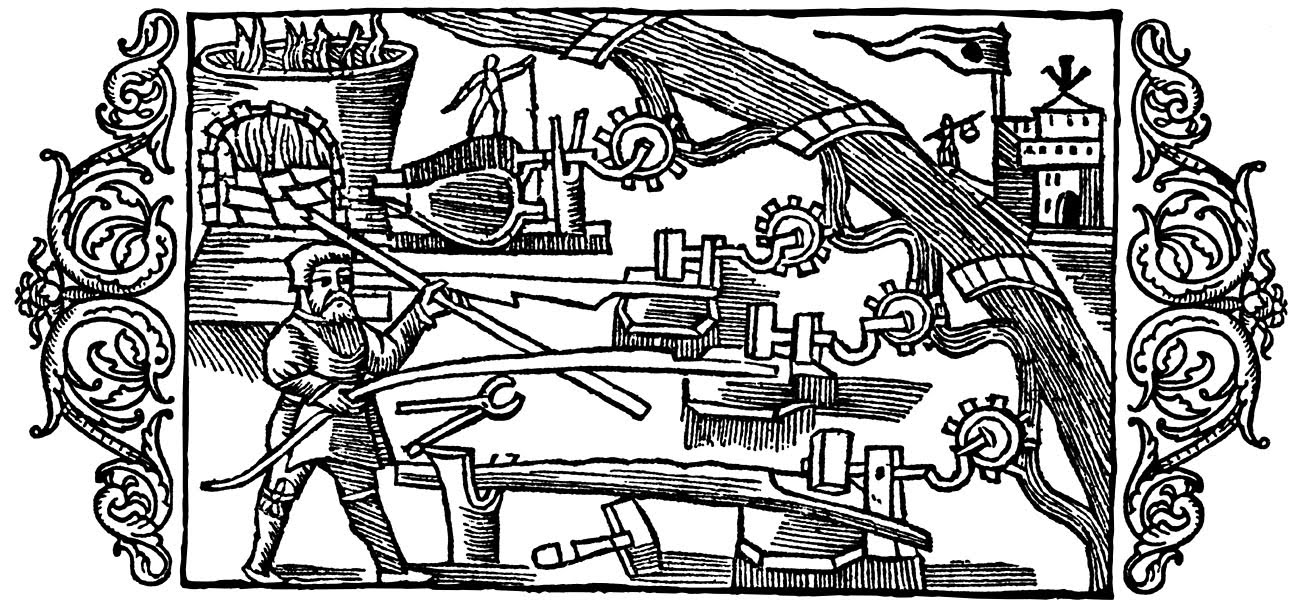
Armorers are smiths that specialize in crafting, maintaining and repairing armor and weapons. An armorer can craft 25 gp worth of an item per month or repair 25 gp worth of an item per day. Lords must employ one armorer for every 100 men-at-arms they employ and provide for them a forge and living quarters. One in twenty armorers is a level low-level fighting-man. Armorers carry light hammers and other tools and fight as normal men with 1d6 hit points.
All armorers can make leather, ring, chainmail, shields and all weapons. One armorer in six (and all dwarf armorers) can manufacture platemail and masterwork items. Masterwork weapons and armor cost 300 gp more than normal. Masterwork weapons are +1 to hit (but are not magical) and masterwork armor grants an additional +1 to armor class. Elf armorers know how to make elven chainmail.
Barber
Barbers are the medieval equivalent of dentists, surgeons and hair stylists, all wrapped into one. They tend to be talkative and well informed about their community and its surroundings, knowing 1d6 rumors. Additionally, barber’s can provide medical care (i.e. double natural rate of healing) for wounded characters. One in twenty barbers is a low-level bard. Barbers charge 100 gp for medical care, 5 gp per rumor and 1 gp for a hair cut (or 10 gp for the works). Barbers carry shears, jars of leeches and bandages and fight as normal men with 1d6 hit points.
Beggar
Beggars are peasants who have bought their freedom or been thrown off their lord’s estate and forced to make their living in a town or city. Characters may wish to hire a beggar to do some spying (with a 2 in 6 chance of success) or they may buy rumors from them. Each beggar has 1d3 rumors he is willing to sell at the cost of 1 gp per rumor. A beggar’s rumors may not be true and could be a ruse to lure the unwary into an ambush. One in twenty beggars is actually a low-level thief, and 1 in 100 beggars is insane. Beggars carry begging bowls and crutches and fight as normal humans with 1d6 hit points.
Blacksmith
Blacksmiths make and repair metal goods other than armor, weapons and precious metals. Blacksmiths craft metallic objects at the same rate as armorers. In fact, there are a wide variety of smiths, each specializing in working a different metal, with blacksmiths specializing in iron. For simplicity’s sake, we’ll pretend that blacksmiths work with all metals. One blacksmith in twenty is a low-level fighting-man. Black-smiths fight as normal men with 1d6 hp.
Bowyer
Bowyers are craftsmen that specialize in making bows, crossbows, slings, bolts and arrows. Bowyers can produce 25 gp worth of goods per week. About 1 in 6 bowyers (and all elf bowyers) can make masterwork bows that are +1 to hit. One bowyer in twenty is a low-level fighting-man or ranger. Bowyers carry tools, longbows and 20 arrows and fight as normal men with 1d6 hit points.
Engineer
Engineers are learned in mathematics, carpentry, masonry and mining. They are essential for building or besieging a castle, for they alone understand how to build and operate siege engines (catapults, ballistae, etc). One engineer in 6 can build clocks and clockwork creatures. One engineer in twenty is a low-level magic-user. Engineers have charts, maps, sextants, tools and daggers and fight as normal men with 1d4 hit points.
Fence
A fence can find and dispose of stolen goods, including magic items. They have a 5 in 6 chance to properly appraise the value of an item, and a 2 in 6 chance to identify a magic item (per the spell identify), hide in shadows and move silently. Finding magic items for adventurers is difficult, time-consuming and costly, and costs 100 gp per month of searching with a 1 in 6 chance per month of success. One fence in ten is a low-level thief. Fences have hooded cloaks, daggers and have a 5% chance of carrying a magic item. Fences fight as normal men with 1d6 hp.
Guide
Guides know their way around wilderness areas. For adventure groups without rangers, guides are a must. They know about all set encounter areas within 30 miles (5 hexes) of their home. They always know what sort of gear one needs to survive in their wilderness and can use all ranger skills successfully on a roll of 1-3 on a 1d6. One guide in twenty is a low-level ranger. Guides have padded armor, hand axes, longbows, 20 arrows and survival gear. They fight as men-at-arms.
Healers
Healers are capable of providing care that double’s their patient’s normal healing rate and provides them a +1 bonus on saving throws against poison and disease. One healer in twenty is a low-level cleric of a healing deity such as Apollo Helios. Healers have staffs, silver daggers and surgeon’s tools. They are assisted by apprentices (treat as students). Healers fight as normal men with 1d4 hit points.
Herbalist
Herbalists deal in herbs and herbal concoctions. In Nod, they are equivalent to apothecaries. Besides local herbs and imported herbs, herbalists can prepare herbal remedies for poisons and diseases common to the local are at the cost of 30 gp. Each of these preparations (elixirs, poultices, etc.) grants a +1d4-1 bonus to saves vs. disease or poison. Several types of flora are useful to spell casters as potion ingredients. Most herbalists fight as normal men with 1d4 hit points, but about one in twenty is a low-level druid. Herbalists carry sickles and sacks of herbs.
Innkeepers and Landlords
Innkeepers own and operate inns, while landlords own and operate taverns. For our purposes, we’ll define an inn as a building in which adventurers can sleep, drink and eat, while a tavern is a building in which adventurers can drink and eat. Some medieval inns were as many as four stories tall and offered a variety of services including stables and hot baths. Most innkeepers and landlords fight as normal men with 1d6 hit points, but one in twenty is a low-level fighting-man or thief.
Jewelers
Jewelers are smiths that work with precious metals and stones. They work at the same rate as armorers (25 gp per week). Jewelers are also likely customers for precious metals and stones found by adventurers, and they can appraise such items as well as a fence. Most jewelers fight as normal men with 1d6 hit points, but one in twenty is actually a low-level thief.
Lawyer
Lawyers are a must for adventurers charged with crimes in a city-state (unless one wishes to go the bribery route). They are knowledgeable about the laws of their city-state and the personality and quirks of the local ruler, who presides over court cases. Many cases take 1d6 days to come to trial. A skilled lawyer can cut this time in half and has a 1 in 6 chance of getting the adventurer off without a fine, imprisonment or mutilation. Most lawyers fight as normal men with 1d4 hit points, but one in twenty is a low-level bard. Lawyers carry walking sticks (treat as clubs).
Merchant
Merchants own or finance ships, caravans and voyages of discovery. They are among the wealthiest non-noble members of society and are often resented by craftsmen (from whom they have taken power in most city-states) and nobles (who they are rapidly eclipsing in wealth). Merchants are ostentatious in their display of wealth and worldly in their tastes and habits. A merchant’s silver tongue gives her a +1 bonus to reactions. Most merchants fight as normal men with 1d6 hit points, but one in twenty is a low-level bard. Merchants are usually accompanied by a low-level bodyguard and a scribe. Merchants carry long swords (rapiers) and daggers. Merchants can also play the role of moneylender, providing loans for collateral and at a 10% interest rate (compounded monthly).
Nobles
Nobles are born into positions of wealth and authority. They are loyal (at least outwardly) to the monarch of their city-state and are assigned by him to positions at court. Nobles are knowledgeable about courtesy, singing, dancing, diplomacy and law. Most are educated in history and rhetoric. Nobles are usually accompanied by bodyguards (or rakes) and servants. Most nobles fight as sergeants with 3d8 hit points, but one in twenty is a low-level fighting-man. Nobles have platemail (worn on the battlefield), shields, long swords and daggers. Assume that a city-state has one noble family per one-thousand citizens.
Prostitute
Prostitutes are men and women who provide a night’s comfort and entertainment in exchange for coins. Their charisma should be rolled on a 3d6, with their fee being 10 gp per point of charisma. Most prostitutes fight as normal men with 1d6 hit points, but one in twenty is a low-level thief or assassin. There is a 4 in 6 chance that a prostitute works for and is protected by a rake, and thus charges double her normal fee. Prostitutes carry hidden daggers.
Rake
Rakes are professional duelists, hired by the wealthy to humiliate or kill their enemies. When not on the job, they are drunkards and louts, picking fights to show off and test their skill. Rakes fight with long sword and dagger, gaining a cumulative +1 bonus to hit each round (the Referee may want to set a maximum bonus, or may not). They have a base Armor Class of 4 [15] from their long experience at fighting unarmored. Young nobles often surround themselves with rakes, who demand a wage of 200 gp per month. Most rakes fight as sergeants with 3d8 hit points, but about one in ten is a level 4 to 6 fighting-man. Rakes carry long swords, daggers and bucklers.
Sage
The sage is a polymath scholar, a “renaissance man” who dabbles in all manner of scholastics. He is not a practicing scientist; that role is left to the alchemist. A sage spends his time teaching (to pay the bills) and writing. Sages can be consulted to answer questions. Essentially, this works as a legend lore spell and takes 1d4 weeks to accomplish (there is research to be done, books to borrow from other sages, tests to be made, etc). Sages are often accompanied by students (see below). Elf sages can answer questions in half the normal time, but charge triple the normal wage.
Sages demand a wage of 50 gp per week. Most sages fight as normal men with 1d4 hit points, but about one in twenty is a low-level cleric, druid, illusionist or magic-user. Normal sages have a 5% chance of having a spell book in their library, and a 1% chance of having a magical tome (i.e. tome of gainful exercise) in their library.
Sailor
Sailors are necessary to operate a ship. Sailors have a 3 in 6 chance to climb and they have a natural Armor Class of 6 [13] due to their practice at fighting unarmored. Gangs of sailors encountered at night may be press gangs under the command of a sergeant (mate). Sailors are paid 2 gp per month. Most sailors fight as bandits, but about one in ten is a low-level barbarian. Sailors carry hand axes or clubs.
Scribe
Scribes are literate men and women capable of writing. About 1 in 6 scribes is a master who can read and write in several languages, has a 4 in 6 chance to decipher scripts, and is capable of helping magic-users prepare magic scrolls (see alchemist). Scribes might be hired to read or write a message at a rate of 10 gp per page, or hired as secretaries and clerks. Most scribes fight as normal humans with 1d4 hit points, but one in twenty is a low level bard or cleric. Scribes carry writing kits.
Spy
Spies come in every shape and size. They have a 3 in 6 chance of performing the functions of an assassin. To simulate an information gathering mission, assume a chance in twenty of success equal to fifteen minus the level or hit dice of the target. To simulate an assassination mission, assume a chance in twelve of success equal to twelve minus the level or hit dice of the target. Spies charge 500 gp per mission. Most spies fight as sergeants with 3d8 hit points, but one in twenty is a level 4 to 6 assassin. Spies have padded armor, daggers, vials of poison, invisible ink, disguises and false papers.
Student
Students are the children of wealthy merchants and craftsmen sent to study under one or more sages, usually to acquire basic knowledge in reading, writing, history and arithmetic, but sometimes on their way to becoming alchemists, lawyers, priests or sages. Students have a reputation for boorish, even criminal, behavior, spending more time fencing and carousing than studying. Their masters don’t care, so long as their parents kept paying their tuition. Students fight as normal humans with 1d6 hit points. They have rapiers, daggers and writing kits.
Tax Collector
Employed by lords to collect taxes, tithes and other fees, tax collectors are usually accompanied by a band of men-at-arms. A tax collector’s salary is 10 gp per month and 1% of all taxes collected. Tax collectors have a 4 in 6 chance of discerning lies and an uncanny ability to detect the presence of valuables. One tax collector in twenty is a low-level fighting-man or thief. Tax collectors have ring armor, light maces, daggers and writing kits and fight as normal men with 1d6 hit points.
Torchbearers
These poor folk are desperate enough for money to accompany adventurers into the underworld holding nothing but luggage. If their employers so desire, they can be equipped with padded or leather armor and simple weapons like clubs. Torchbearers fight as normal humans with 1d6 hit points.
Traders
Traders are sellers of foodstuffs, dry goods and used armor and weapons. Used armor has an armor class one point lower than new armor, and used weapons are -1 to hit. They sell for one-tenth the price of new items. There is a 5 in 6 chance that a trader has in stock an item that costs less than 10 gp and a 2 in 6 chance of having in stock more expensive items. Traders never have alchemical items or masterwork armor and weapons. Traders fight as sergeants with 3d8 hit points, but one in twenty is a low-level fighting-man or thief. Traders can be found in souks, bazaars, marketplaces and emporiums.
* Low-level corresponds to levels 1 to 3.
Next post will cover taxes, organizations, inns and taverns and temples.

 Land of Nod