Wyvern Coast – Crocs, Cogs and Cliffside Tombs

The following are set encounters from this map. The Wyvern Coast was first described in this post.

0146 Azer Adventurer: Merikh, and azer, and six clockwork brass beetles are searching for an artifact forged by Volcanus, god of the forge. Merikh wears a helm that hums when within 100 feet of powerful magic items.

  • Merikh: HD 6 (29 hp); AC 2 [17]; Atk 1 weapon (1d6+1); Move 12; Save 16; CL/XP 6/400; Special: +1 heat damage, immune to fire.
  • Beetle Automatons (6): HD 4 (18 hp each); AC 2 [17]; Atk 1 blade (1d6+1); Move 15; Save 13; CL/XP 4/120; Special: Half damage from fire, heat metal (themselves).

0242 Crocodile Keep: The remains of a flooded shell keep sit just off the coast and protected by surrounding rocks from the pounding surf. The bottom level of the keep is completely flooded, and the upper level, though relatively dry, has a weakened floor that presents a hazard to even halflings attempting to walk upon it. At the bottom of the courtyard there is a jade globe decorated with images of writhing reptiles. The jade globe gives out a low pulse that can be heard underwater for many miles. This pulse attracts salt water crocodilians, and at least thirty of the creatures dwell in and around the keep.

  • Crocodile: HD 4; AC 3 [16]; Atk 1 bite (1d8); Move 9 (Swim 12); Save 13; CL/XP 4/120; Special: None.

0341 Sanvuska: A freak storm and a drunken captain recently ran a merchant cog ashore here. The cog, the Sanvuska, was carrying 250 gp worth of hides and skins, 2,000 gp worth of tea and a magical trident (see below) from the Mu-Pan Empire to Antigoon. The Sanvuska is captained by Yulner, a short man with a wiry build, black whiskers and suspicious eyes. Yulner is a given to drunken revels, and his cruelty knows no bounds. He has been working his men into a frenzy trying to get underway before his ship is discovered by bandits. Unfortunately, it has already been discovered by an intellect devourer called Tharsarh. Tharsarh has been systematically picking off the crewmen for the past week, having originally killed and merged with a sailor who wandered too far from camp. Only twelve remain to man the cog, and they are on the verge of mutiny. Only the force of Yulner’s will, and the strong hand of his first mate, Khavit, have kept them in line so far.

  • Yulner, Fighting-Man, Lvl 7: HP 32; AC 6 [13]; Save 10; leather doublet, buckler, hand axe, long sword.
  • Khavit, Beastman (Half-Orc) Fighting-Man, Lvl 4: HP 28; AC 7 [12]; Save 13; shield, battle axe.
  • Tharsarh: HD 6 (21 hp); AC 3 [16]; Atk 4 claws (1d4); Move 15; Save 11; CL/XP 9/1100; Special: Sensitive to light, mind blast, spell immunity, surprise on 1-3 on 1d6, only harmed by magic weapons (1 point of damage per hit).

Umvai: This +1 trident appears to be made of gold. The grip is wrapped in black leather. The trident’s name, which activates it, is burned into the grip in the pictographs of the Mu-Pan Empire. Upon uttering the command word, the trident enables its wielder to fly (per the spell) for 10 minutes.

0442 Cliffside Tomb: Caryatid columns guard a tomb carved into the side of a cliff. The original inhabitant has dried up and blown away, his treasure stolen by something that tunneled in from below.

  • Caryatid Columns (2): HD 5 (32 hp); AC 4 [15]; Atk 1 sword (2d4); Move 9; Save 8; CL/XP 6/400; Special: Immune to normal weapons, normal damage from magic weapons, 25% chance of weapon snap.

0733 Thirsty Vial: Any fishing in this hex will produce a fish with a magical vial in its belly. The vial is made of glass and stoppered with a bit of cork. The interior of the vial is completely etched in glyphs of a magical sort. The vial is a powerful protective device. If a person fills it with his or her own blood, they cannot be killed (hit points cannot go below 1) so long as the vial remains full. Filling the vial inflicts 1 point of constitution damage, which is healed the next day after a normal rest. The blood is slowly absorbed by the magical glyphs, disappearing in 24 hours. The vial can then be refilled at the same price, though the holder of the vial will discover that the time it takes the vial to consume the blood is shortened by 1d6 hours. The quickening of the blood consumption is cumulative, until finally, it must be filled hourly. Such is the price when one attempts to cheat Death.

0941 Escaped Slaves: A canyon here is inhabited by 150 female berserkers – escaped slaves. They worship a golden idol of Astarte that longs for her mate, a golden idol of Adonis (see Map J10). The warrior women are commanded by Ulara and Yosh.

  • Ulara, Barbarian Lvl 5: HP 50; AC 5 [14]; Save 12; Leather, +1 shield (+3 vs missiles), bastard sword, sling.
  • Yosh, Ranger Lvl 3: HP 22; AC 5 [14]; Save 14; Ring armor, shield, short sword, dagger, 3 javelins.

1038 Razed Village: A dragon man lair here was razed by a stegacentipede, now long gone. The dragon men have fled with their treasures, leaving their brass domes empty and their dead baking in the sun. There is a 1 in 6 chance per hour spent in the ruin that 1d6 wyverns will arrive having smelled the carrion.

1127 Scarlet Hall: Scarlet Hall is a three-level keep constructed of limestone sank beneath the waves here over a century ago. The walls of the keep are now worn and pitted, and the entire construction will probably fall down in the near future. The keep is now inhabited by a gang of seven were-sharks who hunt the coral reefs and sometimes venture onto land to attack the villagers. The gang is led by a bull called Mahel and his mate, Thana. The were-sharks have stockpiled a treasure horde consisting of 3,500 gp and a small moss agate (110 gp). Mahel was once a sailor, and he sometimes poses as a sailor to gain access to a ship, his gang following along and waiting for him to steer the ship into a reef or rocks. Thana hails from [1226]. She sometimes sneaks onto the island to give food to her aging mother.

  • Were-Shark: HD 6; AC 3 [16]; Atk 1 bite (1d10); Move 12; Save 11; CL/XP 7/600; Special: Lycanthropy, vulnerable to silver weapons, blood sends them into a frenzy (+2 to hit).
  • Thana: HD 6 (34 hp); AC 3 [16]; Atk 1 bite (1d10); Move 12; Save 11; CL/XP 7/600; Special: Lycanthropy, vulnerable to silver weapons, blood sends them into a frenzy (+2 to hit).
  • Mahel: HD 6 (43 hp); AC 3 [16]; Atk 1 bite (1d10); Move 12; Save 11; CL/XP 7/600; Special: Lycanthropy, vulnerable to silver weapons, blood sends them into a frenzy (+2 to hit).

1137 Vulchlings: Five vulchlings live in a shallow cave 50 feet above the desert floor. A narrow passage with a metal ladder leads straight down 100 feet, ending at a steel trapdoor. The trapdoor leads to a small chamber filled with crates containing 7 weeks of iron rations in tins.

1236 Ophir, City of Slaves: The city-state of Ophir is nestled in a valley of woodlands and rich pastures. It is surrounded by villas worked by slaves that grow wheat, grapes (slightly bitter, but good enough for spiced wines) and olives. The cultivated lands are separated by rocky highlands (good for grazing goats) and thicks stands of cedar. Ophir has a population in excess of 6,000, with most of them earning their living from the sea or in the slave markets. The city-state is ruled by Prince Zargo, an heir of the ancient Purple Kings. Ophir’s architecture blends elements of classical Greece and medieval Morocco.

1642 Labyrinth: This is a true labyrinth with 30-foot walls of blue glass and floors of blue marble tile. The passages are 20-feet wide and the center is 40-foot in diameter. In the center are 20 statues of warriors created by the gaze of an amphisbaena basilisk which lairs among the statues. Its treasure is 4,000 sp, 115 gp, 3 pp, a pearl medallion (40 gp), a pearl pendant (40 gp) and a jade torc (30 gp). It lies scattered about the central chamber.

  • Amphisbaena Basilisk: HD 9 (62 hp); AC 3 [16]; Atk 2 bite (1d8); Move 9; Save 6; CL/XP 13/2300; Special: All-around vision, half damage from cold, petrifying gaze, split.

1749 Toad Hollow: A depression in the savanna holds a large (200-ft diameter) pond. A gang of twenty thugtoads lives in mud-burrows dug into the banks of the pond. The toads carry shields woven from the grasses that choke the banks of the pond, and they carry flint-tipped spears. The banks of the pond are trapped with holes that can break legs if one is not careful. The thugtoads worship a large froghemoth who dwells in the center of the pond, bringing it fresh kills of the animals that come to drink from the pond, hoping to keep it in a torpor that it will not devour them. The leader of the thugtoads is called Tudeggy (2 HD, 12 hp, CL 3/60). He considers himself a “high priest”, but has no magical powers. He does, however, carry a military pick made from the bronze beak of a stymphalian bird; the thugtoads displaced the cranes many years ago as the masters of the pond, carrying their “tadpole-hemoth” with them.

  • Thugtoad: HD 1; AC 6 [13]; Atk 1 weapon (1d6); Move 4 (Swim 15); Save 17; CL/XP 2/30; Special: Camouflage, hop.
  • Froghemoth: HD 16; AC 3 [16], tentacles 1 [18], tongue 5 [14]; Atk 1 tongue (5d10) or 4 tentacles (1d8); Move 3 (Swim 9); Save 3; CL/XP 19/4100; Special: Swallow whole, immune to fire.

1931 Seath’s Fortress: A sandstone keep overlooks the sea here. It is surrounded by fifteen simple cottages. The keep is ruled by Seath, an elf warlord. The village is populated by human herdsmen. Lord Seath is likable and trusting. His armorial is a scorpion gules on a field sable. Seath commands fifteen elves, a lawful sergeant named Herval and a chaplain named Alabras. Herval is like a stereotypical British sergeant-major, while Alabras has a dark, unpleasant sense of humor. Seath’s treasure consists of 13,500 sp, 200 gp, a fire opal (100 gp), 2 ounces of sandalwood oil (5 gp), a copper necklace set with hyacinths (340 gp), an ivory holy symbol of Mercurius (60 gp), an ivory armband (60 gp), a bronze mirror (1 gp), a glass coffer (7 gp), astrological charts worth 12 gp and a tooth from a bronze dragon (100 gp).

  • Elf: HD 1+1; AC 5 [14]; Atk 1 sword (1d8) or 2 arrows (1d6); Move 12; Save 17; CL/XP 1/15; Special: None.
  • Herval: HD 3 (19 hp); AC 3 [16]; Atk 1 weapon (1d8); Move 9; Save 14; CL/XP 3/60; Special: None.
  • Alabras, Elf Cleric (Druid) Lvl 3: HP 20; AC 8 [11]; Save 12; Special: Druid spells (2nd),; +1 oak quarterstaff, leather armor, white hooded robe, mistletoe.
  • Seath, Elf Fighter/Mage Lvl 8: HP 36; AC 2 [17]; Save 8; Special: Magic-user spells (4th); Longsword, longbow, elven chain, shield, grimoire, scroll of fireball.

2035 Halob: Halob is a village nestled against a tall cliff. The village is surrounded by a thicket and a dry moat. The village is inhabited by 100 iron miners and their families living in small, timber houses. The miners of Halob are renowned for the high level of literacy in the village. Halob is ruled by a mayor named Eocar, who is advised by a small group of selectmen. Eocar is the most cunning man in a village of cunning men, and is not to be trusted. The village is protected by twenty men-at-arms (chainmail, shield, spear, sling) and two sergeants-at-arms. The villagers mine a long seam of iron that cuts directly into the cliff behind their village. The miners make no attempt to smelt the iron here, selling it instead to merchant caravans from Ophir in exchange for manufactured goods and the odd luxury.

2041 Dancing Lights: The narrow, limestone canyons in this hex are like a maze. Local legends tell of a great army of the Purple Kings that was lost in this maze while on its way to sack the rebellious miners in [2042]. The canyons, with their wavy walls of purple and grey, their sharp peaks and their tiny, winding caves, are haunted by will-o-the-wisps. Travelers by night will see 1d4+2 of these lights, often visible as a soft glow from around a corner. The will-o-the-wisps are accompanied by the echoing voices of desperate men.

  • Will-o-the-Wisp: HD 9; AC -8 [27]; Atk 1 shock (2d6); Move 18; Save 6; CL/XP 10/1400; Special: None.

2145 Gnoblins: A band of 30 gnoblins (gnoll-goblin hybrids) are trashing a merchant caravan here. Twenty men-at-arms and thirty gnoblins lie dead. One fat merchant has been skewered with a spear and pinned to the ground by his shoulder. If questioned within a minute of discovery, he will inform the adventurers that thirty people were forced to flee into the desert without food and with very little water, including his niece. He has a small painting of his niece in a locket around his neck (5 gp), and she is quite beautiful. The dead bodies attract wandering monsters on a roll of 1-3 on 1d6. The caravan was transporting one hundred bolts of purple cloth (2 lb each, worth 50 gp each).

  • Gnoblin: HD 1d6 hp; AC 6 [13]; Atk 1 weapon (1d6); Move 12; Save 18; CL/XP 1/15; Special: Groups of 10+ cause confusion with their chattering voices.

2331 Khlai: Khlai is a village of 300 dour hunters and their families nestled in a vale with a cool, rushing stream and a variety of grasses and scrub. The village is surrounded by a wooden palisade (12’ tall) and consists of approximately 100 longhouses constructed of red brick. The village is defended by 60 men-at-arms (leather armor, spear, long bow) and six sergeants-at-arms under the command of Sampin, lord of Khlai. Sampin has in his employ an alchemist by the name of Alende, a high-born woman of distant Ibis who found a life on the Wyvern Coast preferable to a wizard’s dungeon. The village is known to be haunted by a vampire called Arlotho, who is believed to dwell in the surrounding hills. Arlotho is a distant ancestor of Sampin, and is in league with his descedant, his tomb being located beneath the lord’s manor. Sampin’s treasury contains 500 gp worth of hides and skins, 500 gp worth of frankincense, 1,000 sp and 400 gp. Arlotho’s crypt contains 2,700 gp and a golden medallion depicting the lord’s armorial (3,700) studded with amethysts.

  • Sampin: HD 3 (12 hp); AC 4 [15]; Atk 1 weapon (1d8); Move 12; Save 14; CL/XP 3/60; Special: None.
  • Alende: HD 1d4 (3 hp); AC 9 [10]; Atk 1 dagger (1d4); Move 12; Save 18; CL/XP A/5; Special: Brew acids and poisons.
  • Arlotho: HD 7 (29 hp); AC 2 [17]; Atk 1 bite (1d10 + drain 2 levels); Move 12 (Fly 18); Save 9; CL/XP 10/1400; Special: Regenerate 3 hp/rd, only hit by magic weapons, gaseous form, change into giant bat, summon swarm of bats or 3d6 wolves, charm (save at -2), weaknesses.

2533 Box Canyon: There is a box canyon here that can only be entered via a narrow gorge. The land here is exceedingly dry and devoid of plant life. The box canyon contains a shrine to elemental earth. The shrine is a perfectly square, unworked block of stone. In the center of the block of stone there is a mace +2/+5 vs. air elementals that can (once per month) summon 1d6 small earth elementals who will faithfully serve their summoner for 1 week. The shrine’s guardian is a crumbler called Lok. Lok has a contingent of twenty dwarven defenders under his command. There is a 1 in 6 chance that pilgrims are visiting the shrine when the adventurers arrive. These pilgrims will do their best to defend the shrine if it is disturbed.

1. 1d6 Druids (4 HD)
2. 3d6 Dwarfs
3. 2d6 Dwelvers
4. 1d6 Janni
5. 1d3 Nymphs (Oreads)
6. 1d3 Stone Giants
7. 3d6 Svirfneblin
8. 1d4 Xorn

There is an equal chance that the shrine is under attack from rival elementals. If this is the case, assume that there are 6d6 hit dice worth of air, fire or water elementals, with half of those hit dice possessed by their leader, a djinn, efreet or marid.

  • Lok, Crumbler: HD 10 (60 hp); AC 4 [15]; Atk 1 thrown rock (2d6) or fist (2d6); Move 0; Save 17; CL/XP 11/1700; Special: Immunities.
  • Dwarf Defender: HD 5; AC 0 [19]; Atk 1 weapon (1d10); Move 6; Save 12; CL/XP 6/400; Special: Cannot be surprised, cannot be back attacked, adjacent creatures enjoy +1 bonus to AC.

2539 Basswood Grove: A large grove of basswoods surround the banks of a clear spring. The grove is inhabited by a hive of giant honeybees. The hive houses 90 workers, five soldiers, five non-combative drones and one non-combative queen. The bees do not tolerate visitors other than druids, who sometimes come to collect honey.

  • Honeybee Worker: HD 3; AC 5 [14]; Atk 1 sting (1d4); Move 12 (Fly 36); Save 14; CL/XP 4/120; Special: Poison (additional 1d6 damage unless save is made).
  • Honeybee Soldier: HD 4; AC 4 [15]; Atk 1 sting (1d6); Move 15 (Fly 36); Save 13; CL/XP 5/240; Special: Poison (additional 1d6 damage unless save is made).

2847 Baboon Rock: A rocky outcropping rises from the grasslands like the bow of a great ship. At its peak it towers forty feet above the surrounding grasslands. The outcropping is inhabited by a vicious tribe of rock baboons led by an alpha male who wields a bone club that once the femur of an evil high priest. It now acts as a +1 club that causes light wounds on an attack roll of ‘20’.

  • Baboon: HD 1 (6 hp); AC 7 [12]; Atk 1 bite (1d4); Move 12; Save 17; CL/XP 1/15; Special: None.
  • Baboon, Alpha Male: HD 2 (8 hp); AC 7 [12]; Atk 1 bite (1d6); Move 12; Save 16; CL/XP 2/30; Special: None.

2927 Shephard’s Spring: A bubbling spring, surrounded by tall reeds, exists in this hex. The spring was once a shephard who was killed and turned into a spring by a weeping goddess. For those who camp near the spring, healing is accelerated. The reeds can be turned into pipes capable of charming fairy women.

3035 Beldor’s Bedazzling Belfry: Atop a tiny cairn lies a crystalized skull. The skull belonged to Beldor, a man famed in his time as a poet and musician. Beldor foolishly courted the youngest bride of the archimage Baloc (see [5708]) and thus came to his ruination. If held, the skull will fill one’s mind with the most extravagant imagery and inspiring songs. The holder of the skull will feel more confident and amorous, and will enjoy a blessing (as the spell) on all of his endeavors, though he will also find it impossible to concentrate. He will be surprised more often, find it more difficult to locate hidden things, and spell-casting will be all but impossible.

3127 Yem’s Pavilion: A large tent of intricately woven rugs and tapestries sits in a small oasis here. Inside the tent are braziers burning incense, expensive golden objects d’art and a plush couch. Upon the couch rests a priestess, the vessel of Astarte. The priestess, Yem, is a virgin sworn to divine service. The tent is Astarte’s temple and a pilgrimage for her servants. There is a 1 in 6 chance that when the adventurers arrive it is being visited by a lawful cleric. Upon approaching, intruders who do not properly intone the seven hymns of Astarte are confronted by a flock of erinyes. Anyone harming or otherwise molesting Yem or the cult items in the tent will be attacked by the erinyes and will discover what it means for Yem to be the vessel of a goddess. Yem is willing to cast spells for good adventurers at no cost and neutral adventurers at cost plus the condition that they accept a mark of justice that keeps them from breaking the law in any settlement.

As a vessel of Astarte, Yem can be filled with the goddess’ essence, gaining the abilities of a planetar. Yem’s +1 mace is lawful, radiates protection from evil in a 10-foot radius and can apply a mark of justice on a willing person once per day.

  • Yem, Cleric Lvl 6: HP 21; AC 8 [11]; Save 9; Special: Cleric spells (3rd), banish undead; +1 mace, holy symbol.

Mark of Justic (Cleric 5): You draw an indelible mark on the subject and state some behavior on the part of the subject that will activate the mark. When activated, the mark curses the subject. The spell takes 10 minutes to cast and involves writing on the target. The mark of justice cannot be dispelled, but it can be removed.

3232 Dragon Men: There is a dragon man village here consisting of 200 males, 140 females, 300 young and 400 eggs. The village is composed of twenty brass domes surrounding a large broodery. The females and young live in the broodery, while the males live in the domes. The domes are surrounded by a 10-ft high stone wall. There is a natural spring that has been turned into a pond in the center of the village.

The village is led by a haggard old chieftain called Spadda. Besides his normal warriors, he also has ten warlocks that wear chainmail and wield battle axes and short bows. The normal warriors have leather armor, spears, shields, short bows and barbed arrows.

The females of the village care for the young and hunt in the surrounding countryside for game. They are experts at the use of lasso and net, since they need to eat their prey alive. Dragon men do not need to eat or drink as much as humans, and so have little trouble surviving on the meager pickings of the Wyvern Coast.

The village has three smiths who work in bronze and iron. The village’s priest, Garros, worships Apophis, the dragon god of chaos. His mace is made of bronze and resembles a serpent coiled around a rod.

  • Spadda, Barbarian Lvl 5: HP 23; AC 4 [15]; Save 12; Two-handed axe, crown of command (3/day).
  • Garos, Cleric Lvl 3: HP 20; AC 4 [15]; Save 12; Special: Cleric spells (2nd); +2 mace, shield, sacrificial knife, unholy symbol.

3239 Gnoblin Village: This hex contains a gnoblin (a hybrid of gnolls and goblins) lair. The lair consists of twenty-four shallow pits (burrows) covered by woven grass mats. The pits grant access to burrows which connect to a central chamber of sacrifice. The gnoblins live very separate lives in their burrows. Six large burrows house five males that form very loose bonds of brotherhood with their burrow mates. Each of the eighteen smaller burrows shelter one female and her 1d4 young.

Murder within the family is common among gnoblins, so tensions are always high and the gnoblins are always on the lookout for a third party upon whom they can focus their aggression. Each burrow holds about 30 gp. There is a 1 in 6 chance that a burrow holds a cache of 1d6 gems or 1d3 small pieces of jewelry. Most of the tribe’s treasure comes from raids on merchant caravans.

The sacrificial chamber in the center of the lair is 6 feet high and 20 feet in diameter. A fire pit 15 feet deep has been dug in the center. Sacrificial victims are lowered into the pit and then killed by dropping lit torches and hot ash on their heads. The roasted remains are then shared in an orgy of greed and violence. Sacrifices are presided over by nursing females who wear headdresses of bone and feather and dance and chant to Demogorgon, their demonic god. There is a 1 in 6 chance that adventurers will interrupt one of these ceremonies, and a further 1 in 6 chance that the chanting will summon a vrock to the tribe’s defense. In the case of a sacrifice, there will be no more than three sacrificial victims present, usually merchants, men-at-arms or unlucky hunters.

  • Gnoblin: HD 1d6 hp; AC 6 [13]; Atk 1 weapon (1d6); Move 12; Save 18; CL/XP 1/15; Special: Groups of 10+ cause confusion.

3336 Giant Brothers: Three hill giant brothers lair here, grazing their herd of giant goats. The eldest brother is Hama (72 hp). His younger brothers are Golth (38 hp, lame after fighting off a wyvern) and Lot (40 hp). Hama’s bag contains a vial of holy water, pieces of plate armor, a mace, two torches, an hourglass, a two-handed sword, six iron spikes and 11 gp. Golth’s bag contains a bronze breastplate emblazoned with a two-headed phoenix, a staff, heavy crossbow, two sets of burglars’ tools and a silver flute (10 gp). Lot’s bag contains a spear, longbow, pole arm, pack of matches, a theatrical disguise kit, studded leather and a simple breastplate. The brothers’ herd consists of 30 giant goats who respond to their shouts and clicks. The giants are visited every year by a trader from Ophir who exchanges wool for tobacco and other necessities. They live in a cave higher in the mountains with their mother Lilit. The giants keep a treasure of 4,880 gp, two banded agates (75 gp), a rhodochrosite (300 gp) and an amethyst (3,000 gp) in their lair.

  • Hill Giants: HD 8+2; AC 0 [19]; Atk 2 slams (2d6) or 1 weapon (1d8+6); Move 15; Save 3; CL/XP 16/3200; Special: Rock catching, shape earth, spells, track by scent.
  • Lilit, Druid Lvl 8: HD 13 (70 hp); AC 0 [19]; Save 3; CL/XP 16/3200; Spells 4th; Special: Rock catching, shape earth, track by scent.
  • Giant Goat (30): HD 3; AC 7 [12]; Atk 1 gore (2d6); Move 18; Save 14; CL/XP 3/60; Special: +4 damage on charge.

3344 Winding Halls of the Scarab Lords: A wide swathe of the savanna here is barren, and one might find odd lumps of glass embedded in the ground. A dozen secret doors throughout the area lead to wide, curving passages beneath the ground. These passages run downward, eventually coming to a central, conical chamber 100 yards tall and 300 yards in diameter at the base. This subterranean hall is lit by radium globes embedded in the walls, which feel like stone but are unworked and uncommonly smooth. This chamber is guarded by three large beetlors. A large, bronze trapdoor in the center of the chamber leads to a six level dungeon inhabited by many strange, alien creatures that were brought to this world by visitors from beyond the sublunary sphere. These creatures include rust monsters, coeurl, barics and doppelgangers. The main inhabitants of this realm, however, are a kingdom of beetlors, once servants to an alien people. The beetlors are ruled by a queen called Cleo’optera, but are now bitterly divided into warring clans, each led by a daughter of the queen, and each looking to gain advantage against its rivals. Alien devices and the wealth of the heavens is here to be plundered.

  • Beetlor: HD 8+1; AC 1 [18]; Atk 2 claw (3d4) and 1 bite (1d10); Move 6 (Burrow 30; Save 8; CL/XP 9/1100; Special: Confusion.

3429 Canyon of Crawlers: Traversing this hex from west to east involves walking through a dry canyon with towering limestone walls pocked with holes. Moving from north to south is virtually impossible, for there is no bridge across the canyon, which spans 90 feet. During the day, the canyon is safe enough; no monsters will be encountered here unless they have the power of flight. At night, hundreds of old crawlers (disembodied hands) will swarm from the canyon walls. These horrible creations seek to strip unfortunately travelers of all their possessions, stowing their prizes deep in their burrows within the canyon walls. On a given night, each traveler moving through the valley will be accosted by 1d6 old crawlers. They do not seek to harm, merely to steal, but they will put up a fight if their would-be victims resist. Of course, regardless of the old crawler’s intentions, its touch is highly dangerous to the living. Should one manage to dig into the canyon walls, they would discover 60 gp worth of treasure for every hand that attacked them.

  • Old Crawler: HD 2; AC 4 [15]; Atk 1 rotting grip (1d8); Move 6 (Scramble 12); Save 11; CL/XP 3/60; Special: Possible spell casting, good saving throws, continuous damage.

3535 Buried Library: In this hex there is, half-buried in the sands, a stepped roof, maybe four feet in height, supported by columns (though one can only just make out the capitals). One could dig their way to the entrance with several days of work, or they might find a secret trapdoor in the roof. The building is rectangular, approximately thirty feet wide and seventy feet long. A square marble desk rests in the middle of this space. The walls are lined with marble shelves that hold polished slices of agate. Any character that speaks the ancient language of the derro, will be able to translate these slcies and discover that they hold the secret to the location of hundreds of derro cave cities. Most of these cities have long been abandoned, the city-states they were assigned to destroy having fallen millenia ago. The slices also tell about the super science of the derro and describe their more unsavory appetites and hobbies.

Approximately five minutes after the site is entered, the floor in the center of the desks will slowly, almost noiselessly, descend, revealing a shaft 600 feet deep. Soon after, everyone inside the library begins to suffer terrible internal torment (1d6 damage each turn, saving throw for half damage, all of it nonlethal). After three turns, the floor re-ascends with a troop of 20 derro. The derro attempt to capture any intruders not laid low by the tormenting power of their air loom. They are armed with catch poles, nets, ray guns (green beam, 1d6 damage, 10 shots) and thin, barbed blades (1d6 damage). Anyone captured and forced down the elevator may never be heard from again.

  • Derro (20): HD 3; AC 5 [14]; Atk 1 weapon; Move 12; Save 14; CL/XP 4/120; Special: Magic resistance 30%.

3746 Gnoll Lair: This gnoll lair has a population of 200 males, 120 females and 80 young. The gnolls live in small, round wattle-and-daub huts. In the center of the village is a mud brick temple dedicated to Demogorgon and a longhouse for the chieftain and his retinue. The lair is surrounded by a 3-foot deep moat and a 5-foot tall wall of thickets and sharpened sticks. A pack of twelve hyenas patrol the lair.

The males spend their time idle. They sometimes rouse themselves to eat, cuff a female or play at combat. The females oversee the human slaves in their tasks of grinding grain, baking bread, weaving baskets, preparing feasts and doing repair work. Three females, marked by their iron jewelry, do the smith work for the village. The eldest of these females is a sorcerer.

The house of Demogorgon is tended by a shaman called Jibbo. Jibbo is assisted by two blind human slaves who wear iron collars around their necks and feet and bear the scars of frequent lashings. It is their wailing that provides music for the house of Demogorgon. Demogorgon’s alter is a slab of rough-cut marble upon which rests a large, curved sword used for cermonial beheadings. Behind the altar there is a crude idol consisting of a wooden post topped by a painted giant hyena skull. Grasses, feathers and iron ornaments hang from the skull. The temple is guarded by two skeletal lions (3 HD skeletons).

The chieftain of the village is Yabba. Yabba is followed by a pack of eight bodyguards wearing leather armor and carrying spears and hide shields. Their longhouse contains 12 animal pelts (50 gp each) and a wooden chest containing 40 gp and 100 sp, mostly in the form of Ophirian shekels and Ibisian scruples.

  • Hyena (12): HD 1; AC 7 [12]; Atk 1 bite (1d3); Move 16; Save 17; CL/XP 1/15; Special: None.
  • Gnoll Bodyguards: HD 3 (14 hp); AC 5 [14]; Atk 1 bite (2d4) or 1 weapon (1d10); Move 9; Save 14; CL/XP 3/60; Special: None.
  • Gnoll Mage-Smith Lvl 2: HP 7; AC 7 [12]; Save 14; Special: Magic-user spells (1st); Hammer, iron jewelry (5 gp).
  • Jibbo, Gnoll Cleric Lvl 3: HP 12; AC 4 [15]; Save 12; Special: Cleric spells (2nd), control undead; Mace, leather armor, shield, unholy symbol, potion of poison.
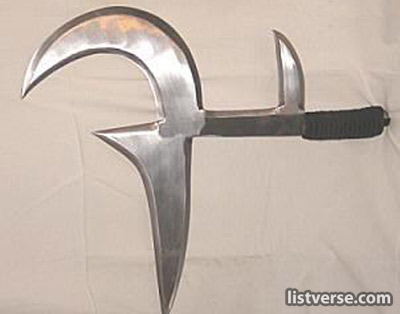
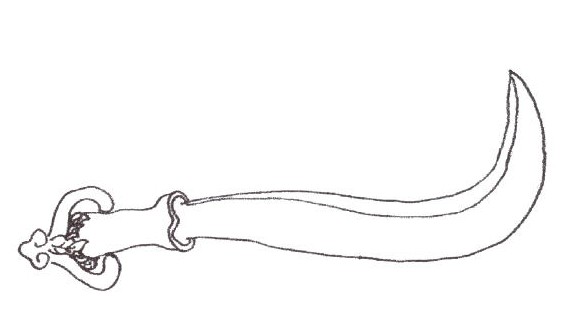
  • Yabba, Gnoll Fighting-Man (Barbarian) Lvl 6: HP 36; AC 5 [14]; Save 11; +1 sickle-sword, shield.

3836 Per-Bael: This ancient fortress has walls of pock-marked, limestone blocks. It is inhabited by a tribe of sahitim who call it Per-Bael, the “House of Bael”. The fortress is square in shape and measures 200 feet long and 80 feet wide. The walls of the fortress are 20 feet tall. Half of the fortress is taken up by a paved courtyard with a deep well (some say it reaches into a demi-plane of sweet water) and a garden. The sahitim grow tiger nut root, mandrake and figs and keep several bee hives made of fired clay.

The people of Per-Bael cultivate the mandrake to turn it into several goods: A powerful sleep draught, philtres of love and homonculi, which they keep in silver cages and train to be familiars. Some Ophirian traders lead caravans to the city in the winter months to trade manufactured goods (especially weapons) for these items.

Per-Bael houses 35 sahitim, their 100 wives and 40 children. The men expect the women to tend to the children, cultivate the garden and fix the meals, while they busy themselves with the arts of war and the hunt. The men keep a pack of six hell hounds for hunting.

The fortress proper consists of a ground floor with a great hall, kitchens, storage, barracks and a shrine (formerly dedicated to Lilith, now re-dedicated to Bael). The second story is used for living quarters and a library. The walls that surround the fortress and courtyard are five-feet thick and have crenelations to protect archers. The sahitim often have meat (sometimes the limbs and torsos of humanoids) skewered on pikes atop the walls, drying it like prosciutto.

The shrine measures 15 ft x 15 ft, with a 20-foot tall vaulted ceiling. The walls are carved with intertwining serpents and fig vines. There is a long, red marble altar here and four brass censors burning an acrid incense that causes non-sahitim to become drowsy (-1 to hit and saves unless a saving throw is passed). A window in the upper portion of one wall connects the shrine to the living chambers of Dramat, the high priest and lord of Per-Bael. His wife can often be found in the chamber, praying to Bael and casting auguries with bits of charred bone.

Dramat is a cleric, fighting-man and magic-user. Dramat has three wives, Gorissa, Sheboth and Haratti each an apprentice to her husband and one of his personal guards. Dramat possesses a crystal skull, the chief treasure of Per-Bael, that empowers his cleric spells, augments his summonings and allows him to commune with the infernal powers once per month. His two sickle-swords, when clanged together, create a blast of fire that inflicts 2d6 damage to all within 10 feet of Dramat once per day. Dramat is always accompanied by Zeb, his imp familiar, and a retinue of six fossil skeletons.

The lands that surround Per-Bael are desolate, but not uninhabited. Wandering the wastes, but never too far away, is another tribe of sahitim who were displaced from Per-Bael a hundred years ago and still scheme to take it back. This tribe of wanderers worships Lilith and is ruled by Ailo, a malcarna who claims to be Lilith’s daughter.

The wanderers, called the Lilitu, number 66 male and female warriors and 20 children. Females rule the Lilitu with an iron fist. They include Kora, Alula, Lamash, Labarta and Scorpia.

The Lilitu attack Per-Bael once every two or three years. Five of their warriors ride achaierai. These mounted warriors operate hand cannons responsible for the condition of Per-Bael’s walls. The hand cannons are cast from bronze and look like grimacing demons. Others have longbows and swords.

The Lilitu wander the hexes that surround Per-Bael, surviving by raiding and hunting. They dwell in tents of thick, reddish cloth and cook their stews in bronze cauldrons and can sometimes be found playing a game involving a “ball” composed of three shrunken heads tied together by their hair.

  • Hell Hound (6): HD 4 (20 hp); AC 4 [15]; Atk 1 bite (1d6); Move 12; Save 13; CL/XP 5/240; Special: Breathe fire (8 hp).
  • Fossil Skeleton (6): HD 2 (10 hp); AC 6 [13]; Atk 1 strike (1d6); Move 9; Save 16; CL/XP 2/30; Special: None.
  • Gorissa, Sahitim Fighting-Woman Lvl 3: HP 19; AC 6 [13]; Save 14; Special: Two-Weapon Fighting; Sickle-swords (2), scale armor.
  • Sheboth, Sahitim Cleric Lvl 3: HP 23; AC 4 [15]; Save 12; Special: Cleric spells (1st); +1 mace, scale armor, unholy symbol.
  • Harati, Sahitim Magic-User Lvl 3: HP 17; AC 8 [11]; Save 13; Special: Magic-user spells (2nd); Wavy dagger, grimoire.
  • Dramat, Sahitim Cleric/Fighter/Mage Lvl 5: HP 34; AC 5 [14]; Save 10; Special: Cleric spells (3rd), magic-user spells (3rd); +1 sickle-swords* (2), +1 leather armor, ring of protection +1, grimoire, unholy symbol, crystal skull.
  • Zeb the Imp: HD 2 (3 hp); AC 2 [17]; Atk 1 sting (1d4 + poison); Move 12 (Fly 16); Save 16; CL/XP 6/400; Special: Poison tail, polymorph, regenerate 1, immune to fire.
  • Ailo, Malcarna: HD 5 (30 hp); AC 3 [16]; Atk 1 tail (1d8), 3 weapons (1d8); Move 12; Save 12; CL/XP 8/800; Special: Magic resistance 25%, only hit by magic or silver weapons.
  • Kora, Alula & Lamash, Sahitim Fighting-Women (Rangers) Lvl 2: HP 12; AC 5 [14]; Save 15; Sickle-sword, longbow.
  • Labarta, Sahitim Cleric Lvl 2: HP 12; AC 6 [13]; Save 12; Special: Cleric spells (1st); Mace, leather armor, unholy symbol.
  • Scorpia, Sahitim Cleric-Fighter Lvl 4: HP 14; AC 8 [11]; Save 12; Special: Cleric spells (2nd); Sickle-sword, leather armor, unholy symbol, potion of healing.
  • Achaierai: HD 6; AC 3 [16]; Atk 2 claws (1d6), 1 bite (2d6); Move 12; Save 11; CL/XP 8/800; Special: Magic resistance 25%, breath of confusion, immune to fire.

NEW MONSTERS
The following monsters are open game content.

Amphisbaena Basilisk
An amphisbaena basilisk is a basilisk with a head and forelimbs on both ends of its body. It cannot be flanked, back attacked or surprised. Amphisbaena basilisks get two bite attacks and can make two gaze attacks each round (see normal basilisk for effect). An amphisbaena basilisk can survive being cut in half. Each half will attack as a normal basilisk with half the creature’s total hit points each. They will reattach to one another in 1 to 2 days.

  • Amphisbaena Basilisk: HD 9+1; AC 3 [16]; Atk 2 bite (1d8); Move 9; Save 6; CL/XP 13/2300; Special: All-around vision, half damage from cold, petrifying gaze, split.


Beetlor

Beetlors are subterranean, insectoid predators. They have shiny, orange carapaces and yellowish underbellies. Their claws are harder than steel, allowing them to burrow through stone. Sentient creatures that look into a beetlor’s multi-faceted eyes must pass a saving throw or be confused (as the spell) for 3d4 rounds. Beetlors have their own language.

  • Beetlor: HD 8+1; AC 1 [18]; Atk 2 claw (3d4) and 1 bite (1d10); Move 6 (Burrow 30; Save 8; CL/XP 9/1100; Special: Confusion.

Caryatid Column
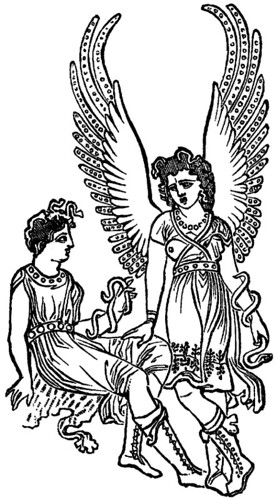
Caryatid columns are lesser stone golems that look like stone pillars in the shape of a human female carrying a sword. When activated, a caryatid column takes on a fleshy appearance. Its sword becomes steel. When its task is complete or the construct is killed, it returns to its normal position and once again becomes stone. Caryatid columns suffer half damage from normal weapons, but suffer full damage from magical weapons (without damage bonuses). Any weapon that hits the column has a 25% chance of snapping (reduced by 5% for each “plus” of a magic weapon).

  • Caryatid Column: HD 5; AC 4 [15]; Atk 1 sword (2d4); Move 9; Save 8; CL/XP 6/400; Special: Weapon snapping.

Froghemoth
Froghemoths are alien creatures that resemble massive, rubbery toads with three eyes atop a retractable eye stalk, four tentacles, and a 10-ft long tongue. When hunting, the beast floats with only its eye stalk above the water and its tentacles thrust forward, sometimes very near the shore, to seize potential victims that walk by.

While the froghemoth’s body can withstand 16 dice of damage before dying, its tentacles require 20 points of damage to sever. Severed tentacles regenerate in 1d4+1 weeks. Creature’s struck by the tongue must succeed at a saving throw or be held fast and dragged into its mouth. Any creature that begins the froghemoth’s turn in its mouth will be swallowed whole, suffering 3d6 points of acid damage per round. They can attack the stomache with a small, sharp weapon, but will be unconscious after 2 rounds. The tongue has 20 hit points. If the tongue is severed the monster will flail with its tentacles (for double damage) for 1d4+1 rounds before retreating into the water.

Froghemoths are immune to normal fire, though especially large and hot ones will drive them away. Fire spells will not drive them away unless at least 10 points of damage are dealt. Electricity attacks deal only 1 point of damage per die and slow the creature for 1 round.

  • Froghemoth: HD 16; AC 3 [16], tentacles 1 [18], tongue 5 [14]; Atk 1 tongue (5d10) or 4 tentacles (1d8); Move 3 (Swim 9); Save 3; CL/XP 19/4100; Special: Swallow whole, immune to fire.

Intellect Devourer
These bizarre creatures resemble large ambulatory brains. They have four stout, thickly muscled legs ending in clawed feet. Intellect devourers dwell underground. They feed on the psychic energy of their prey. After killing their prey, an intellect devourer merges with the body and devours the brain. Their awareness extends into the ethereal and astral planes. They detest bright light and flee from it.

Intellect devourers are immune to most spells. Fireballs act only as bright light (see above), but inflict no damage on them. Lightning bolts inflict 1 point of damage per dice. Death spells only have a 25% chance of slaying them. Psychic powers work on them with no penalties.

  • Intellect Devourer: HD 6; AC 3 [16]; Atk 4 claw (1d4); Move 15; Save 11; CL/XP 9/1100; Special: Sensitive to light, mind blast, spell immunity, surprise on 1-3 on 1d6, only harmed by magic weapons (1 point of damage per hit).

Planetar
Planetars are angels (less powerful than solars, more powerful than devas). Planetars can travel through the planes at will. They typically fight using +4 flaming two-handed swords. Planetars have opaline skin, glowing blue eyes and double wings. Planetars cast spells as level 9 clerics. Each planetar radiates protection from evil in a 40-ft radius. They can commune with the gods at need and remove blindness and deafness and cure disease and light wounds by touch. They automatically detect evil, illusion, invisibility, lies, magic and traps. Planetars can communicate telepathically and understand all languages. If killed anywhere but in the Empyrean Heaven, they will rematerialize there in four decades. Once per day a planetar can gate in one of the following types of creatures: 1d3 astral devas, 1d4 monadic devas or 1d6 movanic devas. Once per day they can summon: 1d4 couatl, 1d2 ki-rin or 1d2 androsphinx.

  • Planetar: HD 17 (144 hp); AC -8 [27]; Atk 3 weapons (1d10+4); Move 15 (Fly 48, Swim 24); Save 3; CL/XP 29/7100; Special: Spells, magic resistance 65%, regenerate 4 hp/rd, immune to cold, lightning, magic missiles, petrification, poison, surprise, life drain, mind effects and death magic, half damage from fire.

Sahitim
Sahitim are an ancient race of men that made a deal with chaotic forces, turning into a race of half-fiends. A sahitim appears as a lean, humanoid demon with blank eyes, golden orange skin and curved, black horns. Sahitim dress neatly and elegantly, sacrificing mobility and practicality for grandeur. They prefer light, elegant weapons and light armor. Most can speak common, the alignment tongues of chaos or evil and the language of evil dragons.

Sahitim sects consist of 50 to 100 warriors plus 40% noncombatants. Sects are led by fighting-men and clerics, and might include magic-users. Sects are accompanied by 1d3+1 hell hounds, 1d6+1 lemures or 1d6+1 dretches. Sahitim rulers are usually clerics. Sahitim lairs are iron fortresses built at remote sites.

Sahitim characters enjoy a +1 bonus to intelligence, wisdom and charisma, but suffer a -1 penalty to constitution. They can see in darkness to a range of 60 feet. Their ancient pact with dark forces gives them a +2 bonus to all saving throws. They suffer only half damage from acid, cold and fire attacks. All sahitim can cast protection from good as an innate power.

  • Sahitim: HD 1; AC 3 [16]; Atk 1 scimitar (1d8) or 1 longbow (1d8); Move 12; Save 17; CL/XP 3/60; Special: Half damage from acid, cold and fire, protection from good.

Svirfneblin
The svirfneblin live deep beneath the earth, ever searching for precious stones and metals. They look like hairless gnomes with brownish skin and grey eyes. Svirfneblin are akin to earth elementals, and groups of them have a 10% chance per svirfneblin to summon a medium earth elemental. Svirfneblin warriors wear chainmail and are armed with daggers and picks. Many carry hollow-tipped darts filled with poison or acid. Svirfnebli are so stealthy that they surprise on a roll of 1-2 on 1d6, and they notice odd stonework as well as dwarfs. A svirfneblin’s innate toughness and resistance to magic gives them an improved saving throw value. All svirfneblin can cast the following spells once per day: blindness, blur and change self.

  • Svirfneblin: HD 3; AC 3 [16]; Atk 1 weapon (1d8); Move 9; Save 12; CL/XP 5/240; Special: Surprise on a 1-2 on d6, summon earth elemental.

Vulchling
Vulchlings are bird-like creatures with vaguely human facial features. They live in desolate places, swooping down on unsuspecting passers-bye from ledges or tall trees. A vulchling lair will contain 1d10-1 eggs. Vulchlings have been known to consort with harpies and vrocks.

  • Vulchling: HD 1; AC 6 [13]; Atk 1 bite (1d4+1) or 2 claw (1d4); Move 6 (Fly 3); Save 18; CL/XP 1/15; Special: None.

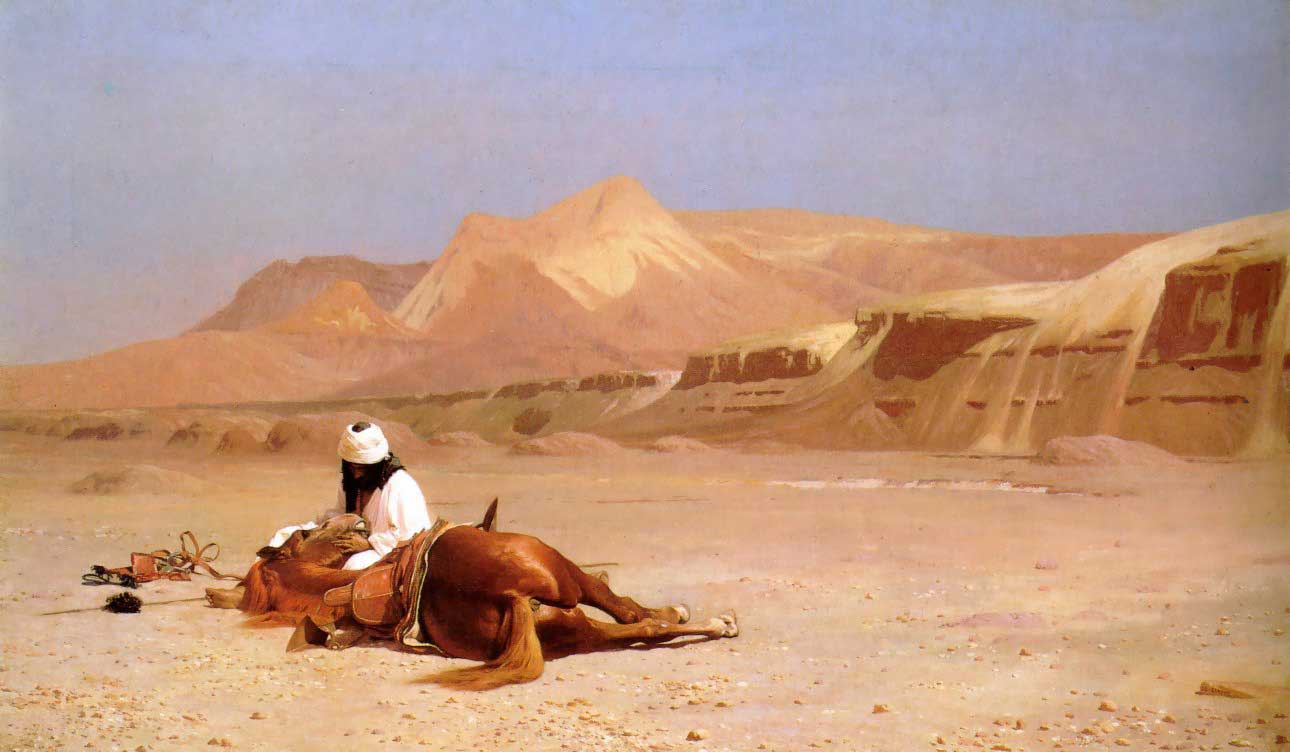
Art: The Arab and his Steed, 1872, Jean-Léon Gérôme

Wyvern Coast – Pwenet Plains

My little series on the Wyvern Coast now moves to the southwest quadrant of Map J11 (the northwest portion begins here). Part One introduced the Wyvern Coast and Tepid Sea. Part Five covers the basics on the savanna of Pwenet. Part Six and Seven will present more of the set encounters.

J11-WyvernCoast-SE

Pwenet
Pwenet is a land of rolling grasslands with scattered copses of aromatic trees and a few rocky outcroppings. Large herds of ruminants travel from watering hole to watering hole while being stalked by giant centaurs, lions and even more fantastic predators. Pwenet is said to hold both a fountain of youth and the source of the River Ish, thus making it a popular destination for explorers. A few merchant-adventurers from the city-states of Ibis and Ophir travel into Pwenet annually to trade manufactured goods for aromatic resins, ivory and wild animals. The region is otherwise untouched by the people of Lemuria and the Motherlands.

Although not the most numerous folk on the grasslands, the giant centaurs of Pwenet are the region’s most prominent. Pwenet is also home to tribes of gnolls and many human villages. The largest tribes, human and gnoll both, provide most of the region’s drama as chiefs and witch-doctors jockey for power and recognition. Oft told tales tell of when the human tribes of Pwenet united under Ouplu the Great and conquered the cities of Nabu. The people of Pwenet believe that history is a cycle and that they will once again conquer the outside world when united by a great leader.

Encounters on Pwenet (3d6)
3. Bulette (1d4)
4. Impundulu (1d6)
5. Giant Aardvark (1d4)
6. Giant Ostrich (2d6)
7. Hyena (6d6) or Giant Hyena (2d6)
8. Cheetah-were (2d6)
9. Cheetah (2d6)
10. Baboon (3d6)
11. Baboon-were (2d6)
12. Humanoid (see subtable)
13. Lion (2d6)
14. Lion-were (1d6)
15. Vampire Tree (1d6)
16. Rhinoceros (1d4)
17. Elephant (1d4)
18. Great Ghost (1d4)

Humanoid Encounters (1d6)
1. Abatwa (6d6)
2. Centaur, Giraffe (2d4)
3. Gnoll (3d6)
4. Trader (1d6) and Men-At-Arms (3d6)
5. Tribesman (6d6)
6. Utu Dwarf (6d6)

Random Battlefield Terrain (1d10)
1. Meadow – no penalties
2-5. Rocky Ground – may lose footing at top speed
6-10. Sand Dunes – half movement, may lose footing

Abatwa: The abatwa travel in force and are mounted on giant ants and armed with spears and short bows. They are humorless about their small size and bloody minded when they feel they have been insulted. Abatwa are led by a captain and there is a 1 in 6 chance that they are also accompanied by a shaman.

  • Abatwa: HD 1d4 hp; AC 6 [13]; Atk 1 weapon (1d4); Move 6; Save 18; CL/XP A/5; Special: None.
  • Large Ant: HD 1; AC 5 [14]; Atk 1 bite (1d4 + poison); Move 12; Save 17; CL/XP 2/30; Special: Poison 1d4 (save for 0 damage).
  • Abatwa Captain: HP 5d4; AC 4 [15]; Atk 1 weapon (1d4+1); Move 6; Save 12; Special: +1 to moral checks, troops +1 to hit.
  • Abatwa Shaman: HD 4d4; AC 9 [10]; Atk 1 weapon (1d6); Move 6; Save 13; Special: Cleric (druid) spells (3rd), shape change.

Centaur: The centaurs of Pwenet are a cross between a man and a giraffe rather than a man and horse. Their larger size gives them one more hit dice than a normal centaur. Centaurs are led by a huntsman and there is a 1 in 6 chance they are accompanied by a shaman.

  • Giraffe Centaur: HD 5; AC 5 [14]; Atk 2 kicks (1d6) and 1 weapon (1d10); Move 18; Save 13; CL/XP 6/400; Special: None.
  • Centaur Huntsman: HD 8; AC 4 [15]; Atk 2 kicks (1d6) and 1 weapon (1d10); Move 21; Save 12; CL/XP 9/1100; Special: Surprise on 2 on 1d6, track, double damage with missiles.
  • Centaur Shaman: HD 8; AC 4 [15]; Atk 2 kicks (1d6) and 1 weapon (1d6); Move 18; Save 13; CL/XP 11/1700; Special: Shape change, cleric (druid) spells (3rd).

Gnolls: The savanna is thick with gnoll war parties. There is one 3 HD gnoll for every 15 gnolls encountered. The gnolls carry wicker shields, spears and javelins.

  • Gnoll: HD 2; AC 5 [14]; Atk 1 bite (2d4) or 1 weapon (1d10); Move 9; Save 16; CL/XP 2/30; Special: None.
  • Gnoll Marauder: HD 5+5; AC 5 [14]; Atk 1 bite (2d4) or 1 weapon (1d10); Move 12; Save 14; CL/XP 5/240; Special: Berserker state.

Trader: Traders from Ophir and Ibis visit Pwenet in search of rare herbs, animal skins and gum acacia, the dried sap of the acacia tree and a useful substance for alchemists and scribes. Each trader is accompanied by six men-at-arms and 10 bearers. The trader and men-at-arms are mounted on horses and have ring armor, shields, battle axes and light crossbows. The bearers are on foot and have slings and clubs. There is a 2 in 6 chance that the 10 bearers are replaced by 6 drovers riding pack camels.

  • Bearer: HD 1d6 hp; AC 9 [10]; Atk 1 weapon (1d4); Move 12; Save 18; CL/XP B/10; Special: None.
  • Man-at-Arms: HD 1; AC 7 [12]; Atk 1 weapon (1d8); Move 12 (Mounted 18); Save 17; CL/XP 1/15; Special: None.
  • Trader: HD 3; AC 3 [16]; Atk 1 weapon (1d8+1); Move 9 (Mounted 18); Save 14; CL/XP 3/60; Special: +1 to damage.

Tribesman: The tribesmen of Pwenet carry shields and spears that are excellent as melee or missile weapons. Most encountered bands are hunting and are led by a huntsman. The group might also be a war party, in which case the leader will be a marauder.

  • Tribesman: HD 1; AC 8 [11]; Atk 1 weapon (1d8); Move 12; Save 17; CL/XP 1/15; Special: None.
  • Huntsman: HD 5; AC 8 [11]; Atk 1 weapon (1d8); Move 15; Save 12; CL/XP 6/400; Special: Surprise on 1 on 1d6, track, double damage with missiles.
  • Marauder: HD 5+5; AC 6 [13]; Atk 1 weapon (1d8); Move 12; Save 12; CL/XP 6/400; Special: Berserker state.

Utu Dwarf: Utu have pitch-black skin and eyes and small beards of wiry, black hair. They are capable of seeing through both normal and magical darkness and their skin is as hard as granite (AC 14). They carry shields and swords made of wood studded with shards of jade. The utu worship Khnum, the divine potter and creator of the universe and the creatures who inhabit it. The utu are experts at working with wood and clay and well practiced in the art of conjuring spirits, from whom they gain most of the knowledge they record on their clay tablets. Utu are led by druids who cast both cleric and magic-user spells.

NPC utu clerics can contact other plane once per month when the stars are aligned. Once in a century an utu cleric will make contact with Khnum himself to deliver a great prophecy to the peoples of Pwenet. On these occasions the dwarfs sound their drums and blow long horns made from hollowed trees to call all the tribes to hear the prophecy. All the great chiefs of Pwenet heed this call and travel to the appointed place with their retinues, sworn by tradition to observe a full week of peace while the ceremonial dances are performed, lineages are recited and finally the prophecy is pronounced. The coming of the current princess of the Quiet Folk, avatar of the great earth mother, was pronounced at the last convocation, and the next prophecy is due to come in the very near future.

  • Utu Dwarf: HD 1; AC 4 [15]; Atk 1 weapon (1d6+1); Move 9; Save 17; CL/XP 1/15; Special: See through all darkness.
  • Utu Priest: HD 4; AC 4 [15]; Atk 1 weapon (1d6); Move 9; Save 13; CL/XP 6/400; Special: Shape change, cleric spells (3rd).

It Came from the SRD – Part Four

This post is the fourth of four posts converting the unconverted monsters from the SRD to S&W. There is, naturally, a part one, part two and part three. This post is open game content.

Sahuagin Mutant
About one in two hundred sahuagin has four arms. Such creatures can make four claw attacks or use extra weapons, in addition to the claw and bite attacks. A Referee in possession of a game that utilizes random mutations may want to add other mutations to the sahuagin mutant (laser eyes, a winning personality, etc).

  • Sahuagin Mutant: HD 2+1; AC 5 [14]; Atk 4 claws (1d4) or 2 weapons (1d8); Move 12 (Swim 18); Save 16; CL/XP 3/60; Special: None.

Scrag (Sea Troll)
These cousins of the troll dwell in any body of water in any climate. They regenerate only if mostly immersed in water.

  • Scrag: HD 6+3; AC 4 [15]; Atk 2 claws (1d4), 1 bite (1d8); Move 12 (Swim 18); Save 11; CL/XP 8/800; Special: Regenerate 3 hp/round.

Shadow, Greater
Although no more intelligent than an average shadow, a greater shadow is more loathesome and dangerous because it can spawn. Creatures drained of all their strength by a greater shadow become shadows under the control of their killer.

  • Greater Shadow: HD 9+3; AC 6 [13]; Atk 1 touch (1d6 + strength drain); Move 12; Save 6; CL/XP 10/1400; Special: Drain 1d4 points of strength with hit, hit only by magic weapons.

Shield Guardian
Shield guardians are magical constructs created to protect whoever wears a certain amulet. They obey verbal commands, but are fairly stupid. All attacks against the amulet wearer in the presence of a shield guardian suffer a –2 penalty to hit. A shield guardian can store one spell of level 4 or lower that is cast into it by another creature. It “casts” this spell when commanded to do so. If a shield guardian’s amulet is destroyed, the guardian ceases to function until a new one is created. If the wearer dies but the amulet is intact, the shield guardian carries out the last command it was given.

  • Shield Guardian: HD 15; AC 0 [19]; Atk 2 slam (2d6); Move 12; Save 3; CL/XP 16/3200; Special: Shield other, spell storing.

Skum
Skum are humanoid algae that serve aboleths and other aquatic dark lords. They are amphibious and have raking claws.

  • Skum: HD 2; AC 7 [12]; Atk 1 bite (2d6), 2 claws (1d4); Move 9 (Swim 15); Save 16; CL/XP 2/30; Special: None.

Spider Eater
A spider eater is 10 feet long and 4 feet high, and has a wingspan of about 20 feet. A spider eater attacks with its venomous sting and powerful mandibles. Female spider eaters lay their eggs inside large, paralyzed creatures. The young emerge about six weeks later, literally devouring the host from inside. Creatures stung by a spider eater must pass a saving throw or be paralyzed for 1d8+5 weeks. Spider eaters have a continuous freedom of movement ability as the spell. They can be trained as mounts.

  • Spider Eater: HD 4+1; AC 5 [14]; Atk 1 sting (2d4) and 1 bite (1d8); Move 12 (Fly 24); Save 13; CL/XP 5/240; Special: Implant eggs, poison.

Thoqqua
The thoqqua is a 5’ long, reddish-silver worm-like creature that radiates intense heat. When it burrows through rock it leaves a 3-ft diameter tunnel glowing red with heat; anyone touching this tunnel within 1 minute of it being made will suffer 2d6 points of damage. It can charge 120’ in one round, dealing 5d6 damage to whomever it hits. Creatures struck must make a saving throw or lose a prominent item worn to the creature’s intense heat. A thoqqua is healed by fire damage. It suffers double damage from cold.

  • Thoqqua: HD 3; AC 1 [18]; Atk 1 touch (2d6); Move 12 (Burrow 3); Save 14; CL/XP 4/120; Special: Healed by fire, double damage from cold.

Troll Hunter
Some trolls, more cunning than most, are not satisfied with merely eating civilized beings but train to hunt them relentlessly. These troll hunters are fearsome creatures who focus on slaying and devouring humanoid prey.

  • Troll Hunter: HD 12+6; AC 1 [18]; Atk 2 claws (1d4), 1 bite (1d8) or battle axe (2d6) or javelin (1d8); Move 12; Save 3; CL/XP 15/2900; Special: Regenerate 3 hp/round, +2 bonus to hit humans and elfs, speak with animals at will, cast resist fire once per day.

Vampire Spawn
Vampire spawn are undead creatures that come into being when vampires slay mortals. Like their creators, spawn remain bound to their coffins and to the soil of their graves. Vampire spawn appear much as they did in life, although their features are often hardened, with a predatory look. Like vampires, vampire spawn have a variety of special abilities. They can only be harmed by magic or silver weapons, regenerate 1 hp per round, can turn into gaseous form at will and can drain one level with their bite. Looking into a vampire spawn’s eyes forces one to make a saving throw or be charmed (as the charm person spell). Vampire spawn have the same weaknesses and vulnerabilities as true vampires.

  • Vampire Spawn: HD 4; AC 4 [15]; Atk 1 bite (1d6 + level drain); Move 12; Save 13; CL/XP 7/600; Special: See description.

Xill
Xill are four-armed, red-skinned hooligans. Xill are asexual. They reproduce by laying eggs in the stomachs of living humanoids. They can shift from the ethereal to the material plane instantly, or the reverse in 2 rounds during which it loses its magic resistance. Despite their magic resistance, xill can be warded with protection from evil. The xill’s claws can inject a paralyzing venom into grappled opponents (a saving throw applies). Once a victim is secured and subdued, the xill will take its victim to the ethereal plane for egg laying. If attacked in its lair, the xill will first save its eggs and any egg-bound victims. Xill eggs hatch in 1d4 days; over the next 2d4 days they will inflict 3d6 damage per day as they mature. Once they emerge they kill the victim instantly. The eggs will produce 2d8 small xill that mature to adulthood in only 1d4 hours.

  • Xill: HD 5; AC 2 [17]; Atk 4 claws (1d4) weapons (1d8); Move 15; Save 12; CL/XP 12/2000; Special: Attack as 8 HD creatures, only harmed by magic weapons, magic resistance 70%, ethereal shift.

Yrthak
A yrthak is a large, blind avian. It senses sound and movement by means of a special organ on its long tongue. It emits powerfully focused beams of sound from the protrusion on its head. The creature is a yellowish-green color, with the wings and fin being more yellow and the head and body more green. The teeth are yellow. A yrthak is about 20 feet long, with a wingspan of 40 feet. Despite their intelligence, yrthaks do not speak. They can focus sonic energy into a ray every 2 rounds. The ray inflicts 6d6 damage. It can also focus the ray on stone, causing an explosion that deals 2d6 damage to all within 10 feet of the impact.

  • Yrthak: HD 12; AC 3 [16]; Atk 2 claws (1d6), 1 bite (2d8); Move 9 (Fly 24); Save 3; CL/XP 13/2300; Special: Sonic attacks.

Templates
Templates are, in my opinion, a sound idea. Why have separate stats for skeletons and monster skeletons and dragon skeletons, when you can instead apply a simple template to any monster and turn it into a skeleton. Nice and simple. Unfortunately, here is where the idea runs smack-dab into one of my least favorite parts of the d20 experience – monster stats. When I used to run a d20 game, I would dutifully go about the business of template-ing a monster to throw a twist to my players. I would go down the list, make the changes, do the calculations, and in the end come up with a slightly new monster that would probably still bite the dust in the course of three or four rounds of combat. For me, not enough bang for the buck. Enter the Swords & Wizardry Core Rules and the sheer joy that is monsters with only SEVEN stats. Compare that to the 23 to 25 statistics for a d20 monster that is going to last just about as long and do just about the same things in combat. Of course, templates often are used to create fairly bizarre, tongue-in-cheek creatures, but I have room for a little comedy in my games. So, here is an attempt at converting some d20 templates into an old school format.

Celestial Creature
The celestial creature template can be applied to any kind of creature.

  • Celestial creatures are subject to spells that repulse conjured creatures.
  • Once per day a celestial creature can “smite evil”, dealing bonus damage equal to its own hit dice on a successful attack against a evil creature.
  • Celestial creatures take half damage from acid, cold and lightning and have 10% magic resistance. A celestial creature with four or more hit dice can only be harmed by magic weapons.
  • Celestial creaures have challenge levels 3 or 4 points higher than normal creatures of the same type.

Sample Celestial Creature

  • Celestial Polar Bear: HD 7; AC 6 [13]; Atk 2 claws (1d6+1), 1 bite (1d10+1); Move 12; Save 9; CL/XP 7/600; Special: Hug, smite evil, half damage from acid, cold and lightning, magic resistance 10%, only harmed by magic weapons.

Fiendish Creature
The fiendish creature template can be applied to any kind of creature.

  • Fiendish creatures are subject to spells that repulse conjured creatures.
  • Once per day a fiendish creature can “smite good”, dealing bonus damage equal to its own hit dice on a successful attack against a good creature.
  • Fiendish creatures take half damage from cold and fire and have 10% magic resistance. A fiendish creature with four or more hit dice can only be harmed by magic weapons.
  • Fiendish creaures have challenge levels 3 or 4 points higher than normal creatures of the same type.

Sample Fiendish Creature

  • Fiendish Giant Viper: HD 4; AC 5 [14]; Atk 1 bite (1d3 + poison); Move 12; Save 13; CL/XP 6/400; Special: Lethal poison, only harmed by magic weapons, half damage from fire and cold, magic resistance 10%, smite good.

Half-Celestial
The haf-celestial template can be applied to any humanoid creature. No matter the form, half-celestials are always comely and delightful to the senses, having golden skin, sparkling eyes, angelic wings, or some other sign of their higher nature.

  • Half-celestials have feathered wings, giving them a fly speed equal to twice their land speed.
  • A half-celestial’s armor class improves by one.
  • Once per day a half-celestial can “smite evil”, dealing bonus damage equal to its own hit dice on a successful attack against an evil creature.
  • Half-celestials can use the spell light at will, and can always counter magical darkness.
  • Half-celestials can cast cleric spells. They can cast one spell of each cleric spell level, with the maximum level of cleric spells equal to their hit dice.
  • Half-celestials are immune to disease, suffer only half damage from acid, cold and lightning, are only harmed by magic weapons, have 25% magic resistance and are +2 to save vs. poison.
  • A half-celestial’s challenge level is 5 points higher than a normal creature of its type.

Sample Half-Celestial

  • Half-Celestial Elf: HD 1+1; AC 4 [15]; Atk 1 sword (1d8) or 2 arrows (1d6); Move 12 (Fly 24); Save 17 (15 vs. poison); CL/XP 6/400; Special: Smite evil (+1 damage), bless once per day, light at will, immune to disease, half damage from acid, cold and lightning, only harmed by magic weapons, magic resistance 25%.

Half-Dragon
The haf-dragon template can be applied to any living creature. Half-dragon creatures are always more formidable than others of their kind that do not have dragon blood, and their appearance betrays their nature; scales, elongated features, reptilian eyes, and exaggerated teeth and claws. Sometimes half-dragons have wings.

  • Half-dragons have +1 hit point per hit dice.
  • A half-dragon that is larger than man-size gains leathery wings and a fly speed equal to twice its land speed.
  • A half-dragon’s armor class improves by two.
  • Half-dragons have one bite attack for 1d6 damage and two claw attacks for 1d4 damage. Damage can be increased for creatures larger than man-sized, or decreased for smaller creatures.
  • Half-dragons gain one breath weapon of the breed of their dragon parent (i.e. frost if a half-white dragon, fire if a half-red dragon). A half-dragon’s breath weapon deals 5d6 points of damage and is usable once per day.
  • Half-dragons are immune to sleep and paralysis.
  • A half-dragon’s challenge level is 2 or 3 points higher than a normal creature of its type, depending on whether or not it can fly.

Sample Half-Dragon

  • Half-White Dragon Mammoth: HD 12+12; AC 5 [14]; Atk 1 trunk (1d10), 2 gore (1d10+4), 2 trample (2d6+4) or 2 claw (1d8), 1 bite (1d10); Move 12 (Fly 24); Save 3; CL/XP 16/3200; Special: Breath cone of frost (5d6 damage) once per day, immune to sleep and paralysis.

Half-Fiend
The haf-fiend template can be applied to any humanoid creature. No matter its form, a half-fiend is always hideous to behold, having dark scales, horns, glowing red eyes, bat wings, a fetid odor, or some other obvious sign that it is tainted with evil.

  • Half-fiends have bat-like wings, giving them a fly speed equal to their land speed.
  • A half-fiend’s armor class improves by one.
  • Half-fiends have one bite attack for 1d6 damage and two claw attacks for 1d4 damage. Damage can be increased for creatures larger than man-sized, or decreased for smaller creatures.
  • Once per day a half-fiend can “smite good”, dealing bonus damage equal to its own hit dice on a successful attack against a good creature.
  • Half-fiends can cast the reverse versions of cleric spells. They can cast one spell of each cleric spell level, with the maximum level of cleric spells equal to their hit dice.
  • Half-fiends are immune to poison, suffer only half damage from acid, cold, fire and lightning, are only harmed by magic weapons, and have 25% magic resistance.
  • A half-fiend’s challenge level is 5 points higher than a normal creature of its type.

Sample Half-Fiend

  • Half-Fiend Berserker: HD 1; AC 7 [12]; Atk 1 weapon (1d8) or 2 claws (1d4), 1 bite (1d6); Move 12 (Fly 12); Save 17; CL/XP 7/600; Special: +2 to hit in berserk state, smite good (+1 damage), cast inflict light wound once per day, immune to poison, half damage from acid, cold, fire and lightning, only harmed by magic weapons, magic resistance 25%.

Lycanthrope
The lycanthrope creature template can combine any humanoid creature with any beast.

  • A lycanthrope’s hit dice are equal to the hit dice of his humanoid form plus the hit dice of his animal form.
  • Lycanthropes can shift between their humanoid form, their animal form, and a hybrid form.
  • A lycanthrope’s armor class improves by two.
  • Lycanthropes gain special movement types of their animal form while in hybrid form.
  • A lycanthrope in hybrid form gains two claw attacks that deal 1d4 damage and one bite attack that deals 1d6 damage. Damage can be increased or decreased as the Referee deems appropriate.
  • A lycanthrope spreads its curse to other creatures through its bite attack. Creatures bitten by the lycanthrope must pass a saving throw to avoid the curse.
  • Lycanthropes can only be harmed by silver or magic weapons.
  • Lycanthropes can communicate with animals of their kind in any form.

Sample Lycanthrope

  • Hill Giant Were-Orca: HD 20+2; AC 2 [17]; Atk 1 weapon (2d6) or 2 claws (1d6), 1 bite (1d8); Move 12 (Swim 24); Save 3; CL/XP 9/1100; Special: Throw boulders, only harmed by silver or magic weapons, communicate with orcas, curse of lycanthropy.

Vampire
The vampire template can be applied to any humanoid creature.

  • If the creature has fewer than seven hit dice, increase their hit dice to seven.
  • Improve the creatures armor class by two.
  • The creature gains a bite attack that deals 1d10 points of damage and drains one level.
  • As a vampire, the creature gains the following special abilities: Can only be hit by magic weapons, regenerate 3 hp each round, turn into gaseous form or giant bat at will, summon a swarm of bats or 3d6 wolves from the night, eyes that charm (as the charm person spell, save at -2 to negate), and the ability to turn humanoids into vampires by killing them.
  • As a vampire, the creature gains the following vulnerabilities: They can be killed by immersion in running water (unless they are natural swimmers), exposure to sunlight, or having a stake driven through their hearts (which, to be honest, kills non-vampires as well); they retreat from the smell of garlic, the sight of a mirror and the sight of “good” holy symbols.
  • Vampiric creatures have challenge levels 3 points higher than normal creatures of the same type, plus any additions due to extra hit dice.

Sample Vampire

  • Vampiric Lizardman: HD 7+1; AC 6 [13]; Atk 2 claws (1d3), 1 bite (1d10 + level drain); Move 6 (Swim 12); Save 9; CL/XP 10/1400; Special: See description above.

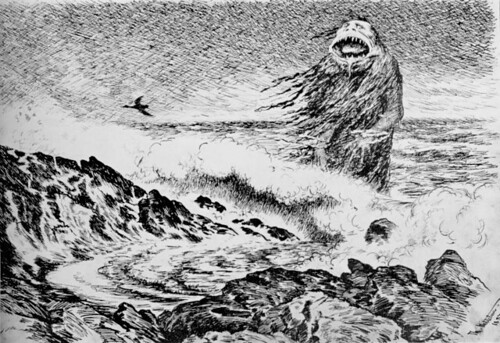
Art by Theodor Kittelsen – Sjøtrollet 1887 (The Sea Troll)

It Came from the SRD – Part Three

This post is the third of four posts converting the unconverted monsters from the SRD to S&W. There is, naturally, a part one and part two. This post is open game content.

Lammasu
Lammasus are servants of the lords of law. They appear as winged lions with the heads of bearded kings. They cast spells as level 7 clerics. In addition, they radiate a protection from evil, 10’ radius effect, can turn invisible twice per day and use dimension door once per day.

  • Lammasu: HD 7; AC 0 [19]; Atk 2 claw (2d6); Move 12 (Fly 24); Save 9; CL/XP 9/1100; Special: Spells.

Lillend
Lillends are protectors of the arts that look like winged women with the lower torsos of snakes. Victim’s of a lillend’s tail slap must succeed at a saving throw or be constricted each round for 2d6 damage. A constricting lillend cannot move, but it can still attack. A lillend can use the following spells: At will – darkness, knock, light, pass plant, polymorph self (humanoid only), speak with animals, speak with plants; 3/day – hallucinatory terrain; 1/day – fire charm, irresistible dance, transport via plants. Each lillend can understand all forms of communication.

  • Lillend: HD 7+2; AC 2 [17]; Atk 1 tail (2d6) or 1 weapon (1d8+4); Move 9 (Fly 27, Swim 15); Save 9; CL/XP 14/2600; Special: Spells, only harmed by magic weapons, immune to poison and life drain, half damage from fire, magic resistance 25%.

Magmin
Magmin look like halflings formed from molten rock and surrounded by an aura of flames. Touching a magmin causes flammables to ignite unless a saving throw is made. Just being within 20 feet of a magmin inflicts 1d6 points of damage. Metal items that touch a magmin melt unless the owner makes a saving throw.

  • Magmin: HD 2; AC 2 [17]; Atk 1 touch (1d6); Move 12; Save 16; CL/XP 3/60; Special: Heat.

Malenti
If a community of undine (aquatic elves) is located within 100 miles of a sahuagin community, about one in one hundred sahuagin looks just like an undine. These creatures, called malenti, can remain out of water for up to 12 hours. They are otherwise statistically identical to sahuagin.

  • Malenti: HD 2+1; AC 5 [14]; Atk 1 weapon (1d8); Move 12 (Swim 15); Save 16; CL/XP 2/30; Special: None.

Mephit
Mephits are minor elemental creatures that appear as small, winged demons. A mephit can use its breath weapon three times per day. Once per day, a mephit can attempt to summon another mephit of the same variety with a 25% chance of success. Mephits regenerate 2 points of damage each round if they are within their “element”.

Air Mephits
An air mephit breathes a 15-foot cone of dust and grit that inflicts 1d8 damage (saving throw for half). Once per hour it can duplicate a blur spell. Once per day it can use gust of wind. An air mephit regenerates if exposed to moving air.

  • Air Mephit: HD 3; AC 2 [17]; Atk 2 claw (1d3); Move 12 (Fly 24); Save 14; CL/XP 5/240; Special: Harmed by magic weapons, breath weapon, blur, gust of wind, regenerate, summoning.

Dust Mephit
A dust mephit breathes a 10-foot cone of irritating particles that deal 1d4 damage (saving throw for half) and imposes a -2 penalty to AC and attack rolls. Once per hour, a dust mephit can duplicate a blur spell. Once per day it can create a mass of roiling dust that duplicates a wind wall. A dust mephit regenerates in an arid, dusty environment.

  • Dust Mephit: HD 3; AC 2 [17]; Atk 2 claw (1d3); Move 12 (Fly 21); Save 14; CL/XP 5/240; Special: Harmed by magic weapons, breath weapon, blur, regenerate, summoning, wind wall.

Earth Mephit
An earth mephit breathes a 15-foot cone of rock shards and pebbles that deals 1d8 damage (saving throw for half). Once per day it can cast soften earth and stone. Once per hour it can magically change its size. An earth mephit regenerates if it is underground or buried up to its waist in earth.

  • Earth Mephit: HD 3; AC 3 [16]; Atk 2 claw (1d3); Move 12 (Fly 18); Save 14; CL/XP 5/240; Special: Harmed by magic weapons, alter size, breath weapon, regenerate, soften earth and stone, summoning.

Fire Mephit
A fire mephit breathes a 15-foot cone of fire that deals 1d8 damage (saving throw for half). Once per hour it can cast burning hands, and once per day it can heat metal. A fire mephit regenerates if it is touching a flame at least as large as a torch.

  • Fire Mephit: HD 3; AC 2 [17]; Atk 2 claw (1d6); Move 12 (Fly 21); Save 14; CL/XP 5/240; Special: Harmed by magic weapons, breath weapon, burning hands, heat metal, regenerate, summoning.

Ice Mephit
Ice mephits breathe a 10-foot cone of ice shards that deals 1d4 damage (saving throw for half) and imposes a -2 penalty to AC and attack rolls. Once per hour an ice mephit can cast magic missile and once per day they can chill metal. An ice mephit regenerates if touching a piece of ice of or if the ambient temperature is 32°F. or below.

  • Ice Mephit: HD 3; AC 1 [18]; Atk 2 claw (1d6); Move 12 (Fly 21); Save 14; CL/XP 5/240; Special: Harmed by magic weapons, breath weapon, chill metal, magic missile, regenerate, summoning.

Magma Mephits
Magma mephits breathe a 10-foot cone of magma that deals 1d4 damage (saving throw for half) and imposes a -2 penalty to AC and attack rolls. Once per hour, a magma mephit can turn into a pool of lava. The mephit can only be struck by +3 or better weapons in this form. The mephit can’t attack while in lava form but can use spells. It can move at a speed of 3. The pool’s touch ignites flammable materials such as paper, straw, or dry wood. Once per day a magma mephit can use pyrotechnics. A magma mephit regenerates if touching magma, lava, or a flame at least as large as a torch.

  • Magma Mephit: HD 3; AC 3 [16]; Atk 2 claw (1d6); Move 12 (Fly 21); Save 14; CL/XP 5/240; Special: Harmed by magic weapons, breath weapon, pyrotechnics, regenerate, shape change, summoning.

Ooze Mephits
An ooze mephit breathes a 10-foot cone of caustic liquid that deals 1d4 points of acid damage (saving throw for half). Living creatures that fail their saves are tormented by itching skin and burning eyes unless they have immunity to acid or are otherwise protected. This effect imposes a -2 penalty to AC and a -2 penalty on attack rolls for 3 rounds. Once per hour an ooze mephit can hurl an acid arrow (2d4 damage for 2 rounds). Once per day it can create a stinking cloud (6 rounds). An ooze mephit regenerates if in a wet or muddy environment.

  • Ooze Mephit: HD 3; AC 3 [16]; Atk 2 claw (1d3); Move 12 (Fly 18, Swim 12); Save 14; CL/XP 5/240; Special: Harmed by magic weapons, breath weapon, acid arrow, stinking cloud, summoning.

Salt Mephits
Salt mephits breathe a 10-foot cone of salt crystals that deals 1d4 damage (saving throw for half) and imposes a -2 penalty to AC and attack rolls. Once per day it can draw the moisture from an area in a 20’ radius. Living creatures within range take 2d8 points of damage (saving throw for half). This effect is especially devastating to plant creatures and aquatic creatures, which take a -2 penalty on their saving throws. A salt mephit regenerates if in an arid environment.

  • Salt Mephit: HD 3; AC 3 [16]; Atk 2 claw (1d6); Move 12 (Fly 18); Save 14; CL/XP 5/240; Special: Harmed by magic weapons, breath weapon, destroy moisture, glitterdust, summoning.

Steam Mephits
Steam mephits breathe a 10-foot cone of steam that deals 1d4 damage (saving throw for half) and imposes a -2 penalty to AC and attack rolls. Once per hour a steam mephit can duplicate a blur spell. Once per day it can create a rainstorm of boiling water that affects a 20-foot-square area and causes 2d6 damage. A steam mephit regenerates if touching boiling water or is in a hot, humid area.

  • Steam Mephit: HD 3; AC 3 [16]; Atk 2 claw (1d6); Move 12 (Fly 21); Save 14; CL/XP 5/240; Special: Harmed by magic weapons, breath weapon, blur, boiling rain, summoning.

Water Mephits
Water mephits breathe a 15-foot cone of caustic liquid that deals 1d8 acid damage (saving throw for half). Once per hour a water mephit can hurl an acid arrow. Once per day it can create a stinking cloud spell (6 rounds). A water mephit regenerates if exposed to rain or submerged up to its waist in water.

  • Water Mephit: HD 3; AC 3 [16]; Atk 2 claw (1d3); Move 12 (Fly 18, Swim 12); Save 14; CL/XP 5/240; Special: Harmed by magic weapons, breath weapon, acid arrow, stinking cloud, summoning.

Merrow
Merrows are the aquatic cousins of the terrestrial ogre. Merrow can live in fresh water or salt water. Salt water merrow often keep large harems of mermaids. The mermaids tolerate the merrow because of the protection he affords, but otherwise find them repulsive. This, in turn, drives the merrow to even greater depths of cruelty and hatred. Instead of the typical ogre’s club, they prefer to use long spears in combat.

  • Merrow: HD 4+1; AC 5 [14]; Atk 1 weapon (1d10+1); Move 9 (Swim 15); Save 13; CL/XP 4/120; Special: None.

Mohrg
Mohrgs are the animated corpses of mass murderers or similar villains who died without atoning for their crimes. Mohrgs are accompanied by 1d4+6 zombies. A mohrg’s long tongue paralyzes those it touches for 1d4 minutes. Creatures killed by a mohrg rise after 1d4 days as zombies under its control.

  • Mohrg: HD 14; AC -4 [23]; Atk 1 slam (1d8) and 1 tongue (paralysis); Move 12; Save 3; CL/XP 17/3500; Special: Tongue attack.

Mummy Lord
Unusually powerful or evil individuals preserved as mummies sometimes rise as greater mummies after death. A mummy lord resembles its lesser fellows, but often wears or carries equipment it used in life. Mummy lords are often potent spellcasters. The mere sight of a mummy lord causes one to become paralyzed with fear for 1d4 rounds unless they pass a saving throw. They are found as guardians of the tombs of high lords, priests, and mages. Most are sworn to defend for eternity the resting place of those whom they served in life, but in some cases a mummy lord’s unliving state is the result of a terrible curse or rite designed to punish treason, infidelity, or crimes of an even more abhorrent nature. A mummy lord of this sort is usually imprisoned in a tomb that is never meant to be opened again.

  • Mummy Lord: HD 10+4; AC 0 [19]; Atk 1 fist (1d12); Move 6; Save 5; CL/XP 15/2900; Special: Despair, rot, hit only by magic weapons, cast spells as a level 10 cleric.

Nessian Warhound
Nessian warhounds are coalblack mastiffs the size of draft horses, often fitted with shirts of infernal chainmail (+1 chainmail barding). Nessian warhounds resemble hell hounds in the same way that pit bulls resemble chihuahuas.

  • Nessian Warhound: HD 12; AC 0 [19]; Atk 1 bite (1d10); Move 12; Save 3; CL/XP 14/2600; Special: Breathe fire (24 hp).

Ogre Berserker
Their inherent bent toward chaos combines with their size and strength to make ogres natural berserkers. Indeed, their leaders are almost always monstrous brutes whose fury in battle is truly fearsome. A raging ogre berserker is an inspiration to other ogres.

  • Ogre Berserker: HD 8+2; AC 2 [17]; Atk 1 weapon (1d10+1); Move 9; Save 8; CL/XP 9/1100; Special: +2 to hit in berserk state.

Phasm
A phasm is an amorphous creature that can assume the guise of almost any other creature or object. If attacked, a phasm transforms into the most fearsome creature it knows (up to 12 feet long) and attacks. A phasm is immune to poison, sleep, paralysis, polymorph, and stunning effects.

  • Phasm: HD 15; AC 2 [17]; Atk 1 slam (1d4); Move 12; Save 3; CL/XP 17/3500; Special: Alternate form.

Rast
A rast has anywhere from ten to fifteen claws, though it can only use four at once. A rast has a body about the size of a large dog’s, with a head almost as large as the body. Any who meet a rast’s gaze must pass a saving throw or be paralyzed for 1d6 rounds. A victim hit by a rast’s bite attack loses 1 point of constitution from blood drain.

  • Rast: HD 4; AC 4 [15]; Atk 4 claws (1d4) or 1 bite (1d8); Move 3 (Fly 24); Save 13; CL/XP 8/800; Special: Paralyzing gaze, blood drain, immune to fire, x2 damage from cold.

Razor Boar
Razor boars are enormous boars with black-bristles and wild, bloodshot eyes. Its tusks are more than three feet long. Razor boars regenerate 2 hp per round. On a natural 20, the razor boars’s tusk attack severs its opponents head (if it has one) from its body.

  • Razor Boar: HD 10; AC -3 [22]; Atk 1 tusk (2d6) and 2 stomps (1d6); Move 21; Save 5; CL/XP 14/2600; Special: Magic resistance 50%, regenerate, vorpal tusks.

A Few Random Thoughts

A few random ideas hit me today and I thought I’d put them down on pixel before I forgot.

Thieves
I think the subject of thieves in the OSR may soon surpass alignment in the amount of words written. Personally, I just used a thief class that made saving throws (modified by ability score bonuses/penalties) to perform his skills – kind of, save or fail to climb the wall idea. It was simple and worked for the group. Later, I got to thinking about a S&W thief class that gets a flat bonus to some of the existing “X in 6” skill checks in the game, i.e. finding secret doors, listening at doors, surprise, chance to notice a trap, etc. That gives you a thief that lives within the framework of the game, and is simply a bit better than the other PCs at the non-combat side of the equation. Then I thought that you could make each thief stand out by letting him specialize in one skill, say surprise, using the saving throw mechanic with that one skill. I was thinking in terms of the classic caper movies, where the boss assembles a team to rob a bank – you have the greatest safe cracker, greatest get-away car driver, etc. So, each thief would be generally good at slipping through a dungeon’s non-combat defenses, and would eventually become one of the best in the world at his specialized skill. Just a thought.

Big Monsters
Big monsters should create a nice, dramatic fight-to-the-finish in games, but they often fall flat. The problem, I think, might be that they’re surrounded, and with all attacks focused on the one monster, their life expectancy isn’t necessarily much more than every other beastie encountered on an adventure. One answer could be to let the monster cause random damage (1d6, 2d6) to everyone within 10 to 20 feet of it, every round. This would represent the problem of fighting a really massive monster that is thrashing around and generally causing collateral damage to everything nearby. Again, just a thought.

Last Thought
Al Nofi’s CIC on the Strategy Page is one of my favorite reads. In the latest edition I found this quote:

“During the fifteenth century it was common for German mercenary companies to have a special officer named the “Booty Master,” charged with assessing the value of and overseeing the division of loot.” – Al Nofi

So, the Old School adventure party can now add a “Booty Master” to the “Mapper” and “Caller”. I like it.

It Came From the SRD – Part Two

Here’s part Two of my SRD conversions, letters F through K. I’ll post L-R tomorrow and then round it out on Wednesday with S-Z and some templates.

This post is open game content.

Frost Worm
Frost worm look like white and blue purple worms. They are capable of burrowing through ice, but not stone. They can produce a sonic trill that causes creatures who fail a saving throw to stand stunned for the duration of the trilling. If attacked, a stunned creature may make another saving throw. The worm can breath a cone of cold once per hour that inflicts 10d6 points of damage (saving throw for half damage). When killed, the frost worm turns to ice and shatters, dealing 10d6 damage to all within 100 feet.

• Frost Worm: HD 14; AC 1 [18]; Atk 1 bite (3d6); Move 12 (Burrow 3); Save 3; CL/XP 18/3800; Special: Trill, breath weapon, explode, immune to cold.

Fury
A cruel hunter and roaming brigand, the fury is a harpy that has trained to become a deadly archer. Furies often become mercenaries, selling their services to the highest bidder. When not employed, they make ends meet as highway robbers, forcing merchant caravans to pay protection money. Their siren song is no less effective than a normal harpy’s, and their touch also charms (saving throws apply).

• Fury: HD 7; AC 4 [15]; Atk 2 talons (1d3) and weapon (1d6+2); Move 6 (Fly 18); Save 9; CL/XP 8/800; Special: Flight, siren-song, +2 to hit and damage with bows.

Ghost
Ghosts are restless spirits that dwell between the ethereal and material planes. They can emit a frightening moan (save vs. fear) and their touch ages a person one decade (in the case of most humanoids) or one century (in the case of long-lived demi-humans). Ghosts can also use telekinesis to hurl small objects. As ethereal creatures, ghosts can only be harmed by magic spells and weapons.

• Ghost: HD 6; AC 4 [15]; Atk 1 touch (aging) or 1 hurled object (1d4); Move (Fly 12); Save 11; CL/XP 9/1100; Special: Moan, aging touch, telekinesis.

Girallon
Girallons are 8-foot tall, albino, four-armed gorillas that are as strong as stone giants. Although capable of fighting with their claws and bite, girallons sometimes employ simple weapons in combat. They are tribal by nature and have a simple language. They are fond of gems, jewelry and shiny metal. They are also fond of human flesh. Girallons speak their own simple language. A girallon that hits with two or more claw attacks latches onto the opponent’s body and tears the flesh for double damage.

• Girallon: HD 7+1; AC 16; Atk 4 claw (1d6) and 1 bite (1d8); Move 15 (Climb 15); Save 9; CL/XP 7/600; Special: Rend with claws, track by scent.

Grimlock
Grimlocks are a race of subterranean humanoid that raid the surface world at night searching for humans to butcher and devour. They are completely blind, but with their highly developed senses of smell and hearing they can sense creatures within 20 ft. Although they are immune to spells that require their victims to have sight, they can be partially “blinded” with spells such as ghost sound and sound burst or substances like snuff. Grimlocks have grey skin, black hair and white eyes. Their teeth are large and sharp. Grimlocks speak their own language. Grimlocks sometimes (10%) lair with medusae. In rocky areas, grimlocks are effectively invisible (and require a see invisibility spell to detect) if they remain motionless.

• Grimlock: HD 2; AC 4 [15]; Atk 1 slam (1d6) or 1 weapon (1d8); Move 15; Save 11; CL/XP 4/120; Special: Blind-fight, invisible in rocky areas.

Howler
A howler looks like a massive, emaciated lion with a mane of quills. In the middle of the night, it lies low in the grass and howls for hours on end. Those who hear the howl must make a saving throw each hour or temporarily lose one point of wisdom, with creatures who lose all of their wisdom dropping dead. Creatures engaged in melee combat with a howler suffer 1d4 attacks each round from its quills. With each successful attack, the victim must make a saving throw or have the quill break free and lodge in their flesh. Each quill so lodged imposes a -1 penalty to hit in combat.

• Howler: HD 6; AC 5 [14]; Atk 1 bite (2d8), 1d4 quills (1d6); Move 24; Save 11; CL/XP 8/800; Special: Howl, quills.

Janni
Janni are lesser kin to the djinn and efreet. They are formed of all four elements, and thus dwell on the material plane. They can change a creature’s size twice per day, become invisible three times per day, and speak with animals at will. They can also create food and water once per day (as a cleric) and shift into the ethereal plane for a few rounds at a time. They have telepathy with a range of 100 feet. Most janni are encountered wearing chainmail and armed with a curved sword and longbow.

• Janni: HD 6; AC 3 [16]; Atk 1 weapon (1d8); Move 12 (Fly 15); Save 11; CL/XP 7/600; Special: Spells.

Kapoacinth
Kapoacinth are aquatic cousins of the terrestrial gargoyle that lack wings. I imagine their “skin” might look like coral, and they would perch on a reef waiting for an unlucky sahuagin or undine to swim past.

• Kapoacinth: HD 4; AC 5 [14]; Atk 2 claws (1d3), 1 bite (1d4), 1 horn (1d6); Move 9 (Fly 15); Save 13; CL/XP 5/240; Special: None.

Krenshar
The krenshar is a strange, catlike carnivore with extremely flexible skin on its head. Krenshars use solitary scouts to drive prey into the waiting clutches of the pride. The scout appears from hiding, uses its scare ability, then chases the fleeing target to join the attack. A krenshar can pull the skin back from its head, revealing the musculature and bony structures of its skull. Combining this with a loud screech produces an unsettling effect that works like a scare spell.

• Krenshar: HD 2+2; AC 4 [15]; Atk 2 claw (1d4) and 1 bite (1d6); Move 15; Save 16; CL/XP 3/60; Special: Frighten.

It Came from the SRD – Part One

As I’ve mentioned before, I’m no purist when it comes to the many editions and iterations of the “world’s most popular role-playing game”. My own desire for simplicity draws me toward the older versions of the game and their modern simulacra, but that doesn’t mean I can’t find things to like about most editions. The problem, I think, is when some of these clever notions (kits, feats, templates) become revenue sources for their owners. That said, I think one of the top five best ideas ever concerning our favorite game was the creation of the Open Gaming License and its accompanying System Reference Document. The SRD, and all of the other open content on the internet, are amazing sources from which to mine ideas. Looking over the SRD today, I decided to convert a few creatures (and creature variants) that didn’t make it into S&W:C. All of the following is open game content.

Arrowhawk
An arrowhawk is a predator and scavenger from the Elemental Plane of Air. By twisting its body and varying the cadence of its wingbeats, an arrowhawk can fly at top speed in any direction.

• Arrowhawk: HD 7; AC 3 [16]; Atk 1 lightning bolt (2d8) or 1 bite (1d8); Move (Fly 24); Save 9; CL/XP 9/1100; Special: Immune to lightning.

Barghest
A barghest is a lupine fiend that can take the shape of a wolf or a goblin. A full-grown barghest is about 6 feet long and weighs 180 pounds. It has bluish-red skin and blue-black fur. A barghest’s eyes glow orange when it becomes excited. Barghests can cast blink, levitate and misdirection at will and charm monster and dimension door once per day. A barghest in wolf form leaves no tracks or trail. When a barghest slays an opponent, it can feed on the corpse, devouring both flesh and soul. Feeding prevents any form of raising or resurrection that requires part of the corpse. For every three suitable corpses a barghest devours, it gains one hit dice, and its armor class improves by one. The barghest only advances by consuming the corpses of creatures whose hit dice or levels are equal to or greater than its own current total. A barghest that reaches 9 hit dice through feeding immediately becomes a greater barghest upon completion of the act. A greater barghest gains the ability to cast invisibility and alter size once per day.

• Barghest: HD 6; AC 3 [16]; Atk 1 bite (1d6), 2 claws (1d4); Move 12; Save 11; CL/XP 8/800; Special: Change shape, cast spells, feed, only harmed by magic weapons.
• Greater Barghest: HD 9; AC 0 [19]; Atk 1 bite (1d8), 2 claws (1d6); Move 15; Save 6; CL/XP 12/2000; Special: Change shape, cast spells, feed, only harmed by magic weapons.

Belker
Belkers are wicked spirits of the air. They are composed of smoke, and their wings lend a demonic cast to their appearance. At will, it can take on gaseous form, looking like a pillar of smoke. In combat, it can engulf a victim, sending solidified, smoky claws into its lungs to tear and rend for 2d6 damage each round.

• Belker: HD 7; AC 2 [17]; Atk 2 wings (1d6), 2 claws (1d3), 1 bite (1d4); Move 12 (Fly 21); Save 9; CL/XP 9/1100; Special: Smoke claws, gaseous form.

Bodak
A bodak is the restless, angry spirit of one killed by an act of terrible, senseless evil. They appear as humanoids with rubbery, reddish skin, featureless faces and smoldering, orange eyes. Creatures that meet its pitiless gaze must pass a saving throw or die instantly, re-animating as bodaks 24 hours later. Bodaks loathe sunlight, which inflicts 1 point of damage each round it is in contact with their skin.

• Bodak: HD 9; AC 1 [18]; Atk 1 slam (1d8); Move 9; Save 6; CL/XP 12/2000; Special: Death gaze, vulnerable to light, unharmed by lightning.

Cauchemar
The cauchemar is a horrible, especially malevolent version of a nightmare. The sight of one of these great horrors bearing down is enough to shake the heart of the boldest champion.

• Cauchemar: HD 16; AC -5 [24]; Atk 1 bite (2d6), 2 hoofs (2d8); Move 18 (Fly 35); Save 3; CL/XP 19/4100; Special: Breathe smoke, become incorporeal.

Celestial Charger
A celestial charger is a unicorn blessed by the gods of light and law. They have the same abilities as normal unicorns, but can also cast spells as a level 7 cleric. Once per day, a celestial charger can deal +8 damage on a successful attack against an evil creature.

• Celestial Charger: HD 8; AC 0 [19]; Atk 2 hoofs (1d8), 1 horn (1d10); Move 24; Save 8; CL/XP 11/1700; Special: Double damage for charge, 25% magic resistance, teleport, smite evil, cast cleric spells as level 7 cleric.

Chaos Beast
Chaos beasts have mutable, ever-changing forms. For all its fearsome appearance, whether it has claws, fangs, pincers, tentacles, or spines, a chaos beast does little physical harm. A blow from a chaos beast causes a living creature to become a spongy, amorphous mass unless they pass a saving throw. An affected creature cannot hold or use any item. Soft or misshapen feet and legs reduce speed to 6. Searing pain courses along the nerves, so strong that the victim cannot cast spells or use magic items, and it attacks blindly, unable to distinguish friend from foe. Each round the victim spends in an amorphous state causes 1 point of wisdom drain from mental shock. If the victim’s wisdom score falls to 0, it becomes a chaos beast. A victim can regain its own shape by attempting a saving throw. A success reestablishes the creature’s normal form for 1 minute. On a failure, the victim can still repeat this check each round until successful or drained of wisdom. A shapechange or stoneskin spell does not cure an afflicted creature but fixes its form for the duration of the spell. A restoration or heal spell removes the affliction, but a separate restoration is necessary to restore any drained points of wisdom.

• Chaos Beast: HD 8; AC 3 [16]; Atk 2 claw (1d4); Move 9; Save 8; CL/XP 11/1700; Special: Corporeal instability, immune to critical hits and transformations, magic resistance 20%.

Choker
These vicious little subterranean predators have hands and feet with spiny pads that help grip almost any surface. The victim of a successful tentacle attack must make a saving throw or be strangled for 1d6 points of damage each round. Chokers are so fast, they can make an extra attack or move at the end of each round.

• Choker: HD 3; AC 2 [17]; Atk 2 tentacles (1d4); Move 9 (Climb 6); Save 14; CL/XP 5/240; Special: Strangle, quickness.

Chuul
Chuuls are a horrible combination of crustacean, insect, and serpent. Although amphibious, they are not good swimmers and prefer to attack on land or in shallow water. The victim of a chuul’s claw attack must succeed at a saving throw or be constricted for 3d6 points of damage each round. A chuul can transfer constricted victims from a claw to its tentacles on its next turn. The tentacles grapple with the same strength as the claw. They deal no damage, but do exude a secretion that paralyzes for 6 rounds if a saving throw is failed. While held in the tentacles, a victim suffers 1d8 points of damage each round from the chuul’s mandibles.

• Chuul: HD 11+2; AC -3 [22]; Atk 2 claw (2d6); Move 12 (Swim 9); Save 4; CL/XP 15/2900; Special: Amphibious, constrict, paralyze, immune to poison.

Cloaker
When resting or lying in wait, these creatures are almost impossible to distinguish from common black cloaks (the cloaker’s ivory claws look very much like bone clasps). Only when it unfurls does the horrific nature of the creature become apparent. A cloaker has a wingspan of about 8 feet. Cloakers emit a low moan that can either cause everyone within 30 feet to save vs. fear or cause one creature within 30 feet to save vs. hold monster. Cloakers can manipulate shadows, duplicating the effect of the spells blur or mirror image.

• Cloaker: HD 6; AC 3 [16]; Atk 1 tail (1d6), 1 bite (1d4); Move 3 (Fly 15); Save 11; CL/XP 9/1100; Special: Moan, shadow shift.

Derro
Derro are a degenerate race of albinos that dwell deep underground. At night, they walk the surface world, kidnapping humans for slaves or food. Most derro wear studded leather armor and carry repeating light crossbows with poisoned bolts (see below), fork-fauchards (pole arms that grant a +4 bonus to overbearing attacks) and daggers. Derro bands are often lead by their savants, a sort of combination of magic-user and cleric. Derro lairs contain 20-40 derro, 1d3 savants, 1d6 student savants, 20-30 slaves (80% female) and 1d3 gargoyle allies.

• Derro: HD 3; AC 14; Atk 1 weapon (1d4); Move 12; Save 14; CL/XP 4/120; Special: Magic resistance 30%.
• Savant: HD 7; AC 14; Atk 1 weapon (1d4); Move 12; Save 9; CL/XP 10/1400; Special: Magic resistance 30%, spells.

Destrachan
A destrachan looks something like an eyeless velociraptor with a gaping, lamprey-like mouth. It has a pair of complex, three-part ears that it can adjust to be more or less sensitive to various sounds. It is blind, yet hunts with a sense of hearing more precise than most creatures’ sight. From its tubular mouth a destrachan emits carefully focused harmonics, producing sonic energy so powerful it can shatter a stone wall. So skilled is a destrachan at controlling the sounds it emits that it can choose what type of material to affect with its attack.

A destrachan can blast sonic energy in a cone up to 80 feet long. It can also use this attack to affect any creatures or objects within a 30-foot radius. It can tune the harmonics of this destructive power to affect different types of targets, including a blast that deals 4d6 points of damage to all within 20 feet, stunning all foes within 20 feet (saving throws apply) or shattering a particular material.

• Destrachan: HD 8; AC 1 [18]; Atk 2 claw (1d6); Move 12; Save 8; CL/XP 11/1700; Special: Blindsight, sonic energy.

Dread Wraith
The oldest and most malevolent wraiths lurk in the depths of forgotten temples and other forsaken places. They can sense the approach of living creatures, and hunger for them. Dread wraiths are immune to all non-magical weapons, including silver ones. Arrows, even magical ones, inflict only a single point of damage on their etheric bodies. The touch of a dread wraith inflict 2d6 points of damage and drains 1d2 levels. Humanoids that have all of their levels drained by a dread wraith become wraiths themselves under the control of their killer.

• Dread Wraith: HD 16; AC 0 [19]; Atk 1 touch (2d6 + level drain); Move 9 (Fly 24); Save 3; CL/XP 19/4100; Special: Drain 1d2 levels per hit.

Elder Pudding
The most ancient black puddings are vast pools of inky death. They have the same special abilities as other black puddings, save that weapons and armor of any kind are destroyed with but a single hit.

• Elder Pudding: HD 20; AC 8 [11]; Atk 1 attack (4d8); Move 6; Save 3; CL/XP 21/4700; Special: Acidic surface, immune to cold, divides when hit with lightning.

Ethereal Filcher
Ethereal filchers look vaguely like giant, disembodied hands, the “fingers” each tipped in a hand with long, sinuous fingers. The “palm” contains a rudimentary face. Ethereal filchers can slip in and out of the ethereal plane at will, using this ability to take people by surprise. The creature attempts to seize an item, then quickly shifs back to the ether. Ethereal filchers can detect magic at will.

• Ethereal Filcher: HD 5; AC 2 [17]; Atk 1 bite (1d4); Move 15; Save 12; CL/XP 6/400; Special: Detect magic, ethereal jaunt, pick pockets.

Ethereal Marauder
Ethereal marauders look like bipedal lizards with no forelegs and with gaping, tri-corner mouths filled with fangs. Their coloration ranges from bright blue to deep violet. They live on the ethereal plane, but mostly hunt on the material plane. Once a marauder locates prey, it leaves the ethereal plane to attack, biting the victim and then retreating quickly back to the ether.

• Ethereal Marauder: HD 2+1; AC 5 [14]; Atk 1 bite (1d8); Move 15; Save 16; CL/XP 3/60; Special: Ethereal jaunt.

Coming Soon: I’ll finish up the unconverted SRD monsters and then get to work describing the southwest portion of the Wyvern Coast and the infamous city-state of Ophir.

A Sword by Any Other Name

Weapons are a big part of fantasy role-playing. They are one of the main tools of the trade for vanquishing evil (or promoting it) and relieving the local humanoids of their ill-gotten booty. They are also a way that many players, especially those playing fighting-men, define their characters – archer vs. swordsman vs. weird guy who specializes in the flail.

The thousand variations on the D&D theme have introduced a few different ways of handling weapons in play, from the concept of everything doing 1d6 damage in 0E, to the introduction of variable damage types soon after, to 3rd edition’s variable damage + variable critical hit ranges + variable critical hit multipliers + different sizes + different weapon types (bludgeoning/piercing/slashing and simple/martial/exotic). AD&D’s weapon speeds and weapon vs. AC table was another way of differentiating one weapon from another, i.e. making one’s choice of weapon (or weapons) an element that could influence success or failure in the course of play.

Now, I like lots of variety in gaming, but I also like enough simplicity that I can store the vital game rules in my brain so that I rarely have to consult a book or table during play. For this reason, my desire for weapon differentiation extends about as far as variable weapon damage. Unfortunately, as a person who likes to write game material, and as an ardent devotee of Clark Ashton Smith, describing NPCs with maces and short swords can get a bit boring. So, using my dog-eared copy of Palladium’s Compendium of Weapons & Armor (one of the essential books for a Referee or a write of game material in my humble opinion), I present this handy list of weapon synonyms, along with their region of origination or most common use. The weapon types are based on Moldvay’s Red Book.

Axe, Battle (1d8)
• Africa – Elephant Axe
• Ancient – Khetan (Egypt)
• Central & South America – Maquahuilt
• East Asia – Masakari
• Europe – Bearded Axe, Bipennis, Doloire (wagoner’s axe), Sparte, Taber Axe, Toporok, Tuagh-gatha, Woodsman’s Axe
• India – Bullova, Tabar, Tabar-i-zin, Tungi, Venmuroo
• Near East – Ay-Balta
• Oceania – Balestarius, Head Axe, Udlimau

Axe, Hand (1d6) – includes sickles (*)
• Africa – Hunga-Munga, Shoka, Silepe, Throwing Irons
• Ancient – Dolabra (Rome), Epsilon Axe (Mid-East), Eye Axe (Mid-East), Novacula (Cyprus *)
• East Asia – Biliong, Kama, Kusarigama* (attached to chain), Toki Kakauroa, Piau
• Europe – Francisca, Hatchet, Hurlbat, Miner’s Axe, Thin Axe, Thrusting Axe
• India – Ancus (elephant goad), Galraki, Hoolurge, Kharga (sacrificial axe), Kodelly, Tongia
• Near East – Balta
• North America – Tomahawk
• Oceania – Adze, Arit, Kadjo, Kapak, Keerli, Pareh

Club (1d4) – includes staves (#)and throwing sticks (*)
• Africa – Kasrullah, Kerrie *, Rungu, Trombash *
• Ancient – Aclys * (Rome), Lisan (Egypt), Naboot # (Egypt)
• Central & South America – Iverapena, Macana, Pagaya
• East Asia – Bo #, Bokken (practice sword), Jo #, Kiam Bokiam, Tonfa, Yoribo
• Europe – Baculus, Blackjack, Cudgel, Maul, Quarterstaff #, Sap, Slung Shot, Truncheon
• India – Kirasoo *, Mugdar
• North America – Ga-Ne-U-Ga-O-Dus-Ha (deer antler club), I-Wata-Jinga, Ja-Dagna, Ja-Weti, Mandehi-Liguje (coup stick), Tiglun
• Oceania – Baggoro, Bi-Teran, Boomerang *, Burrong, Dowak *, Flat Club, Hoeroa, Japurunga, Kangaroo Rat *, Kauah, Kotiate, Kujerong, Kunnin *, Leonile, Lil-lil, Mabobo, Mattina, Meeri, Merai (jade club), Muragugna, Nil-li, Pacho, Pahu, Patu, Periperiu, Potu, Purijimala, Quirriang-an-wun, Rang-kwan, Sapakana, Siwalapa, Tambara, Tabutje, Tawha-tewha, Tindil, U’u, Ulas *, Uramata *, Waddy, Wahaika, Wairbi, Wakerti, Watilikri *, Weerba, Wirka, Yeamberren

Dagger (1d4) – includes knives
• Africa – Baswa Knife, Bracelet Dagger, Fantail Dagger, Forked Tongue Dagger, Kummya, Mongwanga, Pokwe, Telek
• Ancient – Falx Supina (Rome), Harpe (Greece), Parazonium (Greco-Roman), Pugio (Rome), Sica (Rome)
• East Asia – Aikuchi, Bade-Bade, Chopper, Dhaw, Golok, Hamidashi, Heyazashi, Himogatana, Koshigatana, Kozuka, Kubikiri, Kujungi, Kwaiken, Mit, Parang Ginah, Parang Latok, Piso Raut, Pisu Tonkeng, Raut, Rentjong, Siangkam (not quite a dagger, but close enough), Tanto, Tjaluk, To-Su
• Europe – Batardeau, Bodkin, Cinquedea, Chuchillo (folding knife), Degan, Dirk, Estradoit, Kidney Dagger, Main Gauche, Mattucashlass, Misercorde, Pavade, Poignard, Roundel Dagger, Scramasax, Sgain Dubh, Skain, Stiletto, Triple Dagger
• India – Bank, Buhj, Bich’hua, Bundi Katari, Chilanum, Choora, Haladie, Horn Dagger, Jamdhar Katari, Karoula, Katar, Katar Bank, Katar Dorlicaneh, Kukri, Maushtika, Moplah, Paiscush, Para-i-tutti, Phurbu, Pichangatti, Piha Kaetta, Saffdara, Vinchu
• Middle East – Acinaces. Bichaq, Chaqu (folding knife), Jambiya, Kard, Khanjar, Khanjarli, Khyber Knife, Kindjal, Pesh-Kabz, Qama, Zirah Bouk (mail-piercer)
• Oceania – Badik, Barong, Bayu, Beladau, Bolo, Buyu Knife, Halasan, Karambit, Kira (quartz blade), Kudi, Kudi Tranchang, Labo Belange, Lading, Mandaya Knife, Pahua (wooden), Palitai, Panabas, Sabit, Sadoep, Sakin, Sekin, Sewar, Tadji, Todo, Tolaki, Tombak Lada, Tuba,Wedong

Flail (1d6) – includes whips (*)
• Ancient – Flagellum (Rome)
• East Asia – Hui-Tho (bladed rope), Kau Sin Ke, Manriki Gusari, Nagegama, Nunchaku, Rante, Rante Ber Gangedug
• Europe – Ball & Chain, Bullwhip *, Cat-o’ Nine Tails *, Goupillon, Mace & Chain, Military Flail
• India – Binnol, Cumber-Jung
• Middle East – Kamcha *
• Oceania – Chemeti *, Kalus *, Laingtjat, Petjut *, Sa Tjat Koen

Mace (1d6)
• East Asia: Gunsen (war fan), Kiseru (smoking pipe), Suang-tu-fung
• Europe – Bouzdykan, Bulawa, Chacing Staff, Fist Mace, Hercules Club, Holy Water Sprinkler, Massuelle, Mazule, Pernat, Plombee, Quadrelle, Schestopjor
• India – Dhara, Gargaz, Garz, Lohangi, Ox Mace, Quoit, Shashpar, Sickle Mace, Singa (steel boomerang)
• Middle East – Dabus, Ox Mace
• Oceania – Gada, Ganjing

Pole Arm (1d10) – includes pikes (#) and tridents (*)
• Ancient – Romphaea (Greece), Sarissa # (Greece), Taru # (Egypt)
• Central & South America – Tepoztopilli
• East Asia – Bisento, Fang, Feruzue (concealed ball & chain), Half Moon, Hwa-Kek, Kongo-Zue, Kumade, Lajatang, Magari Yari *, Nagamaki, O-No, Shakujo Yari (concealed blade), Shinobi-Zue (concealed blade), Sjang Sutai, Shakwo, Sode Garami (sleeve tangler), Tetsubo, Tiger Trident *, Toyak
• Europe – Ahlspiess #, Awl Pike #, Beaked Axe, Berdysh/Berdiche, Bill, Bohemian Ear-Spoon, Brandestoc, Chauves-Spuris, Couteau De Breche, Croc, Falcastra, Falx, Feather Staff (concealed blades), Fuscina *, Glaive, Godendag, Halberd, Half Moon, Hippe, Jedburg Axe, Korseke, Langue De Boeuf (Ox Tongue), Lochaber Axe, Lucerne Hammer, Military Fork, Partizan, Pike #, Pitch Fork, Plancon A Picot #, Pole Axe, Runka, Sabre Halberd, Scaling Fork, Scorpion, Scythe, Spetum, Spontoon #, Sudis #, Voulge
• India – Khatramkha *, Kunjukdan, Saintie #, Veecharoval
• Oceania – Arbir, Hani

Spear (1d6) – includes lances (*) and throwing spears (#)
• Africa – Assegai #, Golo, Hinyuan, Kikuki, Koveh, Mahee, Makrigga, Mkuki, Sudanese Spear
• Ancient – Angon # (Franks), Cateia # (Celtic), Contus * (Rome), Egchos (Greece), Falarica (Rome), Framea * (Franks), Gaesom # (Rome), Jaculum # (Rome), Javelin # (Greece), Pelta # (Greece), Pilum # (Rome), Saunion # (Samnites), Spiculum # (Rome)
• East Asia – Dung, Hak, Hoko, Jarid #, Kamayari, Ken Shoka #, Lembing, Makura Yari, Nageyari #, Su Yari, Te Yari #, Yari
• Europe – Boar Spear, Harpoon #, Lance *, Lance-Ague * #, Pill, Zegaye *
• India – Ballam, Barchi, Bhala *, Garvo, Khundli P’Hansi, Laange, Patisthayana, Sang * (from camel back), Sangu, Shail *, Tschehouta
• Middle East – Rummh, Sinan
• North America – Ja-Mandehi *, Kahsita #
• Oceania – Aunurgith, Bandang, Bilari #, Budiak, Chimbane, Do-War, Enhero, Fal-Feg, Granggang, Irpull, Jiboru, Kadji, Kannai, Kapun, Kiero, Koy-Yung, Kujolio, Kuyan, Larna-Pe, Mon-Gil Mon-Gil, Mongile, Mu-Rungal, Nandum, Nerau, Pillara, Pouwhenua (also a staff), Sangkoh, Sanokat, Shanen Kopaton, Siligis #, Simbilan #, Sligi, Tahr Ruan, Tao, Tawok, Telempang, Tirrer, Tjunkuletti, To-Ono, Tombak, Tumpuling, Wainian, Wallunka, Wi Valli

Sword (1d8)
• Africa – Flyssa, Kaskara, Seme, Shotel
• Ancient – Spatha (Rome)
• East Asia – Dha, Dukn, Han Dachi, Katana, Sondang, Tashi
• Europe – Broadsword, Colichemarde, Craquemarte, Estoc, Falchion, Fleuret, Foil, Halstatt Sword, Karabela, Longsword, Pappenheimer, Rapier, Reiterpallasch, Sauschwerter (boar sword), Schiavona, Schnepfer, Spadroon, Tuck, Verdun
• India – Abbasi, Ahir, Dao, Firangi, Fish Spine Sword, Goliah, Gupti, Halab, Kastane, Katti Talwar, Khanda, Nagan, Pata, Pattisa, Pulouar, Ram Da’o, Sapola, Sirohi, Sosunpattah, Sultani, Talwar, Tegha
• Middle East – Karabela, Killj, Pala, Quaddara, Saif, Scimitar, Shamshir, Shashqa, Zulf-I-Khar
• Oceania – Campilan, Isau, Jumgheerdha, Pakayun, Peudeueng, Sikim Gala

Sword, Short (1d6)
• Africa – Babanga, Manople, Takouba, Wasa
• Ancient – Carp’s Tongue Sword (Europe), Gladius (Rome), Herebra (Phoenicia), Kledyv (Wales), Kopsh (Egypt), Machera (Greece), Sapara (Assyria), Seax (Anglo-Saxon), Xiphos (Greece)
• East Asia – Ama-Goi-Ken, Kamashimo Zashi, Ken, Kenuki Gata Tachi, Klewang, Luris Pedang, Ninjato, Opi, Pedang, Pira, Senangkas Bedok, Wakizashi
• Europe – Backsword, Badelaire, Baselard, Bilbo, Braquemar, Coustil A Croc, Cutlass, Dusack, Kantschar, Katzbalger, Palache, Sabre, Small Sword, Straight Sword
• India – Alamani , Ayda Katti, Kapee Dha, Kora, Shah Nawaz Khani, Surai, Zafar Takieh
• Middle East – Chereb, Goddara, Sassanid Sword, Yatagan
• Oceania – Beledah, Chundrick, Kris, Lopu, Manpau, Mentok, Perang Bedak, Parang Nabur, Parang Pandit, Piso Podang, Talibon, Tapak Kudak, Thinin

Sword, Two-Handed (1d10)
• Ancient – Dacian Falx (Celts, Germans)
• East Asia – Beheading Sword, No Dachi
• Europe – Bastard Sword, Claymore, Espadon, Executioner’s Sword, Flamberge, Zweihander
• India – Mel Puhah Bemoh
• Oceania – Dalwel

War Hammer (1d6) – includes picks (*)
• Europe – Bec-de-Corbin, Bisacuta *, Crowbill, Dagger Mace, Horseman’s Hammer, Martel de Fer, Oncin *, Tschekan Hammer
• India – Lohar *, Sabar *, Zaghnal *
• North America – Taavish

A few things I noticed while compiling this list …

Axes loom large in every culture. I’m no expert in weapon making, but my understanding is that axes only require a small strip of really good steel for their edge, so they’re much cheaper to make and maintain than swords.

Africa has some really cool axes, especially the throwing axes.

A band of kshatriyas armed with cumber-jungs sounds cooler than a band of fighting-men with flails. I would run away from both, but the former would make for a more picaresque story if I survived the experience.

Any player who was cool enough to have his fighter specialize with the Bohemian ear-spoon would probably get a secret +1 to all saving throws from me.

Oceania is club central, and if you set a game there you would probably want to differentiate the different types of clubs with different damage values.

East Asia has a penchant for making weapons that defy categories. The jitte, for example, is a parrying weapon that might be considered a mace. Other parrying weapons are the sai, segu, tau-kiev and tjabang. The adarga is a Moorish combination of spear and shield used for parrying. Europe had similar weapons; the lantern shield and sword shield. The bagh nakh, or “tiger claw” is an Indian weapon that is a bar with four or five curved blades sticking from it. Entangling or capturing weapons incude the bolas, lasso/lariat and catch pole (or mancatcher). I might do a post on exotic, strange weapons at a later date.

Daggers are ubiquitous. I’m convinced that every NPC you ever deal with should have a dagger on his or her person.

Six from the Sanctum

I was playing with Seventh Sanctum’s alien and fantasy race generators today, and decided to stat up some of the results. If any enterprising artist wants to draw one of these oddballs, I’d love to see the result. The following is open game content.

Caledjula
Caledjula are tall, statuesque creatures with angular bodies and reddish-orange skin. Their heads are pointed and their jaws and foreheads jut out about three inches beyond their flat faces. Their eyes are large and brightly colored, and surrounded by long lashes. Their arms (wings, actually) and legs end in hands with seven long fingers. Caledjula have a radar-like sense reminiscent of bats. Caledjula are capable of imitating all sorts of speech, and their pleasant, deep voices and calm demeanor makes them successful negotiators. Caledjula are advanced in the areas of illusions and healing, and have more than their fair share of illusionists and clerics. The caledjula come from a barren world. They live beneath the surface in cave systems dug into the permafrost. They adorn themselves with leather armor, sometimes studded, in battle and carry long, thin blades and bolas.

Caledjula characters are capable of finding their way even in complete darkness. They can also fly. Caledjula enjoy a +2 bonus to save vs. illusions and every caledjula begins play knowing one minor illusion that they can cast once per day.

  • Caledjula: HD 1; AC 9 [10]; Atk 1 weapon; Move 12 (Fly 9); Save 16 (14 vs. illusion); Special:Radar sense, know one illusion spell.

Ifnut
Ifnuts have bulky, spherical bodies with thick, rubbery skin the color of damask. They have three heads that resemble elephant trunks tipped with black, beady eyes and three stubby limbs that end in three long finger/toes. These limbs are used for both movement and manipulation. Although omnivorous, ifnuts prefer to browse on vegetation. Ifnuts tend to be narcissists, and find it difficult to work with others on a permanent basis. Other races find them to be corrupt and untrustworthy. Ifnut armorers can fashion all manner of armor for ifnuts, with their suits of plate mail making them look like pot-bellied stoves. They can wield short weapons (short swords, daggers, light maces) and their heads are capable of casting stones as if they were slings.

Ifnut characters are only surprised on the roll of 1 on 1d8. Their thick skin improves their armor class by one. They can make one ranged attack each round for 1d4 points of damage, provided they have ammunition in the form of sling stones or bullets. Their limb placement does not allow for the use of other ranged weapons with the exception of light crossbows, with which they suffer a -2 penalty to hit.

  • Ifnut: HD 1; AC 8 [11]; Atk 1 weapon (1d6) or 1 thrown stone (1d4); Move 9; Save 16; Special: None.

Nif’nef
The nif’nef look like elves with honey-colored skin and wasp-shaped bodies (i.e. extremely thin waists). They have ashen hair, beady, black eyes, and thin mouths and noses. The nif’nef have a shamanistic belief system (i.e. druids in place of clerics) and they worship creatures of elemental earth. A group of five nif’nef can, with 3 rounds of ritual chanting, conjure an earth elemental from the ground. Nif’nef practice ritual cannibalism of deceased friends and family, preserving the flayed skins in alabaster boxes marked with angular runes. They dwell on a rich island chain that is the site of a lost civilization.

Nif’nef characters are light and graceful, gaining a +1 bonus to dexterity rolls at character creation, but suffering a -1 penalty to strength rolls. These modifications cannot send an ability score over 18 or below 3. Their quiet natures give them a +1 bonus to surprise (or sneak). Nif’nef have slow metabolisms that allow them to eat half as much as humans.

  • Nif’nef: HD 1d6; AC 8 [11]; Atk 1 weapon (1d6); Move 15; Save 17; Special: Surprise on 1-2 on 1d6.

Olvu’gai
The olvu’gai resemble nothing so much as giant potatoes covered in velvety, yellow fur. Sprouting from their “middles” are from eight to twelve thin tentacles, each about 10 feet in length. The tentacles are used to move, almost in the manner of a spider, and to manipulate objects. There are numerous patches of what appear to be long, black hairs sprouting from the bodies of the olvu’gai. These hairs are used to collect sensory data (smell, sight, sound). The creatures communicate by vibrating their tentacles, creating sounds reminiscent of the glass armonica. The creatures can also use these vibrations to render themselves invisible (as the spell). Olvu’gai are natural bureaucrats, with a love for classification and “everything in its place” thinking. They spend much of their time in endless debates about the minutiae of an idea, and only rarely move ahead with anything. Their home world is barren and craggy, which most of the life living in the soil. The world has no moon and suffers frequent catastrophes. The wildlife is as bizarre to an “earthling” as the olvu’gai themselves.

Olvu’gai characters retain their ability to become invisible, but may only use it once per day. Their very ordered thinking helps them find secret doors and traps on a roll of 1-2 on 1d6, but it takes them twice as long to search for them. Olvu’gai can learn to understand humanoid languages but not speak them. Likewise, their language can be learned by humanoids but cannot be spoken by them.

  • Olvu’gai: HD 1; AC 9 [10]; Atk 3 tentacles (1d6); Move 12; Save 16; Special: Invisibility.

Vindlu
Vindlu resemble long, thin lions covered in silvery scales tipped with aquamarine and they have long “whiskers” like those of a carp. These whiskers are extremely sensitive, making vindlu difficult to surprise and allowing them some insights into the emotions of others. Their four legs end in clawed hands. Outside their home city, they live in tight-knit family bands, hiring themselves out as assassins. They are very skilled at poison making.

The vindlu originate in a huge, prosperous city state located in the “Crawling Canyon”, a canyon that seemingly moves about their native highlands. The city-state is composed of circular brick “shell-keeps” centered around fire pits fueled by coal and always kept burning. The vindlu sleep on shelves overlooking the pit, with the interior of their buildings given over to storage rooms, kitchens, libraries and armories. Most of the city-state’s revenue comes from intricately died cotton textiles, the cotton harvest being a highlight of their year. Although not particularly religious, the vendlu give a nod to a hermaphroditic divinity they call Magfa. Magfa is aloof and mysterious, and works its wonders through earth-bound messengers and servants.

Vindlu characters enjoy a +1 bonus to save vs. poison, and are capable of using poison on their weapons safely and effectively. They also have a +1 bonus to save vs. fire damage. Their whiskers make them susceptible to surprise only on a roll of 1 on 1d8, and give them the ability to detect lies.

  • Vindlu: HD 1; AC 8 [11]; Atk 1 bite (1d4) or 1 weapon (1d8 + poison); Move 15; Save 16 (15 vs. poison and fire); Special:Surprised on roll of 1 on 1d8, detect lies / read emotions.

Zwunker
Zwunkers are an offshoot of dwarfs. They are black-skinned and have long manes of gold hair. Their eyes are faceted and resemble yellow diamonds. Zwunkers live in caves overlooking the sea. They are skilled sailors and love nothing more than to feel the wind whipping through their manes. Once per day, a zwunker can control the winds, either calming them or whipping them into a frenzy. Zwunkers are highly resistant to magic, and their presence actually absorbs magical energy. Essentially, their “magic resistance” applies to all magical effects within 30 feet of them. Zwunkers make elaborate leather armor (always black) and carry steel rods for weapons.

Zwunker characters enjoy the same benefits as normal zwunkers. They have a +2 bonus to save vs. magic. Their hair can be shaved and melted down into the equivalent of 5 gold pieces, though no zwunker would willingly do this save to avert his own death or that of a loved one. Zwunkers cannot work magic, and thus are barred from becoming clerics and magic-users, though they can become psychics.

  • Zwunker: HD 1; AC 6 [13]; Atk 1 weapon (1d6); Move 9; Save 16 (14 vs. magic); Special:Control wind, magic resistance 10%.

Magic Rings

Here are a couple magic rings inspired by the world of comic books (and their modern simulacra).

Rings of Elemental Earth
This pair of rings is carved from citrines and are worth 1,000 gp as jewelry. If worn one on each hand and slammed together while chanting “Res orbis operor vestri res”, the wearer becomes an 8 HD earth elemental for 10 minutes. This can be done but once per day.

Ruby Ring
The ruby ring is made of admantine and set with a highly-polished ruby lens. It was forged to be a weapon against evil and can only be used by benevolent creatures. The ring must be re-charged once every 24 hours at the altar of a benevolent deity. When fully charged, the ring allows the caster to produce several spell-like effects by succeeding at a wisdom check, for use of the ring requires an act of supreme will. The wisdom check must be made every round in combat or every ten minutes outside of combat to maintain willpower. Multiple effects can be manifested simultaneously, but the required wisdom checks are made at a -2 penalty for every effect beyond the first. The ring can duplicate the following spells: crushing hand, fly, forcecage, forceful hand, grasping hand, interposing hand, magic missile (1 missile), shadow conjuration, shield and wall of force. All spell effects manifest as a ruby-colored construct of pure force. If the bearer of the ring is killed, the ring teleports to the nearest person worthy of wielding it.